


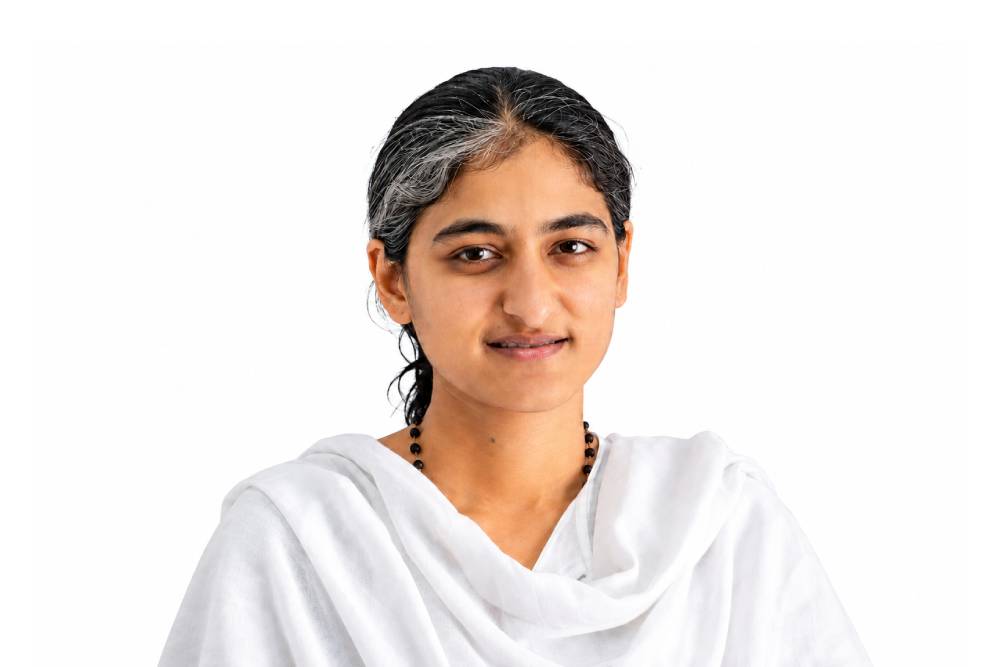
Dr. Srividya Sheshadri is a social science researcher working at the intersection of implementation science, gender studies, and technology-enabled social development. Her work focuses on designing, evaluating, and strengthening community-based interventions related to women’s empowerment, field implementation systems, and sustainable community development.
She holds a Ph.D. in Implementation Sciences from Amrita Vishwa Vidyapeetham and an MSW with a concentration in International Social Welfare Policy from Columbia University. Her research draws on field-based inquiry, systems thinking, and applied social data methods to understand how social programs succeed or fail in complex, real-world settings. In recent years, her work has increasingly engaged with AI-enabled and data-informed tools as applied methods to strengthen implementation, learning, and accountability in underserved communities.
Research Areas & Opportunities for PhD Students
Dr. Sheshadri welcomes PhD students in Social Sciences, Development Studies, Public Policy, and related fields. Students with data science or AI backgrounds are welcome where there is a strong interest in real-world social applications and collaborative or co-supervision arrangements.
1. Systems Approaches to Women’s Empowerment
This research develops and applies systems-oriented frameworks to understand how women’s empowerment unfolds within interconnected social, economic, environmental, and institutional contexts. This includes designing empowerment measurement frameworks (e.g., the AWESOME model), studying feedback loops that shape agency and participation, and evaluating long-term outcomes of women-centered interventions. PhD students may work on conceptual modeling, mixed-methods research, and empirical evaluation of empowerment processes in rural and underserved communities.
2. Technology-Enabled Implementation & Field Systems
This stream examines how digital tools and AI-assisted systems can strengthen implementation, reporting, and participatory processes in development programs. Current work includes evaluating AI-assisted field reflection and documentation tools, designing low-burden digital systems for community reporting, and studying how technology shapes accountability, participation, and learning in field teams. The focus is on application, evaluation, and ethical deployment in real-world settings rather than technical AI development.
3. Community Development & Sustainable Livelihoods
This area focuses on designing and evaluating community-based interventions aimed at strengthening livelihoods, ecological resilience, and women’s leadership. Projects examine agroforestry and land-based livelihood systems, coastal and climate-resilient income models, community-level institutional strengthening, and determinants of long-term sustainability in development programs. PhD students may engage in impact evaluation, behavioral analysis, institutional studies, or mixed-methods field research.