


Cognitive Sciences & Technology
This programme invites scholars to engage with forefront technologies, including robotics, machine learning, neurocognition, simulation-based learning, virtual reality (VR), augmented reality (AR), and haptics. The aim is to serve humanity through:

Amrita Vishwa Vidyapeetham has not appointed any agent or third-party representative within India for admissions to any programme. Students residing in India are advised not to make payments or seat reservation advances to any individual or organization claiming to offer admission assistance for Amrita campuses.
For international admissions, the University may work with authorized overseas representatives in select countries. International applicants are advised to verify the credentials of such representatives through official Amrita communication channels before proceeding with applications or payments.
– Issued in Public Interest by Directorate of Admissions and Academic Outreach

We are looking for candidates who possess:
Compassion Driven Research lies at the Core of Amrita’s value and identity.


There are two kinds of poverty. The poverty that comes with the lack of food, clothing and shelter. The second kind of poverty is the lack of love and compassion. If we address the second kind of poverty first, we automatically address the first kind of poverty.
– Amma
Register with us online
For Indian Candidates For International Candidates
| Name of the Research Lab |
Major Facilities / Equipment Details |
|
| Skill Intelligence Lab | Interdisciplinary research at the laboratory
will study the complexity of skills and their enhancement through teaching, based on models of skill learning. |
Major Domains:
1.HAPTICS – TeslaSuit-2, SenseGlove DK1-2, Bar Bending Simulator. 2.GAZE & MOTION CAPTURE – Tesla Suit – 2, Rokoko IMU based Smartsuit with Gloves-2. 3.VR & AR – Hololens-3, Oculus Quest 2. 4.NEUROCOGNITION – Brain Products EEG, Analyser & Recorder softwares, -2. 5. SYSTEMS – Powerful Gaming Laptops, Al & Data Science Workstations, Cloud Services-Google/AWS, Network Attached Storage. |
| Skill-eLabs | Learning technology services and research for skill development | VR Headsets
Unity3D/ VR computers Video Production Equipments Audio Production Studio and Equipments |

Dean,
Schools of Social & Behavioral Sciences (Amritapuri & Coimbatore)
Intake Capacity : 1

Professor,
Department of Cognitive Sciences and Psychology, School of Social & Behavioural Sciences, Amritapuri
Intake Capacity : 1

Chairperson,
Department of Social Sciences, School of Social and Behavioural Sciences, Amritapuri
Intake Capacity : 0

Vice Principal, School of Social & Behavioral Sciences, Amritapuri | Vice Principal, School of Social & Behavioral Sciences, Faridabad | Assistant Professor, Department of Social Sciences, Amritapuri
Intake Capacity : 0

Assistant Professor, Department of Social Sciences, Amritapuri
Intake Capacity : 3

Associate Professor,
Economic Development, Economics and Culture, Public Administration and Civil Service, Ethical Systems, Social Research
Intake Capacity : 5

Assistant Professor, Department of Social Work, School of Social and Behavioral Sciences, Amritapuri
Intake Capacity : 0

Assistant Professor, Department of Social Sciences, School of Social and Behavioral Sciences, Amritapuri
Intake Capacity : 1 PT

Assistant Professor, Department of Cognitive Sciences and Psychology, School of Social and Behavioural Sciences, Amritapuri
Intake Capacity : 1

Assistant Professor,
Department of Social Sciences, School of Social and Behavioural Sciences, Amritapuri
Intake Capacity : 0

Assistant Professor, Department of Cognitive Sciences and Psychology, School of Social & Behavioural Sciences, Amritapuri
Intake Capacity : 3
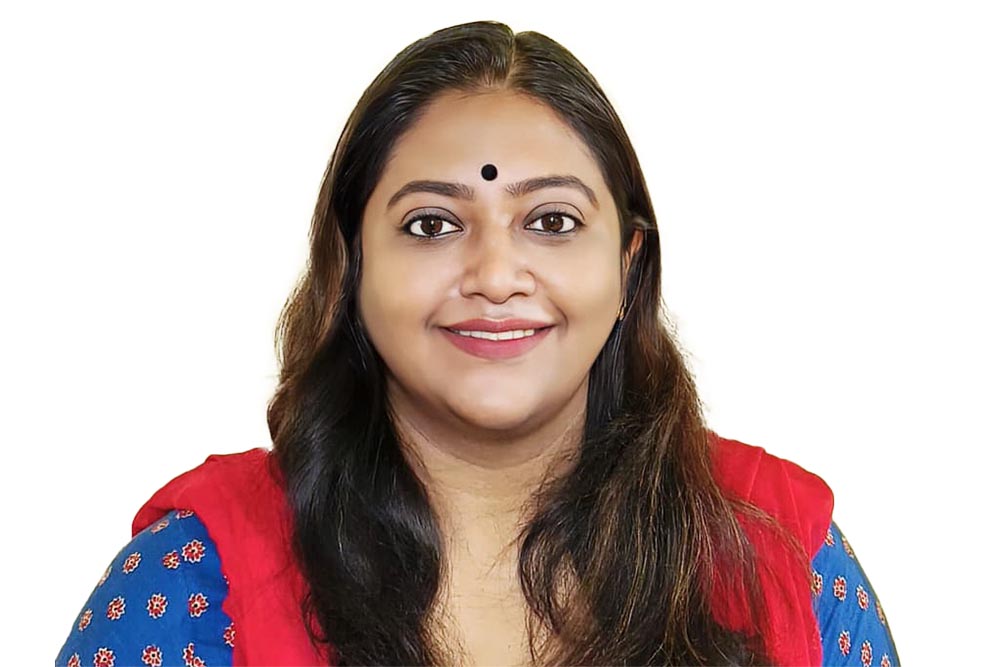
Visiting Faculty, Department of Cognitive Science, Learning and Technology & Department of Social Work, School of Social and Behavioral Sciences, Amritapuri

Post-Doctoral Fellow,
Medicine and Public Health Policy, Economics of Healthcare, Educational Research
Intake Capacity : 1

Vice Chairperson, Department of Social Sciences
Intake Capacity : 4

Assistant Professor (Sr. Gd.), Department of Social Sciences
Intake Capacity : 4
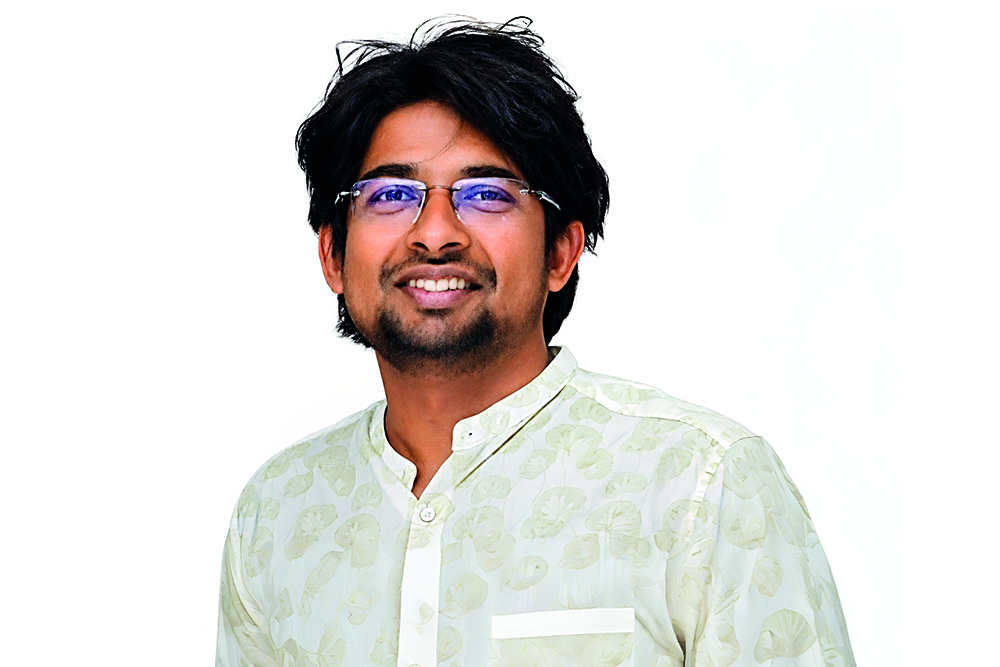
Assistant Professor
Intake Capacity : 4
*Applicable Programs.

| Sl. No. | Faculty Name | Current Intake Capacity as on Oct 2026 | Campus | Research interests and areas | Industry, government, or international collaborations relevant to Ph.D. research | Notable, Awards, recognitions, or Patents |
|---|---|---|---|---|---|---|
| 1 | Dr. Bhavani Rao | 1 | Amritapuri | Women’s Empowerment and Gender Equality; Learning Technologies; Vocational and Educational Training; AI and Robotics for social good; Disaster Risk Management | Author of 100+ publications and numerous patents related to vocational skills and haptics. Work recognized by international and national awards. Led numerous field and research projects funded by international and national institutions, including UNESCO, UNDEF, UNICEF, the Ministry of Skill Development and Entrepreneurship (MSDE), the Ministry of Science and Technology, Department of Science & Technology (DST), NSDC, NABARD, and foreign institutions since 2009. Publication of two UNESCO Books: “Transforming MENtalities: Gender Equality & Masculinities in India;” and “A Braided River: The Universe of Indian Women in Science” | |
| 2 | Dr. Sophia | 1 | Amritapuri | Research interests: Dr. Sophia von Lieres specializes in mental health research, including psychological coping and protective factors that promote mental health among neurodivergent people; cross-cultural neurodiversity research; empathy and autism; autistic communication, as well as validating psychometric scales for the Indian cultural context. Research Projects & Opportunities for PhD Students: Dr. Sophia von Lieres welcomes PhD students with a strong background in Psychology who are neurodivergent. She is currently seeking PhD students to join the research projects listed below. Candidates will undertake their doctoral research on a topic aligned with, and contributing to, one of these projects. Cross-cultural research on coping and protective factors that keep autistic people mentally healthy This collaborative study between Amrita Vishwa Vidyapeetham (India) and LMU München (Germany) shifts autism research from a deficit framework to a strengths-based neurodiversity paradigm. Utilizing a mixed-methods design, it investigates how cultural context influences protective factors, personal strengths, and coping mechanisms (e.g., stimming, special interests) in autistic individuals, which can then be fostered. The project aims to produce culturally affirmative mental health interventions, foster autism acceptance in society, and foster a positive self-identity in autistic people. 2. Experiences and expression of empathy in autistic people This mixed-methods research project directly challenges the pervasive myth that autistic individuals lack empathy. Combining quantitative correlation (Basic Empathy Scale and RAADS-14) with qualitative lived-experience narratives, the study investigates how the double-empathy problem is experienced cross-culturally and what the unique autistic expressions of empathy are. Additionally, the project validates the Munich Autism Questionnaire for the Indian context, delivering culturally responsive toolkits for educators and families while reducing internalized and externalized stigma. 3. Autistic communication This is a project that a PhD student could take on as their own, as it has not yet started. The goal is to develop a training toolkit for non-autistic people so that they learn how to better communicate with autistic people. Similar to hearing parents of deaf children having to learn sign language, non-autistic parents of autistic children need to learn autistic communication. In this way, autistic communication is not seen as a deficit but as a different but valid form of communication. |
Currently collaborating with the Ludwig-Maximilians University (LMU) in Munich, Germany, and awaiting funding from the ICSSR for a joint Indo-German funding opportunity | |
| 3 | Dr. LM (Malini) Frey | 1 | Amritapuri | Dr. Malini invites students interested in research that bridges psychology, neuroscience, and mind-body health to uncover and cultivate methods by which to build lasting psychological strength across the lifespan. Her work spans diverse populations – from young children and vulnerable youth in childcare homes/institutions, to adolescents, college students, adults, and CRPF personnel. Beyond investigating how psychological/mental distress and disasters (such as COVID-19) impact overall wellbeing, she designs practical, evidence-based interventions such as: resiliences workshops for youth and young adults, preventive as well as uplifting strategies for at-risk populations to cultivate a sense of self-worth, confidence, and positive futures, and interactive storytelling programs that teach higher values to chlidren. She is very interested in the intersection of psychospiritual values and daily life, hence, her work also explores how alignment with lifestyle ethics (e.g., Dharma) can foster lasting peace-of-mind, happiness, and wellbeing, as well fostering ethical integrity in research. |
2019-2020 – UNICEF project, Project & Clinical Director 2020 – Covid-19 Mental Health Helpline; clinical director and trainer of volunteers to help persons suffering psychologically in the wake of India’s initial, sudden national lockdown. 2020-2022: Central Reserve Police Force (CRPF): part of a team that developed an intervention program to reduce gender and masculinites challenges, mental health issues, and excessive suicides. Team Lead and designer of the Mental Health part of this holistic, comprehensive program. 2022-2023: Mental Health lead for India’s C20 (component of G20); Health Working Group. Massive global outreach to connect with CSOs and experts regarding mental health interventions and needs, designed and moderated webinars, participated in offline events (in different states of India) and many online events with varied countries (e.g., Unkraine, China, US, African countries, Mexico, Germany, Czech Republic, etc.). 2026: DST (Department of Science & Technology). Team member to develop methods to reduce academic student stress. Focus: impart knowledge and understanding among students to develop self-understanding and compassion, and to learn fortitude, confidence, and equinimity. This project utilizes technology such as ECG, GSR, EEG, and others (3-year project). |
|
| 4 | Dr. Drishti | 1 | Amritapuri | women’s empowerment, gender, health economics, health systems , policy, vulnerability mapping, health outcomes | recipient of ICSSR funding for project Building Grassroots Community Capacity: Evaluating the Impact of a Blended Digital–Practical Training Curriculum to Reduce Preventable Blindness in Rural India in Wayanad $ | |
| 5 | Dr. Kochukrishnan Kurup | 0 | Amritapuri | Child Rights and child Protection, Corporate Social Responsibility, School counselling, Human resource Management | State Governing Body Member of Keralam Association of Professional Social Workers.(KAPS). Awards/ Honor: Child Welfare Committee (CWC) Member- Kearala (2019 to 2022) |
|
| 6 | Dr. Parvathy V | 0 | Amritapuri | Health & Wellbeing Application of Strengths perspective Resilience & Alcohol misuse Spirituality in social work & Self-development Social Work Research |
University Grants Commission (India) Junior and Senior Research Fellowship in Social Work (2015- 2020) | |
| 7 | Dr. Harikrishnan U | 1PT | Amritapuri | Child and Adolescent Mental Health, Psychiatric Social Work, Psychosocial Support in Disaster Management, Gender-Based Viloence, Family Therapy, Social Work Education | ||
| 8 | Dr. Yamuna N. K. | 3 | Amritapuri | Community Development, Aging, women, Children, family | Rural develpment dept, social justice dept,local self govt | |
| 9 | Dr. Vivek S. | 0 | Amritapuri | Education : Digital Education, Technology-Enhanced Learning, Educational Technology, Digital Learning Technology Integration Spirituality and Social Work Indianization in Social Work Practice and Education Indigenous Innovation, Technology and Development (IKS) Sustainable Development Management Technology-Enhanced Learning; Knowledge Management; Indian Knowledge Systems (IKS); Community Education |
2012 to Ongoing : 14 years plus Research and Teaching Experience , Q1 and Q2 Research publications , Book chapters 2015 to 2017 : Lay Counselling Project in collabration with MAM Trivandrum Chapter 2025 BOS member of Social Work Program , Kannur University and MG university , Kerala |
|
| 10 | Dr. Gaurang | 3 | Amritapuri | |||
| 11 | Dr. Srividya Sheshadri | 0 | Amritapuri | Research Areas & Opportunities for PhD Students Dr. Sheshadri welcomes PhD students in Social Sciences, Development Studies, Public Policy, and related fields. Students with data science or AI backgrounds are welcome where there is a strong interest in real-world social applications and collaborative or co-supervision arrangements. 1. Systems Approaches to Women’s Empowerment This research develops and applies systems-oriented frameworks to understand how women’s empowerment unfolds within interconnected social, economic, environmental, and institutional contexts. This includes designing empowerment measurement frameworks (e.g., the AWESOME model), studying feedback loops that shape agency and participation, and evaluating long-term outcomes of women-centered interventions. PhD students may work on conceptual modeling, mixed-methods research, and empirical evaluation of empowerment processes in rural and underserved communities. 2. Technology-Enabled Implementation & Field Systems This stream examines how digital tools and AI-assisted systems can strengthen implementation, reporting, and participatory processes in development programs. Current work includes evaluating AI-assisted field reflection and documentation tools, designing low-burden digital systems for community reporting, and studying how technology shapes accountability, participation, and learning in field teams. The focus is on application, evaluation, and ethical deployment in real-world settings rather than technical AI development. 3. Community Development & Sustainable Livelihoods This area focuses on designing and evaluating community-based interventions aimed at strengthening livelihoods, ecological resilience, and women’s leadership. Projects examine agroforestry and land-based livelihood systems, coastal and climate-resilient income models, community-level institutional strengthening, and determinants of long-term sustainability in development programs. PhD students may engage in impact evaluation, behavioral analysis, institutional studies, or mixed-methods field research. |
Tel Aviv University, Israel; University of Groningen, Netherlands; Aarhus University, Denmark | Recipient of ICSSR funding for study entitled, “Collective Efficacy in Action: A Retrospective Study of Women’s Leadership in Sanitation and Environmental Stewardship Under the Amala Bharatam Campaign.” Research contributions to several QI Journal Publications Currently serve as the Associate Director of the Center for Women’s Empowerment and Gender Equality |
| 12 | Dr. Victoria | 5 | Amritapuri | Development Economics: Designing and evaluating interventions aimed at poverty alleviation, gender empowerment, and the creation of sustainable livelihoods. Current projects open to PhD student involvement include evaluating the determinants of success of tree and intercropping farming systems in tribal communities in Odisha (WADI project), and designing an incentive scheme to engage women in coastal areas in seaweed farming (Blue is the New Pink project). Gender and Water Systems: Studying the determinants of safe water management practices using behavioural change frameworks, and designing interventions that strengthen women’s roles in community water governance. This work focuses on how social norms, risk perceptions, and institutional trust influence household water treatment, water safety behaviours, and collective action. Current projects open to PhD student involvement include designing evaluating interventions that train women as Water Ambassadors to deliver water quality information, support behaviour change at the household level, and mobilize communities to take collective action to improve water quality and access, in collaboration with researchers from Tel Aviv University and Delft University of Technology. AI and Civic Participation in Governance: Developing and applying computational social science methods to understand how citizens frame public problems and how these perspectives can be meaningfully integrated into policy processes. This work applies natural language processing to examine values, concerns, and priorities expressed by citizens, and to study how these inputs align — or fail to align — with public policy agendas. We are currently open to PhD students interested in examining how citizen perspectives are reflected across different types of government policies, particularly in domains such as environmental protection, gender equality, and other areas of social and public policy, with a special focus on rural and underserved communities. |
Tel Aviv University, Israel; Delft University of Technology, Netherlands; University of Groningen, Netherlands | Associate Editor of Frontiers in Water (Section: Water and Human Systems), a Q1 journal (Impact Factor 2.8; CiteScore 5.5), contributing to the advancement of interdisciplinary research on water governance, human systems, and sustainability. Research contributions include Q1 publications advancing transformer-based topic modeling approaches (e.g., BERTopic) for the analysis of citizen perspectives, policy framing, and governance processes, positioning computational social science methods within public policy and development research. Demonstrated impact on public policy design through six government-funded research grants (2015–2020) awarded by the Government of Russia focused on innovation systems, human capital development, and science and technology policy, supporting evidence-informed policy formulation at national level. Held the position of Senior Researcher at the Russian Academy of Sciences, contributing to research on innovation systems, technological foresight, and responses to global challenges through science and innovation policy. Currently serves as Research Head of the Center for Women’s Empowerment and Gender Equality (CWEGE), which holds the UNESCO Chair in Gender Equality, coordinating interdisciplinary research on gender, water governance, and inclusive development. |
| 13 | Dr. Nishanth Pillai | 2 | Amritapuri | Education with a focus on rural and tribal communities, Child Rights and Child Development, Child Care and Child Protection, Rural and Tribal Community Development, Agrarian Issues and their impact on rural families. |
||
| 14 | Dr. Nikhil Prabhu | 4 | Amritapuri | Neural basis of cognition, and movements using fMRI, elecrophysiology, EEG and psychophysics | International collaborations in the pipeline | MedTech startup fellow, Tuebingen, Germany; Young Entrepreneurs in Science (YES) fellow, Germany; Rothberg International School fellow, Hebrew University of Jerusalem, Israel |
| 15 | Dr. Reshma R | 4 | Amritapuri | Citizen science & water governance Training rural and coastal women as community water monitors; studying enablers and barriers to safe water practices in low-resource settings using participatory and behavioural change approaches. Gendered livelihoods & blue economy Examining women’s participation in aquaculture — especially seaweed farming — as a climate-resilient coastal livelihood. Research explores agency, economic empowerment, ecological stewardship, and barriers to women’s entry and leadership in the blue economy. Community sustainable livelihoods Designing and evaluating community-based interventions for ecological resilience and income sustainability — including agroforestry, coastal livelihood systems, and vocational skill development for underserved women. Women’s empowerment & implementation science Evaluating the processes and outcomes of women-centered development programs; applying systems thinking to understand how empowerment unfolds across social, institutional, and environmental dimensions in rural communities. |
Tel Aviv University, Israel — Ongoing research partnership on women-led water quality monitoring (Women in Sustaining the Environment Initiative; Joint Clean Water Initiative) Delft University of Technology, Netherlands — Collaboration on water governance and behavioural change frameworks |
Published in ACS ES&T Water (Q1) on reliable water quality monitoring by women in low-resource communities; multiple contributions to IEEE Global Humanitarian Technology Conference proceedings (2021–2025). Co-authored research on coastal livelihoods and conservation frameworks (IEEE GHTC 2025), and machine-learning-assisted community readiness diagnostics for water governance. |
| 16 | Dr. Priya V | 0 | Ettimadai | Women and Child Mental Health, Women Empowerment | ||
| 17 | Dr. S. Kanagaraj | 0 | Ettimadai | Sustainable Rural Development, GIS & Rural Development, Social Welfare Policy, Disaster Management, Women Empowerment, Youth Development, Disability Issues, Self Help Groups (SHGs), Social Mobilization, Tribal development. |
ICSSR (Indian Council of Social Science Research), Unnat Bharat Abhiyan (Govt. of India) | Received AIRA (Amrita Innovation & Research Awards) Publication Merit Award for the publications in 2022 Received Best Faculty Award in recognition of outstanding dedication, mentorship, and lasting impacting on students on 06th January 2026 *. Co-PI (Co – Principal investigator) for the ICSSR (Indian Council of Social Science Research) Ministry of Education, Government of India, Major research project “Temple Festivals, Social Cohesion, and Community Development in the Sub-cultural Regions of Tamil Nadu and Kerala” under ICSSR Major Research Projects (2024-25) sanctioned Rs.16,50,000/- File No. 19/2024-25/ICSSR/RP/MJ/OBC Dated: 07.03.2025 |
| 18 | Dr. Dipanjan Bhattacharjee | 0 | Ettimadai | |||
| 19 | Dr. Rajeev Ramakrishnan | 1 | Ettimadai | Child Rights, SDGs, Tribal Development, Sustainable Development Technological Interventions for Marginalised development |
Ministry of Tribal Affairs, Ministry of Social Justice ICSSR |
AIRA 2025 |
| 20 | Dr. Mukil M V | 1 | Ettimadai | Environmental psychology, Behavioral Design, Human Centric Design, Design for Sustainability, Indian Knowledge Systems (Temple Design), Product Design and Development | DST, ICSSR, Ministry of Education (IKS Division), JSPS (Japan), John Templeton Foundation. | Q1 Journal Publications: Recognized for high-impact research in top-tier Springer and Elsevier journals on culture-driven sustainability and human-nature connectedness. Cultural Expert & Media Panelist: Invited Judge and Panelist for Amrita TV’s “Sreshtabharatam” (Season 2), serving as a subject matter expert on Indian Temple Architecture and Aesthetics. Environment & Disasters Track Co-Chair: Served as a Co-Chair for the Environment & Disasters Track of C20 India, steering global policy recommendations on environmental preservation and disaster resilience. |
| 21 | Dr. Radhika Mohan | 4 | Ettimadai | Psychological resilience, Gender Studies, Mental Health and Behavioural Interventions | Sameekshanam:Be Calm, Be Compassionate Project | |
| 22 | Dr. Nimita Pandey | 3 | Faridabad | Innovation Systems, Social impacts of emerging technologies, STI Policy, Gender and STEM | ICSSR NITI Aayog Department of S&T, Government of India UNESCO New Delhi Northwestern University (Qatar Campus) |
STI Policy Postdoctoral Fellowship 2020 supported by Department of Science & Technology, Government of India Contributed to national and state policy processes, including leading the chapter on Equity and Inclusion in the forthcoming National STI Policy of India as well as in State S&T policy of Madhya Pradesh and Uttar Pradesh. Coordinated and co-led the ‘Education and Skill Development’ subtheme of the C20 Working Group on ‘Gender Equality’, under India’s G20 Presidency 2022-23 Projects: (a) Co-PI of “Spread and Influence of Hirkani’s Legend on Breastfeeding Working Mothers in Maharashtra” Research Project, awarded by ICSSR, Govt of India under the “Punyashloka Devi Ahilyabai Holkar Special Call for Women-Led Research on Women-Led Development” (2025-26) (b) Co-PI for the Assessment Studies on (i) ‘Role of Incubators in success of startups’ and (ii) ‘Enhancement of Employment Opportunities’ under Smart Cities Mission, supported by Ministry of Housing and Urban Affairs, Govt. of India (2023-24) Membership/other Positions: – Member, National Policy Research Network, constituted at the Centre for Science and Technology Policy (CSTP), Indian National Science Academy (INSA), Govt. of India (October 2024-Till date] – Member, UNESCO Women for Ethical AI South Asia Chapter (December 2024 – Till Date) – Lifetime Member, Indian Institute of Public Administration (IIPA), New Delhi, India (June 2021) – Member/Alumnus, Global Network for Economics of Learning, Innovation, and Competence Building Systems (GLOBELICS), Economics Institute – IE/UFRJ; Federal University of Rio de Janeiro, Brazil (2017 – Till Date) – Member, Science and Democracy Network, Harvard University (May 2019 – till date) Publications in form of books, reviews, book chapters and articles in reputed journals. Served as Guest Topic Editor, Frontiers special issue: Engaging Scientific Diasporas for Development: Policy and Practices (May 2021 – April 2022) and Associate Editor, Science Diplomacy Review journal (November 2018 – March 2020) |
| 23 | Dr. Christopher Coley | 0 | Faridabad | Sustainable Development, Implementation Sciences, Gender Equality, Critical Masculinities | Part of the team which published two UNESCO Books: “Transforming MENtalities: Gender Equality & Masculinities in India;” and “A Braided River: The Universe of Indian Women in Science.” Significant contributions to the UNDEF-funded Women’s Empowerment projects in 2012-14 and 2017-19, including grant-writing, deployment, research & evaluation, and publications. Researcher and field team member on multiple women’s empowerment projects from 2012-present, including WE:Sanitation 1 & 2 where I acted a Zonal Lead for the Western Zone. Ongoing Gender Sensitization curriculum development and upcoming deployments across multiple contexts, including for the CRPF and Amrita University faculty and students. |
|
| 24 | Dr. Parvathy Viswanath | 4 | Ettimadai | Positive psychology, Social-Emotional Learning, Character strengths and virtues, Cross-cutural values | In pipeline | Postdoctoral fellowhip, joint collaboration between Christ University, India and University of Virginia, USA; Patent filed on cognitive appraisal model for social entrepreship education; Q1 and Q2 oublications in the broader area of positive social development |
Fees mentioned beside are current. The University reserves the right to alter fees at any time without notice.
| Program Fees | ||||
| CAMPUS | TUITION FEES PER YEAR |
TUITION FEES TOTAL |
||
| Amritapuri | 30,000 | * | ||
The top reasons to choose Amrita for your career


PhD Office, (Amritapuri/Faridabad),
School of Social and Behavioral science,
Amrita Vishwa Vidyapeetham, India
ssbs_pgp@am.amrita.edu