M.Sc. in Social Data Science & Policy is a postgraduate programme offered by the School of Social and Behavioural Sciences, Amrita Vishwa Vidyapeetham. This programme is uniquely designed for students who are passionate about making a difference in the world and who want to learn to apply complex data science methods to inform policy and community decisions to solve social problems.
This course, among the only of its kind in India, strategically blends the fields of Data Science, Social Science, and Public Policy to prepare graduates to take on global issues, especially sustainable development in the Global South. Students will engage with critical topics related to social theory, national and international policy, economics, and sustainable development as well as technical skills in machine learning, programming, and other advanced data collection, management, and analysis techniques.
Social data and policy studies are interrelated fields that involve the use of the latest data and analytical techniques to understand and address social issues. Social data science involves the collection, analysis, and interpretation of data from social sources, such as surveys, censuses and administrative records, in order to understand and address social issues. Concurrently, policy studies utilises multiple forms of data to analyse public policies and their impacts, as well as the development of strategies and recommendations for improving policies.
Social data science and policy studies intersect in the context of policy analysis and evaluation, where data and analytical techniques are used to understand the impacts and effectiveness of different policies and interventions. Both fields are relevant for a wide range of organisations and sectors that are focused on addressing social issues, including government agencies, non-profit organisations, businesses, and academia.
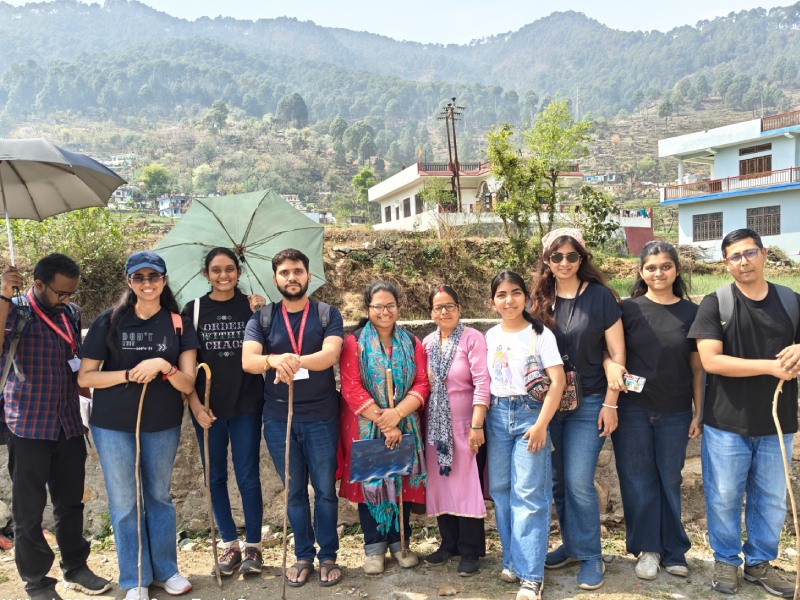
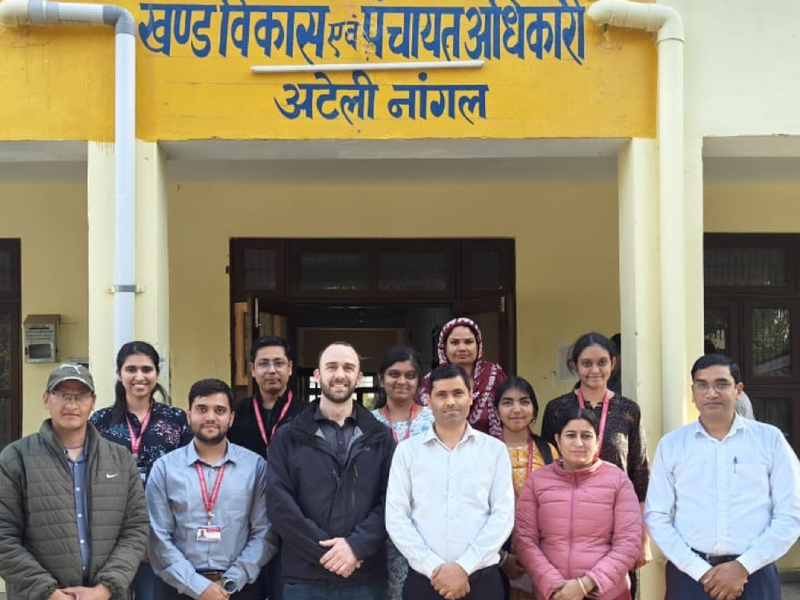
The programme is unique in that students will have the opportunity to conduct field work in India’s diverse village and urban settings, gaining valuable experience in applying their skills to real-world contexts. Further, there are opportunities to collaborate with high-profile organisations, industries, and government offices to ensure more opportunities for placements post-graduation.
Graduates are prepared for careers in Government ministries and departments, international organisations, research institutions, private companies and consultancies, etc. as:
- Data privacy analyst
- Data security and governance specialist
- Social Analytics scientists at NGOs, corporate, or Government sectors
- Specialist of Data Visualization & Journalism
- Policy Advisor, and more
Amrita Advantage
We are a new MSc. Programme under a well-established and internationally recognized School, with affiliation to India’s only UNESCO Chair in Gender Equality and Women’s Empowerment, and the Center for Women’s Empowerment and Gender Equality (CWEGE) and AMMACHI Labs. We do innovative systems-oriented research and sustainable development initiatives that combine state-of-the-art technologies and data science with UNESCO-UNEVOC recognized best-practices in education and skill development. Under the leadership of the SSBS Advisory Committee, made up of renowned experts with multi-sectoral representation, this programme provides students with exposure and opportunities unique in India and around the world. Students will have an opportunity to join in nationally and internationally funded projects taking place across India where we work in the field with Indian villages, SC/ST communities, and vulnerable urban/peri-urban populations. To learn more about these exciting initiatives, please visit
UNESCO Chair
The UNESCO Chair seeks to impact the individual, community and greater society through research, implementation and education.
In its fourth year, Amrita’s UNESCO Chair strives to promote international, inter-university cooperation and networking to enhance institutional capacities and collaborative work. It was in the fall of 2016 that Amrita Vishwa Vidyapeetham (University) and UNESCO inaugurated India’s first-ever Chair on Gender Equality and Women’s Empowerment.
Focus areas of UNESCO Chair:
- Designing tools and methods for effective interventional strategies towards the empowerment of women and strengthening gender equality with community’s active and inclusive participation.
- Focusing on six holistic dimensions of the United Nations Sustainable Development Goals defined as: safety and security, economic vitality, education, political, social and cultural environment, environmental quality and health.
- Understanding and mapping the vulnerabilities in communities to finally support India’s progress towards achieving the UN’s 2030 agenda for Sustainable Development.
The Center for Gender Equality and Women’s Empowerment: where research meets action
The Center for Gender Equality and Women’s Empowerment at Amrita Vishwa Vidyapeetham is a research-focused academic center for promoting gender equality and fostering women’s empowerment with a special focus on technology and other innovative methods. This center offers diverse courses on key focus areas, pilot radical ideas, and collaborate with leading universities and institutions to advance the initiatives. The center acts as a major resource center for the implementation of various development projects undertaken by Amrita University and its parent organization, MA Math.
The CWEGE mission is built upon the three pillars of education, implementation, and action research.
The CWEGE research agenda continues with a system’s thinking-based approach to mapping women’s vulnerabilities throughout rural India. The approach remains focused through the lens of six dimensions ((i) safety and security, (ii) economic vitality, (iii) education, (iv) political, social and cultural environment, (v) environmental quality and (vi) health), and how they intersect with the different context levels of women’s lives. Our primary focus over the last six months has been improving and refining our data collection strategies, engaging with subject matter experts in the areas outlined above in order to ensure quality of research, and planning an expansion of our original pilot field venture.