Last Updated – December 30, 2024
Amrita has established a comprehensive Higher Energy Efficiency Buildings initiative aimed at systematically upgrading existing infrastructure to significantly reduce energy consumption and environmental impact. Guided by the Chancellor’s vision for a greener and more resource-conscious campus ecosystem, the university has embedded energy efficiency as a core pillar of its sustainability strategy. This programme aligns directly with the 2030 Sustainable Development Goals, demonstrating Amrita’s long-standing commitment to environmental stewardship and its leadership in advancing sustainable development across the higher education sector.
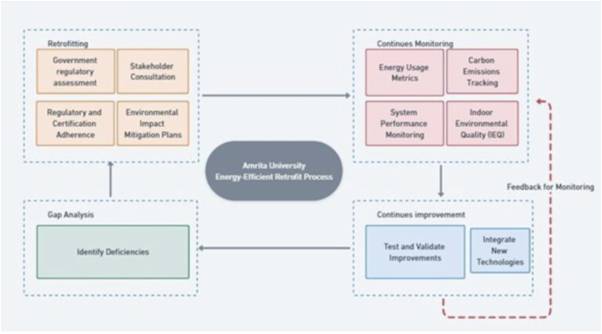
A rigorous process is implemented to facilitate energy-efficient retrofitting, ensuring the upgraded building achieves a significantly higher level of energy efficiency. These practices align with the standards set by ASHRAE 90.1-2007 and the LEED certification models.
Upgrading Existing Buildings to Higher Energy Efficiency
Amrita Vishwa Vidyapeetham has established a structured programme to upgrade existing buildings to higher energy-efficiency standards, aligned with national frameworks and the UN SDGs. Guided by the Chancellor’s sustainability vision, the initiative strengthens the university’s long-term commitment to environmentally responsible campus development.
Commitment to Sustainability Excellence
A comprehensive improvement framework ensures continuous evaluation of building performance, identification of gaps, and adoption of global best practices. Through targeted upgrades and efficiency measures, the university has achieved 32.4% energy cost savings, demonstrating measurable progress in reducing environmental impact.
Innovation-Driven Infrastructure Enhancement
Amrita regularly assesses current sustainability practices and integrates advanced technologies, such as smart energy-management systems and high-efficiency materials to elevate existing buildings to modern efficiency benchmarks. This approach enhances operational performance and positions the university as a leader in sustainable campus management.
Energy Efficiency Policy for Renovations and New Builds
All new buildings and major renovations at Amrita adhere to sustainable design principles, incorporating energy-efficient systems, sustainable materials, and passive design strategies. The university’s comprehensive Energy-Efficient Building Policy ensures that:
- Buildings are designed to maximize energy efficiency using renewable energy sources, efficient insulation, and energy-saving technologies such as LED lighting and smart HVAC systems
- All air conditioning systems maintain an indoor temperature of 24°C in compliance with Bureau of Energy Efficiency (BEE) standards
- Water-saving technologies including low-flow fixtures, rainwater harvesting systems, and wastewater recycling minimize consumption
- The campus has achieved 100% compliance with BEE standards and a 90% energy efficiency rating in the latest energy audit
Links:
Comprehensive Building Upgrade Initiatives
- Replacing all lights with energy-efficient LED bulbs.
- 2200 LED replacement till 2024 in the old building
- 1600 LED lights in newly built spaces
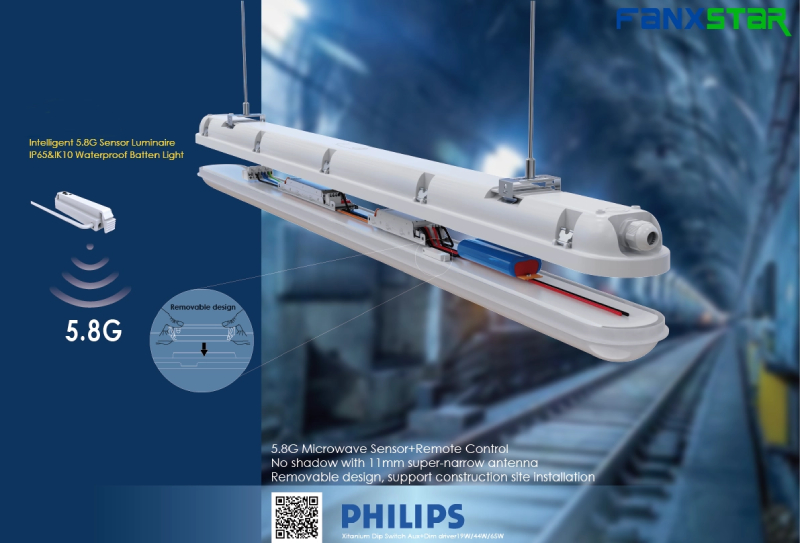
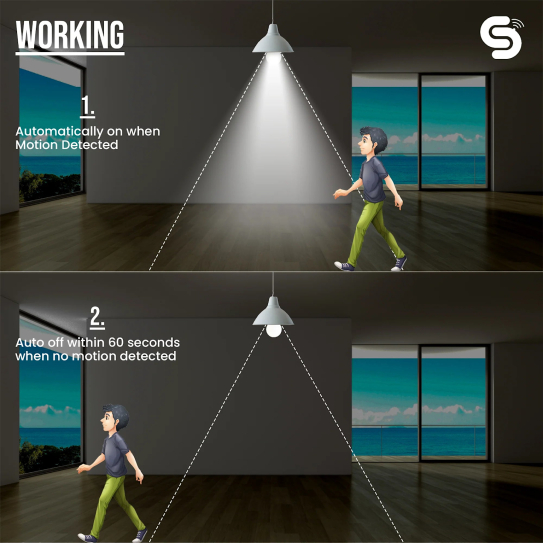
- Installing motion sensors and timers in common areas.
- 100% of energy consumption is reduced through sensor-based workspace automation
- Installing energy-efficient HVAC systems with VFDs to meet ASHRAE 62.1-2007.
- 40% of the buildings have HVAC systems adhering to ASHRAE 62.1-2007.
Installation of energy-efficient HVAC systems with Variable Frequency Drives (VFDs) to reduce energy consumption.
Routine maintenance practices—including filter cleaning/replacement, duct sealing, and use of programmable thermostats—ensure sustained energy-efficient operation.
- Retrofitting windows with double-glazing or shading devices with U-Value of U-1.39 BTU/HR-ft2-F.
- 58% retrofitting with Double Glazing Unit with an average exterior fenestration U-Value of U-1.001 BTU/HR-ft2-F. The average includes 12,000 window panes with a cumulative average U-Value of U-1.39 BTU/HR-ft2-F
- Heat recovery systems capture waste heat from air-conditioning units and repurpose it to heat water for the building’s hot-water circulation, lowering overall energy demand.
- Extensive Computational Fluid Dynamics (CFD) analysis has been conducted to optimize HVAC ducting performance, recognising that HVAC systems account for 50–65% of electrical energy use in commercial buildings.
- Using energy-efficient computers and power-saving modes.
- 40% CRT Monitors
- 60% LCD Monitors
- 100% Hard Disk Drives
- 100% LED Monitors
- 86% of the systems are equipped with Solid-State Drives
- Integrated with low-power processors
Mandatory Energy Efficiency Pledge for Laboratory Users
We pledge to use laboratory facilities responsibly by conserving energy at all times. We commit to switching off equipment, lights, and systems when not in use; minimizing unnecessary computing, AI, and processor-intensive activities; and adopting energy-aware practices in the use of laboratory instruments and digital resources. I will actively support efficient, sustainable, and responsible use of energy in all laboratory and research activities.
Energy Efficiency Plan
- Installing solar water heaters.
- Solar water heaters
- 50% of hot water needs are met by waste heat recovery from air conditioners
Solar panels installed on a rooftop at Amrita University campus generating renewable energy for higher energy efficiency.
The university has significantly expanded its renewable energy infrastructure:
- Baseline 2014: No solar panels, diesel-run generators
- Baseline 2024: Solar panel capacity of 4MW
- Installation of 5 EV charging stations
- Introduction of 3 solar-powered mobile telemedicine units for accessible healthcare
Amrita has pledged to achieve 100% renewable energy by 2035, demonstrating leadership in promoting clean energy solutions beyond the campus.
- 66% dependency on diesel-generated units for backup power across campus operations.
Diesel dependency reduced to 47% through:
- Integration of renewable energy sources
- Increased reliance on natural daylight through improved scheduling and infrastructure design
- Planning of more daytime activities and events
- Creation of shared common spaces to optimize energy use and reduce redundant power demand
A significant reduction in fossil-fuel-based backup power, supporting the university’s transition toward cleaner, more efficient energy systems.
Amrita University hallway showcasing LED lighting installations for energy efficiency across campus.
The university has undertaken extensive LED lighting upgrades across its campuses:
- Baseline 2014: 0% LED lights
- Baseline 2024: 1,200 LED replacements in old buildings; 1,000 LED lights in newly built spaces[1]
- 100% sensor-based workspace automation reduces energy consumption through motion sensors and timers in common areas
This transition to LED technology significantly reduces energy consumption and maintenance costs while extending the lifespan of lighting systems.
Links:
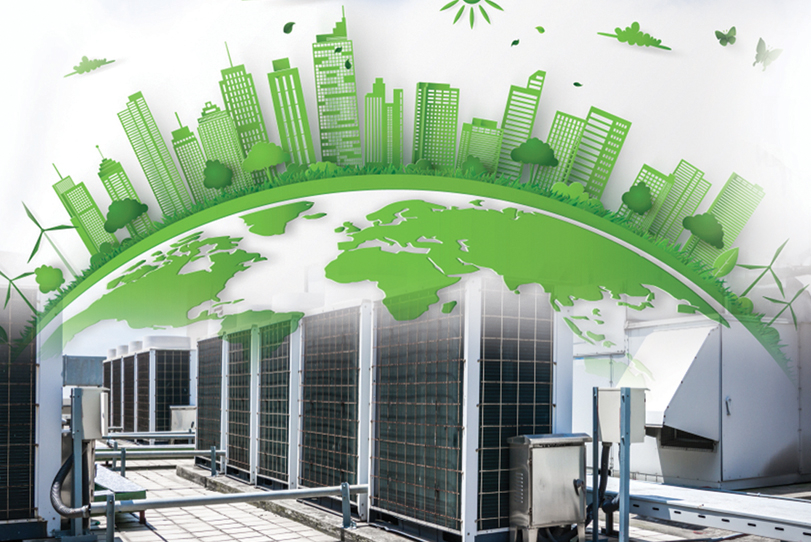
Energy-efficient HVAC units on rooftop symbolize green building upgrades for sustainability.
Amrita has implemented state-of-the-art heating, ventilation, and air conditioning systems:
- Baseline 2014: 40% of buildings had HVAC systems adhering to ASHRAE 62.1-2007
- Baseline 2024: 100% of buildings have HVAC systems fully meeting ASHRAE 62.1-2007 ventilation standards, documented by prominent ventilation company Systemair[1]
- Installation of energy-efficient HVAC systems with Variable Frequency Drives (VFDs)[1]
- Regular maintenance including cleaning and replacing air filters, sealing ductwork, and installing programmable thermostats[4]
- Heat recovery integration: Heat generated by air conditioning systems is repurposed to boil water for hot water circulation within buildings
The university has conducted extensive research to optimize HVAC ducting systems through Computational Fluid Dynamic (CFD) analysis, recognizing that 50-65% of electrical energy in commercial buildings is consumed by HVAC systems.
Links:
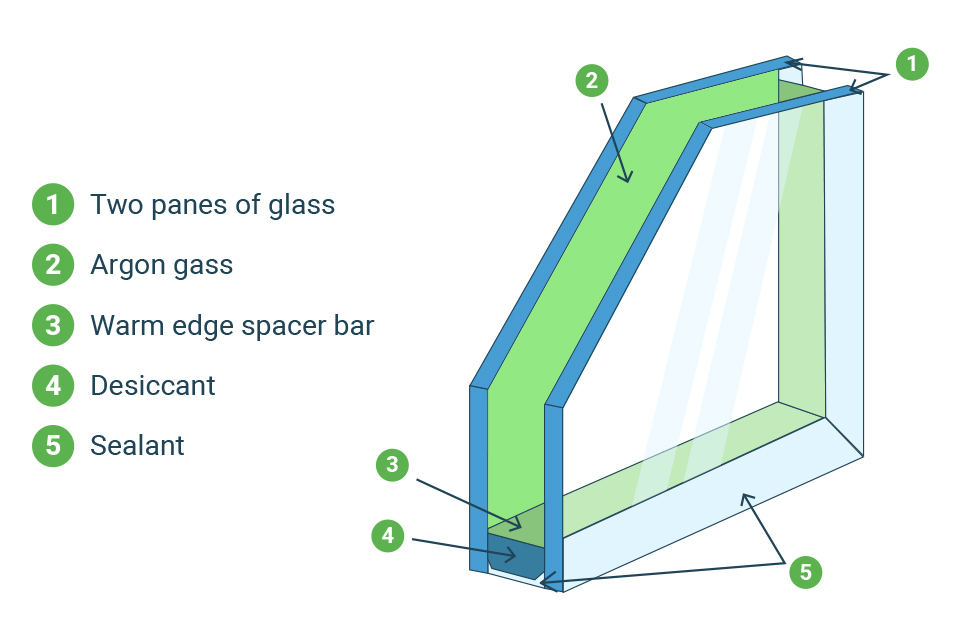
Diagram showing the structure and components of energy-efficient double glazed windows with argon gas insulation.
The university has implemented comprehensive window and building insulation upgrades:
- Baseline 2024: 35% retrofitting with Double Glazing Units with an average exterior fenestration U-Value of U-1.001 BTU/HR-ft2-F
- The average includes 12,000 window panes with a cumulative average U-Value of U-1.39 BTU/HR-ft2-F
- Retrofitting windows with double-glazing or shading devices to minimize heat transfer
For building insulation:
- Baseline 2014: 7% of buildings were insulated
- Baseline 2024: 58% of buildings are insulated
- Improved insulation in buildings minimizes heat loss in winter and heat gain in summer, reducing the workload on HVAC systems
Links:
The university has modernized its computing infrastructure:
- Baseline 2014: 40% CRT Monitors, 60% LCD Monitors, 100% Hard Disk Drives
- Baseline 2024: 100% LED Monitors, 80% Solid-State Drives, integrated with low-power processors
This transformation includes replacing outdated equipment with energy-efficient models featuring energy-efficient labels and ratings.
Links:
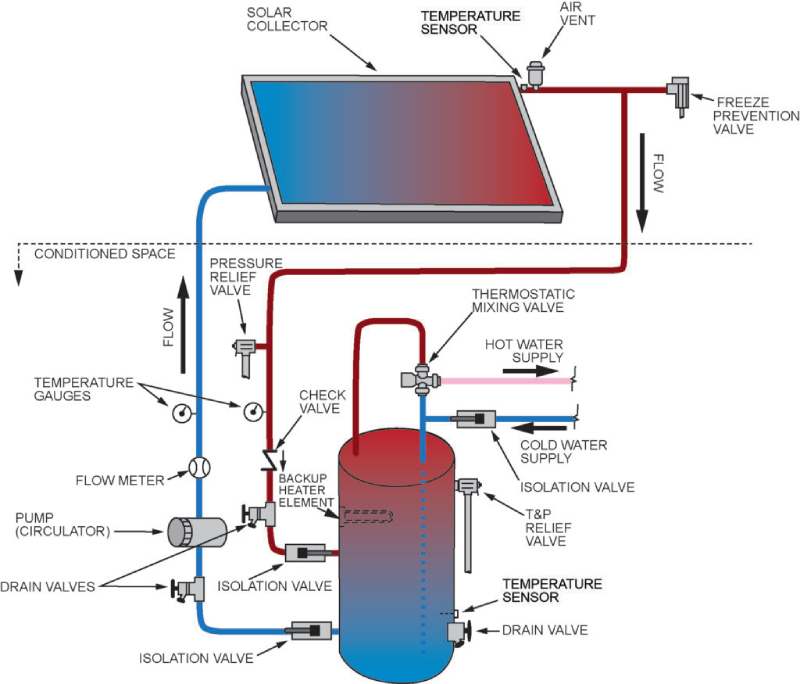
Diagram of a solar water heating system showing key components and water flow for energy-efficient hot water supply.
- Baseline 2014: No solar water heaters
- Baseline 2024: Solar water heaters installed; 50% of hot water needs are met by waste heat recovery from air conditioners
- Usage of energy-saving 5-star rating equipment such as Solar Geysers promoted as part of energy conservation
Links:
Solar panels installed on a rooftop at Amrita University campus generating renewable energy for higher energy efficiency.
The university has significantly expanded its renewable energy infrastructure:
- Baseline 2014: No solar panels, diesel-run generators
- Baseline 2024: Solar panel capacity of 4MW
- The campus produces 5.24% more clean energy than its total energy demand
- Installation of 5 EV charging stations
- Introduction of 3 solar-powered mobile telemedicine units for accessible healthcare
Amrita has pledged to achieve 100% renewable energy by 2035, demonstrating leadership in promoting clean energy solutions beyond the campus.
Links:
The university has transformed its campus transportation fleet:
- Baseline 2014: 0 electric shuttle vehicles, 0 CNG-powered vehicles
- Baseline 2024: 60% increase in electric shuttle vehicles, 40% increase in CNG-powered vehicles
Link: https://www.amrita.edu/unsdg-25/sdg7/upgrade-buildings/
In-House Research to Support Efficiency Improvements
Cross-departmental research involving engineering faculties and the School for Sustainable Futures contributes directly to the design and execution of building upgrades. Faculty and PhD-led studies inform procurement, retrofit strategies, and performance optimisation, substantially improving the university’s overall energy efficiency.
The university has implemented sophisticated building automation systems:
- Building Energy Monitoring and Management System installed in all buildings
- Real-time energy management system ensures continuous monitoring and control of energy usage
- Automated systems utilize real-time occupancy and environmental data to manage workspace energy consumption efficiently
Energy usage data is prominently displayed across campus to create awareness and encourage energy-saving behaviors