

In 2024, Amrita Vishwa Vidyapeetham strengthened international collaboration on SDG best practice through its leadership of the International Network for Sustainable Innovation and Resilient Futures (SustIN) under the UNESCO Chair on Experiential Learning for Sustainable Innovation and Development. The network expanded to over 150 partner institutions across 28 countries, enabling structured cross-border collaboration, comparative learning, and joint research on sustainable development.
Through multi-country consultations, thematic working groups, and collaborative research, SustIN facilitated the systematic comparison of regional SDG approaches and the development of shared methodologies for SDG data collection, monitoring, and evaluation. As a result, Amrita co-develops and disseminates internationally transferable SDG best practices including community-based water governance, disaster-resilient livelihoods, renewable energy deployment, and participatory monitoring adapted and replicated by partner institutions across multiple countries.
In 2024, the International Network for Sustainable Innovation and Resilient Futures (SustIN)—a global collaboration platform led by Amrita Vishwa Vidyapeetham under the UNESCO Chair on Experiential Learning for Sustainable Innovation and Development—convened 150 institutions from 28 countries to advance collaborative research and shared SDG strategies. Through international meetings and joint working groups, partners compared regional SDG approaches, co-developed common research and SDG data methodologies, and exchanged transferable best practices in community resilience and sustainable innovation.
By bringing together universities, UNESCO Chairs, civil society organisations, and research institutions, SustIN strengthened global knowledge exchange, supported capacity-building for diverse and remote communities, and enabled coordinated, evidence-informed SDG action adapted and replicated across partner countries.
Members
Countries
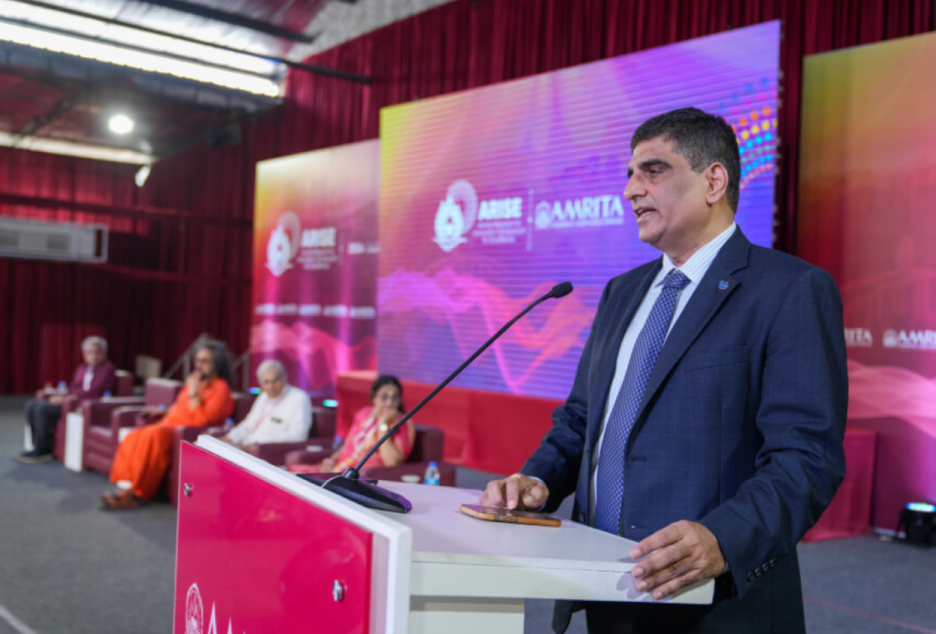
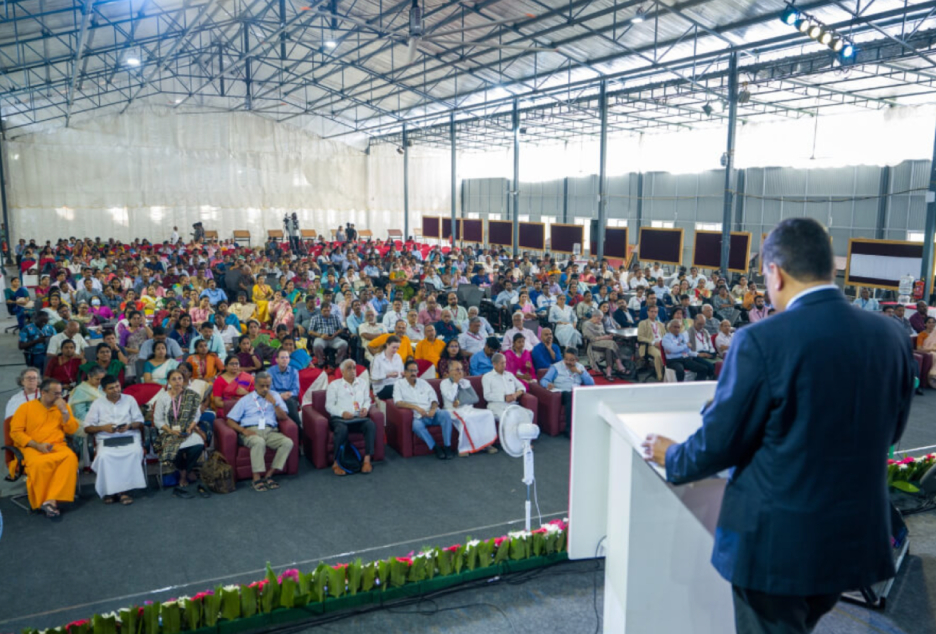
In 2024, Amrita Vishwa Vidyapeetham strengthened its SDG-aligned research strategy through ARISE 2024 (Amrita Research & Innovation Symposium for Excellence), a university-wide initiative that brought together over 500 faculty members across campuses. ARISE 2024 enabled collaborative priority-setting and informed the development of Amrita’s 2024–2027 research strategy, with a focus on cross-cutting, SDG-relevant themes including One Health, environmental sustainability, resilient communities, artificial intelligence for social good, inclusive education, and ecosystem restoration.
Between July and August 2024, Amrita Vishwa Vidyapeetham engaged with leading universities in the United States to strengthen SDG-aligned international collaboration. The engagements focused on advancing joint research, faculty and student exchange, community-focused initiatives, and the co-development of scalable sustainability solutions, strengthening long-term academic partnerships and global knowledge exchange.
University of Arizona
SDG 3,4,9,17
Immunobiology MS program, biotech, interdisciplinary medical research collaboration.
19 July 2024, Arizona. Key People: Dr. Nafees Ahmad.
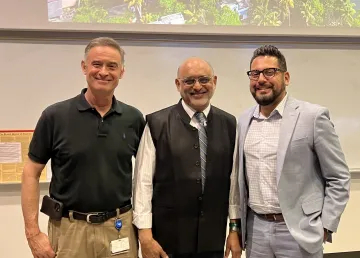
University of Wyoming
SDG 3,4,9,17
Faculty research exchange in chemistry, pharmacy, zoology, engineering; student recruitment for labs.
5 July 2024, Wyoming. Key People: Dr. Isadora Helfgott, Dr. Ramesh Sivanpillai.
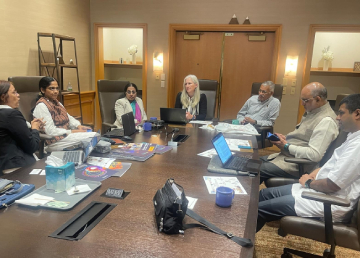
UC Irvine
SDG 6,3,9,11,4,17
Water-energy nexus, cyber-physical systems, social ecology, Live-in-Labs integration.
16 July 2024, Irvine. Key People: Prof. Khargonekar.
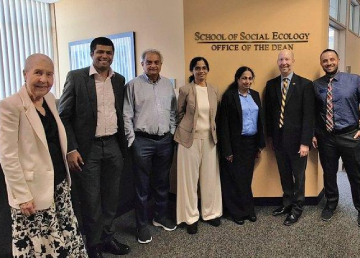
UC Riverside
SDG 4,9,11,8,17
Sustainability, agriculture, business pathways, double degrees, Live-in-Labs programs.
15 July 2024, Riverside. Key People: Prof. Marko Princevac.
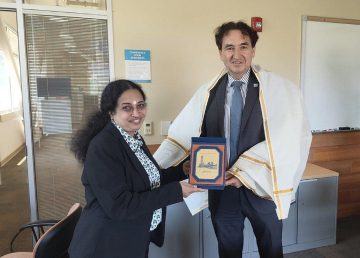
New Jersey Institute of Technology
SDG 6,9,3,7,12,17
Pollution research, biosensors, microfluidics, energy storage, joint centers & dual degrees.
7 Aug 2024, NJ. Key People: Dr. Somenath Mitra.
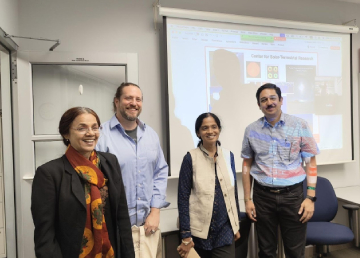
University of New Mexico
SDG 3,6,9,4,11,17
Geospatial research center, engineering, trauma health, joint symposiums & mobility programs.
19 July 2024, Albuquerque. Key People: Dr. Nicole Tami.
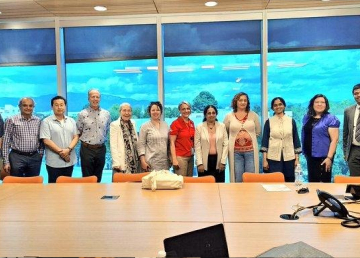
Northeastern University
SDG 9,4,7,3,17
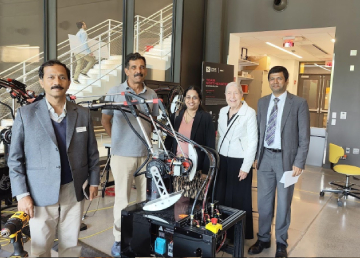
Robotics, renewable energy, AI, experiential learning, joint center & degree pathways.
1 Aug 2024, Boston. Key People: Dr. Rifat Siphai.
University of Massachusetts Boston
SDG 3,4,5,11,12,13,17
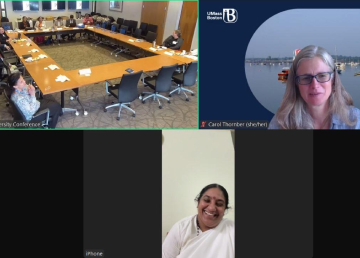
Public health, sustainability, women empowerment, circular economy, MoU & exchange programs.
2 Aug 2024, Boston. Key People: Chancellor Marcelo Suarez-Orozco, Provost Berger.
University at Buffalo
SDG 6,13,3,9,4,17
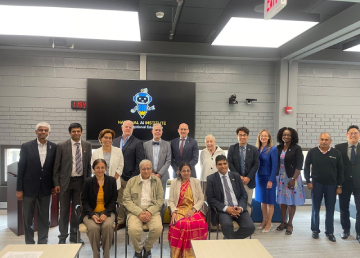
Environment, cybersecurity, One Health, ecosystem restoration, public health collaborations.
5 Aug 2024, Buffalo. Key People: Provost Scott Weber.
UC San Francesco
SDG 3,9,17
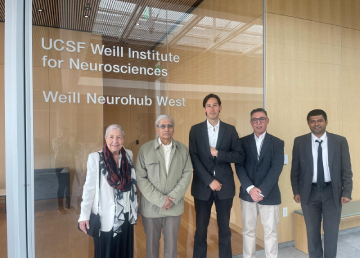
Neuroscience research, health diagnostics in low-resource settings, global health collaboration.
9 July 2024, San Francisco. Key People: Dr. VanLeeuwen.
Columbia University
SDG 6,3,13,12,9,17
Joint Water-Climate-Health Center, wastewater R&D, geospatial water systems, biotech & sanitation research.
6 Aug 2024, New York City. Key People: Dr. Kartik Chandran.

Indiana University
SDG 3,9,11,13,16,17
Community resilience, geospatial systems, public health, AI for social good, cybersecurity research.
9 Aug 2024, Indianapolis. Key People: Sharon Kandris, Karen Comer.
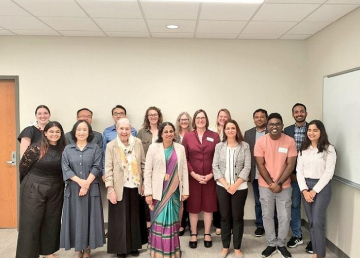
Case Western Reserve University
SDG 9,4,3,17
MoUs signed for dual degrees, engineering research, HPC, women-in-tech initiatives.
26 July 2024, Cleveland. Key People: Dr. Chris Sippel.
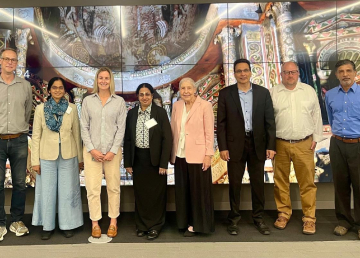
Lehigh University
SDG 3,4,9,17
Biomedical engineering, AI in healthcare, dual degrees, collaborative symposium.
5 Aug 2024, Pennsylvania. Key People: Dr. Cheryl Matherly.
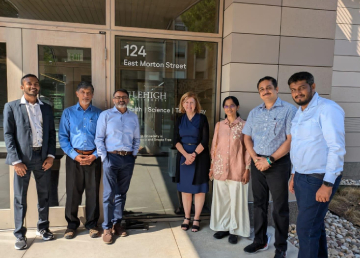
Harvard University
SDG 3,13,4,16,17
Climate clusters, global health, brain health, autism biomarkers, mental health research.
31 July 2024, Cambridge. Key People: Prof. Clooney, Dr. Clerisme.
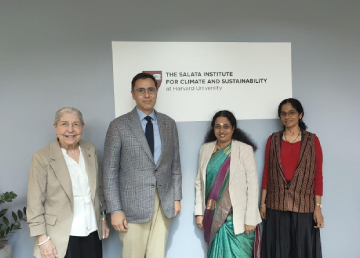
Penn State University
SDG 9,2,3,4,13,17
Smart sensors, food security, quantum computing, innovation programs.
25 July 2024, Pennsylvania. Key People: Prof. Saptarshi Das.
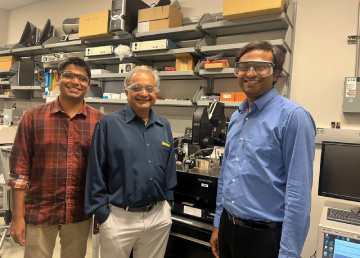
John Hopkins University
SDG 3,9,4,13,17
AI/ML, nanobiotech, peace engineering, climate security, dual degrees.
29 July 2024, Baltimore. Key People: Dr. Sri Sharma.
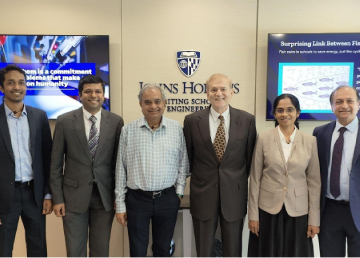
University of Southern California
SDG 9,3,11,4,17
AI for Science, autonomous systems, health engineering, humanitarian applications.
15 July 2024, Los Angeles. Key People: Raghu Raghavendra.
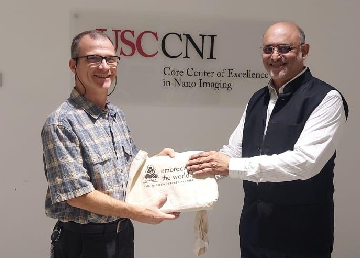
UC Davis
SDG 2,6,7,11,4,13,17
Agriculture, climate change, sustainable energy, DataLab research, joint degrees.
7 July 2024, Davis. Key People: Dr. Joanna Regulska.
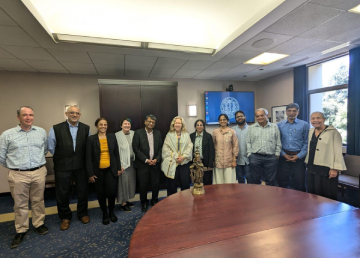
Washington college
SDG 14,15,5,2,11,4,17
Watersheds, food security, women empowerment, environmental justice.
29 July 2024, Maryland. Key People: Dr. Valerie Imbruce.
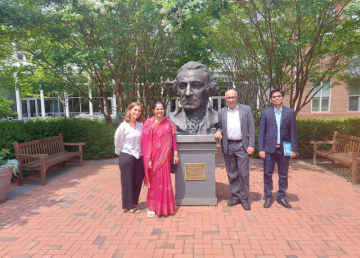
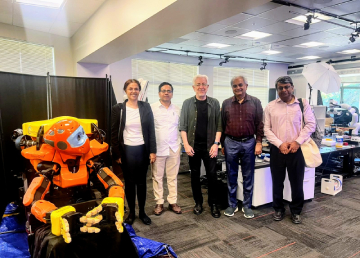
Stanford University
SDG 9,3,17,4
Medical robotics pilot, PhD mentoring, advanced robotics research.
10 July 2024, Stanford. Key People: Dr. Oussama Khatib.
In 2024, Amrita Vishwa Vidyapeetham expanded its international partnerships through new Memoranda of Understanding with leading global universities, strengthening SDG-focused collaboration. These MoUs support joint research, comparative analysis of sustainability approaches, and the exchange of methodologies, enabling partners to co-develop and refine transferable best practices for addressing the SDGs across diverse contexts.
| University | Country |
| University of Auckland | New Zealand |
| University of Burgundy | France |
| Grenoble INP – Institut d’Ingénierie et de Management | France |
| KU Leuven – Katholieke Universiteit Leuven | Belgium |
| Kathmandu University | Nepal |
| Yuan Ze University | Taiwan |
| Barsadshid e-Iranian Co. (BSI) | Iran |
| University of Leeds | UK |
| University College Dublin (UCD) | Ireland |
| University of Twente | Netherlands |
| University of Arizona | USA |
| University of Minnesota | USA |
| Case Western Reserve University | USA |
| Stanford University (Stanford SPARK Program) | USA |
| Széchenyi István University | Hungary |
| Kettering University | USA |
| University of Peradeniya | Sri Lanka |
| Pennsylvania State University (Penn State) | USA |
| Kenyatta University | Kenya |
| Northeastern University | USA |
| Firat University | Turkey |
| Hebrew University of Jerusalem | Israel |
| École Centrale de Nantes | France |
| University of New Mexico (UNM) | USA |
| Northern Illinois University (NIU) | USA |
| University of California, Davis (UC Davis) | USA |
| University at Buffalo (UB) | USA |
| Universitat Politècnica de Catalunya (UPC), Barcelona | Spain |
| Griffith University | Australia |
| Aalto University | Finland |
| Clemson University | USA |
| Western Sydney University | Australia |
| Université Clermont Auvergne | France |
| University of Trento | Italy |
| Universitat Politècnica de València (UPV) | Spain |
| University of Bath | UK |
| KTH Royal Institute of Technology | Sweden |
| Universitat Politècnica de Catalunya (UPC), ESEIAAT | Spain |
| University of Groningen | Netherlands |
| Rutgers University | USA |
| Colorado State University | USA |
| University of California, Riverside (UCR) | USA |
Under the Sustainable GeoCommunities (SGC) collaboration with the University of Minnesota, Amrita Vishwa Vidyapeetham jointly develops, tests, and refines evidence-based approaches to achieving SDG’s. By combining Amrita’s community-engaged Live-in-Labs model with the University of Minnesota’s expertise in geospatial technologies and data-driven analysis, the partnership co-creates scalable, community-centered solutions in areas such as clean water access, climate adaptation, waste management, and disaster risk reduction. Successful practices emerging from these collaborations are documented and shared across partner institutions, contributing to replicable SDG best practices beyond the university context.
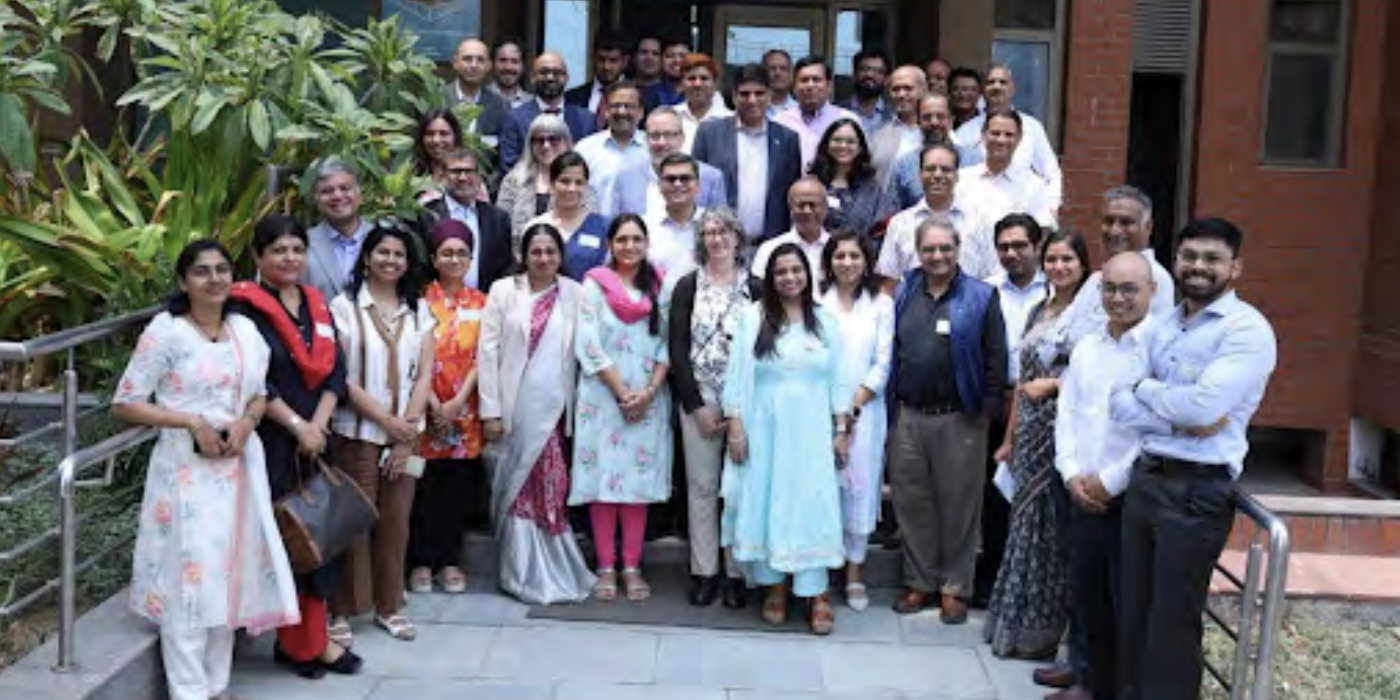
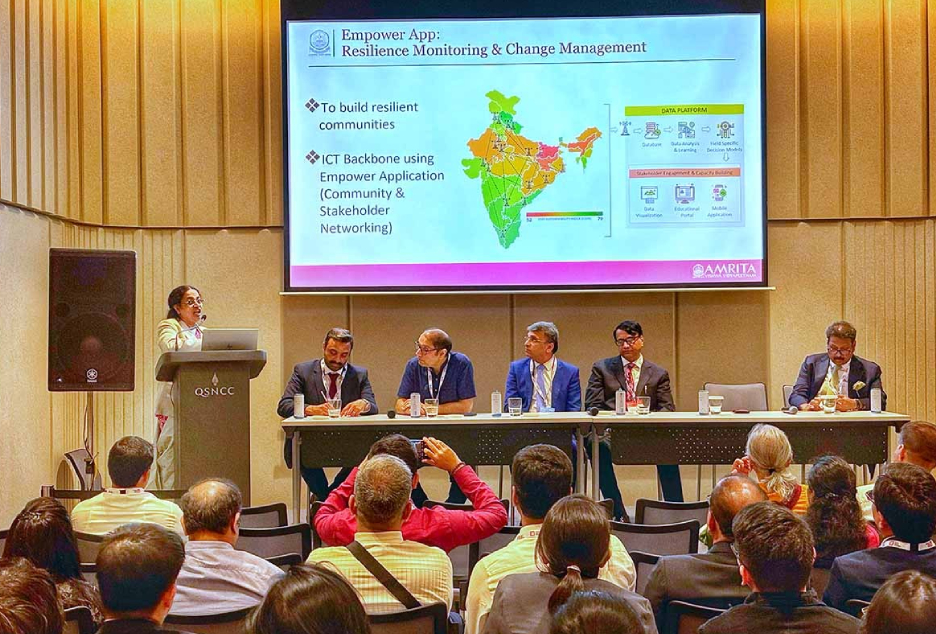
In June 2024, Amrita Vishwa Vidyapeetham participated in the Times Higher Education Global Sustainable Development Congress in Bangkok, engaging with over 2,000 institutions from 125 countries. Through expert panels and thematic sessions, Amrita shared and reviewed SDG best practices, contributing to the co-development of internationally informed, scalable approaches to advancing the UN Sustainable Development Goals.
In July 2024, Amrita Vishwa Vidyapeetham participated in the AYUDH Europe 20th Anniversary Summit in Germany, engaging with 400+ stakeholders from 20+ countries. Through its UNESCO Chair, Amrita showcased Live-in-Labs as a transferable best practice for community-led SDG implementation, strengthening international partnerships and comparative learning on effective SDG delivery.


At the UNESCO Intergovernmental Oceanographic Commission’s Second International Tsunami Symposium in Banda Aceh, Amrita Vishwa Vidyapeetham contributed to international dialogue on disaster resilience and SDG-aligned recovery, marking 20 years since the 2004 Indian Ocean tsunami. Through expert representation, Amrita showcased its community-led tsunami relief and rehabilitation initiatives as international best practices, while engaging in comparative exchange with global disaster-risk-reduction experts.
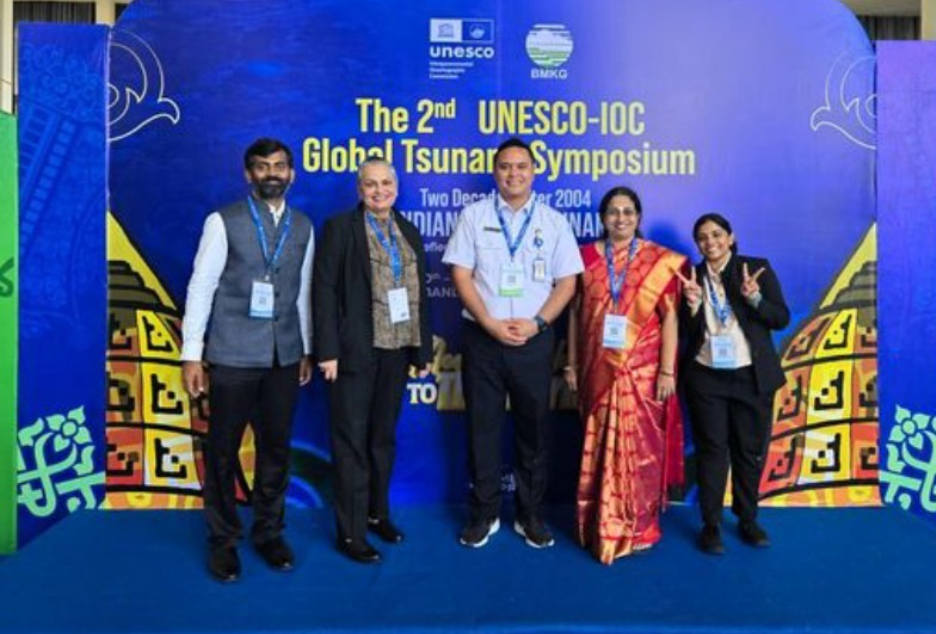
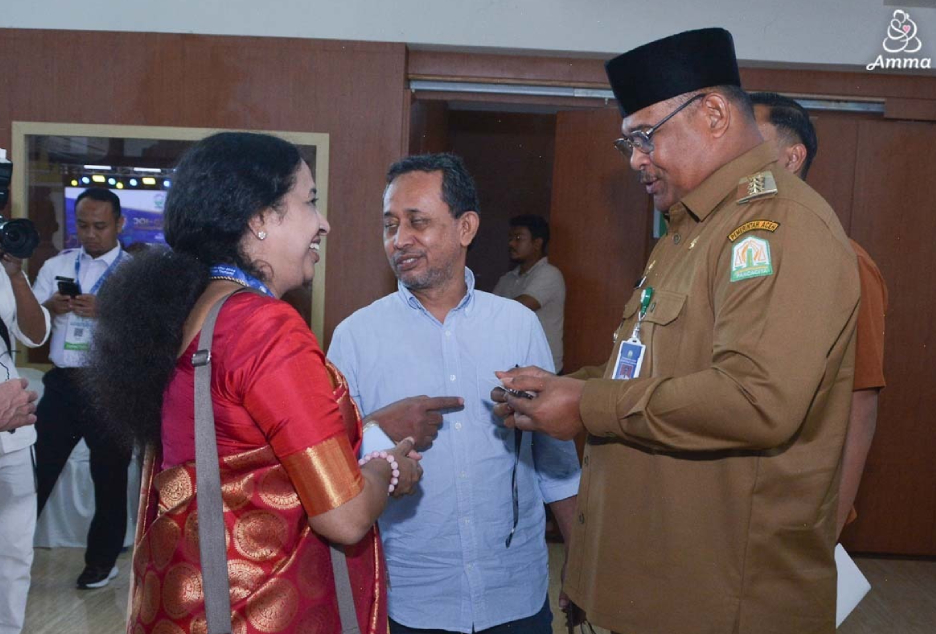
In December 2024, Amrita Vishwa Vidyapeetham hosted an international conference on tsunami risk reduction and community resilience, enabling comparative learning and multi-stakeholder collaboration on coastal disaster preparedness. The conference facilitated the exchange and co-development of best practices, advancing community-centred risk-reduction strategies aligned with the Sendai Framework, SDG 13, and SDG 11.
| Organization Name | Country |
| United Nations Educational, Scientific and Cultural Organization (UNESCO) | International (HQ: France) |
| United Nations Economic and Social Commission for Asia and the Pacific (UNESCAP) | Thailand (Regional), UN Agency |
| UNESCO Intergovernmental Oceanographic Commission (IOC) | International (HQ: France) |
| UNESCO-IOC Indian Ocean Tsunami Warning and Mitigation System Secretariat | Australia |
| United Nations Development Programme (UNDP) | International (HQ: USA) |
| National Disaster Management Authority (NDMA), Maldives | Maldives |
| Disaster Management Center, Sri Lanka | Sri Lanka |
| Mata Amritanandamayi Centre, Europe | Europe (Regional) |
| Kyoto University | Japan |
| Lund University | Sweden |
| Oxford Brookes University | United Kingdom |
| Royal Melbourne Institute of Technology (RMIT) | Australia |
| UNDRR – European Scientific and Technical Advisory Group (E-STAG) | Europe (UN Body) |
| Global Development Research Center (GDRC) | Japan |
| University College London (UCL) | United Kingdom |
| National Oceanic and Atmospheric Administration (NOAA), Pacific Tsunami Warning Center | United States |
| Universitas Muhammadiyah Yogyakarta | Indonesia |
| University of Maryland | United States |
| Environmental Systems Research Institute (ESRI) | United States |
| International Institute of Earthquake Engineering and Seismology (IIEES) | Iran |
| Adelaide Business School, University of Adelaide | Australia |
| Trust Fund for Tsunami Disaster and Climate Preparedness (UNESCAP) | Thailand (UN-managed fund) |
| Indian Ocean Tsunami Early Warning Systems Expert (Independent, based in Germany) | Germany |
| The Nature Conservancy | United States |
| University of Cambridge (Department of Zoology) | United Kingdom |