


At Amrita Vishwa Vidyapeetham, sustainability is deeply embedded in institutional practice, guiding innovative strategies for water conservation and management. Inspired by the Chancellor’s call to value every drop of water, the university has adopted a comprehensive water extraction policy that minimises dependence on underground freshwater sources while maximising the use of treated and reused water. In support of this approach, Amrita’s campuses are equipped with real-time monitoring systems that track the water cycle from extraction and treatment to distribution and end use. These efforts extend beyond campus boundaries to support over 30 local communities with 24/7 water supply, contributing to water-positive outcomes.
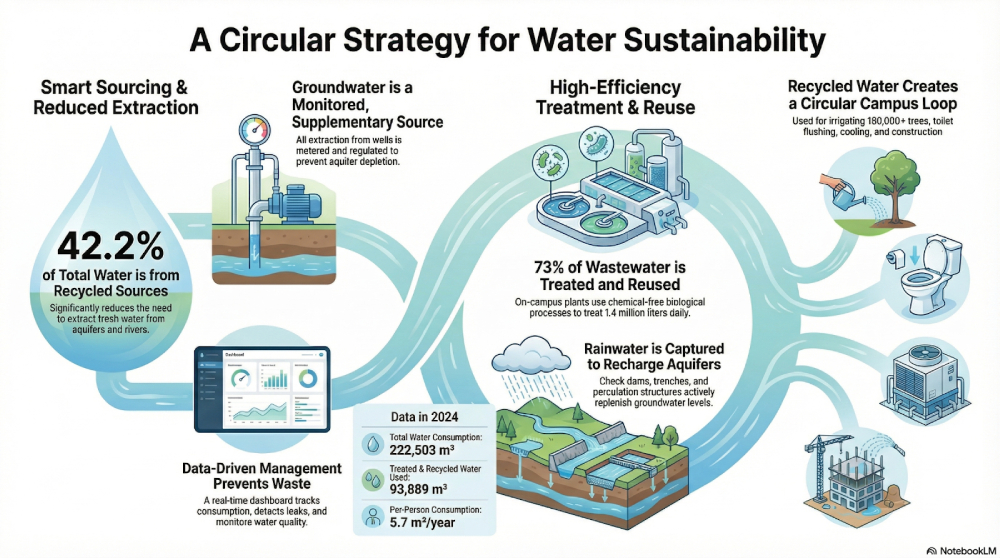
Amrita Vishwa Vidyapeetham follows a sustainable water extraction and reuse strategy that minimises dependence on freshwater aquifers, rivers, and municipal supplies. By combining controlled extraction, high wastewater reuse, and active groundwater recharge, the university ensures long-term water security across its campuses, in alignment with SDG 6.5: Integrated Water Resource Management.
A Zero Liquid Discharge (ZLD) policy is implemented across campuses, treating wastewater as a resource and rainwater as a reserve.
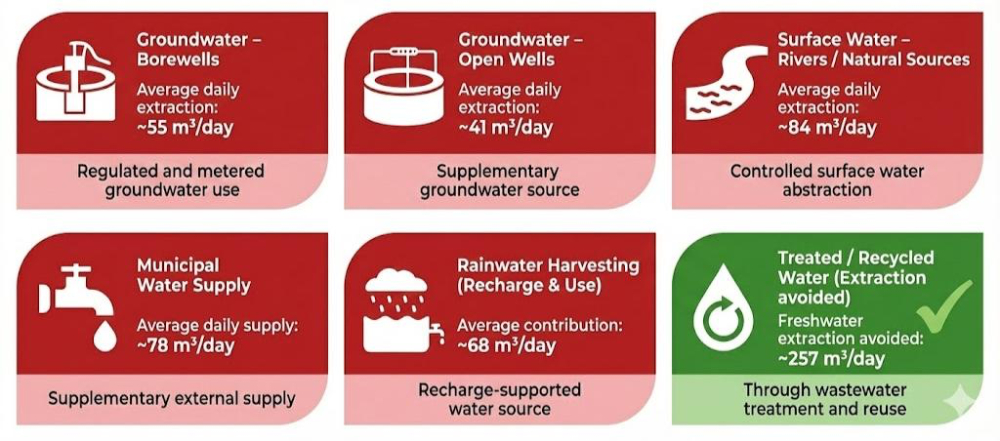
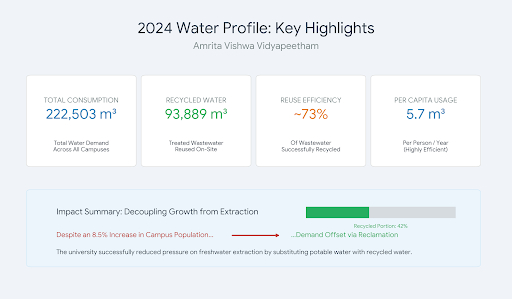
Despite an 8.5% increase in campus population, the university offset a significant share of demand through reclamation and reuse, reducing pressure on freshwater extraction.
The university operates decentralised Sewage Treatment Plants (STPs) with a combined capacity of 1.4 MLD, enabling large-scale reuse.
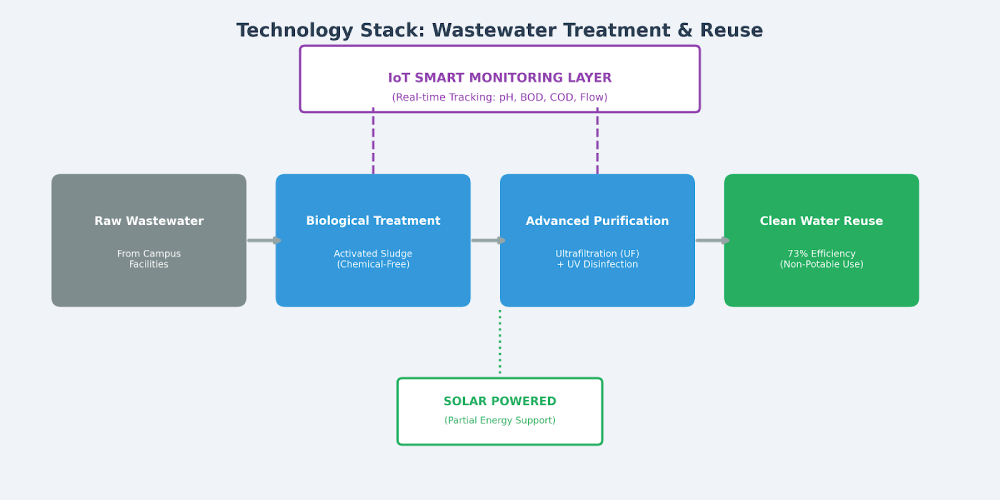
Key features include:
By 2024, approximately 73% of wastewater generated was treated and reused, supporting non-potable demands across campuses.
To balance extraction, Amrita has implemented extensive recharge mechanisms:
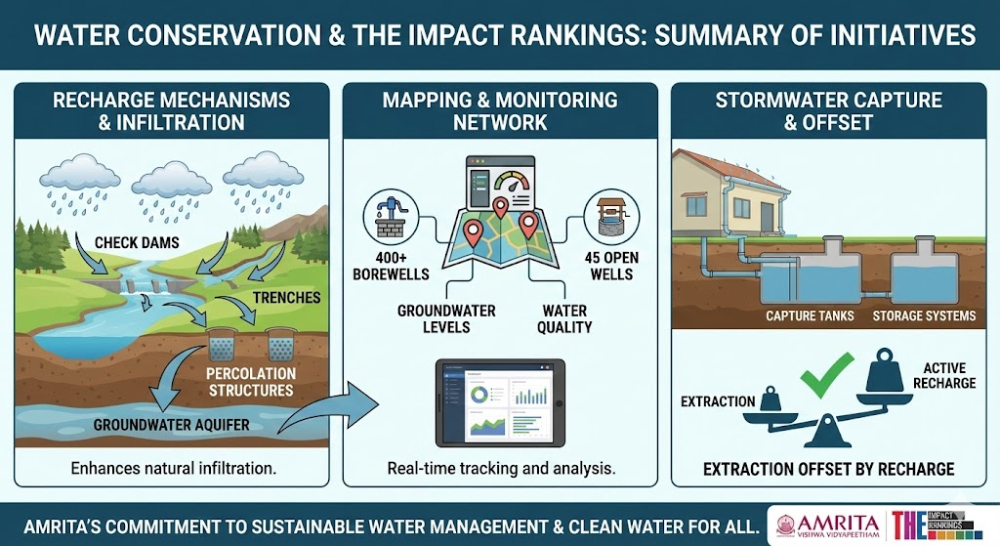
These measures ensure that groundwater extraction is offset by active recharge.
The Ecosphere Water Sustainability Dashboard integrates real-time data on:
This digital governance framework enables adaptive extraction management based on availability and seasonal conditions.
Instead of extracting fresh water for all needs, recycled water is used for:
This creates a circular water and nutrient loop, reducing both extraction and waste.
Amrita extends its approach off-campus through Jivamritam and Live-in-Labs® initiatives:
By 2024, these initiatives continued to support thousands of rural communities, reducing groundwater stress at the community level.
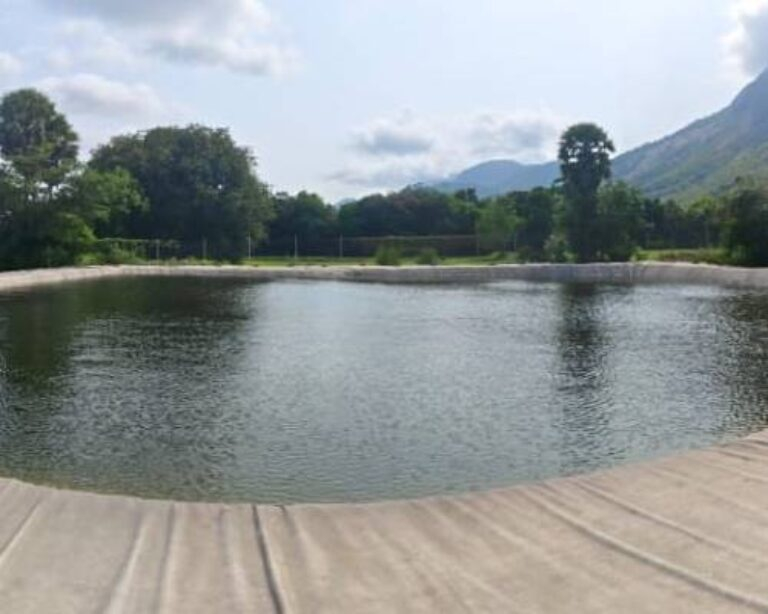
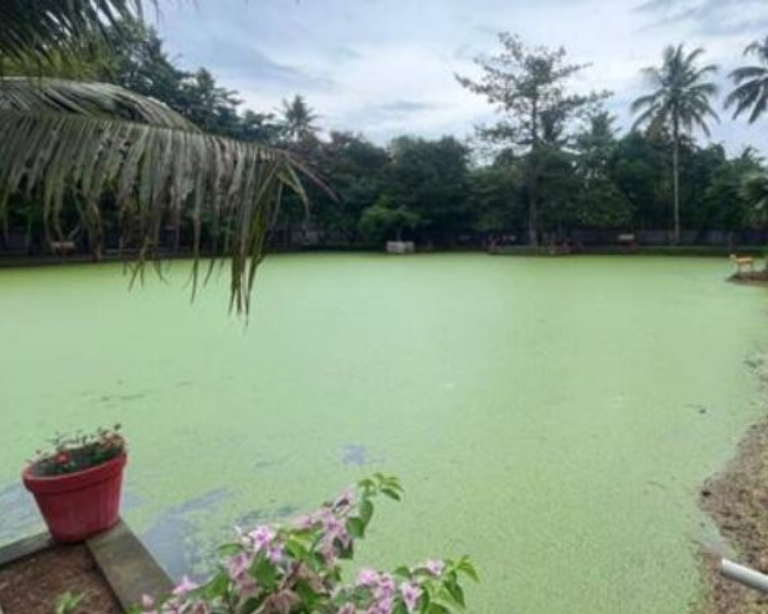
Last Updated: December 22nd, 2024
The university has implemented a “Zero Liquid Discharge” policy and integrates advanced technologies to minimize dependency on freshwater while maximizing reuse.
Executive Summary: 2024 Water Profile
Amrita Vishwa Vidyapeetham continued its strong alignment with UN SDG 6 (Clean Water and Sanitation). The university managed a total water consumption of 384,930 m³ across its campuses. Despite an 8.5% increase in campus population, the university successfully offset a significant portion of its demand through advanced reclamation technologies.

Key Trends Visualized:
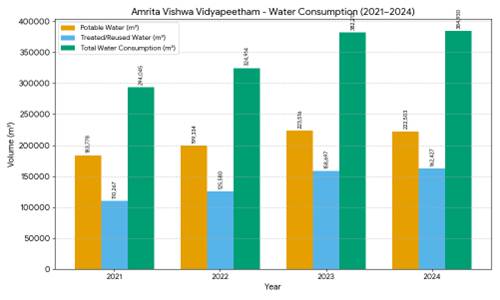
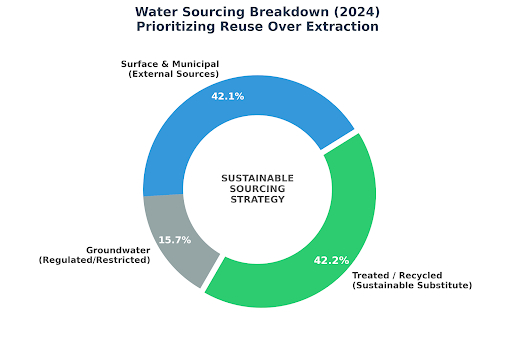
The university’s water sourcing strategy emphasizes reducing reliance on freshwater aquifers by substituting potable water with treated wastewater for non-potable applications.
| Source Category | 2024 Volume (m³) | Details |
| Potable Sources | 222,503 | Includes extraction from borewells and municipal mains7. Extraction is strictly monitored to prevent depletion. |
| Recycled Water | 162,427 | Treated wastewater reused for landscaping and flushing, reducing the need for fresh extraction888. |
| Total Consumption | 384,930 | Combined usage across all campuses9. |
The university maintains a “Zero Liquid Discharge” (ZLD) policy. In 2024, approximately 73% of the total wastewater generated was treated and reused.
Amrita employs an “Integrated Water Management Program” that combines IoT monitoring, biological treatment, and rainwater harvesting
Wastewater Treatment & Reuse (STP)
The university operates decentralized Sewage Treatment Plants (STPs) with a combined capacity of 1.4 Million Liters Per Day (MLD).
Rainwater Harvesting & Groundwater Recharge
To support the aquifers it extracts from, the university has implemented extensive recharge systems:
Smart Water Management (IoT)
The “Ecosphere” Water Sustainability Dashboard tracks consumption patterns across sectors:
Instead of extracting fresh water for all needs, the 162,427 m³ of recycled water was utilized for:
Coimbatore Campus
Amritapuri Campus
Mysore Campus
Amrita’s commitment extends beyond campus borders through the Jivamritam project and Live-in-Labs®.
Jivamritam Project
Village Adoption
In 2024, Amrita Vishwa Vidyapeetham successfully demonstrated that a large institution can decouple its growth from freshwater depletion. By treating wastewater as a resource and rainwater as a reserve, the university has created a circular water economy that protects local aquifers on and off campus.
Sources