The Department of Community Medicine at Amrita School of Medicine, Faridabad offers an exceptional blend of public health exposure, academic excellence, research training, and mentorship by experienced and nationally recognized faculty.
The department provides a structured, holistic, and competency-based Undergraduate and Post graduate training program that encompasses all domains of Community Medicine—epidemiology, biostatistics, communicable and non-communicable diseases, health promotion, environmental and occupational health, health management, health policy, and primary healthcare delivery. The program is designed to equip students with the skills needed to function as effective public health specialists, academicians, epidemiologists, and leaders in health systems.
Our faculty comprises highly trained public health professionals and academicians who have served or trained at premier national institutions and government health programs, bringing rich field, teaching, and research experience. The department is actively involved in community-based teaching, field practice area management, and collaborative public health initiatives with government and private sectors.
In addition to strong academic training, the department fosters a research-oriented culture, encouraging residents to undertake high-impact epidemiological studies, program evaluations, and operational research relevant to national and regional health priorities. Faculty mentorship ensures that students evolve not only as competent community physicians but also as public health scientists and health-system leaders.
The department follows a multidisciplinary and integrative approach, with the vision of preparing community medicine specialists who are academically sound, skilled in data-driven decision-making, passionate about innovation, and committed to translating research into effective health policy and community-level interventions.
The Department of Community Medicine at Amrita School of Medicine, Faridabad, plays a pivotal role in public health education, community-oriented clinical services, and population-based research. The department is deeply engaged in strengthening primary healthcare, disease prevention, and health promotion at the community level.
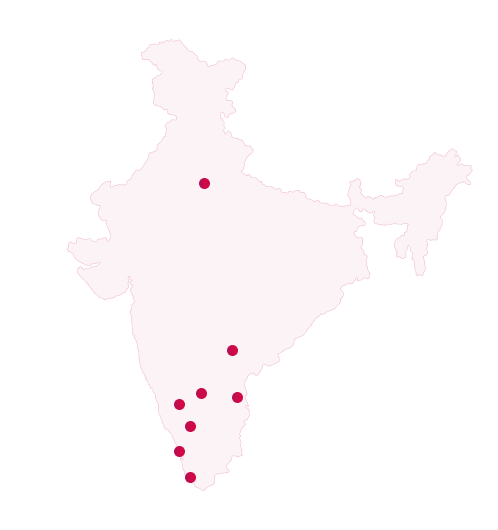
As part of one of India’s largest quaternary care academic hospitals with an extensive field practice network, postgraduate residents gain exposure to a broad and diverse spectrum of community health settings, including:

The department is supported by well-established field practice areas, a robust epidemiology and data analysis unit, and modern teaching facilities that ensure immersive, practical, and service-oriented learning.
This comprehensive setup equips postgraduate residents to become skilled community physicians, epidemiologists, researchers, and public health leaders capable of addressing the evolving health needs of the population.
Amrita Hospital, Faridabad, is a 2600+ bed state-of-the-art quaternary care centre, offering an ideal environment for comprehensive public health and community medicine training. The Department of Community Medicine benefits from this vast clinical and academic ecosystem, supplemented by strong field-level infrastructure.
Key infrastructure and facilities include:
This integrated infrastructure empowers postgraduate trainees to gain strong clinical-community interface skills, program management experience, and research competence essential for a successful career in Community Medicine.

Professor & Head
Professor
Associate Professor
Assistant Professor – Biostatistics
Assistant Professor
Assistant Professor
Assistant Professor
For a prospective MD (Community Medicine) candidate, the Department of Community Medicine at Amrita Hospital & Amrita School of Medicine, Faridabad, offers a rich blend of rigorous academics, extensive field exposure, research excellence, and mentorship rooted in national public health experience.

Residents in MD Community Medicine at Amrita are trained to become:
Whether aiming for careers in academics, national/international public health organizations (WHO, UNICEF, UNDP, ICMR), health policy, epidemiology units, administration, or global public health fellowships, Amrita prepares its MD Community Medicine graduates for excellence.
Get latest updates & announcements from this school in your inbox