

Amrita Vishwa Vidyapeetham advances the Sustainable Development Goals (SDGs) through structured, policy-oriented partnerships with regional NGOs, civil society organisations, and government bodies, enabling evidence-based SDG planning, implementation, and adaptive governance. These partnerships go beyond service delivery to actively inform policy design, strengthen institutional frameworks, and translate community evidence into actionable SDG strategies at regional, national, and international levels.

Civil 20 (C20) and G20 Policy Engagement
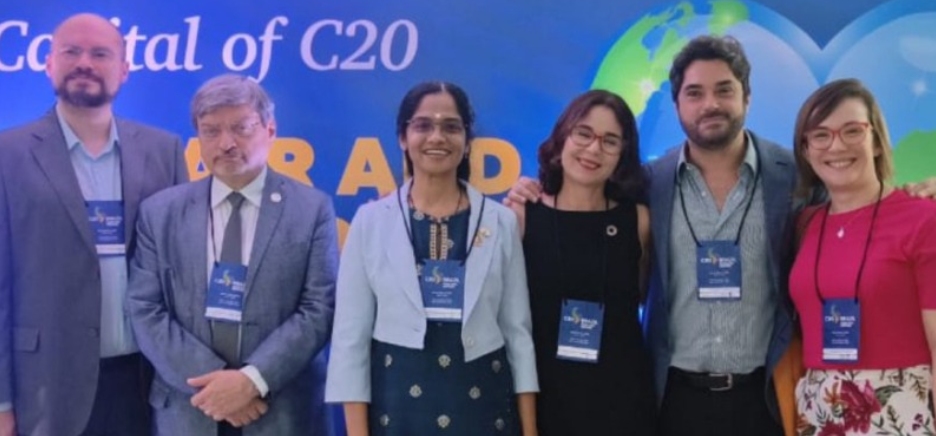
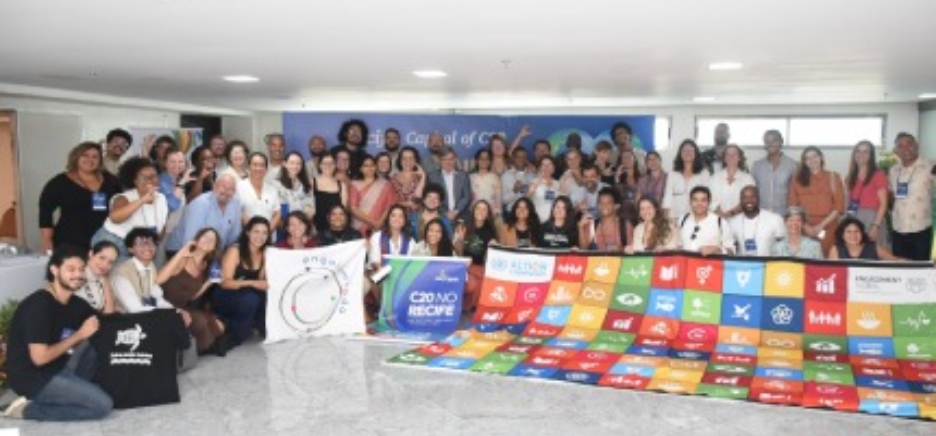
In 2024, Amrita played a leadership role in Civil 20 (C20) international policy processes, building upon its stewardship during C20 India 2023, which laid the foundation for C20 Brazil 2024. Amrita faculty participated in the C20 Brazil Inception Meeting and served on international advisory platforms, contributing policy frameworks, methodologies, and evidence-driven recommendations developed through extensive NGO and community consultations.
Through 16 thematic working groups, Amrita facilitated policy dialogues on climate justice, resilient communities, education, digital transformation, health, gender equality, and democratic governance, ensuring that civil society and community perspectives were systematically integrated into SDG policy recommendations submitted to the G20 process.
CSO’s
Countries
| NGO Name | Field of Work | Relevant SDGs |
| Team Everest | Education, community support | SDG 4 (Quality Education), SDG 10 (Reduced Inequality) |
| Akshara Foundation | Primary education for underprivileged children | SDG 4 (Quality Education) |
| Barefoot College | Skill development, rural empowerment | SDG 8 (Decent Work), SDG 10 (Reduced Inequality) |
| Guria India | Anti-human trafficking, women’s rights | SDG 5 (Gender Equality), SDG 16 (Peace and Justice) |
| Sankalp Foundation | Healthcare, skill development | SDG 3 (Good Health), SDG 8 (Decent Work) |
| Centre for Social Research (CSR) | Gender equality, women’s rights | SDG 5 (Gender Equality) |
| Navjeevan Trust | Disability rights, empowerment | SDG 10 (Reduced Inequality) |
| Arpan | Child abuse prevention, support | SDG 3 (Good Health), SDG 16 (Peace and Justice) |
| Chirag | Health, education in rural areas | SDG 3 (Good Health), SDG 4 (Quality Education) |
| Deepalaya | Education, healthcare for underprivileged | SDG 3 (Good Health), SDG 4 (Quality Education) |
| The Blue Ribbon Movement | Youth leadership, civic engagement | SDG 16 (Peace and Justice), SDG 10 (Reduced Inequality) |
| Aarohi | Sustainable development, rural Uttarakhand | SDG 11 (Sustainable Cities), SDG 15 (Life on Land) |
| SNEHA | Women’s, children’s health and nutrition | SDG 3 (Good Health), SDG 5 (Gender Equality) |
| Sakhi Trust | Women’s empowerment and health | SDG 3 (Good Health), SDG 5 (Gender Equality) |
| Shikshan Gram | Education, shelter for orphaned children | SDG 1 (No Poverty), SDG 4 (Quality Education) |
| Goonj | Resource mobilization, rural development | SDG 10 (Reduced Inequality), SDG 11 (Sustainable Cities) |
| Aavishkaar | Science and tech education in rural areas | SDG 4 (Quality Education), SDG 8 (Decent Work) |
| PRADAN | Rural development, livelihood enhancement | SDG 8 (Decent Work), SDG 1 (No Poverty) |
| Kalap Trust | Community development, Uttarakhand | SDG 11 (Sustainable Cities), SDG 15 (Life on Land) |
| Vanangana | Women’s empowerment, rights | SDG 5 (Gender Equality) |
| Apnalaya | Urban slum support, health, and education | SDG 3 (Good Health), SDG 10 (Reduced Inequality) |
| Salaam Baalak Trust | Shelter and support for street children | SDG 1 (No Poverty), SDG 16 (Peace and Justice) |
| Pratham | Children’s education | SDG 4 (Quality Education) |
| Udayan Care | Support for orphans, women empowerment | SDG 5 (Gender Equality), SDG 10 (Reduced Inequality) |
| Bhumi | Education, skill development for youth | SDG 4 (Quality Education), SDG 8 (Decent Work) |
| Yuva Unstoppable | Sanitation, clean drinking water in schools | SDG 6 (Clean Water), SDG 4 (Quality Education) |
| Snehi | Mental health awareness | SDG 3 (Good Health) |
| Childline India Foundation | Child support, helpline | SDG 16 (Peace and Justice) |
| Lend a Hand India | Skill development, rural education | SDG 4 (Quality Education), SDG 8 (Decent Work) |
| Bal Utsav | School transformation, quality education | SDG 4 (Quality Education) |
| Vidya India | Women empowerment, education | SDG 5 (Gender Equality), SDG 4 (Quality Education) |
| Prayas | Child rights, youth development | SDG 16 (Peace and Justice) |
| Seva Mandir | Rural development, education | SDG 1 (No Poverty), SDG 4 (Quality Education) |
| Parinaam Foundation | Microfinance, health support | SDG 1 (No Poverty), SDG 3 (Good Health) |
| The Ant | Livelihood support, community development | SDG 8 (Decent Work), SDG 11 (Sustainable Cities) |
| Asha for Education | Education for underprivileged children | SDG 4 (Quality Education) |
| Sarthak Educational Trust | Disability support and training | SDG 10 (Reduced Inequality) |
| Milaap | Crowdfunding for social causes | SDG 1 (No Poverty), SDG 10 (Reduced Inequality) |
| Srujna | Empowerment for women in need | SDG 5 (Gender Equality), SDG 8 (Decent Work) |
| Azad Foundation | Women’s skill development | SDG 5 (Gender Equality), SDG 8 (Decent Work) |
| Rang De | Low-interest loans for entrepreneurs | SDG 8 (Decent Work), SDG 10 (Reduced Inequality) |
| Muskaan | Community development, women empowerment | SDG 5 (Gender Equality), SDG 10 (Reduced Inequality) |
| Hunnarshala Foundation | Sustainable housing solutions | SDG 11 (Sustainable Cities) |
| Toybank | Play-based learning for children | SDG 4 (Quality Education), SDG 10 (Reduced Inequality) |
| Naz Foundation | Health and empowerment of marginalized communities | SDG 3 (Good Health), SDG 10 (Reduced Inequality) |
| Myna Mahila Foundation | Women’s health and hygiene | SDG 3 (Good Health), SDG 5 (Gender Equality) |
| Atma | Capacity building for NGOs | SDG 17 (Partnerships for the Goals) |
| Global March | Against child labor and trafficking | SDG 8 (Decent Work), SDG 16 (Peace and Justice) |
| Development Alternatives | Environment, sustainable development | SDG 13 (Climate Action), SDG 11 (Sustainable Cities) |
| Manzil | Education, life skills for youth | SDG 4 (Quality Education) |
Amrita Vishwa Vidyapeetham collaborates with over 50 civil society organisations across more than 20 countriesthrough the SustIN network, operating under the UNESCO Chair on Experiential Learning for Sustainable Innovation and Development, to support SDG-aligned policy development, advisory processes, and implementation frameworks. These partnerships enable the co-creation of solutions, field-level validation of SDG policy approaches, and structured feedback loops between communities, civil society, and policymakers.
The NGO collaborations span critical SDG domains including education, health, gender equality, livelihoods, climate action, water and sanitation, disability inclusion, child protection, and urban resilience, ensuring that SDG policy strategies are evidence-based and grounded in lived community realities.
Amrita has established formal Memoranda of Understanding (MoUs) with regional and international NGOs to institutionalise long-term collaboration on SDG research, capacity building, and policy translation. These MoUs support joint pilot projects, data collection, knowledge dissemination, and policy advisory functions, strengthening the durability and impact of SDG interventions.
Through partnerships with organisations such as CAN South Asia, Vasudha Foundation, WOTR, Gram Vikas, Energy Swaraj Foundation, and the Global Peace Foundation, Amrita contributes to regional SDG implementation frameworks, particularly in areas of climate resilience, water governance, renewable energy, rural livelihoods, and social inclusion.


Amrita works closely with national and state governments to support SDG policy formulation, adaptive strategies, and implementation frameworks. Collaborations with ministries including Environment, Jal Shakti, Health, Education, Women and Child Development, Social Justice, Agriculture, Electronics & IT, and Labour & Employment focus on:
Through partnerships with policy institutions such as CRISP, Amrita contributes to designing, redesigning, and evaluating public schemes, ensuring alignment with national SDG priorities.
| Organization | Area of Collaboration | Relevant SDGs |
| Center for Research in Schemes and Policies (CRISP) | Identify policy implementation gaps and strengthen social data sciences. CRISP, founded by civil servants with over three decades of experience, works directly with central and state governments to help design, redesign, and implement better schemes and policies. | SDG 13, SDG 14, SDG 15 |
| Ministry | Collaborations | Relevant SDGs |
| Ministry of Environment, Forest and Climate Change | Policies for ecosystem restoration, biodiversity protection, and coastal conservation. Promoting circular economy and sustainable practices for emission reduction. Disaster management frameworks for climate resilience. | SDG 13, SDG 14, SDG 15 |
| Ministry of Jal Shakti | Policies for integrated water management and climate-resilient infrastructure. Ensuring access to clean water and sanitation. Capacity-building for water conservation at community levels. | SDG 6, SDG 12 |
| Ministry of Health and Family Welfare | Expanding access to affordable healthcare. National strategies for mental health and disease prevention. Promoting “One Health” addressing human, animal, and environmental health interlinkages. | SDG 3 |
| Ministry of Education | Inclusive, human-centered education with a focus on sustainability. Promoting skill development and indigenous knowledge systems. Developing digital literacy and online education platforms. | SDG 4, SDG 10 |
| Ministry of Women and Child Development | Policies for safety and empowerment of women and girls. Mental health support and gender-responsive programs. Inclusion of women in decision-making and economic empowerment. | SDG 5, SDG 8 |
| Ministry of Social Justice and Empowerment | Frameworks for social protection of marginalized groups, including LGBTQIA+ and indigenous communities. Accessibility initiatives for education and employment. Equal opportunities in the workplace. | SDG 10, SDG 16 |
| Ministry of Agriculture and Farmers Welfare | Promotion of agroecology and climate-resilient agricultural practices. Knowledge transfer for sustainable farming. Incentives to reduce food waste and resource-efficient production. | SDG 2, SDG 12 |
| Ministry of Electronics and Information Technology | Bridging the digital divide. Promoting accessible digital infrastructure. Cybersecurity frameworks and ethical AI guidelines. Public digital platforms for transparency and citizen participation. | SDG 9, SDG 16 |
| Ministry of Labour and Employment | Expanding vocational training for underserved populations. Promoting just and equitable workplace policies. | SDG 8, SDG 10 |
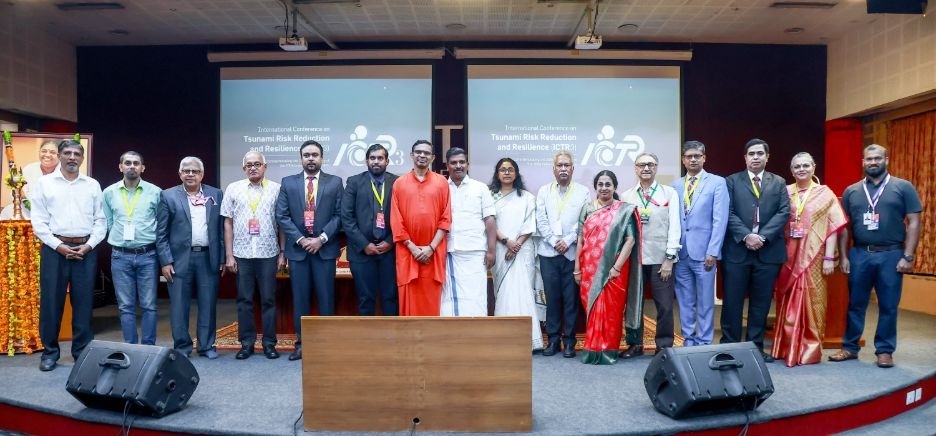
In December 2024, Amrita convened the International Conference on Tsunami Risk Reduction and Community Resilience, marking 20 years since the 2004 Indian Ocean Tsunami. The conference functioned as a policy and knowledge-exchange platform, bringing together government agencies, UN bodies, scientific institutions, NGOs, and coastal community representatives.
The deliberations focused on long-term displacement, coastal erosion, livelihood recovery, early-warning systems, and community resilience, contributing to policy dialogue aligned with the Sendai Framework, SDG 11 (Sustainable Cities and Communities), and SDG 13 (Climate Action). Outcomes from the conference strengthened regional cooperation and policy coordination across the Indian Ocean Rim.
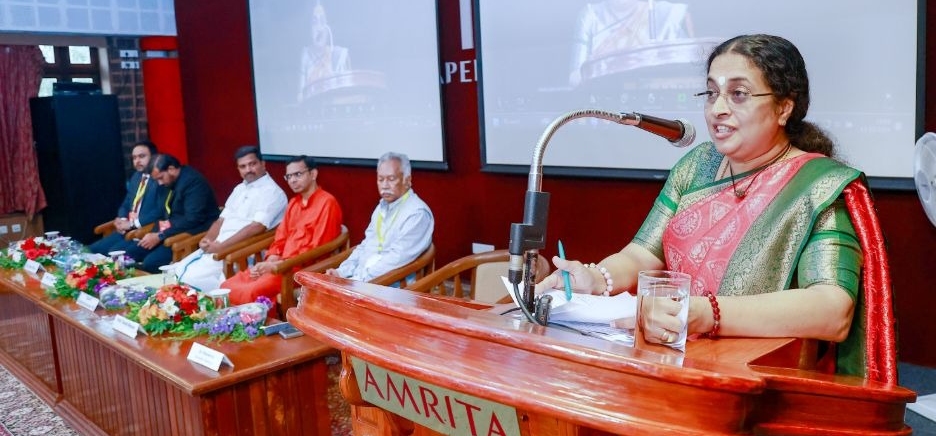
In 2024, Amrita participated in multi-country SDG policy dialogues, including the SDG Global Conversation hosted by Indiana University, alongside universities and community organisations from India, the United States, and Africa. Amrita contributed evidence from its Live-in-Labs® programme, demonstrating how community-based models inform SDG policy adaptation, particularly for SDG 3, SDG 4, and SDG 17.
Amrita’s partnerships have resulted in direct policy influence, including:
These outcomes reflect Amrita’s role as a bridge between communities, civil society, and government, ensuring that SDG policies are inclusive, evidence-driven, and responsive to ground realities.