Back close

Low Carbon Energy Tracking 2024

Overview

Amrita Vishwa Vidyapeetham undertakes systematic, university-wide measurement of low-carbon energy use across its campuses as part of its institutional commitment to climate action and sustainability. Energy consumption and low-carbon energy performance are tracked through a combination of university-level energy accounting, campus-level smart metering, and real-time digital dashboards, aligned with global best practices in higher-education climate reporting.

For global benchmarking and institutional reporting, Amrita reports the following metrics covering all campuses and all energy sources.

  • Total university-wide energy consumption: 244,800 GJ
  • Total energy used from low-carbon sources: 136,221 GJ

Operational low-carbon energy tracking is conducted through electricity-source data measured in kWh at campus level, including grid electricity, diesel-generated backup power, and on-site renewable energy. These measurements are supported by real-time monitoring systems that enable performance assessment, transparency, and data-driven decision-making.

University- Wide Measurement of Energy Use

Amrita Vishwa Vidyapeetham undertakes institution-wide measurement of total energy consumption across all its campuses, covering academic buildings, hostels, laboratories, utilities, and shared infrastructure.

University- Wide Energy Summary (2024)

Energy CategoryEnergy Use (GJ)
Total Energy Consumption (All Sources)244,800 GJ
Energy from Low-Carbon Sources136,221 GJ
Share of Low-Carbon Energy55.6% (~)

This consolidated accounting represents all campuses and all energy sources and forms the basis for statutory reporting, global benchmarking, and strategic climate planning.

To support granular monitoring of the low-carbon transition, Amrita has implemented detailed source-wise electricity tracking at individual campuses using advanced metering and real-time monitoring systems. These campus-level datasets function as operational pilots and representative measurement units, informing university-wide renewable-energy expansion and decarbonisation strategies.

Campus-Level Electricity Consumption by Source

(Representative Smart-Metered Campus)

Electricity consumption at Amrita University is measured annually and disaggregated by energy source, including grid electricity, diesel-generated backup power, and on-site renewable energy (solar). Time-series data is maintained to track trends, efficiency improvements, and progress towards low-carbon energy use.

Source of ElectricityUnit2021 (GJ)2022 (GJ)2023 (GJ)2024 (GJ )
Grid Electricity (State Electricity Board)GJ/year45,30881,01999,918107,962
Diesel Generator PowerGJ/year1,3301,091800617
Renewable Energy (Solar – Low Carbon)GJ/year57,95657,95672,466136,221

This campus-level dataset demonstrates a clear reduction in diesel-based electricity and a progressive increase in renewable energy generation, providing verified evidence of Amrita’s low-carbon energy transition in practice. Insights from such monitored campuses are used to inform scaling strategies across the wider university system.

Measurement of Low-Carbon Energy (Renewables) – Campus-Level Operational Tracking

Amrita Vishwa Vidyapeetham has integrated on-site renewable energy, primarily solar, into campus operations and tracks renewable electricity generation quantitatively at each campus using smart metering and real-time monitoring systems.

  • At a monitored representative campus, renewable electricity generation increased from 3.28 lakh kWh/year (2021) to 7.71 lakh kWh/year (2024), reflecting steady expansion of low-carbon energy infrastructure and improved system utilisation.
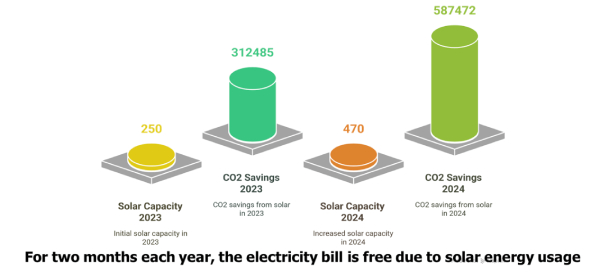
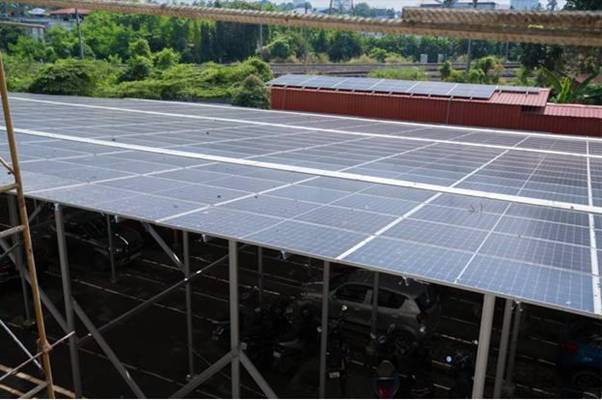
  • Installed solar capacity at this campus expanded from 250 kW (2023) to 470 kW (2024). Solar energy generated is used to power academic buildings, hostels, utilities, lighting systems, and shared campus infrastructure, contributing directly to reduced reliance on fossil-fuel-based electricity.

These campus-level measurements serve as operational pilots and verified datasets that inform university-wide renewable-energy planning and scaling strategies. Campus-level renewable generation data is reported separately from consolidated university-wide energy consumption totals, ensuring transparency and methodological integrity in institutional reporting.

Solar Capacity Expansion and CO₂ Emission Savings

(Representative Campus-Level Data)
YearInstalled Solar Capacity (kW)CO₂ Emission Savings (kg)
2023250312,485
2024470587,472

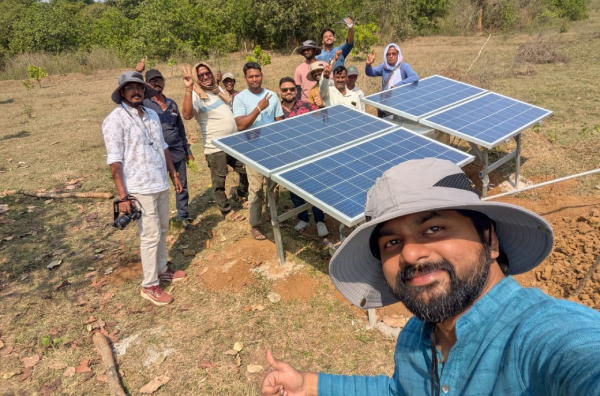
In addition to on-campus generation, Amrita has supported solar deployments in villages, schools, and community facilities, generating 19.7 lakh units of clean electricity. These community systems are clearly reported separately and are not included in institutional energy totals, ensuring transparency and methodological integrity.
Reduction in Fossil-Fuel Dependence – Campus-Level Operational Measurement

At a monitored representative Amrita campus, diesel-generated electricity use is measured annually as part of operational low-carbon energy tracking.

Diesel electricity consumption at this campus declined from 1130 GJ (2021) to 617 GJ(2024), demonstrating a sustained reduction in reliance on carbon-intensive backup power.

This reduction reflects:

  • Increased on-site renewable (solar) electricity generation
  • Improved energy efficiency measures
  • Reduced dependence on diesel generators for routine power needs

Baseline dependency on diesel-generated power at the monitored campus has been reduced through renewable-energy integration, daylight-optimised campus planning, and shared-space infrastructure, which collectively lower overall electricity demand.

Power-Factor and Energy-Efficiency Cost Savings – Campus-Level Evidence

The following cost-savings data relates to power-factor correction and efficient electrical distribution implemented at a monitored campus, and is reported as operational evidence of energy-efficiency outcomes, not as consolidated university-wide financial data.

Campus-Level Power-Factor Savings
YearCost Saving (Rs / Year)
202229,56,500
202336,95,625
202469,47,775
Total (3 years)1,35,99,900

These savings demonstrate the financial and operational benefits of improved electrical distribution efficiency, complementing reductions in diesel use and supporting the campus-level low-carbon transition.

Carbon Impact and Performance Monitoring

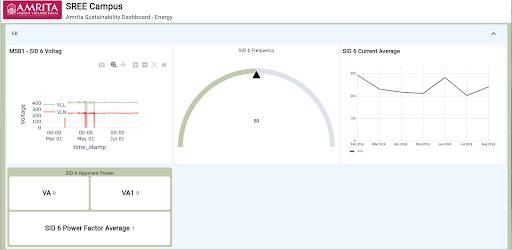
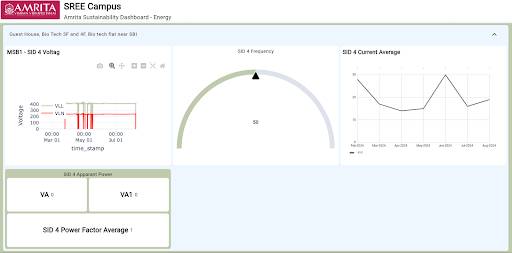
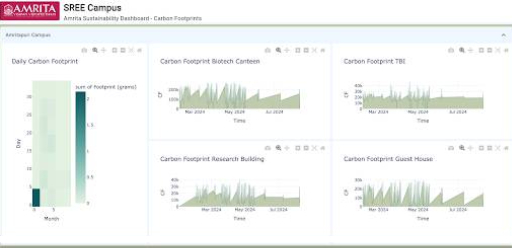
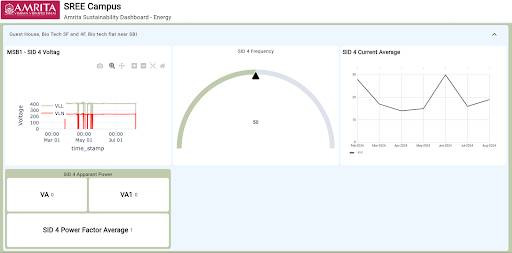
Low-carbon energy use and associated emissions reductions are tracked using Amrita’s SREE Campus Dashboard, an advanced sustainability monitoring platform that integrates:
  • Real-time energy consumption data
  • Solar generation metrics
  • Source-wise emission factors
  • Building- and campus-level performance indicators

At a monitored representative campus, solar energy deployment in 2024 resulted in over 5.87 lakh kg of CO₂ emissions avoided, with cumulative reductions increasing year-on-year. The dashboard supports transparent monitoring, operational optimisation, and institutional reporting, while also serving as a teaching and research tool for students and faculty.
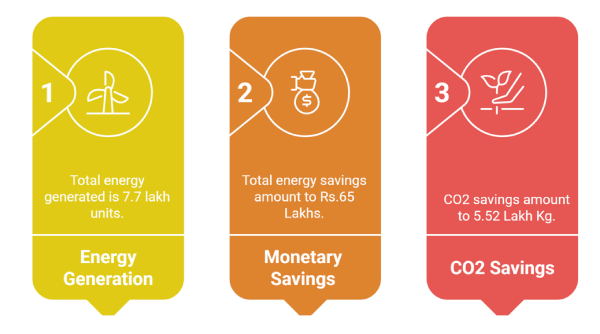
Campus-level solar energy generation, cost savings, and CO₂ emissions reduction
(representative Amrita campus, 2024)

Through institution-wide measurement, quantified tracking of renewable energy, documented reduction in fossil-fuel use, Amrita Vishwa Vidyapeetham demonstrates a comprehensive approach to measuring low-carbon energy use across the university. This integrated system supports informed decision-making, continuous improvement, and alignment with international best practices for climate action in higher education.
Low Carbon Energy Tracking

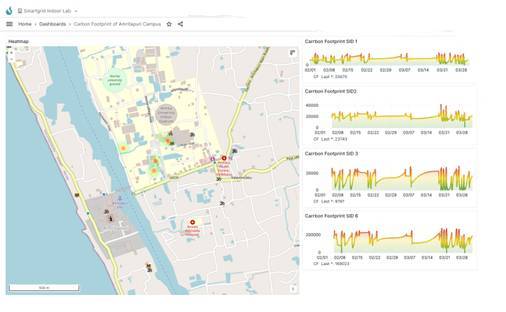
Amrita Vishwa Vidyapeetham is among the early adopters in India to implement real-time campus-wide carbon footprint tracking, reinforcing its institutional commitment to low-carbon operations and sustainability. In alignment with global climate priorities and the Sustainable Development Goals (SDGs), the university systematically monitors carbon emissions associated with energy use across its campuses.

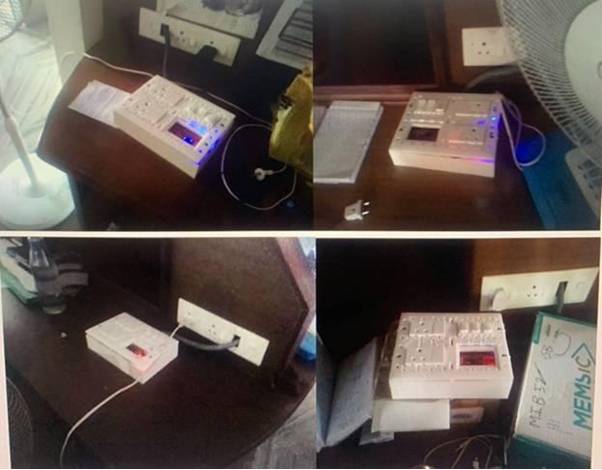
All major campus buildings are equipped with real-time carbon tracking dashboards that display emissions data derived from energy consumption patterns. These dashboards are supported by advanced sensing and monitoring technologies, including MEMS-based sensors, and provide continuous visibility of carbon performance at the building level. The system enables transparent monitoring of low-carbon energy use, supports operational decision-making, and facilitates ongoing optimisation of energy systems.

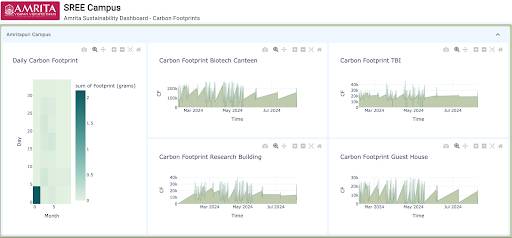
SREE Campus Dashboard for Tracking Carbon Emissions

Amrita University’s SREE Campus Dashboard is an advanced sustainability monitoring platform that provides real-time insights into campus-wide carbon emissions, energy use, and climate conditions. By integrating data from multiple sources, the system offers a holistic view of environmental performance and helps identify opportunities for resource optimisation. The dashboard supports data-driven decision-making, strengthens sustainability management, and plays a key role in advancing the university’s goal of achieving carbon neutrality.

Beyond its operational role, the dashboard functions as an educational and research tool, actively engaging students and faculty in real-world sustainability challenges. By visualising carbon and energy performance, it enhances awareness of institutional progress, identifies areas for improvement, and encourages informed, collective action across the campus community. Designed as a replicable framework for sustainable campuses, the platform reflects Amrita Vishwa Vidyapeetham’s commitment to compassion-driven, impact-oriented research and supports scalable approaches to addressing global environmental challenges within higher education.

Visuals Section  
Visuals Section
The carbon footprint dashboard shows real-time data for building activities.
Students viewing and engaging with carbon footprint data, promoting environmental awareness.
Transitioning to Renewable Energy  

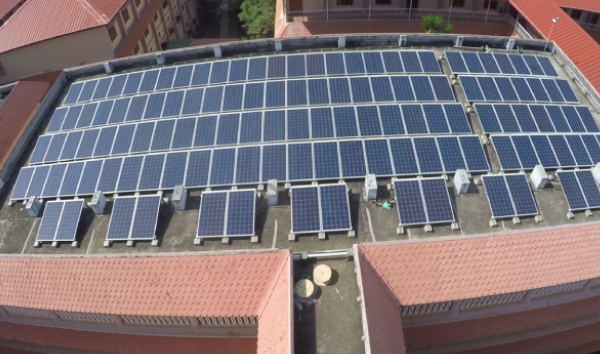
Amrita University has successfully integrated renewable energy technologies into campus operations, with solar panel installations across multiple campuses now contributing substantially to our energy needs.

Last Updated – December 21, 2024

Measuring Low Carbon Energy Usage at Amrita Vishwa Vidyapeetham (2024)

Amrita Vishwa Vidyapeetham has established comprehensive systems to measure and track low carbon energy usage across its campuses, positioning itself as one of India’s first universities to implement real-time carbon footprint monitoring and advanced renewable energy tracking.

Low carbon energy tracking – Amrita Vishwa Vidyapeetham

Real-Time Energy Monitoring Systems

SREE Campus Dashboard

The university’s SREE Campus (Sustainability and Resilience Monitoring Dashboard) provides live tracking of energy consumption and carbon emissions across all campus buildings. This advanced IoT-powered system enables continuous monitoring of key environmental metrics including energy efficiency, climate conditions, and carbon emissions, facilitating data-driven decision-making for resource optimization.

Building Energy Management

Every building on campus features real-time carbon footprint dashboards that allow students and faculty to visualize the environmental impact of their daily activities. The building energy monitoring system provides insights into consumption patterns, historical trends, and calculates key performance indicators such as Energy Use Intensity (EUI) and Power Usage Effectiveness (PUE).

https://www.amrita.edu/energy-efficiency-standards-for-renovations-and-new-builds
https://www.amrita.edu/unsdg-25/sdg7/energy-wastage-identification

Quantitative Low Carbon Energy Measurements (2024)

Renewable Energy Generation

  • Total Renewable Capacity: 4 MW across all campuses
  • Rooftop Solar PV: 306 kWp on academic buildings generating 567,228 kWh annually
  • Clean Energy Surplus: 5.24% excess generation above total campus energy demand
  • Annual Energy Savings: 379,200 kWh through building monitoring systems

Carbon Impact Measurements

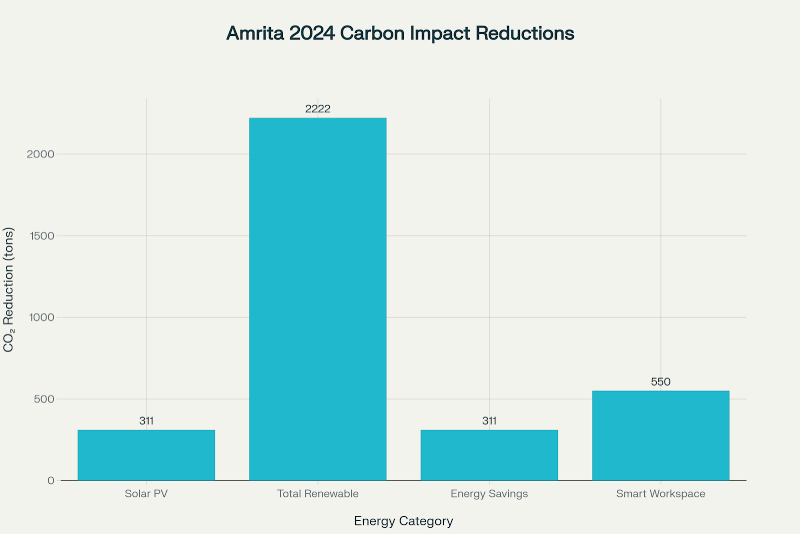
  • Annual CO₂ Reduction: 3,394 metric tons total
    • 311 metric tons from solar installations and water heating systems
    • 2,222 metric tons from carpooling and electric/CNG vehicle initiatives
    • 550 metric tons from shared workspace construction
    • 300 tons from waste recycling programs

Energy Efficiency Metrics

  • LED Lighting Coverage: 90% of campus with sensor-based automation
  • Smart Workspaces: 70% of campus areas with automated energy management
  • Energy Efficiency Rating: 90% in latest energy audit
  • Grid Dependency Target: Reduced to 30% by 2025
  • BEE Standards Compliance: 100% across all buildings

https://www.amrita.edu/unsdg-25/sdg7/plan-to-reduce-energy

Amrita Vishwa Vidyapeetham Low Carbon Energy Measurements 2024

Advanced Tracking Technologies

Carbon Monitoring System

The real-time CO₂ monitoring system provides comprehensive oversight of campus carbon footprint associated with energy consumption. It displays real-time data on emissions from electricity, heating, and cooling systems, analyzes historical trends, and generates detailed reports for environmental compliance.

Smart Infrastructure Integration

  • Sensor-Based Automation: Motion sensors and timers optimize energy usage in common areas
  • Temperature Control: Indoor temperatures maintained at 24°C following Bureau of Energy Efficiency recommendations
  • Heat Recovery Systems: Air conditioning heat is repurposed for water heating

Research and Innovation in Low Carbon Technology

Living Algae Solar Cells

Amrita scientists pioneered breakthrough bio-photovoltaic technology using living freshwater algae to generate electricity. The device achieved a photocurrent of 1.25 mA and photovoltage of 0.5 V under UV light exposure, demonstrating potential for sustainable energy solutions.

https://www.amrita.edu/unsdg-25/sdg7/plan-to-reduce-energy

International Collaborations

The university hosts collaborations with Swedish and German solar energy experts for advanced PV-thermal module development and joint research initiatives.

2024 Documentation and Evidence

Official Reports and Links

Visual Documentation (2024)

  • Campus solar installations documented in June 2024 Energy Swaraj program
  • Real-time dashboard displays showing building-level energy consumption
  • SREE Campus monitoring interface accessible to students and faculty

Future Targets and Commitments

Amrita has pledged to achieve 100% renewable energy by 2035, with plans to install rooftop solar panels meeting up to 50% of energy needs within the next decade. The university aims to serve as a model for other institutions to replicate these renewable energy solutions.

https://www.amrita.edu/unsdg-25/sdg7/renewable-energy-pledge

The comprehensive measurement system demonstrates Amrita’s leadership in quantifying low carbon energy usage, with transparent reporting, real-time monitoring, and ambitious targets that position the university as a pioneer in sustainable campus operations across India.

  1. https://www.amrita.edu/unsdg-25/sdg13/low-carbon-energy-tracking/
  2. https://www.amrita.edu/energy-efficiency-standards-for-renovations-and-new-builds/
  3. https://www.amrita.edu/unsdg-25/sdg7/energy-wastage-identification/
  4. https://www.amrita.edu/unsdg-25/sdg7/carbon-reduction-and-emission/
  5. https://www.amrita.edu/unsdg-25/sdg7/plan-to-reduce-energy/
  6. https://www.amrita.edu/news/amrita-vishwa-vidyapeetham-scientists-pioneer-living-algae-powered-solar-cell-technology/ 
  7. https://www.amrita.edu/news/solar-energy-experts-from-sweden-and-germany-visit-amrita/ 
  8. https://www.instagram.com/p/C8J7AOitFeX/ 
  9. https://www.instagram.com/amritapuricampus/p/C8J7AOitFeX/?hl=ar 
  10. https://www.amrita.edu/unsdg-25/sdg7/renewable-energy-pledge/ 
  11. https://www.amrita.edu/school/sustainable-futures/afforadable-and-clean-energy/ 
  12. https://www.amrita.edu/research/project/amrita-sphuranam-solar-power-rural-electrification/ 
  13. https://www.amrita.edu/unsdg-25/sdg7/upgrade-buildings/ 
  14. https://www.facebook.com/AmritaUniversity/posts/solar-panels-developed-at-amrita-are-being-used-to-power-stalls-during-amritavar/10153244692833719/ 
  15. https://www.amrita.edu/center/amrita-wind-energy-center/ 
  16. https://www.amrita.edu/unsdg/sdg7/plan-to-reduce-energy-consumption/ 
  17. https://www.instagram.com/reel/DBjkidHu0BA/ 
  18. https://www.amrita.edu/publication/impact-of-building-orientation-and-renewable-energy-in-operational-energy-of-a-building-in-micro-climate/ 
  19. https://www.amrita.edu/research/projects/ 
  20. https://amritatec.in/images/TEC_Activities/7_Jul24_Mar25_TECActivities.pdf 
  21. https://www.facebook.com/amritapuricampus/posts/the-solar-panels-from-the-nano-solar-lab-are-being-used-now-all-the-stalls-are-g/971548256250373/ 

Admissions Apply Now