Amrita Vishwa Vidyapeetham has a comprehensive “Sustainable Campus Policy” that was formulated first and issued in 2020. This document has been updated over the years with the last update on 12th Nov 2024.
This Policy broadly covers the following topics related to various sustainable initiatives undertaken in all the campuses at Amrita Vishwa Vidyapeetham and the policies with specific objectives which drive the initiatives.
Sustainable Water Policy
Sustainable Energy Management Policy
Sustainable Waste Management Policy
Sustainable E-Waste Management Policy
Divestment from Carbon-Intensive Energy Industries Policy
Bio-Diversity Management
Sustainable Transportation Policy
Sustainable Land Use Management
Sustainable Construction and Demolition Waste Management Policy
Over the years, all campuses of Amrita have been rigorously assessed against the goals outlined in the Sustainable Campus Policy. This has fostered a self-driven commitment across campuses to ensure the efficient and sustainable use of natural resources while minimizing their environmental impact.
Few of the Major Outcomes monitored and tracked and its results from the past years have been listed below :
1. Water Consumption Tracking
Summarized water consumption based on the grouped sources: Total Consumption data ; 222,503
Potable water: 128,614 m³
Treated / recycled water: 93,889 m³
2. Waste Water Treatment and Water Reuse
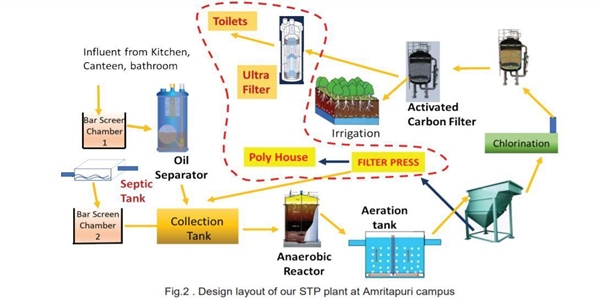
Following are the major highlights from the Waste water treatment initiatives at Amrita :
80% Water Reuse: Amrita reuses 80% of its water, reducing reliance on external sources and contributing to a sustainable water cycle.
1.4 Million Liters Daily STP Capacity: Three STPs with a combined capacity of 1.4 million liters per day treat wastewater efficiently without chemicals.
1.3 Million Liters Daily Recycling: The STPs recycle approximately 1.3 million liters of wastewater daily for reuse in toilet flushing, arboriculture, and gardening.
1,300 Kiloliters of Sewage Treated Over 3 Years: Chemical-free STP processes treated 1,300 KL of sewage over the past three years, conserving freshwater resources.
13 Lakh Liters Recycled Water Produced Daily: The treated water is nutrient-rich, supporting sustainable landscaping and agriculture.
4 LL Capacity STP in 2025-26: A new STP with a 4 LL capacity is planned for construction in the academic year 2025-26.
5,500 Cubic Meters Rainwater Harvested Annually: Integrated rainwater harvesting systems capture 5,500 cubic meters of water annually across 16 locations.
16 Strategic Rainwater Harvesting Locations: Rainwater systems are integrated with wastewater treatment operations for holistic water resource management.
Organic Compost Production: Nutrient-rich sludge from STPs is converted into organic compost, minimizing waste and promoting sustainable agriculture.
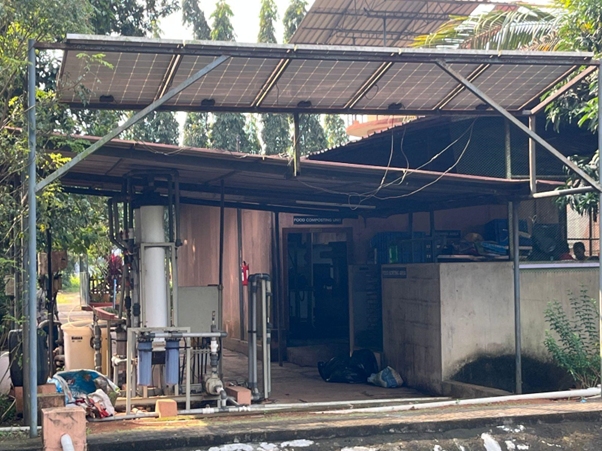
Ultra-filtration of WasteWater Powered by Solar Panels
3. Low Carbon Energy Tracking
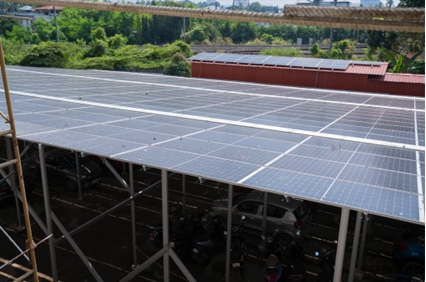
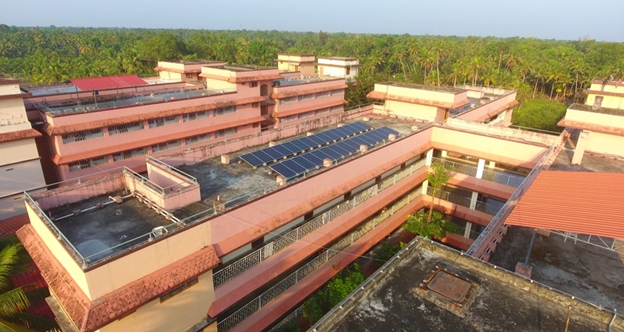
Amrita University has integrated renewable energy technologies into campus operations, with solar panel installations across multiple campuses now contributing substantially to our energy needs.
Solar Panel Installations in the Campus
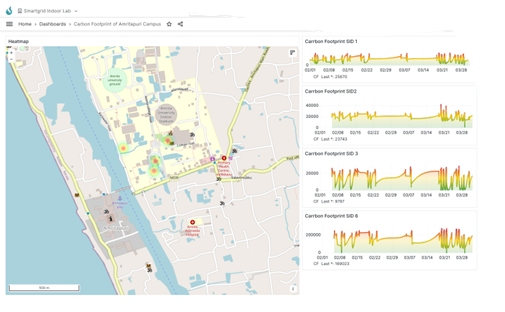
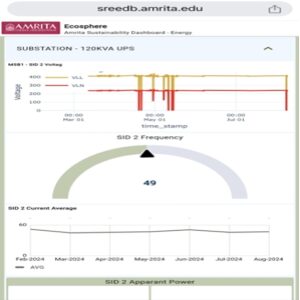
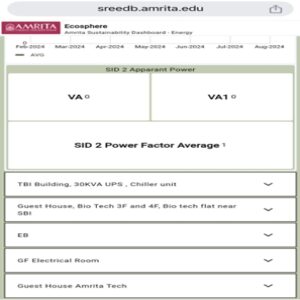
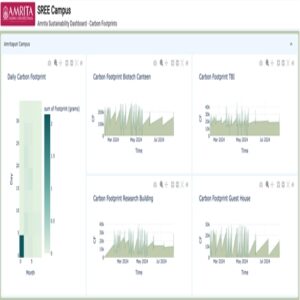
Carbon Footprint Dashboard for Campuses
4. Carbon Reduction and Emission Reduction Process
Following are some of the major highlights based on the activities done in various campuses :
532 metric tons of CO₂ emissions reduced by implementing solar water heater
Carpooling is heavily promoted within the campus
53 % car fleet is based on Electric vehicle or CNG
720 tons of carbon emission neutralized from waste recycling
Construction of Shared workspaces in campus naturalized over 550 metric tons of CO₂ emissions
Academic buildings equipped with 306 kWp of rooftop solar PV panel
Sensor-Based Solar Lighting Systems
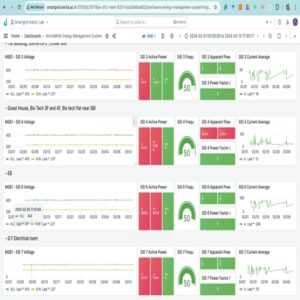
Energy Monitoring and Management System (Real-time insights into energy consumption patterns. Achieves an annual energy saving of 379,200 kWh, corresponding to a reduction of 311 metric tons of CO₂ emissions per year)
Carbon Monitoring System
Building wise real time energy monitoring system installed in the campus
Noteworthy Infrastructure Upgrades (2024)
The policy mandates and expands multiple sustainability frameworks: Green Building Requirements All new buildings must follow:
Climate-responsive design (per Green Building Guidelines)
Renewable energy integration
Low-flow water fixtures
ECBC-compliant energy systems
Green roofs and high-SRI materials
STP integration & dual plumbing
Construction and Demolition Waste Policy (2024)
Mandatory reuse of materials
On-site segregation
Training for staff
Material recovery facilities
Green Building Certification
The policy continues to emphasize recognized green building certifications:
LEED
IGBC
GRIHA
Sustainable Department Operations
The update includes several compassion-driven sustainability strategies across departments, faculty, and students:
Integration of sustainability into curriculum and research
Awareness campaigns led by departments
Recognition programs for green initiatives
Zero-waste and energy-efficient laboratory operations
Student engagement & leadership opportunities
Sustainability Reporting & Accountability
The policy outlines detailed requirements for annual sustainability reporting, including:
Tracking energy, water, waste, biodiversity, and transportation indicators
Reporting green infrastructure & certifications
Monitoring sustainability KPIs
Transparency with stakeholders
Assessing long-term financial, environmental, and social sustainability impacts
Conclusion
The 2024 Sustainable Campus Policy strengthens Amrita’s commitment to environmental responsibility, expanding its sustainability scope to additional campuses and reinforcing standards for water stewardship, clean energy, waste reduction, sustainable mobility, biodiversity enhancement, and green construction. These efforts align with Amrita’s vision of fostering a sustainable, resilient, and compassionate educational ecosystem.
Sustainable Campus Policy – 2024
Amrita Vishwa Vidyapeetham maintains a comprehensive Sustainable Campus Policy, first issued in 2020 and updated periodically to incorporate emerging sustainability priorities and the expansion of campuses. The most recent revision was issued on 12 November 2024, updating the policy to include newly added campuses and strengthening sustainability measures across all locations .
This Policy encompasses the major sustainability domains practiced across Amrita’s campuses and outlines the specific objectives guiding each initiative.
The 2024 Sustainable Campus Policy includes the following sections, which covers institution-wide sustainability operations and goals :
Sustainable Water Policy
Sustainable Energy Management Policy
Sustainable Waste Management Policy
Sustainable E-Waste Management Policy
Divestment from Carbon-Intensive Energy Industries Policy
Biodiversity Management
Sustainable Transportation Policy
Sustainable Land Use Management
Sustainable Construction and Demolition Waste Management Policy
All campuses of Amrita Vishwa Vidyapeetham continue to undergo rigorous assessment against the sustainability goals outlined in the 2024 Policy. The revised policy reinforces monitoring across environmental, social, and operational indicators, ensuring that every campus minimizes environmental impact while promoting responsible resource use.
Major Outcomes
Water Consumption Tracking
Amrita’s campuses follow the 2024 Sustainable Water Policy which emphasizes water-efficient fixtures, granular monitoring, rainwater harvesting, greywater reuse, and advanced wastewater recycling systems.
Key 2024 Water Management Highlights
Comprehensive Water Metering & Monitoring: Expanded installation of campus-wide water meters and automated systems for real-time consumption tracking.
Greywater & Wastewater Reuse: The policy requires treating and reusing wastewater for irrigation, toilet flushing, cooling systems, and construction needs, with high compliance across campuses.
Rainwater Harvesting: Rainwater capture systems integrated with recharge structures across all campus locations.
Pollution Prevention Measures: Strengthened risk assessments, emergency response protocols, spill-prevention infrastructure, and water-quality monitoring aligned with BIS 2012 standards.
Wastewater Treatment & Reuse (2024)
All campuses must operate advanced wastewater treatment plants using chemical-free processes.
Treated water must meet or exceed national effluent standards and be reused for irrigation, flushing, and cooling.
Wastewater recycling, dual plumbing, and decentralized greywater treatment are mandatory components across campuses.
Low Carbon Energy Tracking (2024)
Amrita has expanded its renewable energy and energy-efficiency focus under the 2024 Sustainable Energy Management Policy. Key enactments include:
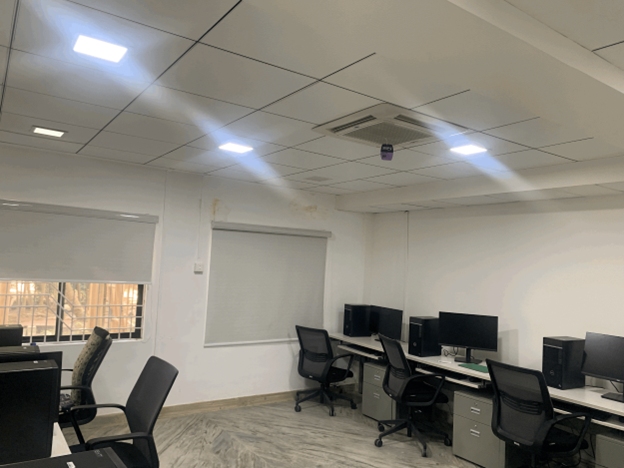
Energy-efficient lighting across campuses (LED, motion sensors).
Smart building automation for lighting and thermal comfort.
Floor-wise and room-wise energy monitoring.
Expanded renewable energy integration (solar, wind where feasible).
Adoption of EV charging infrastructure and conversion of vehicle fleets to EV/CNG.
Campus-level carbon sequestration through increased green cover.
These measures are outlined in the Divestment from Carbon-Intensive Energy Industries Policy .
Major Carbon & Emission Reduction Activities
The policy mandates stronger systems for:
EV fleet expansion & charging stations
Carpooling incentives
Low-carbon procurement
Expansion of green cover & biodiversity zones
Renewable energy obligations
Mandatory energy conservation features in all new buildings
Noteworthy Infrastructure Upgrades (2024)
The policy mandates and expands multiple sustainability frameworks:
Green Building Requirements
All new buildings must follow:
Climate-responsive design (per Green Building Guidelines)
Renewable energy integration
Low-flow water fixtures
ECBC-compliant energy systems
Green roofs and high-SRI materials
STP integration & dual plumbing
Construction and Demolition Waste Policy (2024)
Mandatory reuse of materials
On-site segregation
Training for staff
Material recovery facilities
Green Building Certification
The policy continues to emphasize recognized green building certifications:
LEED
IGBC
GRIHA
Sustainable Department Operations
The update includes several compassion-driven sustainability strategies across departments, faculty, and students:
Integration of sustainability into curriculum and research
Awareness campaigns led by departments
Recognition programs for green initiatives
Zero-waste and energy-efficient laboratory operations
Student engagement & leadership opportunities
Sustainability Reporting & Accountability
The policy outlines detailed requirements for annual sustainability reporting, including:
Tracking energy, water, waste, biodiversity, and transportation indicators
Reporting green infrastructure & certifications
Monitoring sustainability KPIs
Transparency with stakeholders
Assessing long-term financial, environmental, and social sustainability impacts
Conclusion
The 2024 Sustainable Campus Policy strengthens Amrita’s commitment to environmental responsibility, expanding its sustainability scope to additional campuses and reinforcing standards for water stewardship, clean energy, waste reduction, sustainable mobility, biodiversity enhancement, and green construction. These efforts align with Amrita’s vision of fostering a sustainable, resilient, and compassionate educational ecosystem.