Back close

Policy Development for Clean Energy Technology

Amrita Vishwa Vidyapeetham actively supports clean energy and energy-efficient technology policy development by informing and engaging governments, multilateral platforms, and civil society networks at the global, national, regional, and local levels. Leveraging its academic expertise, international leadership roles, and evidence-based research, the university contributes to the design, refinement, and continuity of public policy frameworks that advance clean energy transitions, low-carbon development, and climate-resilient governance. During 2024, Amrita maintained and advanced its ongoing engagement through structured participation in global policy processes, advisory roles, and multi-stakeholder consultations, reinforcing sustained policy impact beyond the campus.

Leadership in Global Clean Energy and Sustainability Policy Platforms 

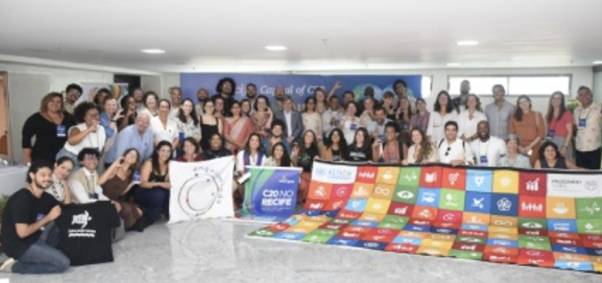
Amrita Vishwa Vidyapeetham plays an active role in shaping global policy dialogue on clean energy, climate action, and energy-efficient technologies through its leadership in international multi-stakeholder platforms. In 2024, as Civil 20 (C20) Brazil commenced its activities under Brazil’s G20 Presidency, the work undertaken during C20 India 2023, led by Amrita, formed a critical foundation for global policy continuity and advancement.

The C20 Brazil Inception Meeting, held in Recife, Pernambuco (March 26–28, 2024), brought together over 2,000 civil society entities from more than 60 countries, representing more than 1,200 CSOs across 150+ countries. Dr. Krishnashree Achuthan, Dean of Postgraduate Studies at Amrita Vishwa Vidyapeetham, represented C20 India on the International Advisory Council, supporting global deliberations on climate action, resilient communities, and clean energy transitions. During the meeting, strategic discussions were held with C20 Brazil leadership to ensure sustained collaboration and alignment of priorities through 2024. Additional Amrita faculty contributed to global deliberations through online participation, strengthening interdisciplinary engagement.

Contribution to Global Policy Frameworks for the G20 

Amrita’s leadership in developing the C20 India 2023 Policy Pack directly informed and strengthened C20 Brazil’s 2024 agenda, including its policy recommendations to the G20. The policy pack—developed through extensive global consultations, conferences, workshops, youth engagement programmes, and community dialogues—provided evidence-based frameworks, methodologies, and policy recommendations on clean energy, climate justice, and sustainable development. 

By enabling continuity across G20 Presidencies, Amrita supported global policy coherence and accelerated the evolution of clean energy and energy-efficiency policy recommendations at the international level. These contributions helped inform global discussions on low-carbon development pathways, inclusive energy transitions, and climate-resilient governance, reinforcing Amrita’s role as a trusted academic and civil society partner in global clean-energy policy development. 

Engagements With NGOs 

1200+

CSO’s   

150+

Countries 

Key Global Policy Recommendations to G20 

Amrita recommended that G20 nations commit to:

  • Redesigning communities, urban form, and infrastructure to drastically reduce induced greenhouse gas emissions
  • Introducing policy incentives for high-emission individuals, organizations, enterprises, and communities to reduce consumption and modify behavior
  • Promoting energy, emissions, and resource-efficient management of electronic devices
  • Incentivizing transitions to energy, food, water, and resource self-sufficiency – on-site renewables and micro-grids, household-level food production, resource sharing, and efficient products

C20 urged G20 nations to:

  • Mandate circular economy principles in designing, financing, and implementing policies for transitions to net zero emissions
  • Accelerate time-bound planning for recycling, reuse, and valorization of waste from sustainable technologies
  • Promote grassroots and frugal innovations for sustainable emissions reductions

Amrita advocated that G20 nations:

  • Immediately cease subsidies for fossil fuels
  • Transparently determine and commit to peaks and timelines in emissions
  • Incentivise adoption of energy-efficient appliances across sectors and value chains
  • Mandate time-bound transition to sustainable feedstock for hard-to-abate chemical industries
  • Effectively monitor and eliminate greenwashing and carbon capture monocultures

Linkhttps://www.amrita.edu/unsdg/sdg7/policy-development-for-clean-energy-tech/ (Published: December 22, 2024)

Lorem ipsum dolor sit amet, consectetur adipiscing elit. Ut elit tellus, luctus nec ullamcorper mattis, pulvinar dapibus leo.

Lorem ipsum dolor sit amet, consectetur adipiscing elit. Ut elit tellus, luctus nec ullamcorper mattis, pulvinar dapibus leo.

The working group consulted with international organizations from diverse regions: 

Region Key Organizations 
Asia-Pacific WWF Australia, Greenpeace Japan, CarbonCare InnoLab (China), CeroED LTD (Singapore), Indonesian organizations including HFI, PREDIK, PRAKARSA 
Africa Team Environment Kenya, Global Green Environmental Network (Ghana), Green Carbon Ghana, Climate Action Network-Uganda, African Smart Cities Innovation Foundation (Nigeria) 
Americas One Tree Planted (USA), Smart Energy Services LLC (USA), Landesa (USA), Gallinas Watershed Council (USA) 
Europe ActionAid International (Belgium), Green Cross International (Switzerland), Italian Climate Network (Luxembourg), University of Lincoln (UK) 
Global Climate Action Network (Worldwide), Syu Design (International) 
Global Policy Dialogue on Clean Energy and Sustainable Technologies in Africa

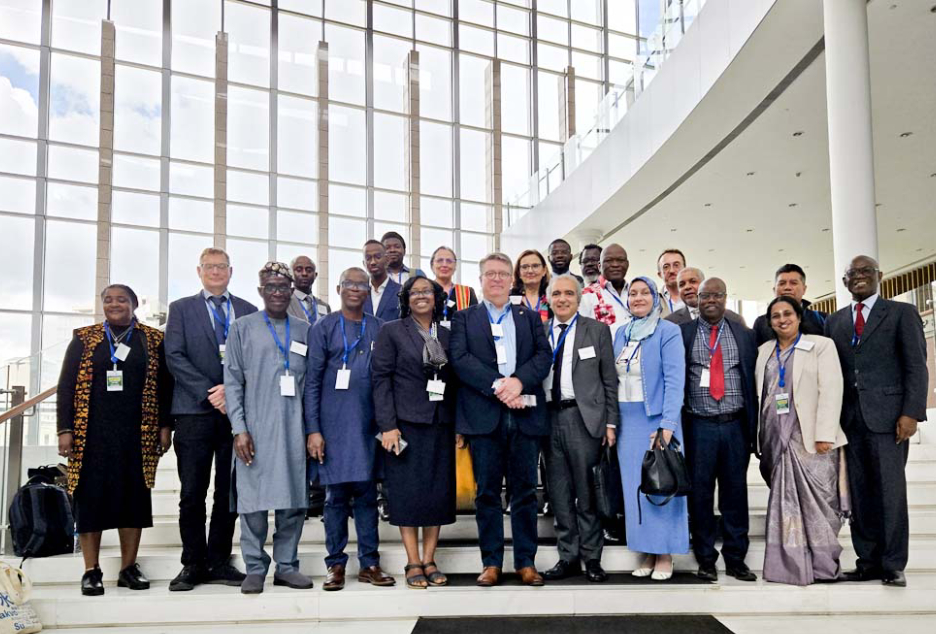
In 2024, Amrita Vishwa Vidyapeetham contributed to global policy dialogue supporting clean energy and sustainable technology development through the active participation of its UNESCO Chairs in the UNESCO–African Union international forum “Transforming Knowledge for Africa’s Future”, held in Addis Ababa, Ethiopia. Convened by UNESCO and the African Union Commission, the forum brought together representatives from all 55 African Union member states, senior officials from national education ministries, leading universities, and global UNESCO stakeholders.

Dr. Maneesha V Ramesh, UNESCO Chair on Experiential Learning for Sustainable Innovation and Development, participated in high-level sessions on research cooperation and capacity development in water, contributing academic and policy insights relevant to sustainable resource management, clean energy transitions, and climate-resilient technologies. 
Amrita Vishwa Vidyapeetham actively collaborates with ministries and departments of the Government of India, as well as state governments, to inform and support national policy development related to clean energy, energy efficiency, and broader Sustainable Development Goals (SDGs). Through research-driven inputs, technology innovation, and capacity-building initiatives, the university contributes to the design and implementation of adaptive, evidence-based policies. These partnerships enable Amrita to promote sustainable development practices, advance clean-energy transitions, strengthen environmental governance, and support inclusive national efforts aligned with India’s SDG commitments.
OrganizationArea of CollaborationRelevant SDGs
Center for Research in Schemes and Policies (CRISP)Identify policy implementation gaps and strengthen social data sciences. CRISP, founded by civil servants with over three decades of experience, works directly with central and state governments to help design, redesign, and implement better schemes and policies.SDG 13, SDG 14, SDG 15
MinistryCollaborationsRelevant SDGs
Ministry of Environment, Forest and Climate ChangePolicies for ecosystem restoration, biodiversity protection, and coastal conservation. Promoting circular economy and sustainable practices for emission reduction. Disaster management frameworks for climate resilience.SDG 13, SDG 14, SDG 15
Ministry of Jal ShaktiPolicies for integrated water management and climate-resilient infrastructure. Ensuring access to clean water and sanitation. Capacity-building for water conservation at community levels.SDG 6, SDG 12
Ministry of Health and Family WelfareExpanding access to affordable healthcare. National strategies for mental health and disease prevention. Promoting “One Health” addressing human, animal, and environmental health interlinkages.SDG 3
Ministry of EducationInclusive, human-centered education with a focus on sustainability. Promoting skill development and indigenous knowledge systems. Developing digital literacy and online education platforms.SDG 4, SDG 10
Ministry of Women and Child DevelopmentPolicies for safety and empowerment of women and girls. Mental health support and gender-responsive programs. Inclusion of women in decision-making and economic empowerment.SDG 5, SDG 8
Ministry of Social Justice and EmpowermentFrameworks for social protection of marginalized groups, including LGBTQIA+ and indigenous communities. Accessibility initiatives for education and employment. Equal opportunities in the workplace.SDG 10, SDG 16
Ministry of Agriculture and Farmers WelfarePromotion of agroecology and climate-resilient agricultural practices. Knowledge transfer for sustainable farming. Incentives to reduce food waste and resource-efficient production.SDG 2, SDG 12
Ministry of Electronics and Information TechnologyBridging the digital divide. Promoting accessible digital infrastructure. Cybersecurity frameworks and ethical AI guidelines. Public digital platforms for transparency and citizen participation.SDG 9, SDG 16
Ministry of Labour and EmploymentExpanding vocational training for underserved populations. Promoting just and equitable workplace policies.SDG 8, SDG 10

Amrita Vishwa Vidyapeetham contributed to national policy development on climate resilience and disaster risk reduction through its leadership in the International Conference on Tsunami Risk Reduction and Community Resilience held in December 2024. The conference brought together the National Disaster Management Authority (NDMA), multiple State Disaster Management Authorities (SDMAs), central government agencies, scientific institutions, and UN bodies to translate research and field experience into policy-relevant guidance.

The engagement enabled cross-state knowledge exchange and alignment of disaster preparedness, early-warning systems, and community-based resilience strategies within national and state frameworks. A key outcome was the development of an actionable policy pack, informed by inputs from NDMA and SDMAs, strengthening evidence-based policy coordination at the national level and aligning with the Sendai Framework, SDG 13, and SDG 11.

Key Particpating Organizations

  1. Government of Goa 
  2. Government of India 
  3. National Disaster Management Authority (NDMA), India 
  4. Disaster Management Center, Sri Lanka 
  5. National Disaster Management Authority, Maldives 
  6. Indian National Centre for Ocean Information Services (INCOIS) 
  7. Earth Observation Program Office (EDPO), ISRO 
  8. National Institute of Advanced Studies (NIAS) 
  9. Kerala State Disaster Management Authority (KSDMA) 
  10. Odisha State Disaster Management Authority (OSDMA) 
  11. National Institute of Disaster Management (NIDM) 
  12. Geological Survey of India (GSI) 
  13. Indian Institute of Space Science and Technology (IIST) 
  14. Alappad Panchayat, Kerala 
  15. Government of Maharashtra (Forest Department) 
  16. UNESCO – Disaster Risk Reduction Unit 
  17. UNESCAP – Disaster Risk Reduction 
  18. UNESCO Intergovernmental Oceanographic Commission (IOC) 
  19. UNESCO-IOC Indian Ocean Tsunami Warning and Mitigation System Secretariat 
  20. United Nations Development Programme (UNDP) 
  21. UNDRR – European Scientific and Technical Advisory Group 

Regional-Level Policy Engagement 

Amrita Faculty Participation in Regional Policy Dialogues 

Amrita Vishwa Vidyapeetham collaborates with regional stakeholders through dialogue with industry and government, contributing to policy development in clean energy technology at the regional level. 

Regional Policy Engagement Topics: 

  • Clean energy technology adoption strategies 
  • Regional energy efficiency standards 
  • Technology transfer and innovation policies 
  • Renewable energy implementation frameworks 
  • Sustainable industrial practices 

These regional-level engagements bridge global best practices with local implementation challenges, ensuring policies are contextually relevant and practically achievable. 

In 2024, Amrita Vishwa Vidyapeetham supported regional-level policy development for clean energy and energy-efficient technologies through its Live-in-Labs® programme, which enables structured engagement across multiple regions and states in India. By embedding interdisciplinary research teams within communities, Live-in-Labs® generated region-specific evidence on energy access gaps, renewable energy feasibility, and scalable efficiency solutions such as decentralised solar systems and energy-efficient cooking technologies. 

Findings from these engagements were consolidated and shared with state-level and regional stakeholders, supporting adaptive planning and evidence-based policy formulation tailored to diverse socio-economic and geographic contexts. 

Key regional-level organisations and institutions engaged: 

  • State Government Departments (Energy, Environment, Rural Development) 
  • State-level implementation agencies 
  • Regional academic and research institutions 
  • District and block-level administrative bodies 
  • Community development organisations operating at the regional scale 

These engagements strengthened regional policy coherence by ensuring that clean-energy and energy-efficiency strategies were informed by on-ground realities and community-tested solutions. 

At the local level, Amrita Vishwa Vidyapeetham directly supported village- and panchayat-level policy developmentthrough Live-in-Labs® community immersions conducted in 2024. The programme worked closely with local governance institutions and community groups to identify energy challenges, co-design solutions, and translate community needs into actionable policy inputs. 

Participatory consultations focused on household energy use, renewable energy adoption, energy-efficient practices, and sustainable livelihoods. Community-specific recommendations were formally documented and shared with local authorities to inform village-level planning and implementation. 

Key local organisations and institutions engaged: 

Gram Panchayats (including Alappad Panchayat, Kerala) 

  • Panchayat Presidents and elected representatives 
  • Village elders and community leaders 

Self-Help Groups (SHGs) 

  • Farmer groups and local residents 
  • Local schools and community institutions 

This bottom-up approach strengthened local governance capacity and ensured that clean-energy and energy-efficiency policies were inclusive, locally relevant, and implementation-ready, reinforcing community ownership of sustainability transitions. Lorem ipsum dolor sit amet, consectetur adipiscing elit. Ut elit tellus, luctus nec ullamcorper mattis, pulvinar dapibus leo.

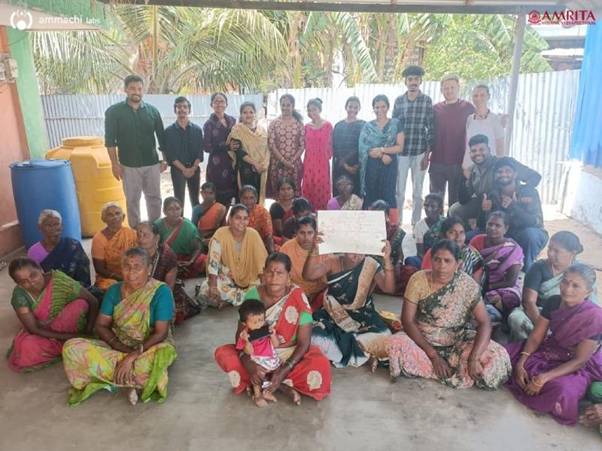
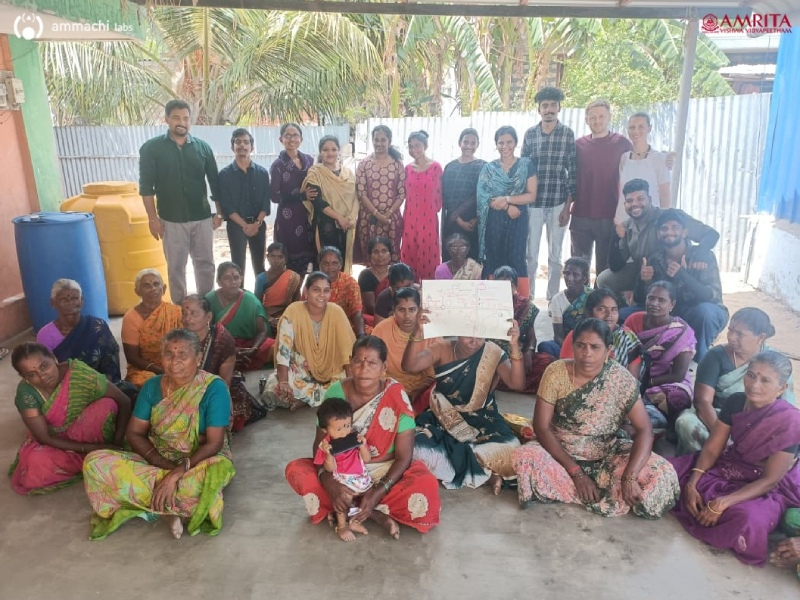
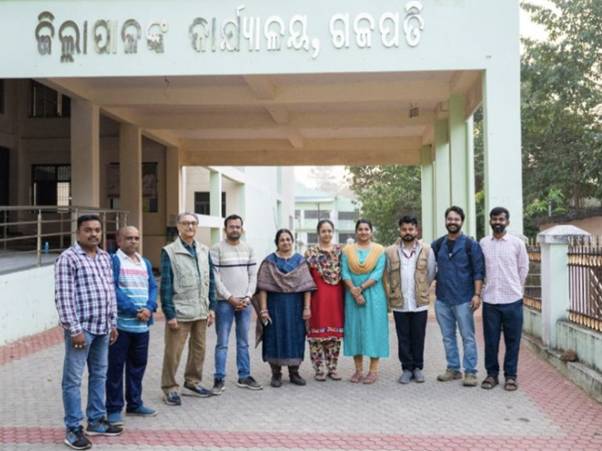
Community consultation meeting with Amrita Vishwa Vidyapeetham students and local villagers
Last Updated – December 28, 2024

Inform and Support Governments in Clean Energy and Energy-Efficient Technology Policy Development at Amrita Vishwa Vidyapeetham

Leadership Role in Global Policy Development

Amrita Vishwa Vishwa Vidyapeetham plays a crucial role in informing and supporting governments at global, national, regional, and local levels in developing clean energy and energy-efficient technology policies. Under the guidance of Amrita’s Chancellor, Sri Mata Amritanandamayi Devi, the university hosted the C20 India 2023 Working Group on Sustainable and Resilient Communities – Climate, Environment and Net Zero Targets, which submitted comprehensive policy recommendations to G20 leadership.

Linkhttps://www.amrita.edu/unsdg/sdg7/policy-development-for-clean-energy-tech/ (Published: December 22, 2024)

Global-Level Policy Development

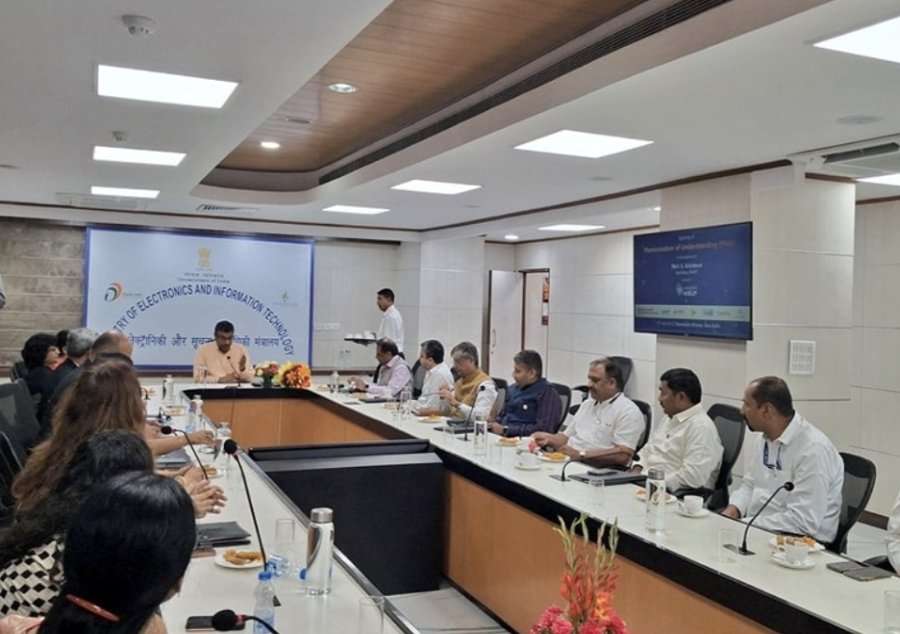
Government officials and professionals meeting at Ministry of Electronics and Information Technology for signing of MoU, indicative of policy collaboration setting.

C20 India 2023 Working Group: Global Leadership

The Civil 20 India Working Group on Sustainable and Resilient Communities, hosted by Amrita Vishwa Vidyapeetham, engaged with over 4,000 Civil Society Organizations (CSOs) across the globe to develop evidence-based policy recommendations for G20 leadership on clean energy and sustainable development.

Global Consultation Network:

The working group consulted with international organizations from diverse regions:

RegionKey Organizations
Asia-PacificWWF Australia, Greenpeace Japan, CarbonCare InnoLab (China), CeroED LTD (Singapore), Indonesian organizations including HFI, PREDIK, PRAKARSA
AfricaTeam Environment Kenya, Global Green Environmental Network (Ghana), Green Carbon Ghana, Climate Action Network-Uganda, African Smart Cities Innovation Foundation (Nigeria)
AmericasOne Tree Planted (USA), Smart Energy Services LLC (USA), Landesa (USA), Gallinas Watershed Council (USA)
EuropeActionAid International (Belgium), Green Cross International (Switzerland), Italian Climate Network (Luxembourg), University of Lincoln (UK)
GlobalClimate Action Network (Worldwide), Syu Design (International)

This global collaboration ensured that policy recommendations reflected diverse perspectives from multiple continents and represented voices from civil society organizations across 50+ countries.

Linkhttps://www.amrita.edu/unsdg/sdg7/policy-development-for-clean-energy-tech/ (Published: December 22, 2024)

Key Global Policy Recommendations to G20

Amrita recommended that G20 nations commit to:

  • Redesigning communities, urban form, and infrastructure to drastically reduce induced greenhouse gas emissions
  • Introducing policy incentives for high-emission individuals, organizations, enterprises, and communities to reduce consumption and modify behavior
  • Promoting energy, emissions, and resource-efficient management of electronic devices
  • Incentivizing transitions to energy, food, water, and resource self-sufficiency – on-site renewables and micro-grids, household-level food production, resource sharing, and efficient products

C20 urged G20 nations to:

  • Mandate circular economy principles in designing, financing, and implementing policies for transitions to net zero emissions
  • Accelerate time-bound planning for recycling, reuse, and valorization of waste from sustainable technologies
  • Promote grassroots and frugal innovations for sustainable emissions reductions

Amrita advocated that G20 nations:

  • Immediately cease subsidies for fossil fuels
  • Transparently determine and commit to peaks and timelines in emissions
  • Incentivise adoption of energy-efficient appliances across sectors and value chains
  • Mandate time-bound transition to sustainable feedstock for hard-to-abate chemical industries
  • Effectively monitor and eliminate greenwashing and carbon capture monocultures

Linkhttps://www.amrita.edu/unsdg/sdg7/policy-development-for-clean-energy-tech/ (Published: December 22, 2024)

Lorem ipsum dolor sit amet, consectetur adipiscing elit. Ut elit tellus, luctus nec ullamcorper mattis, pulvinar dapibus leo.

Lorem ipsum dolor sit amet, consectetur adipiscing elit. Ut elit tellus, luctus nec ullamcorper mattis, pulvinar dapibus leo.

Global Policy Consultation Events (2023)

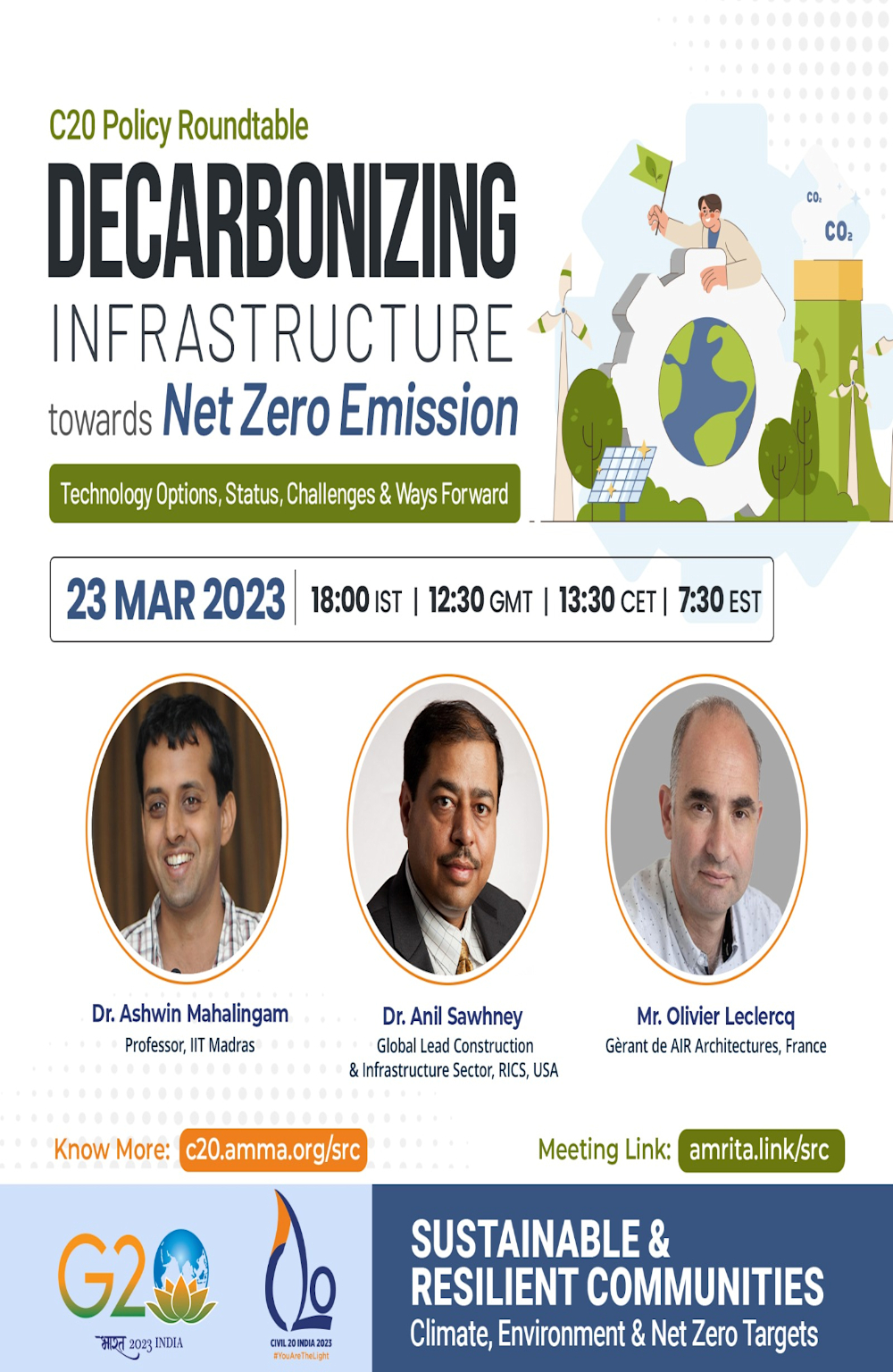
C20 policy roundtable on decarbonizing infrastructure held in March 2023 featuring experts in clean energy and infrastructure, with event details and links.
Key International Dialogues Conducted by Amrita (February – June 2023):
EventDateFocus
C20 Dialogues – Technology Integration, Finance and Adoption Strategies for Addressing Net Zero Emissions Management08/02/2023Technology policy integration and financing mechanisms
Online Webinar – Net Zero Emission Targets – Energy Storage Systems in Battery Electric Vehicles25/02/2023Energy storage policy for transportation sector
International Symposium on R&D of Autonomous Mobility and Electric Vehicle Technology10-11/03/2023Vehicle technology policy development
C20 Policy Dialogues – Transitioning to Renewable Electricity and Renewable-Integrated Grids17/03/2023Grid modernization and renewable energy policy
C20 Policy Dialogues – Decarbonising Infrastructure towards Net Zero Emissions23/03/2023Infrastructure decarbonization policy
Decoding Results Based Climate Finance (RBCF): Strategies for Success07/04/2023Climate finance policy mechanisms
C20 Policy Round Table on Green FinanceJune 2023Green financing policy frameworks
Financing a Just Energy Transition Through Fossil Fuel Subsidy Reform20/06/2023Energy transition financing and subsidy reform

These consultations directly informed policy recommendations submitted to G20 leadership, ensuring that clean energy and energy-efficient technology policies are grounded in global best practices and expert recommendations.

Linkhttps://www.amrita.edu/unsdg/sdg7/policy-development-for-clean-energy-tech/ (Published: December 22, 2024)

National-Level Policy Development

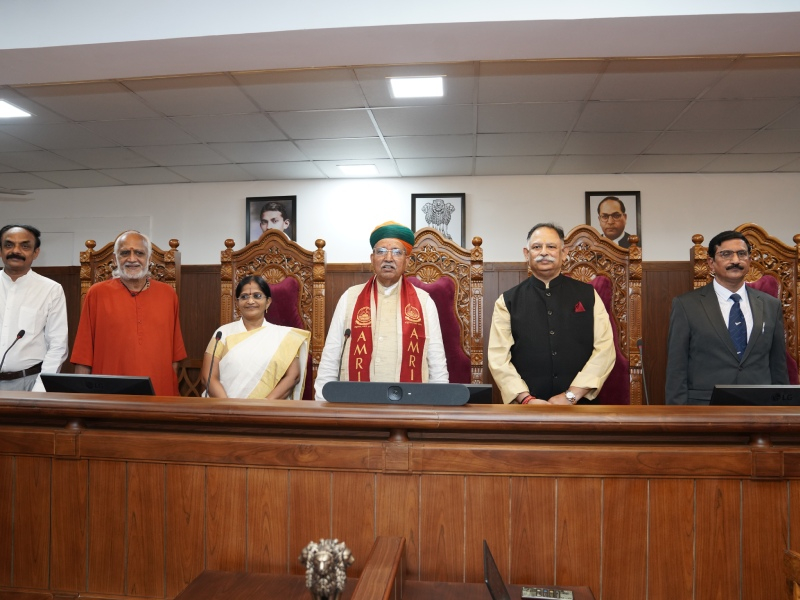
Amrita Vishwa Vidyapeetham officials at a formal event, highlighting the university’s institutional role in policy and governance.
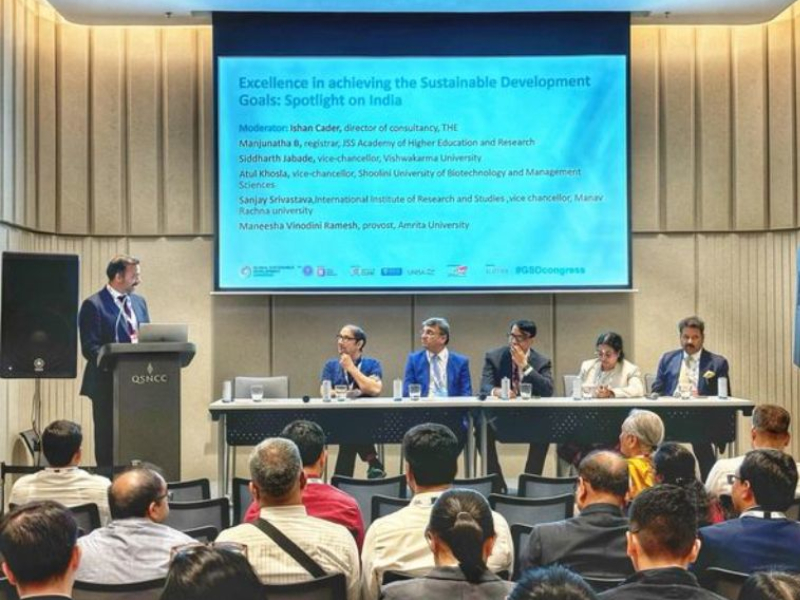
Amrita University and other Indian university leaders at a panel on sustainable development goals in India

Extensive Consultations with Indian Government and Organizations

The C20 Working Group engaged in comprehensive consultations at the national level, bringing together insights from over 98 Indian civil society organizations to inform energy and environmental policy development.

Key National Organizations Engaged (2023):
Strategic Organizations:
  • Vasudha Foundation (Sustainable energy and climate policy)
  • Energy Swaraj Foundation (Solar energy and decentralized systems)
  • Agrani Bharat Abhiyan Foundation Trust (Renewable energy projects)
  • Alternative Futures (Sustainable development)
  • World Vision India (Development initiatives)
  • Oxfam India (Sustainable livelihood)
  • The Bharat Scouts and Guides (Youth engagement)
Government and Academic Institutions:
  • DST’s Centre for Policy Research (CPR) at IISc, Bangalore
  • North-Eastern Hill University
  • Acharya Nagarjuna University
  • Vellore Institute of Technology
  • State Disaster Management Authorities from multiple states

These national consultations ensured that policy recommendations address India-specific challenges, opportunities, and institutional contexts in clean energy and energy-efficient technology adoption.

Linkhttps://www.amrita.edu/unsdg/sdg7/policy-development-for-clean-energy-tech/ (Published: December 22, 2024)

Regional-Level Policy Engagement

Community consultation meeting with Amrita Vishwa Vidyapeetham students and local villagers

Amrita Faculty Participation in Regional Policy Dialogues

Amrita Vishwa Vidyapeetham collaborates with regional stakeholders through dialogue with industry and government, contributing to policy development in clean energy technology at the regional level.

Regional Policy Engagement Topics:
  • Clean energy technology adoption strategies
  • Regional energy efficiency standards
  • Technology transfer and innovation policies
  • Renewable energy implementation frameworks
  • Sustainable industrial practices

These regional-level engagements bridge global best practices with local implementation challenges, ensuring policies are contextually relevant and practically achievable.
Linkhttps://www.amrita.edu/unsdg/sdg7/policy-development-for-clean-energy-tech/ (Published: December 22, 2024)

Local-Level Policy Development

Grassroots Consultations Through Compassion-Driven Chaupals (2023)

To bring the voices and challenges from grassroots communities to national and international policy forums, Amrita’s C20 Working Group conducted compassion-driven chaupals (traditional village gatherings) across rural India from February to June 2023.

Geographic Coverage: 11 Indian States:
  • Rajasthan
  • Haryana
  • Uttarakhand
  • Uttar Pradesh
  • Madhya Pradesh
  • Andhra Pradesh
  • Sikkim
  • Kerala
  • West Bengal
  • Maharashtra
  • (Additional states covered)
Chaupals Format and Objectives:

These traditional village gatherings were designed to:

  • Resonate with local culture and provide relatable platforms for policy discussions
  • Educate villagers on efficient energy usage, alternative energy sources, and sustainable practices
  • Address energy sustainability from a rural Indian standpoint
  • Emphasize cost-effective and locally implementable solutions such as:
    • Solar-powered lighting
    • Energy-efficient cooking methods
    • Reducing dependency on traditional fuels
Community Engagement Approach:
  • Panchayat Members Involvement: Direct participation of local government leaders
  • Village Elders: Ensured sessions were rooted in community’s social fabric, fostering trust
  • Active Participation: Empowered villagers to take steps toward energy sustainability and self-reliance
  • Documentation: Community-specific recommendations were documented and shared with local authorities

Linkhttps://www.amrita.edu/unsdg/sdg7/policy-development-for-clean-energy-tech/ (Published: December 22, 2024)

Local Government Partnerships

Alapad Panchayat Engagement (September 20, 2023):

Amrita held meetings with Alapad Panchayat members focused on promoting renewable energy in the community. The outcomes, including challenges and community-specific suggestions, were documented and presented to the panchayat president for policy implementation.

Village-Level Consultations:

Discussions with village heads and local residents on the use of solar energy for farming in rural India resulted in documentation of community-specific recommendations shared with village elders for localized policy development.

Linkhttps://www.amrita.edu/unsdg/sdg7/policy-development-for-clean-energy-tech/ (Published: December 22, 2024)

Policy Support Through Academic Programs

University-Wide Policy Integration

Amrita Vishwa Vidyapeetham integrates policy and governance into its academic curriculum, ensuring the next generation of leaders understands clean energy and energy-efficient technology policies.

Sustainability in Curriculum (2024):
  • 4,568 courses across all programs integrate sustainability elements
  • 400,000+ sustainability champions graduated from the university
  • Sustainability aligned with at least one level of Bloom’s Taxonomy in all courses
  • Integration across disciplines ensuring holistic understanding of energy policy
Specialized Course on Energy Policy:

The Sustainable and Renewable Energy Technology course covers:

  • International agreements/conventions on Energy and Sustainability:
    • United Nations Framework Convention on Climate Change (UNFCC)
    • Sustainable Development Goals (SDGs): SDG 7 – Affordable and Clean Energy
  • Policies on clean energy technology
  • Renewable energy standards and regulations
  • Energy efficiency frameworks and standards
  • Government incentives and subsidy mechanisms

Linkhttps://www.amrita.edu/course/sustainable-renewable-energy-technology/ (Published: October 8, 2025)

Research and Evidence for Policy Development

Energy Sustainability Thrust Area Group (TAG) Research Portfolio

The Energy Sustainability Thrust Area Group at Amrita’s School for Sustainable Futures conducts research that directly informs policy development at multiple levels:

Research Focus Areas:
  • Smart grids and renewable energy systems
  • Energy storage technologies
  • Carbon capture, utilization, and storage (CCUS)
  • Green hydrogen development
  • Waste-to-energy solutions
  • Biofuels and sustainable feedstocks
  • Water-energy nexus
Research Infrastructure:
  • Portfolio: INR 3.8 crore (~$165,000 USD) in project funding
  • 337 Scopus publications in energy-related research
  • 4 national patents awarded for energy innovations
  • Partnerships with global institutions for collaborative policy-relevant research

This extensive research portfolio provides evidence-based findings that inform government policymaking on clean energy and energy-efficient technology adoption.

Linkhttps://www.amrita.edu/school/sustainable-futures/afforadable-and-clean-energy/ (Published: February 18, 2025)

Policy Advocacy Leadership

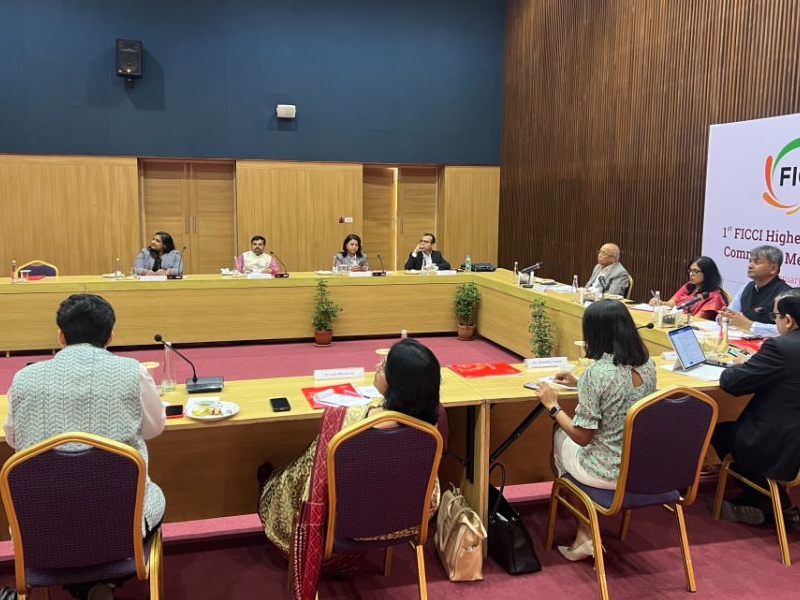
Amrita Vishwa Vidyapeetham representatives participating in the 1st FICCI Higher Education Committee Meeting 2025 to discuss education policy.

UNESCO Chair for Sustainable Innovation and Policy

Amrita holds the UNESCO Chair on “Experiential Learning for Sustainable Innovation and Development,” renewed in 2024, enabling the university to develop frameworks for academic engagement in policy development and sustainable community building.

International Network for Sustainable Innovation (SustIN)

Under the UNESCO Chair, Amrita established SustIN (International Network for Sustainable Innovation and Resilient Futures) to:

  • Enhance institutional capacities in clean energy policy development
  • Foster regional collaborations on sustainable development
  • Accelerate collective efforts to achieve clean energy goals
  • Promote knowledge-sharing on renewable energy policy implementation

Linkhttps://www.amrita.edu/unsdg-25/sdg17/education-for-sdgs-commitment-to-meaningful-education/ (Published: December 25, 2024)

Contact and Engagement Information

For Government Policy Collaboration:

Amrita Vishwa Vidyapeetham welcomes government engagement on clean energy and energy-efficient technology policy development through:

  • UNESCO Chair on Experiential Learning for Sustainable Innovation and Development
  • Energy Sustainability Thrust Area Group at School for Sustainable Futures
  • Amrita Technology Enabling Center for technology transfer and policy support
  • Faculty expertise across engineering, research, and public policy

Through comprehensive engagement at global, national, regional, and local levels, Amrita Vishwa Vidyapeetham demonstrates institutional commitment to informing and supporting government policy development on clean energy and energy-efficient technology adoption. The university’s evidence-based research, academic programs, international consultations, and grassroots community engagement ensure that policies developed are both globally informed and locally relevant, contributing to sustainable energy transitions that benefit governments, industries, and communities worldwide.

Linkhttps://www.amrita.edu/unsdg/sdg7/policy-development-for-clean-energy-tech/ (Published: December 22, 2024)

  1. https://www.amrita.edu/unsdg/sdg7/policy-development-for-clean-energy-tech/
  2. https://www.amrita.edu/unsdg-25/sdg17/education-for-sdgs-commitment-to-meaningful-education/
  3. https://www.amrita.edu/course/sustainable-renewable-energy-technology/
  4. https://www.amrita.edu/school/sustainable-futures/afforadable-and-clean-energy/
  5. https://www.amrita.edu/energy-efficiency-standards-for-renovations-and-new-builds/ 
  6. https://www.amrita.edu/thematic-area/sdg-7-energy 
  7. https://www.amrita.edu/unsdg-25/sdg7/plan-to-reduce-energy/ 
  8. https://www.facebook.com/AmritaUniversity/posts/welcome-to-the-international-conference-on-sustainable-resilient-futures-bridgin/1183173393842305/ 
  9. https://www.linkedin.com/posts/amrita-vishwa-vidyapeetham-official_gender-sensitization-gender-transformative-activity-7287410479960928256-3gJY 
  10. https://www.amrita.edu/unsdg-25/sdg7/upgrade-buildings/ 
  11. https://www.amrita.edu/unsdg-sustainable-campus-policy2023/ 
  12. https://www.amrita.edu/unsdg/sdg7/ 
  13. https://www.amrita.edu/unsdg-25/sdg7/renewable-energy-pledge/ 
  14. https://www.amrita.edu/unsdg/sdg7/plan-to-reduce-energy-consumption/ 
  15. https://www.amrita.edu/unsdg/sdg6/policy-divestment-from-carbon-intensive-energy-industries-policy/ 
  16. https://www.amrita.edu/course/sustainable-and-renewable-energy-technology/ 
  17. https://www.amrita.edu/unsdg/ 

Admissions Apply Now