Innovation revolutionizes societies. It is a game-changer and is the biggest marker to distinguish a forward-looking nation from a stagnant one.
In 2025, the Royal Swedish Academy of Sciences decided to award the Sveriges Riksbank Prize in Economic Sciences in memory of Alfred Nobel (the Nobel Prize) to Joel Mokyr, Philippe Aghion and Peter Howitt “for having explained innovation-driven economic growth”.
India aims to become Viksit Bharat by 2047. Innovation is the key that will not only propel the country into the ranks of leading knowledge economies but also address long-standing developmental challenges in health, education, agriculture, sustainability, and inclusive growth.
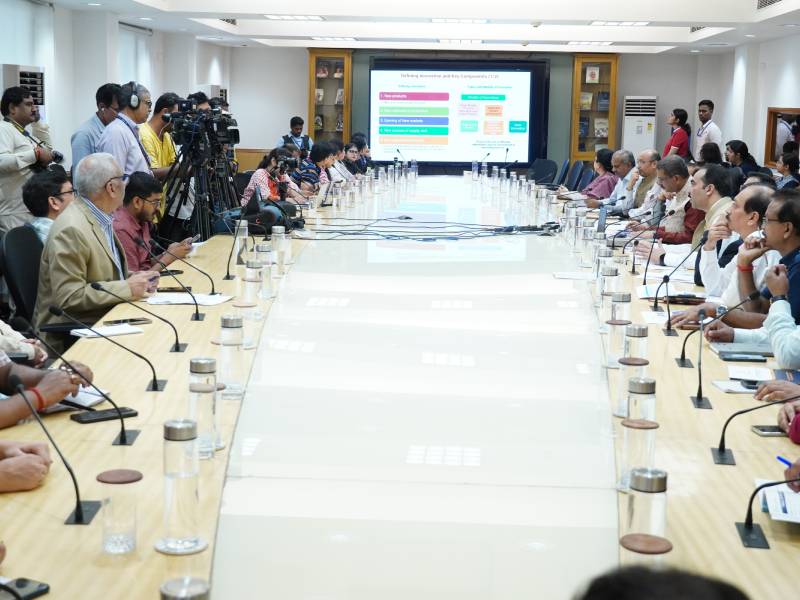
Recognising this, NITI Aayog (the apex public policy think tank of the Government of India and the nodal agency tasked with catalysing economic development and fostering cooperative federalism) unveiled its comprehensive report, “Pathways to Progress: Analysis and Insights into India’s Innovation Story” on 23rd September 2025.
The report is a comprehensive view of India’s amazing journey in Science, Technology, and Innovation (STI), showcasing the entire ecosystem, the structure, initiatives, and the vibrant centres of excellence that have now catapulted India into one of the foremost innovators in the world.
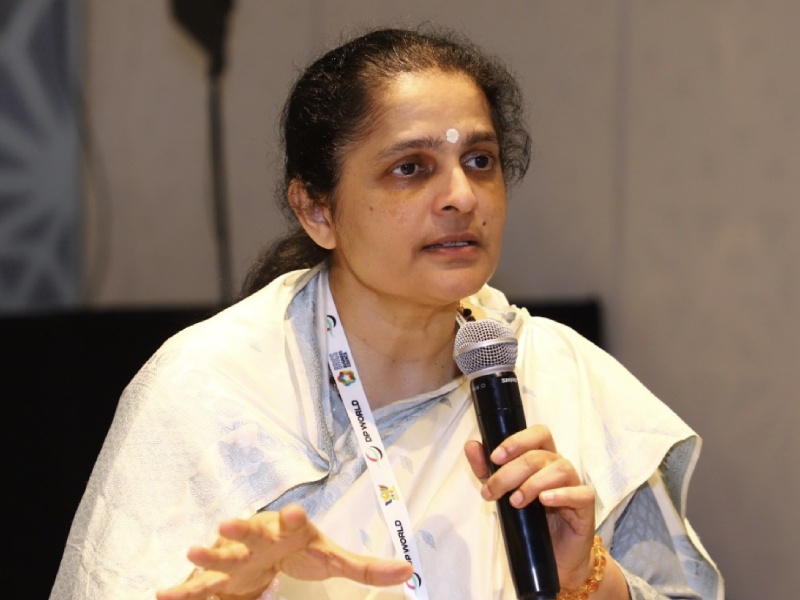
We are proud to announce that Amrita’s Adjunct Professor. Sujit Bhattacharya, ASF, Amrita Vishwa Vidyapeetham & Former Chief Scientist, CSIR-NIScPR (National Institute of Science Communication and Policy Research) is one of the co-authors of this report.
Dharmendra Pradhan, Minister of Education, Government of India, is emphatic in his belief that education is deeply intertwined with innovation. This report reminds us that innovation is not the preserve of research labs or industries alone; it begins in our classrooms, in our higher education institutions, and in the everyday act of learning. The seeds of creativity and critical thinking sown during schooling mature into groundbreaking ideas in universities, laboratories, and startups.
The National Education Policy (NEP) 2020 has placed a strong emphasis on fostering curiosity-driven learning, flexibility across disciplines, and greater integration of skilling, technology and innovation in education.
We hope these reforms nurture holistic individuals who are not just employable but also entrepreneurial, capable of creating new knowledge and value. We are keen to build and strengthen an ecosystem that connects education to industry and government.
Suman Bery, Vice Chairman of NITI Aayog with the rank and status of a Cabinet Minister and an experienced policy economist and research administrator, said this report is a roadmap for the journey ahead. It inspires a collective endeavour to build a unique innovation ecosystem that is distinctly Indian—inclusive and globally competitive in its ambition.
At Niti Aayog, we regard innovation not as a sectoral pursuit, but as a cross-cutting enabler for transformation across the country and society.
We endeavour to strengthen the institutions, diversify the funding models, invest in deep tech research and above all, stay committed to ensure that the innovation is inclusive and sustainable.
For a nation such as India, the strength of our youth, their aspirations and entrepreneurial spirit are our foremost strength and our greatest responsibility.
As we advance towards the vision of Viksit Bharat@2047, innovation will be the principal force through which our demographic dividend is transformed into enduring prosperity, competitiveness and leadership on the global stage.
Dr Jitendra Singh, Minister of State (Independent Charge), Ministry of Science & Technology, says this shows the rise of India’s vibrant startup ecosystem, coupled with our strong digital public infrastructure. A modern innovation ecosystem requires us to move beyond incremental change and embrace reforms in regulation, financing, and institutional design.
This report lays emphasis on systems thinking: that innovation cannot be confined to a single institution or sector, but must be the product of collaboration between government, academia, industry, and society. Our scientists and entrepreneurs are demonstrating that innovation can emerge not only from elite laboratories but also from grassroots ingenuity.
Dr Singh reiterates that India cannot merely aspire to catch up with global innovation nations; we must aim to set benchmarks of our own by investing in frontier technologies, fostering interdisciplinary research, and encouraging risk-taking in entrepreneurship.
In his message, Principal Scientific Adviser to the Govt of India, Ajay K. Sood, enunciated that a robust national innovation ecosystem rests on three pillars:
Dr. V. K. Saraswat, member, NITI Aayog, has placed innovation at the core of a nation’s advancement. Innovation defines the strength and resilience of nations. The ability to generate new knowledge, translate it into practical applications, and scale solutions rapidly is the force to achieve long-term development goals.
This report, apart from bringing together government-led missions, state initiatives, and industry contributions, also situates India’s progress within the global innovation landscape, benchmarking against international indices and drawing attention to areas where we must accelerate efforts.
Dr. V. K. Saraswat defines NITI Aayog’s role in building this systemic perspective–to identify gaps, assess outcomes, and guide evidence-based policymaking. Our vision is that innovation capacity must be strengthened at every level of governance, not just at the national level.
Daren Tang, Director General World Intellectual Property Organization (WIPO), in his message, said, “This publication reflects India’s innovative capacity. In the WIPO’s Ranking of the World’s Top 100 Innovation Clusters, 2025, four Indian clusters—Bengaluru (21st), Delhi (26th), Mumbai (46th), and Chennai (84th)—rank among the world’s top 100, placing these centers on par with many of the developed world’s most dynamic cities. Bengaluru’s leap into the global top 25 exemplifies this.
Defining Innovation
Joseph Schumpeter, one of the most influential economists of the early 20th century, drew a sharp distinction between Innovation and Invention. Invention is the discovery of new knowledge or technology, whereas Innovation is the economic application of inventions or ideas to create value.
Innovation is the carrying out of new combinations that disrupt economic equilibrium and drive development. These are not mere improvements but huge, fundamental changes that transform how civilizations move forward using resources and human skills.
Indian Innovation Ecosystem
The Indian Science, Technology and Innovation (STI) ecosystem consists of multiple subsystems at the levels of centre and states, sectors, technologies, etc., with different ministries, departments, industries, state governments and communities playing supportive roles in shaping innovation.
The authors have explained that using the Triple Helix model focuses on the interactions between the three key institutional spheres–University, Industry and the Government. The Quadruple Helix model extends the Triple Helix by adding a fourth helix–the Civil Society. This dimension brings with it media, culture, and citizens.
Non-profits and community groups ensure that innovation aligns with values and fosters citizen participation. It is a key driver of frugal and grassroot innovations. Incubators and accelerators provide support by offering physical spaces and shared resources that facilitate idea exchange and technological development.
Characterizing the Indian Innovation Ecosystem
Based on the STI ecosystem, the policies and interventions, 8 key dimensions were framed to examine the country’s enabling innovation ecosystem.
The key dimensions are:
Financial & Infrastructural Support
The success of startups depends not only on technological innovation but also on their capacity to secure funding, build markets, and forge strategic linkages.
The Fund of Funds for Startups (FFS) and the Startup India Seed Fund Scheme (SISFS) are the two most important support mechanisms for financial support to startups to bridge the funding gaps, especially critical at the “valley of death” stage.
The “valley of death” stage for startups is that perilous early period after initial funding but before generating consistent revenue. In this stage, cash flow dries up, expenses mount, and most companies fail due to a lack of funds, inability to scale, or often bridging the gap between seed funding and Series A.
National Initiatives to promote innovation
Atal Innovation Mission (AIM): This mission was launched in 2016 by the Government of India under NITI Aayog to foster a culture of innovation and entrepreneurship across the country, at all levels from schools and universities to research institutions and startups. The Atal Tinkering Labs (ATLs) and the Atal Incubation Centers (AICs) encourage innovation and support technology development, deployment, and commercialization. The Atal Community Innovation Centers (ACICs) help to build a robust innovation ecosystem in unserved areas and engage communities.
The AIM has made significant strides and has mobilised over 6200 mentors of change and facilitated the development of more than 60 domestic and 20 international partnerships between public-private institutions.
Startup India
This flagship program of the Government of India was launched in 2016, with an aim to create a robust startup culture and provide mentorship, funding access, and regulatory support. The government is setting up a new Fund of Funds (FFS) with a Rs. 10,000 crore corpus to develop high-growth entities.
Research, Development and Innovation Fund
Prime Minister Narendra Modi sanctioned the Research, Development, and Innovation (RDI) Scheme on July 1, 2025, with a funding corpus of 1 lakh crore to enhance R&D in strategic sectors such as artificial intelligence, semiconductors, biotechnology, quantum technologies, and precision agriculture.
National Supercomputing Mission
The National Supercomputing Mission (NSM) was launched in 2015, creating a grid of over 70 high-performance computing facilities enabling India leapfrog into the league of world-class computing power nations, at an estimated cost of Rs. 4,500 crore over a period of 7 years.
National Biotechnology Development Strategy (2021–2025)
This initiative aims to position India as a global leader in bio-innovation with a focus on bringing academia and industry together, and creating an enabling ecosystem for bio-manufacturing, research, and entrepreneurship.
Biotechnology has emerged as a vital catalyst for innovation in India, making significant contributions to advancements in healthcare, agriculture, environmental sustainability, and industrial processes.
Indian Semiconductor Mission
The India Semiconductor Mission (ISM) was initiated in 2021 by the Government of India, under the aegis of MeitY, with a financial investment of Rs 76,000 crore towards creating a self-sufficient electronics industry with cutting-edge R&D capacity, chip design capabilities, and strong international collaborations.
National Quantum Mission
Approved on 19th April 2023, the mission is set to span from 2023–24 to 2030–31, with a budget allocation of Rs 6,003.65 crore.
IndiaAI mission
The IndiaAI mission was launched in 2024 with a proposed budget of Rs. 10,372 crore and a five-year span.
The mission aims to foster AI innovation and build domestic capacities in artificial intelligence. It consists of seven key pillars, namely, India AI Compute, Innovation Centre, Dataset platforms, Application development initiatives, Future Skills, Startup Financing, and Safe & Trusted AI.
National Green Hydrogen Mission: The Mission will have wide-ranging benefits like the creation of export opportunities for Green Hydrogen and its derivatives; Decarbonisation of industrial, mobility and energy sectors; reduction in dependence on imported fossil fuels and feedstock; development of indigenous manufacturing capabilities; creation of employment opportunities; and development of cutting-edge technologies.
Department of Biotechnology
The Department of Biotechnology (DBT) in India actively promotes innovation and entrepreneurship through a range of dedicated programs and initiatives.
Pioneering Role during the COVID-19 Pandemic
The DBT played a pivotal role in developing and deploying COVID-19 vaccines and stood as a symbol of India’s innovation excellence, driven by scientific rigour, strategic funding, and robust partnerships.
India became one of the largest global producers and suppliers of COVID-19 vaccines- Covaxin. Covaxin, India’s first indigenous COVID-19 vaccine developed by Bharat Biotech in collaboration with ICMR and NIV Pune, is a landmark in public health innovation.
National Innovation Foundation (NIF):
Founded in 2000 by the Department of Science and Technology, Govt. of India, NIF supports grassroots and societal innovations developed by individuals and local communities in any technological field.
NIF has pooled a database of over 225,000 technological ideas, innovations and traditional knowledge practices from over 585 districts of the country. NIF has till date recognised 816 grassroots innovators and school students at the national level.
NIF is a good example of a Quadruple Helix with participation of community and formal institutions for promoting societal and grassroots innovation. It is also working towards revamping the INSPIRE – MANAK (Million Minds Augmenting National Aspiration and Knowledge) program in association with the Department of Science & Technology to align it with the action plan for the “Start-up India” initiative launched by the Hon’ble Prime Minister of India.
India in The Global Innovation Landscape
In the last decade or so, India has established itself as an innovation-driven economy, as evident from its performance reflected in various international benchmarking reports and indices.
Global Innovation Index (GII) 2025
In the Global Innovation Index (GII) 2025, India achieved the 38th position among 139 global economies, marking a continued upward trajectory in its innovation capabilities from rank 81 in 2015.
European Innovation Scoreboard (EIS)
In the European Innovation Scoreboard (EIS), India is placed among the “Emerging Innovators”, reflecting that its innovation performance, at 48.1% of the EU average in 2025, is still developing. However, it is a notable improvement of 55 percentage points since 2018,
The OECD’s Science, Technology and Innovation Scoreboard mentions that 65% of Indian firms are innovative or R&D-active, putting India ahead of Japan and close to Korea.
Bloomberg Innovation Index
In 2021, India secured the 50th position, climbing four spots from 2019 (54th among 95 countries).
Startup Ecosystem
India has emerged as the world’s third-largest startup hub, with more than 1,57,000 startups registered under the Department for Promotion of Industry and Internal Trade (DPIIT) through the Startup India initiative, and over 100 unicorns as of 31 December 2024.
In the area of Publications, Patents, Trademarks, and Geographical Indications, India has become a major global knowledge producer, consistently ranking among the world’s top 10. Its research output and share of global publications have been rising steadily over the past two decades.
In 2023, India became the 6th largest filer of patent applications worldwide with 64,480 filings, recording a 15.7% increase over 2022, one of the highest growth rates among the top 20 origins globally.
University Industry Government (UIG) Collaboration
To create a stronger institutional mechanism for university-industry collaboration, the Anusandhan National Research Foundation (ANRF) plans to bring industry stakeholders into the research ecosystem with schemes such as the Advanced Research Grant and PAIR, etc.
Intermediary industry bodies NASSCOM, FICCI, and CII have played an important role in promoting university-industry collaborations.
Challenges and Gaps in the Indian Innovation Ecosystem
This report provides a comprehensive analysis of the key challenges hindering India’s innovation ecosystem. The main areas of concern are:
Siloed Government Initiatives: Often, innovation ecosystems, grassroots innovators, and support initiatives function in parallel or isolation, and robust institutional mechanisms are absent to seamlessly connect research institutions and government bodies.
During their formative stages, startup ventures struggle to secure crucial seed funding and mentorship. The other concern is that existing funding mechanisms often do not adequately cater to the long gestation periods and high capital expenditure associated with research and development (R&D), like in biotechnology and other high-tech areas.
Unlike conventional venture capital, which prioritizes rapid scaling and quick exits, sectors such as deep-tech demand sustained investment, a higher tolerance for delayed returns and emphasizes long-term support for businesses, startups, and innovations.
A persistent challenge is the low level of collaboration between research institutions and industry, which significantly limits the commercialization of academic research and the industry’s access to cutting-edge knowledge and talent.
Research institutions often prioritize academic excellence and publications, and often operate in isolation from the immediate needs of the industry and the overall economic needs of the community.
Control-Oriented Systems: Existing systems are often optimized for control and compliance rather than agility and facilitation. This creates challenges for innovators and damps their enthusiasm.
The Road Ahead
Strengthening and Creating Regional Innovation Clusters:
There is a need for more strategic allocation of resources, with more targeted investments in R&D, which in turn requires a significant increase in our Gross Expenditure on Research and Development (GERD).
Technology Business Incubators (TBIs) should be actively engaged across the entire innovation-to-commercialisation value chain.
Ease of Doing R&D: Systematic efforts should be initiated to provide ease of doing R&D by removing obstacles and promoting Enablers.
Intellectual Property Rights Policy
The current focus of IPR is towards creating protection through patents. However, these lack focus on other forms of IPR.
In recent years, there has been a positive shift towards Geographical Indications. A GI is a name or a sign used on products that correspond to a specific geographical location or origin (e.g., a town or region).
The use of a geographical indication, as an indication of the product’s source, is intended as a certification that the product possesses certain qualities and is made according to traditional methods, or enjoys a good reputation due to its geographical origin.
The new IPR policy should address issues of misappropriation of intangible cultural artefacts. The new IPR policy must align strongly with the Viksit Bharat 2047 vision.
Create Apex policy-making and Strategic body: This body should be chaired by the Prime Minister or a designated senior minister, and have members from head/ key functionaries from the S&T bodies, PSA office, NITI Aayog, inter-ministerial bodies, etc.
Addressing the nation during the inauguration of the Emerging Science, Technology and Innovation Conclave, ESTIC 2025, the Prime Minister Shri Narendra Modi said,
“When science is scaled, innovation becomes inclusive, and technology drives transformation, it lays the foundation for major achievements.
India is no longer merely a consumer of technology, but has become a pioneer of transformation through technology.”
India is now ready to take its place amongst the most innovative nations. The structures are in place.
Know more:
About the Co-author, Prof. Sujit Bhattacharya
Prof. Sujit Bhattacharya is a former Chief Scientist & Dean of Policy Research at CSIR-NIScPR, and Professor at the Academy of Scientific & Innovative Research (AcSIR).
Prof Bhattacharya was also Professor at the Centre for Studies in Science Policy at the Jawaharlal Nehru University, 2007-2009. He joined Amrita Vishwa Vidyapeetham post superannuation as Adjunct Professor in the School for Sustainable Futures.
He is also the founding Editor-in-Chief of the Journal of Scientometric Research (JSCIRES), indexed in Web-of-Science (ESCI), Scopus, and Dimensions. He is on the Board of Directors of the Asian Society for Innovation and Policy (ASIP) and a Board member of the International Society for Scientometrics & Informetrics.
Prof Bhattacharya is a PhD from the Indian Institute of Technology, Delhi and an MSc (Physics) from Delhi University. His research focuses on Science, Technology and Innovation (STI), STI Policy Studies, Scientometrics, with particular emphasis on emerging technologies, STI indicators, and intellectual property rights (IPR), addressing contemporary policy challenges.
Prof Bhattacharya has published over a hundred research papers in peer-reviewed journals and conference proceedings and has co-authored/co-edited 14 books.
He has presented papers at major international conferences, including the Science Summit at the 78th UN Nations General Assembly, the Global Ministerial Forum, Geneva Forum, Globelics, etc.
He serves on the editorial boards of several journals and is a member of programme committees and core groups of various national and international committees. Prof Bhattacharya actively connects with different academic and policy institutions in India and abroad.
To learn more about Prof Bhattacharya’s work:
The other authors of this report are: