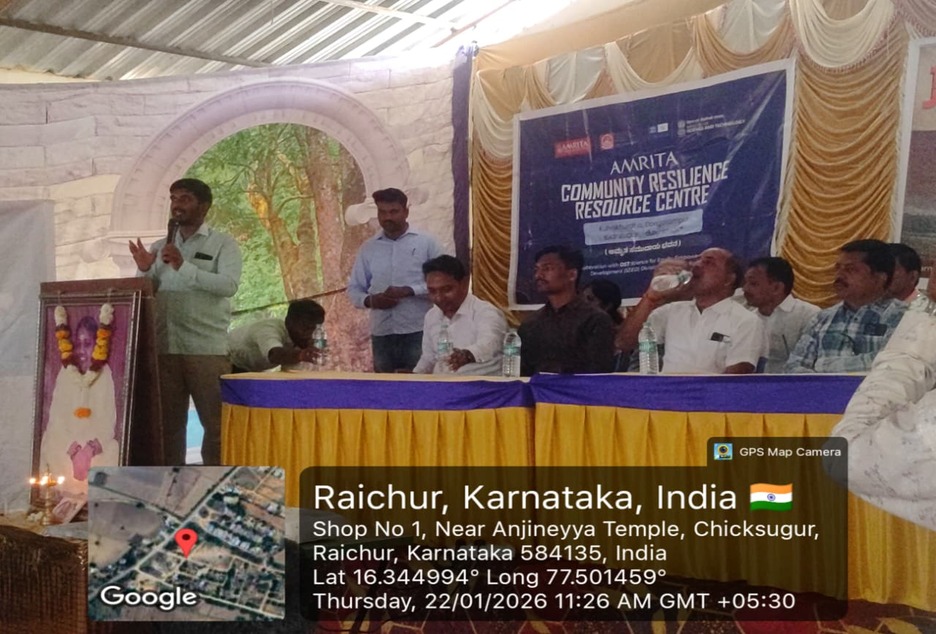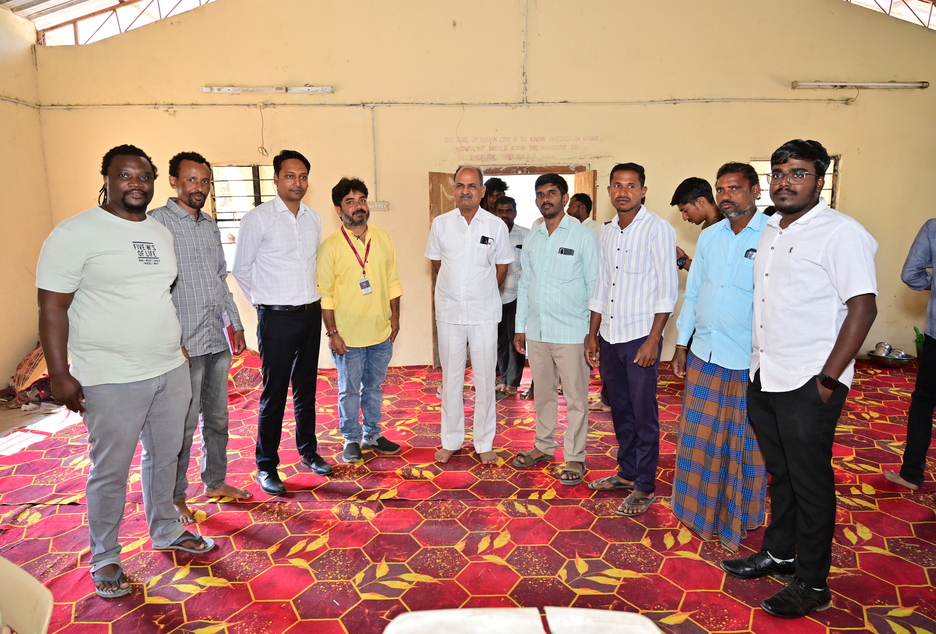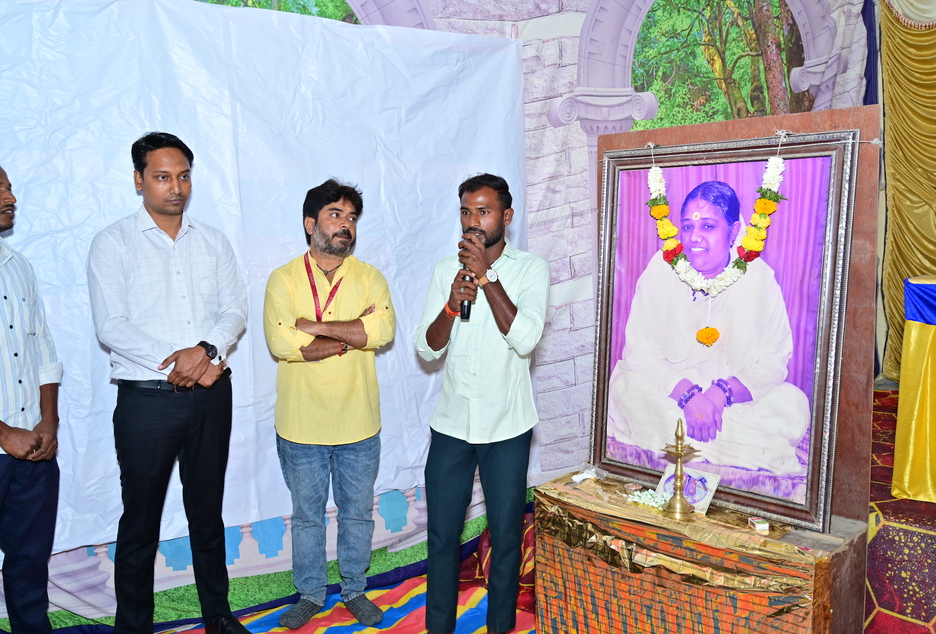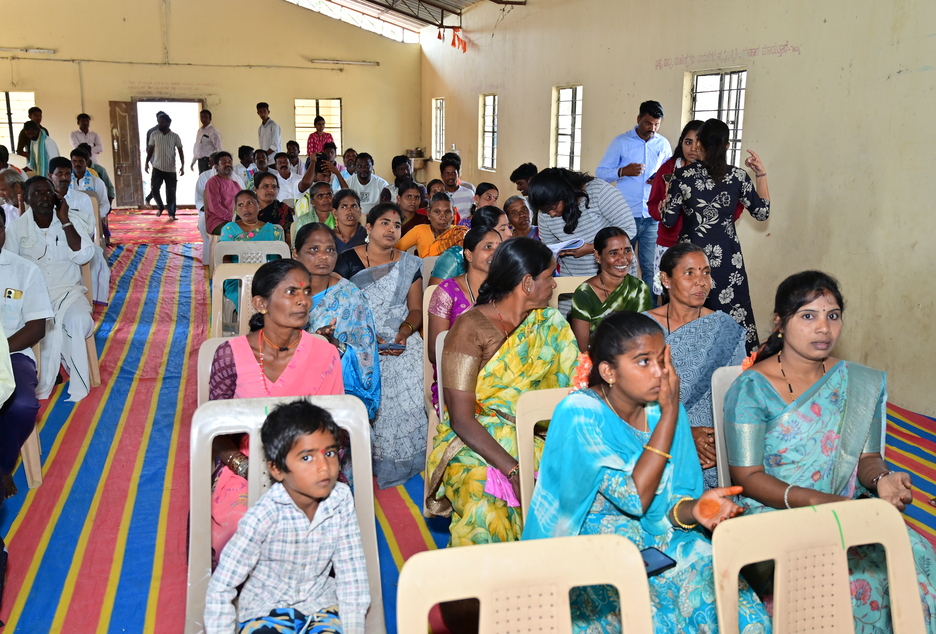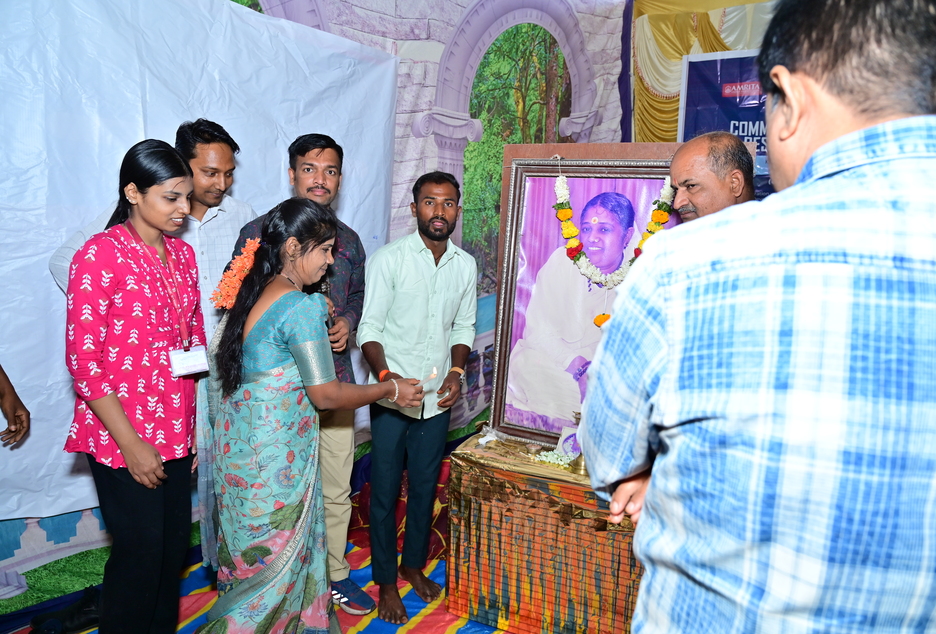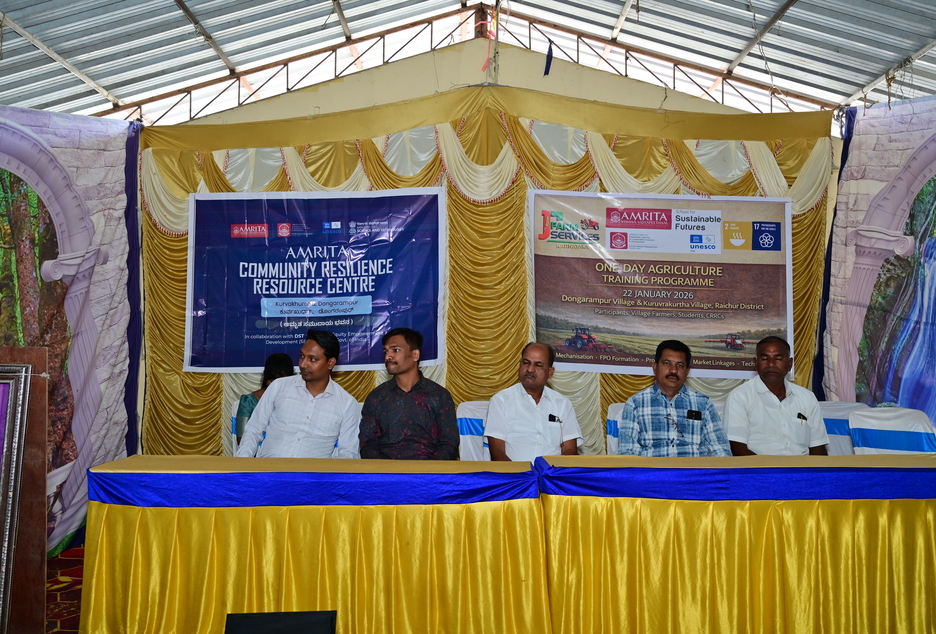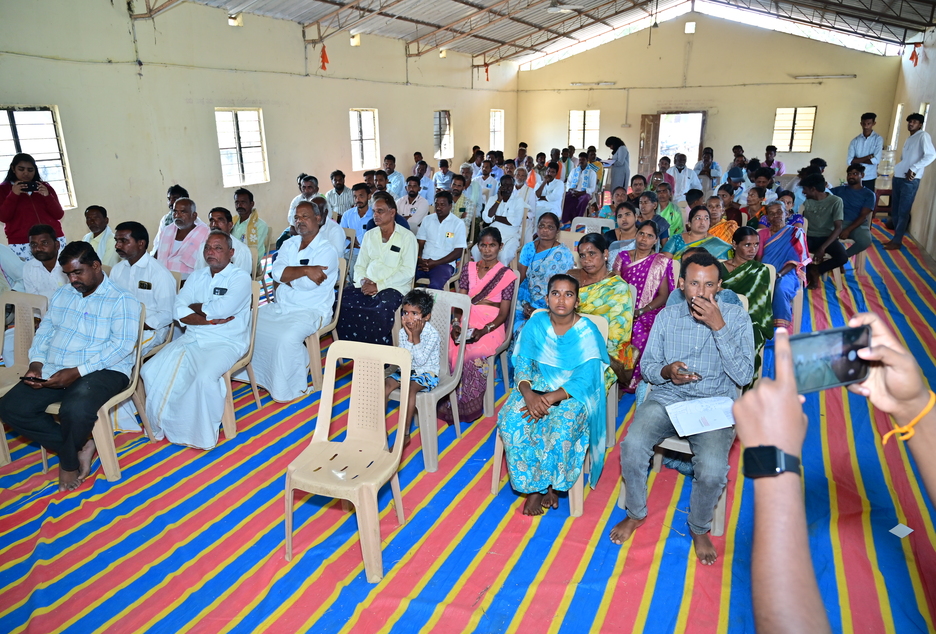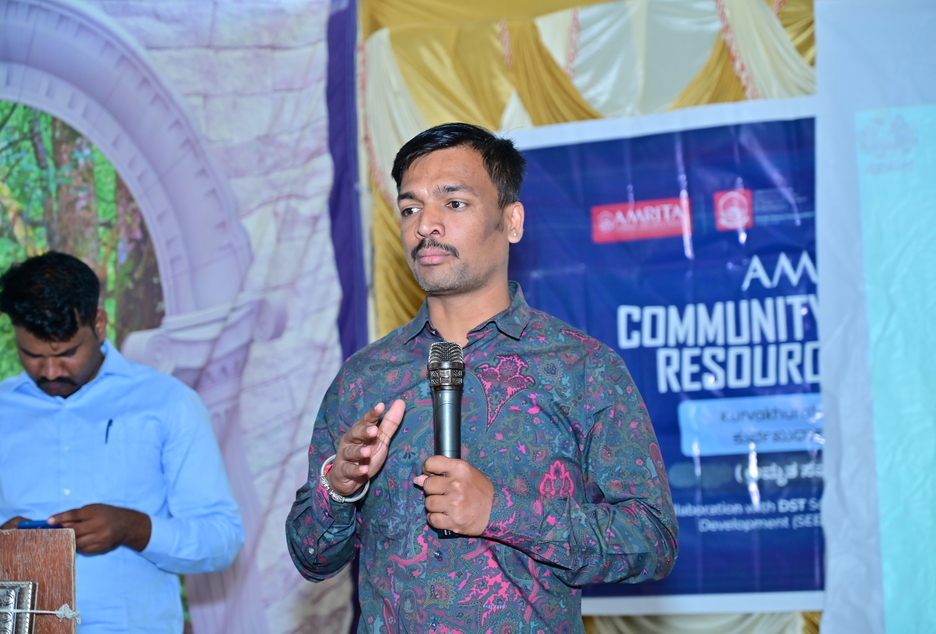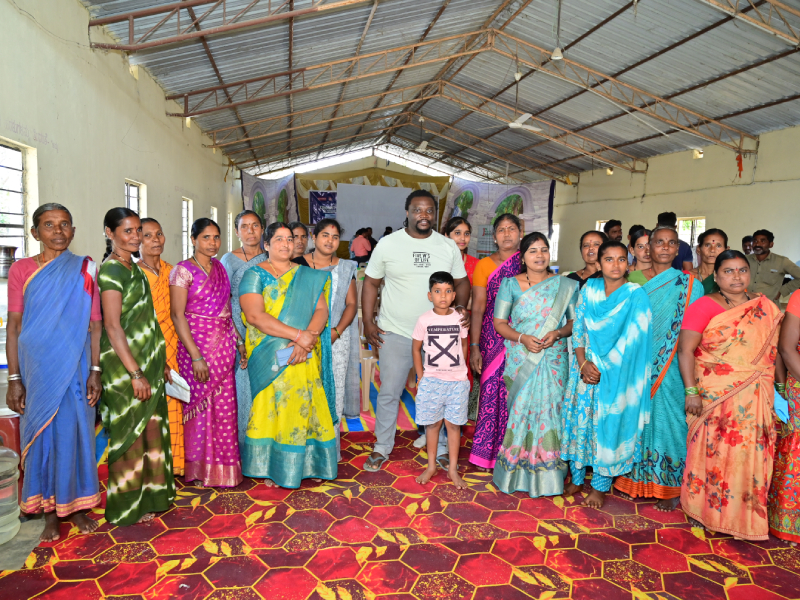
The Amrita School for Sustainable Futures, Amrita Vishwa Vidyapeetham, in collaboration with JFarm Services, a CSR initiative of the TAFE Group, organised a One-Day Agriculture Training Programme in Dongarampur and Kuruvakurtha villages of Raichur district in Karnataka.
Held under Amrita’s Live-in-LabsⓇ initiative, the programme was coordinated by the School’s Sustainable Agriculture & Livelihood Thematic Action Group, in collaboration with the UNESCO Chair on Experiential Learning for Sustainable Innovation and Development. The training aimed to introduce farmers to practical, technology-based solutions while strengthening collective and sustainable farming practices at the village level.
More than 80 farmers from the two villages participated in the programme, along with village representatives, faculty members, researchers, and students from Amrita School of Arts and Sciences, Mysuru who were engaged as part of the Live-in-LabsⓇ initiative. As the villages currently do not have a Farmer Producer Organization (FPO), special emphasis was placed on creating awareness about FPOs and initiating the process for their formation, enabling farmers to work collectively for improved market access and income opportunities.
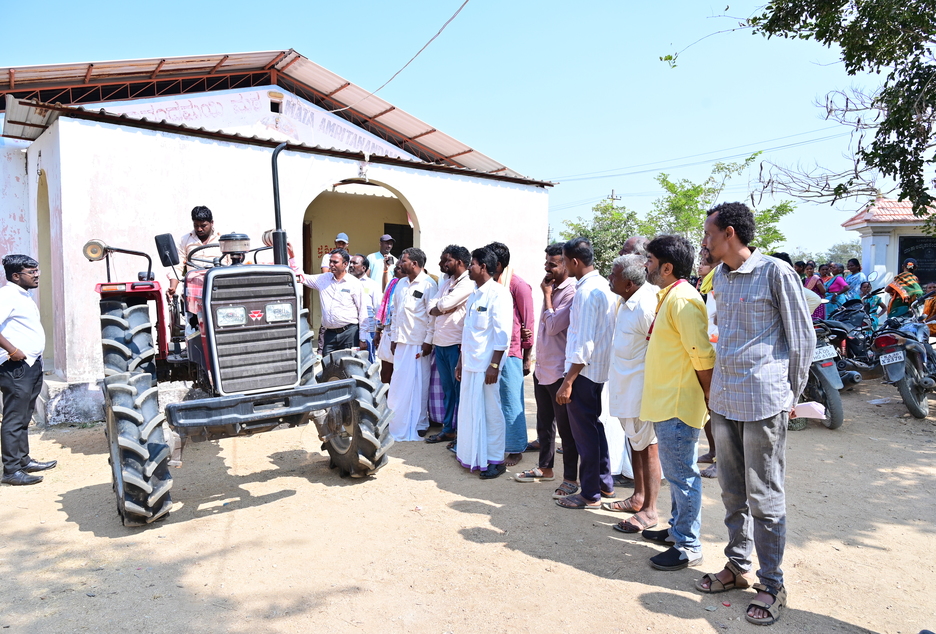
The sessions focused on farm mechanisation, safe and efficient tractor operation, and basic maintenance practices to reduce costs and improve productivity. Farmers were also introduced to the use of drones in agriculture for crop spraying and crop health monitoring. In addition, experts shared information on government schemes and subsidies available to small and marginal farmers, including the Pradhan Mantri Formalisation of Micro Food Processing Enterprises (PMFME) scheme, highlighting opportunities for value addition and small-scale food processing. Resource persons from JFarm Services led interactive discussions on modern agricultural equipment and market linkages.
The programme contributed to the achievement of Sustainable Development Goal 2 (Zero Hunger) by promoting sustainable agriculture and farmer livelihoods, and Sustainable Development Goal 17 (Partnerships for the Goals) through collaboration among academia, industry, CSR partners, and local communities.
The training concluded with discussions on the way forward, including follow-up support for FPO registration, continued capacity-building initiatives, and strengthening linkages to markets and institutional support systems, reaffirming Amrita’s ongoing commitment to rural development and sustainable agriculture.