


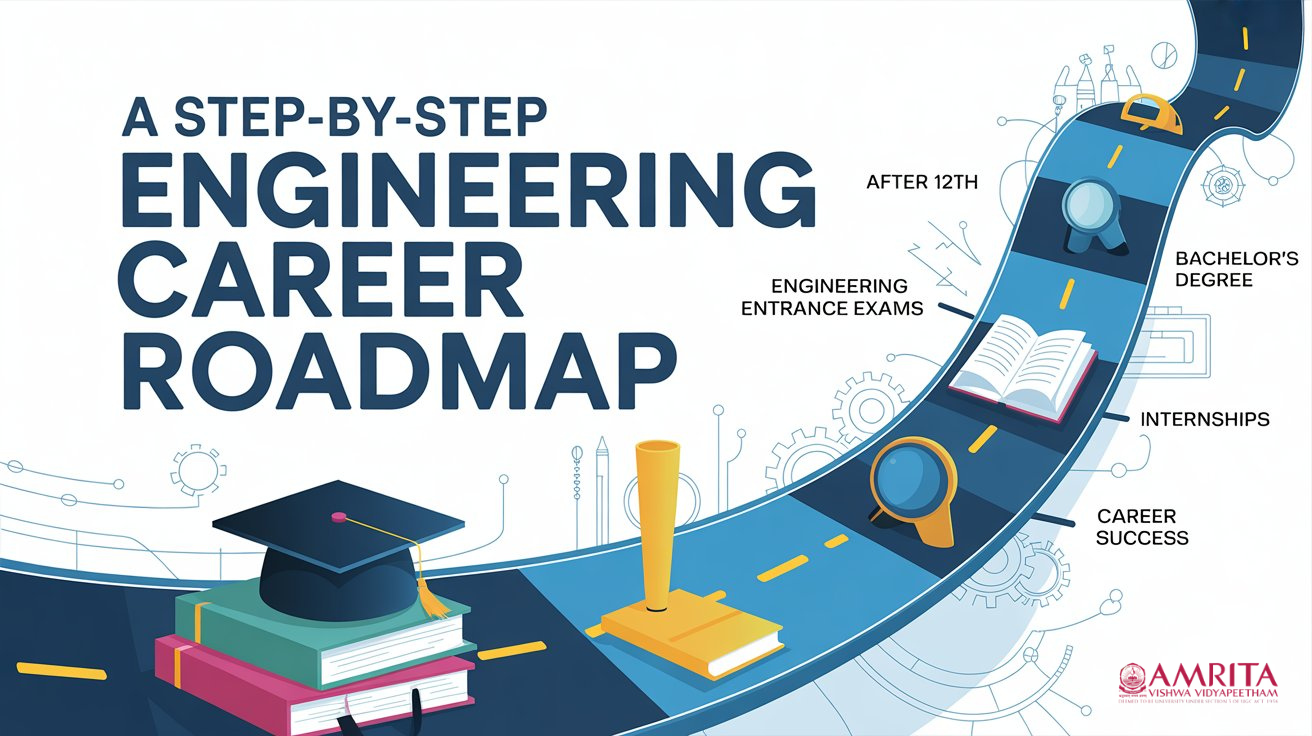
As you stand at the crossroads of your academic journey after 12th, you may find yourself drawn to the exciting world of engineering. With numerous specializations and career prospects, engineering offers a wealth of opportunities for those with a passion for innovation and problem-solving.
However, charting your career path in this field can be overwhelming. Before diving into the nitty-gritty of your engineering journey, it’s crucial to understand what this field entails.
As you contemplate your career choices after 12th, it’s essential to assess your eligibility for pursuing an engineering degree. Let’s explore the key criteria you need to meet:
To pursue an engineering degree, you must have completed your 10+2 education with Physics, Chemistry, and Mathematics (PCM) as core subjects. This combination lays the foundation for understanding the fundamental concepts of engineering.
Most engineering colleges in India require candidates to have scored a minimum of 60% in their 12th-grade examinations. However, the exact percentage may vary depending on the institution and the specific program you wish to pursue.
Securing admission to top engineering colleges often involves appearing for entrance examinations. The most common exams include:
With numerous engineering disciplines to choose from, it’s essential to align your interests and aptitudes with the right specialisation. Here are some popular engineering courses to consider:
This four-year undergraduate program offers specialisations such as:
If you prefer a shorter and more practical-oriented program, diploma courses in engineering can be a suitable option. These three-year programs provide hands-on training in specific engineering fields, preparing you for entry-level positions in the industry.
Some institutions offer integrated programs that combine undergraduate and postgraduate studies. These courses, typically spanning five years, allow you to earn both a B.Tech and an M.Tech degree in your chosen specialization.
To ace your chosen entrance exam and secure a seat in your desired engineering college, thorough preparation is key. Consider the following strategies:
Once you have prepared for the entrance exams, it’s time to navigate the admission process:
As you embark on your engineering degree, make the most of your academic journey:
To be a well-rounded engineer, develop skills like problem-solving, maths, technical knowledge, IT, design, communication, creativity, and project management. Improve these through coursework, projects, and extracurricular activities for better employability.
As you near the completion of your engineering degree, it’s time to explore the vast career opportunities available:
To successfully transition from academia to the professional world, consider the following strategies:
Embarking on an engineering career after 12th grade is an exciting journey filled with endless possibilities. By carefully considering your interests, eligibility criteria, and the steps outlined in this guide, you can make informed decisions and pave the way for a successful career in engineering.
Amrita University offers a holistic engineering education combining academics and practical experience. Our programs provide essential knowledge, skills, and hands-on training. With top facilities, industry ties, and expert faculty, we help launch your engineering career.
Take the first step towards realising your engineering dreams. Explore our programs, connect with our faculty, and discover how Amrita University can help you navigate your career roadmap with confidence and success.
1. What subjects do I need to study in 12th grade to pursue engineering?
To pursue an engineering degree, you should study Physics, Chemistry, and Mathematics (PCM) as your core subjects in 12th grade. These subjects form the foundation for understanding the principles and concepts of engineering.
2. Can I pursue an engineering degree if I have studied Biology instead of Mathematics in 12th grade?
3. What is the difference between B.Tech and B.E. programs?
B.Tech (Bachelor of Technology) and B.E. (Bachelor of Engineering) are both undergraduate engineering degrees. The primary difference lies in the nomenclature used by different universities. The curriculum and course structure are generally similar for both programs.
4. How can I prepare for engineering entrance exams?
5. What are the career prospects after completing an engineering degree?
After completing an engineering degree, you can work in manufacturing, construction, or energy. Software, IT, or R&D roles are also options. You could also start a business or pursue further studies.


