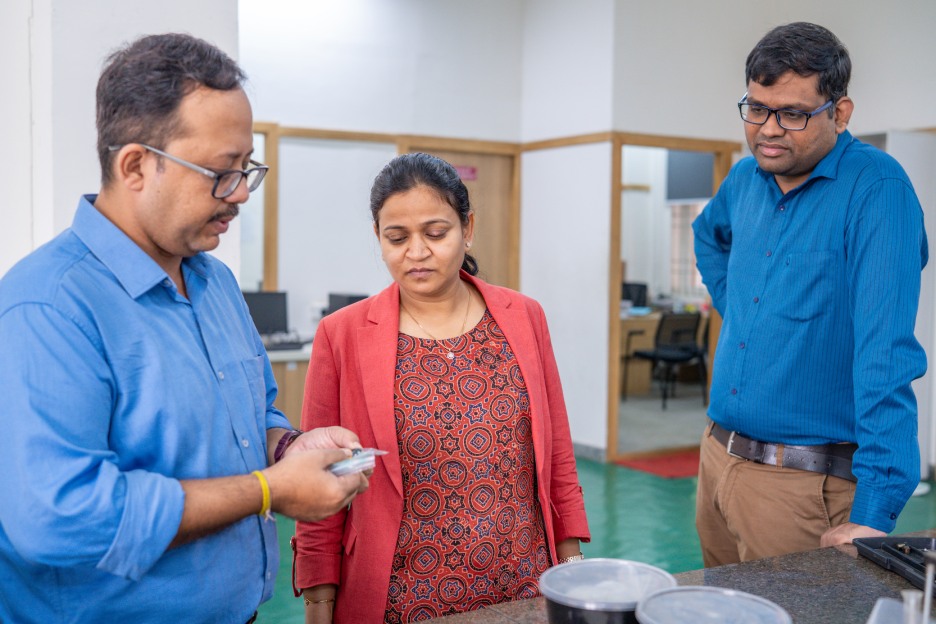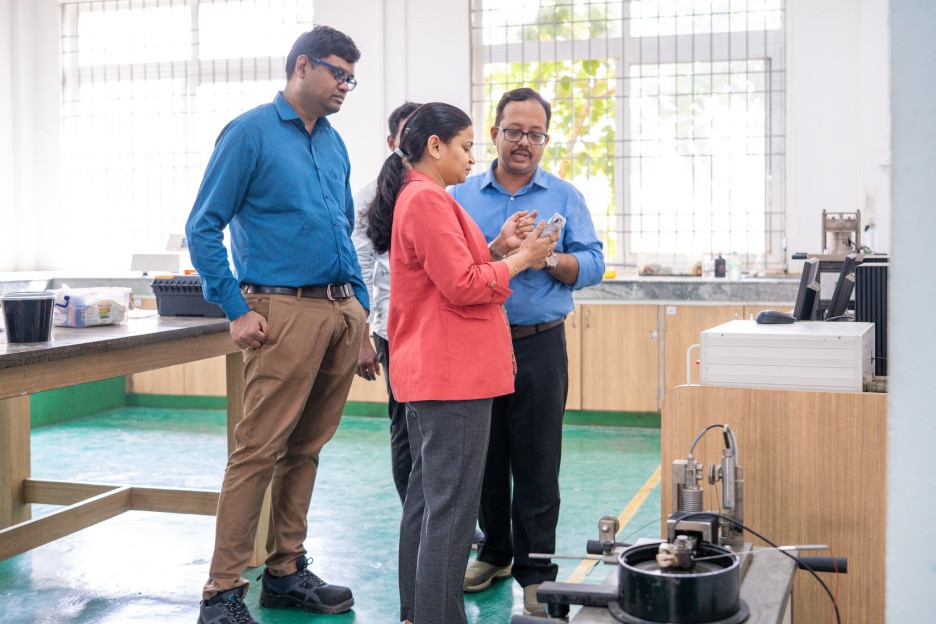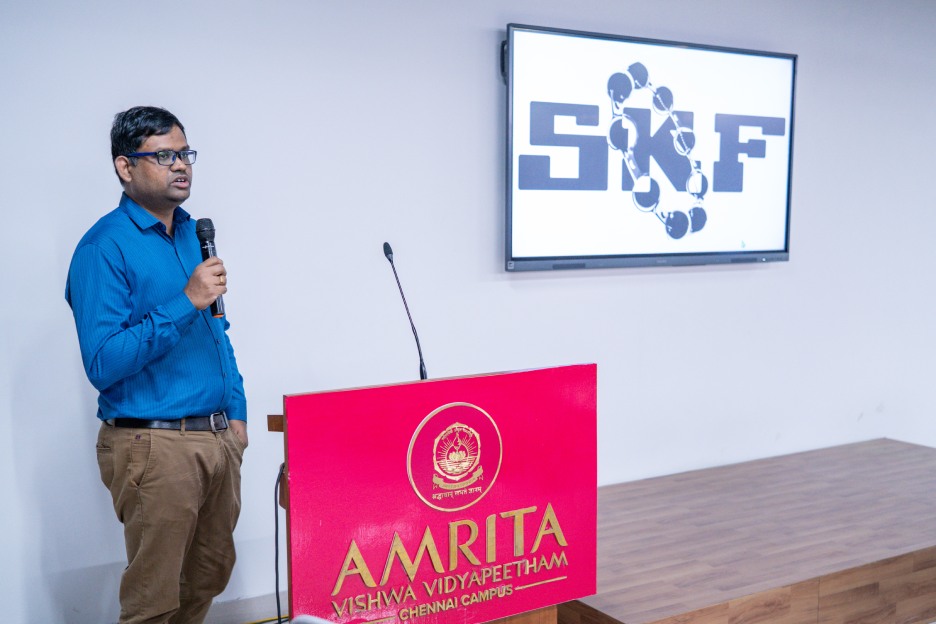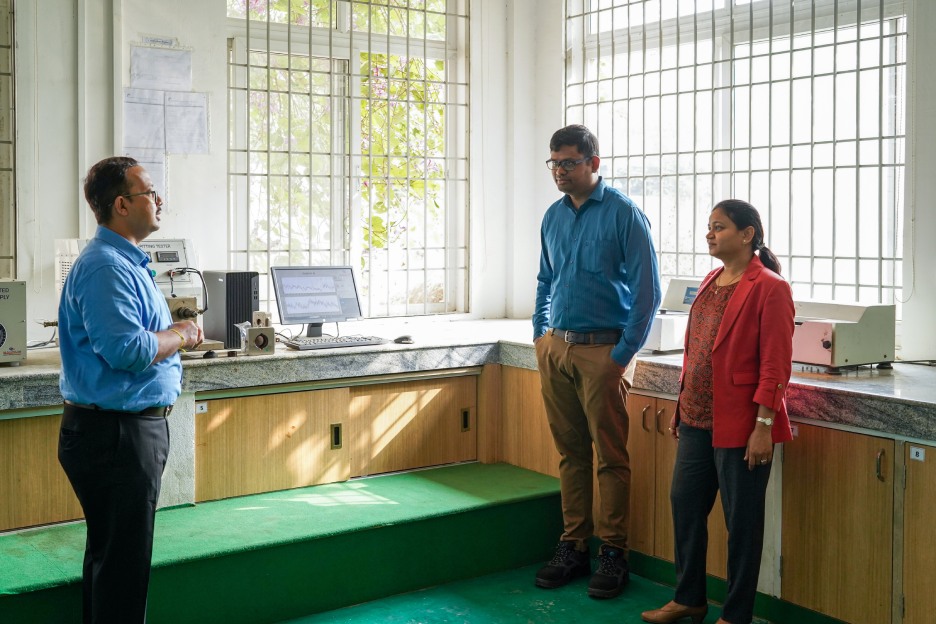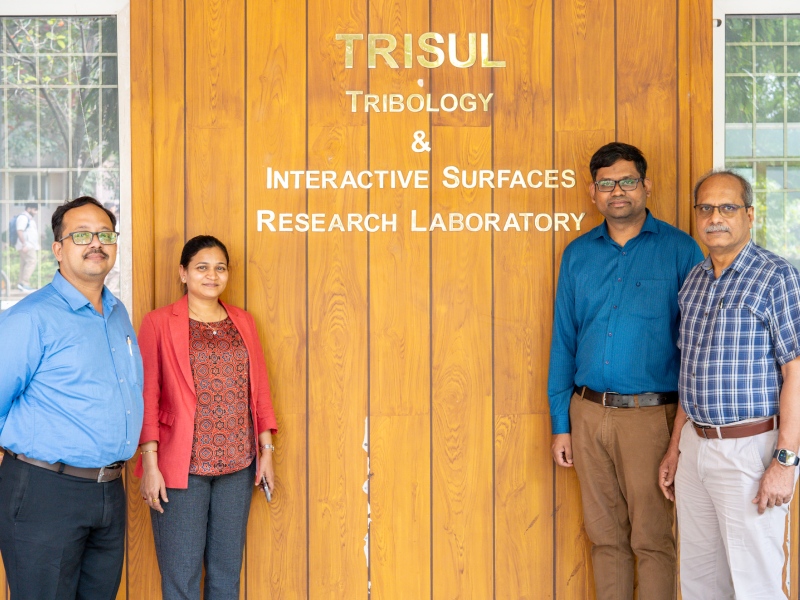
Representatives from SKF visited the Tribology and Interactive Surfaces Research Laboratory (TRISUL) on 2 February 2026. The visiting delegation included Mr. Rupesh Chitari, Manager (Innovation), Technology Development, Pune, and Dr. Deepika Malpani, Principal Engineer – Polymer, SKF R&D Bengaluru.
The team interacted with Dr. Shubrajit Bhaumik, Associate Professor and Centre Head of TRISUL, and held in-depth discussions on the ongoing sustainable and innovative tribological solutions for next-generation bearing systems. The deliberations focused on emerging challenges in bearing performance, environmentally responsible lubrication strategies, and advanced surface engineering approaches for improved reliability and energy efficiency.
TRISUL is supported by SKF to develop innovative and sustainable tribology solutions, strengthening the academia–industry partnership in the area of friction, wear, and lubrication research.
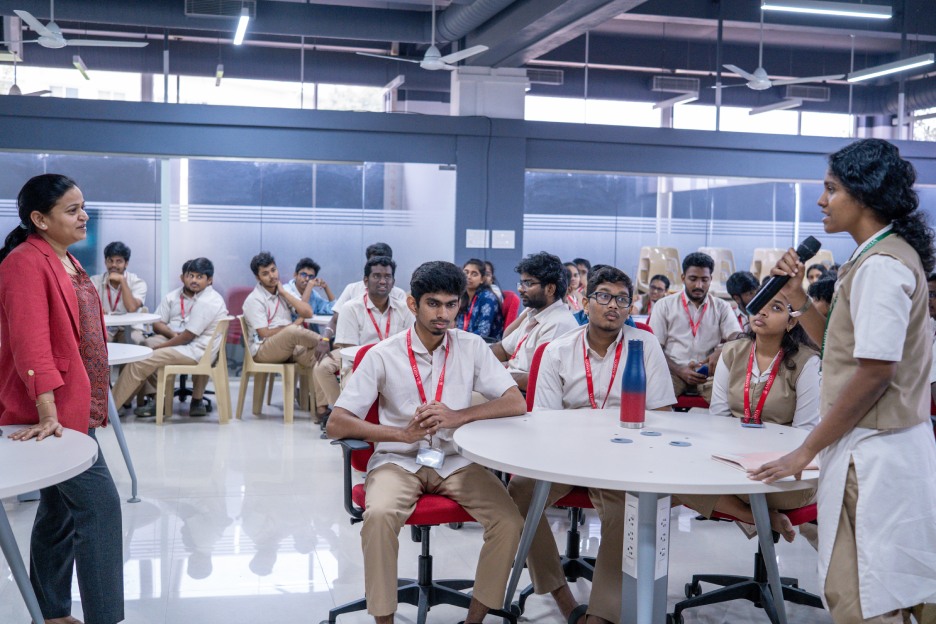
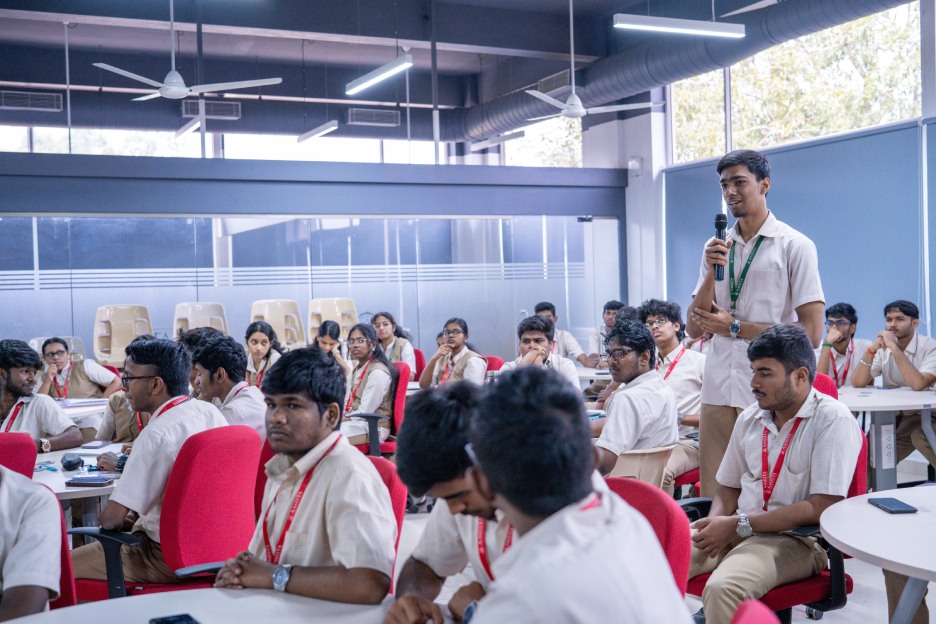
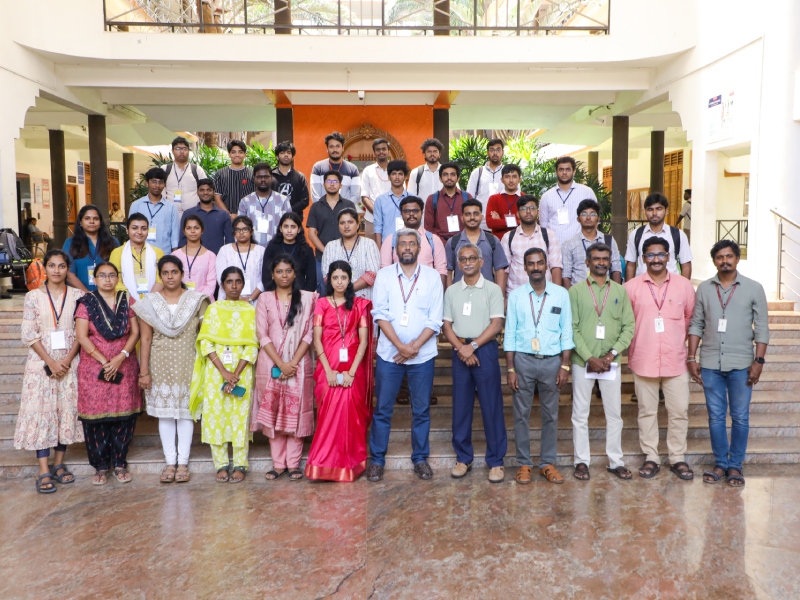
During the visit, the SKF engineers also interacted with enthusiastic students from the Department of Mechanical Engineering. They expressed appreciation for the students’ strong technical curiosity and active engagement in discussions related to tribology, bearings, and industrial research challenges.
The visit of SKF to the Tribology and Interactive Surfaces Research Laboratory (TRISUL) represents a unique and strategically significant step toward strengthening academic–industry ties in the field of tribology and bearing technology.
Such visits play a crucial role in:
Overall, this visit stands as a model example of meaningful academia–industry collaboration, demonstrating how shared expertise can accelerate innovation while nurturing future talent in tribology and advanced bearing technologies.