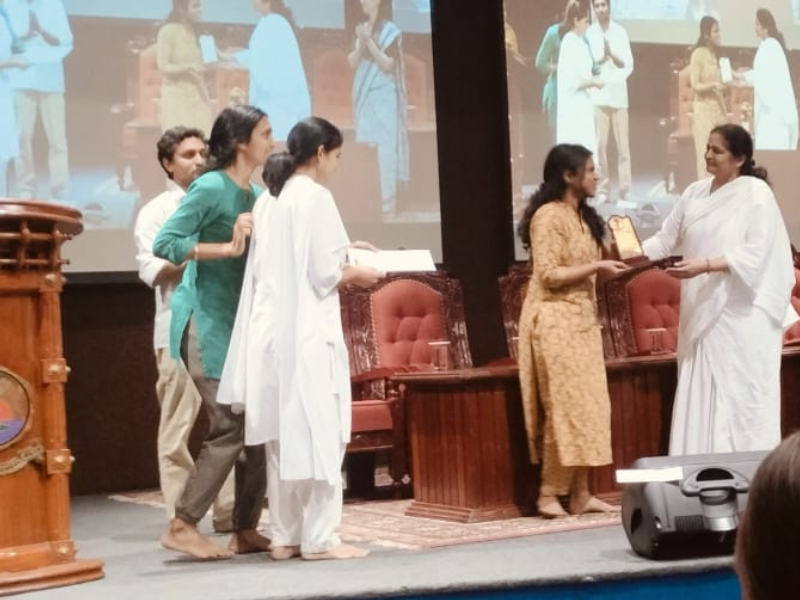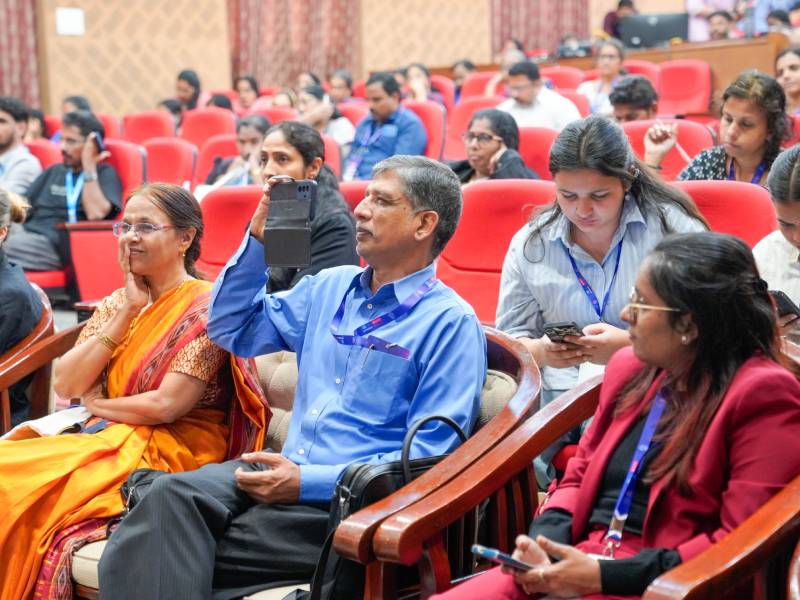
The UNESCO Chair on Assistive Technologies in Education, Amrita Vishwa Vidyapeetham, recently hosted the landmark event, “AI-Enabled Assistive Technologies for Inclusive Education,” a two-day intensive program serving as a vital pre-Summit event to the India AI Impact Summit 2026. Bringing together a synergy of policymakers, educators, researchers, and technologists, the event explored a singular, powerful vision: leveraging Artificial Intelligence to transform technology from a potential barrier into a universal bridge for learners with diverse needs.
Compassion and Equity in Education Systems
In a special message for the Symposium, Chancellor, Amma (Mata Amritanandamayi Devi) reflected on education as a process that strengthens both inner resolve and social consciousness. Amma encouraged perseverance amid challenges observing that real learning emerges when students confront societal realities and develop compassion through engagement with human experience.
This perspective is deeply embedded in Amrita Vishwa Vidyapeetham’s approach to education and research. As the only university in India to host three UNESCO Chairs, including the UNESCO Chair on Assistive Technologies in Education, Amrita leverages AI-driven innovation within UNESCO’s UNITWIN network to advance inclusive education, gender equality, and sustainable development with measurable societal impact.
Translating institutional vision into lived insight, the event featured a distinguished lineup of speakers whose work spans policy, practice, research, and lived experience in disability and inclusion. The fantastic lineup of speakers include:
From Niche to Necessity: The Universal Design Shift
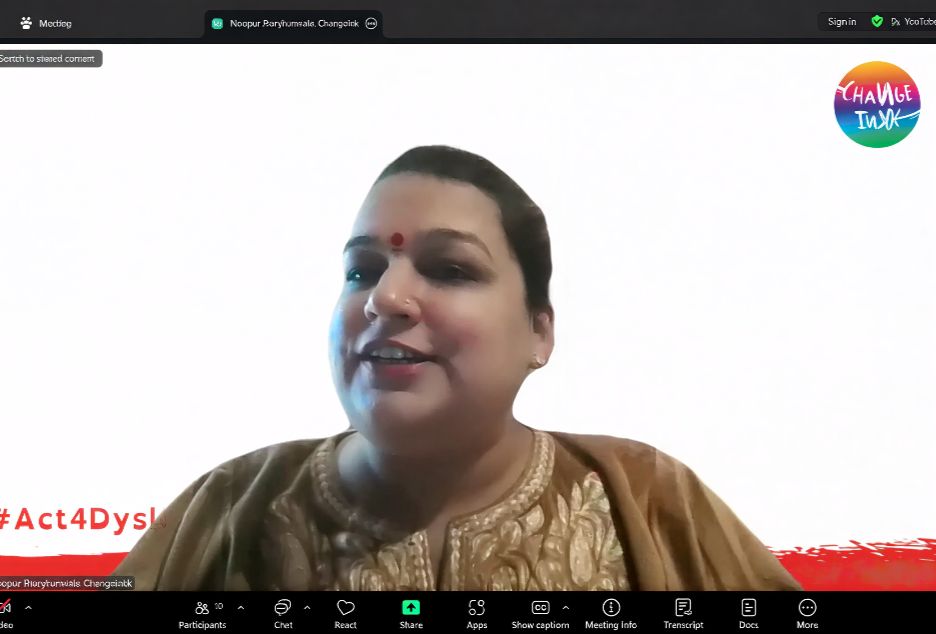
Dr. Nupur Jhunjhunwala, ChangeInkk Foundation, set the tone by challenging the traditional definition of Assistive Technology (AT). She argued that AI-driven tools—such as real-time captioning, speech-to-text, and predictive playback—should no longer be viewed as “specialized” interventions for disability, but as universal enablers.
Dr. Jhunjhunwala noted that when AI is built on inclusive datasets and involves persons with disabilities as architects, it creates a “curb-cut effect” where innovations designed for a few ultimately benefit all. With nearly 1.8 billion people globally navigating disabilities or age-related challenges, she framed inclusive AI not as an act of charity, but as a significant economic and social opportunity for scalable, high-quality therapy and education.
Neurodiversity and the AI Toolkit
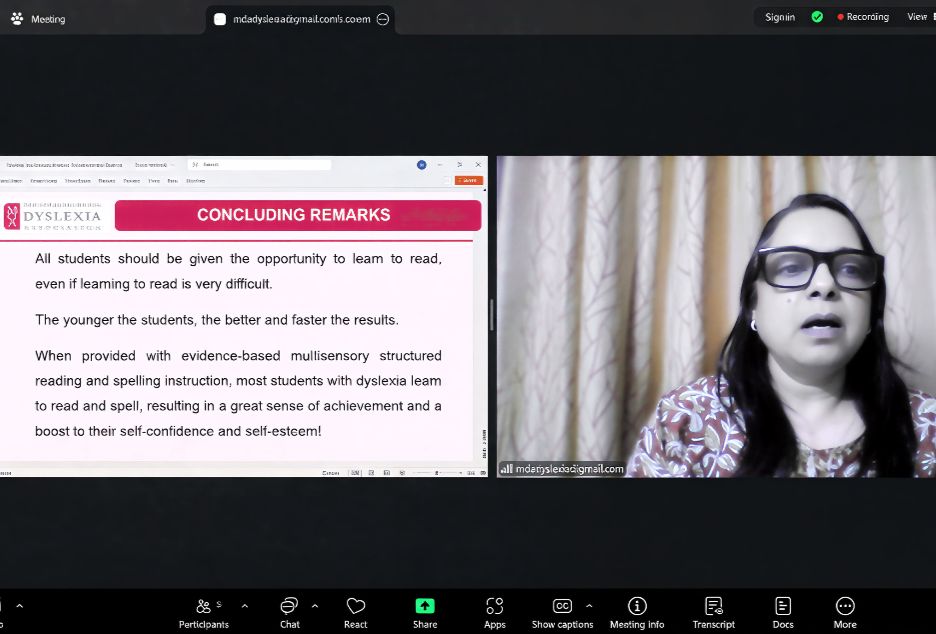
The conversation shifted toward neurodiversity with Ms. Massrat Khan, CEO of the Maharashtra Dyslexia Association, who emphasized that literacy is a fundamental right. She demonstrated how AI-powered multisensory tools provide the structured, evidence-based intervention necessary for students with dyslexia to achieve reading fluency and self-esteem.
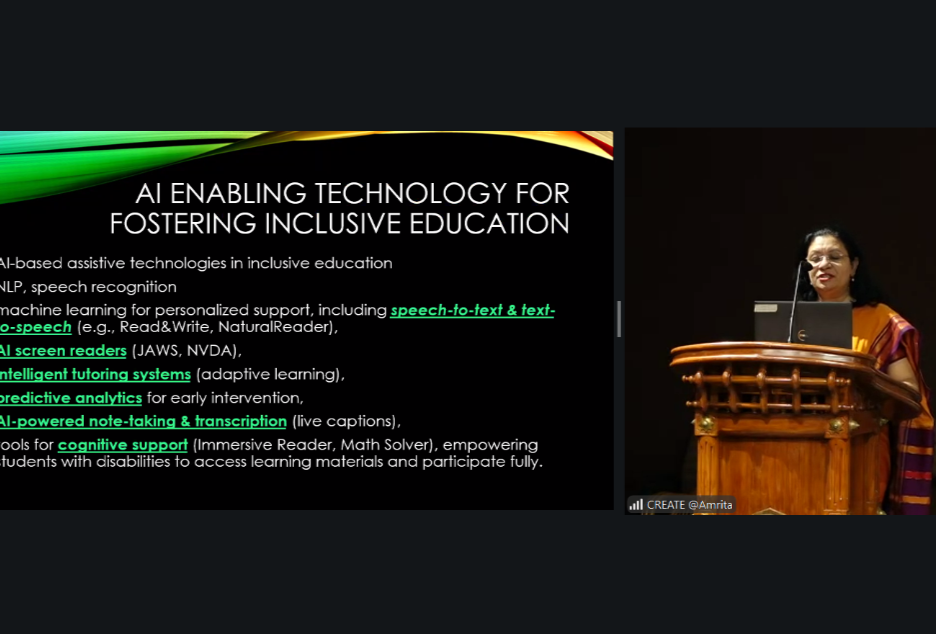
Expanding on this, Prof. Vaishali Kolhe from TISS situated these tools within the framework of Universal Design for Learning (UDL). She illustrated how a robust AI toolkit—comprising intelligent tutoring systems, predictive analytics, and real-time accessibility features—allows students with disabilities to use the exact same platforms as their peers. This “common participation” is essential for reducing the social stigma often associated with traditional assistive devices.
Breaking the Silence: Multimodal AI in Deaf Education
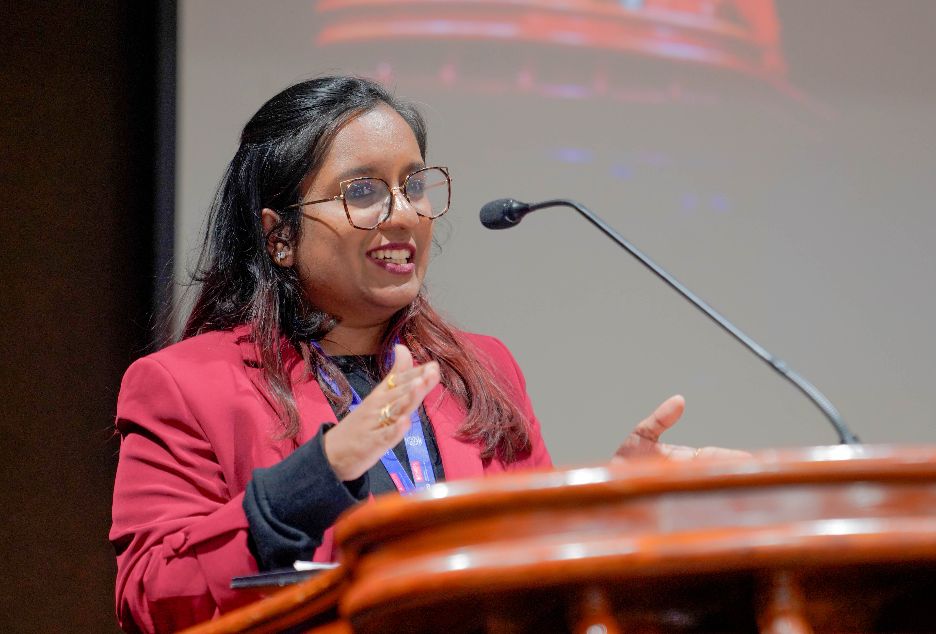
Addressing the systemic gaps in deaf education, Ms. Shraddha Agarwal, Oral Deaf Founder and CEO of Signsetu, highlighted the literacy challenges facing children born into hearing families without early access to sign language. She advocated for a fundamental shift toward Indian Sign Language (ISL) as the primary cognitive foundation.
The sessions showcased how AI-enabled multimodal learning—incorporating sign-based video recognition, visual gaming, and repetitive AI tutoring—can bridge the gap between visual thought and written language. By removing linguistic barriers through technology, educators can ensure that “concept clarity” precedes literacy, allowing deaf students to compete on an equal playing field.
A Unified Vision for the Future
The event concluded with a clear consensus: inclusion thrives only when technology, pedagogy, and policy work in harmony. The insights shared by these experts underscored that AI is not a mere “add-on” to modern education. It is the foundational architecture required for an equitable system.
By addressing physical and cognitive barriers in education, Amrita Vishwa Vidyapeetham and its partners have reaffirmed their commitment to an educational future where every student is empowered to lead confidently and contribute to the global narrative advancing SDGs 4 (Quality Education), 10 (Reduced Inequalities), and 17 (Partnerships for the Goals).