A proven science- and community-driven model transforming vulnerable rural communities into resilient knowledge societies through integrated interventions in health, education, livelihoods, water security, agriculture and digital inclusion — operating through a Hub-and-Spoke model across 13 states. Sustainability & Resilience Impact Assessment & GIS-Enabled Dashboards
Extended Beneficiaries
Direct Beneficiaries
Community Resilience Centres
Pan-india Implementation
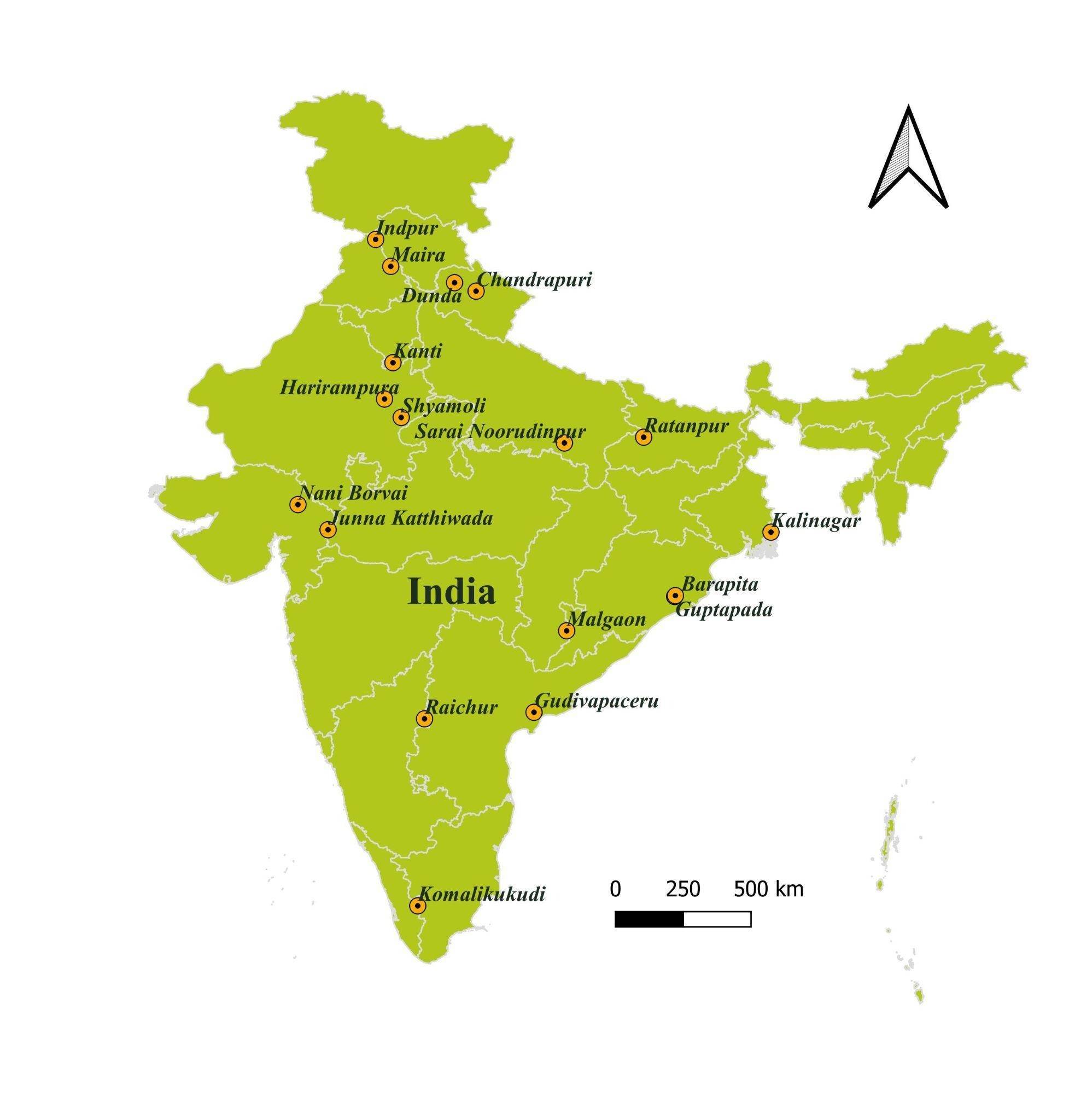
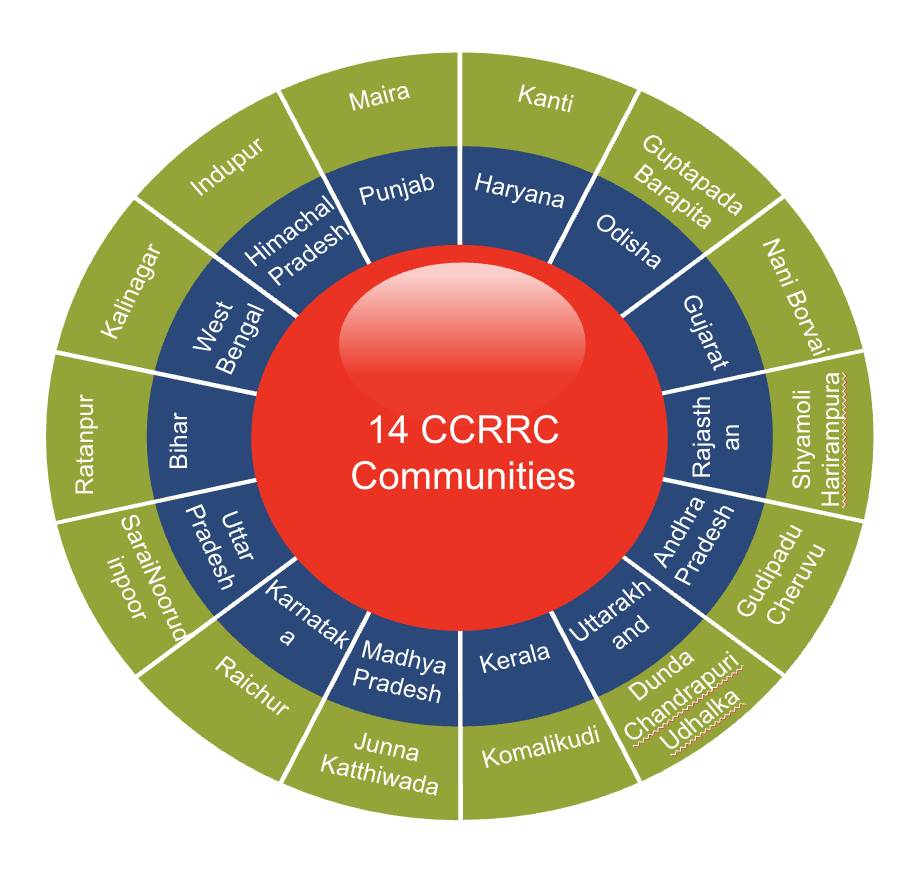
Across 14 Community Resilience Resource Centres in 13 states, the CCRRC model creates community-owned, science-driven resilience ecosystems — integrating health, digital education, water security, livelihoods, agriculture, nutrition and disaster preparedness through a scalable Hub-and-Spoke framework.

Community-Owned Resilience Hubs

Livelihood & SHG Empowerment

Digital Education & Knowledge Society

Water Security & WASH Innovation

Digital Health & Telemedicine
SREE AI Platform & Digital Governance
14 Community Resilience Resource Centres across 13 states — localized science and technology hubs addressing healthcare, education, livelihoods, water security, agriculture and disaster resilience through community participation.
Digital Knowledge Hubs with O-Labs and V-Labs, tablet-enabled learning, Vidyamritam educational support, mentor-mentee programmes and digital literacy for rural youth.
Telemedicine, Village Health Ambassadors, IoT health monitoring (Amrita Spandanam), health camps, TB-Free village initiative with community task forces, maternal & child health and lifestyle disease screening.
Smart Self-Help Group model, mushroom cultivation, tailoring & fabric painting, kitchen gardens, cloth vegetable bag enterprise, PM Vishwakarma facilitation and market linkage.
Jivamritam community water filtration, GIS-based water mapping, contactless sanitation technologies, PEPE social robot hygiene promotion and ABCD nutrition assessment with kitchen gardens.
AI-enabled platform integrating community surveys, geo-spatial information, IoT data, resilience benchmarking, evidence-based planning and real-time decision support for community development.
Each of the fourteen themes in this dossier is a working system, not a concept. Together they form a single regenerative model for the rural India that exists to serve — one where climate resilience protects communities, water and agriculture sustain them, clean energy and circular enterprise power them, and women-led SHGs own the entire value chain.
Amrita begin with a Climate-Resilience Flagship Program, anchored in the world-first AI-IoT early-warning systems and the 14-hub CCRRC network — and scale outward, theme by theme, through existing financing instruments. The infrastructure, the evidence base, the community trust and the women-led delivery network are already in place.
AI-IoT early warning & adaptation
Energy, water & circular hubs
300,000+ women, ready to scale
Nature-based enterprise clusters
The initiative is not only a delivery programme — it is a national evidence engine. The same data that guides a village’s own decisions rolls up, anonymised and benchmarked, into rigorous inputs for policy at five levels of governance.
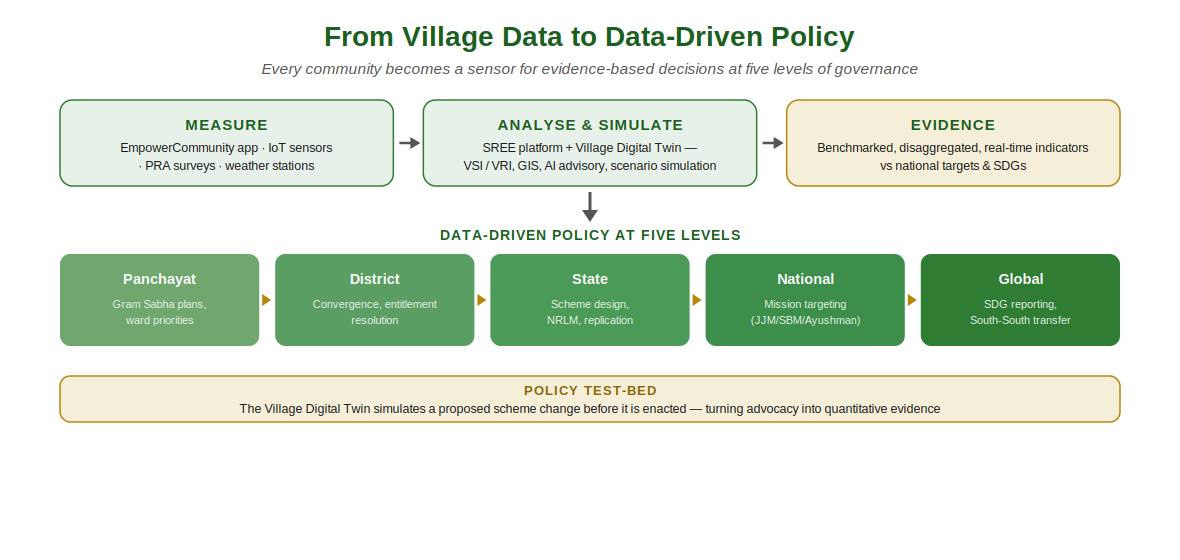
VSI and VRI indicators map onto the targets of national missions in near real time and at village granularity, how policy is actually landing on the ground: