


By Dr. Maneesha V. Ramesh
Pro Vice-Chancellor, Amrita Vishwa Vidyapeetham
UNESCO Chair on Experiential Learning for Sustainable Innovation and Development
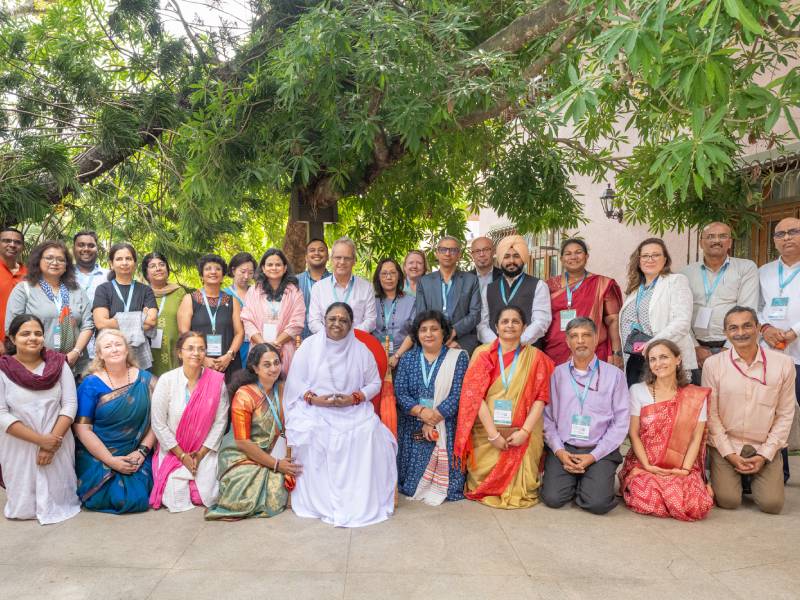
The UNESCO Chair Roundtable 2026, convened by UNESCO and hosted at Amrita Vishwa Vidyapeetham’s Amritapuri Campus in Keralam on 13–14 May 2026, brought together UNESCO representatives, UNESCO Chairs, academic leaders, researchers, and practitioners from across South Asia to advance regional dialogue on sustainable development, education, innovation, and community resilience.
The roundtable focused on strengthening regional knowledge networks, reviewing collective progress over the past two years, and identifying opportunities for deeper collaboration among UNESCO Chairs in South Asia. The discussions were closely aligned with UNESCO’s strategic priorities for the 2026–27 biennium, including advancing gender equality, mobilizing cultural diversity, and engaging meaningfully with youth, while also addressing the broader challenges of digital transformation and environmental crises.
As the UNESCO Chair on Experiential Learning for Sustainable Innovation and Development, it was a privilege to present the work undertaken by the Chair over the past two years, along with our roadmap for 2026–2027. The roundtable provided an important platform for examining how UNESCO Chairs can collectively contribute to research, education, policy engagement, innovation, and community-centered development through collaborative and interdisciplinary approaches.
During the deliberations, the UNESCO Chair on Experiential Learning for Sustainable Innovation and Development presented several initiatives aligned with UNESCO priorities. These included work in smart cities, water governance, circular water systems, digital twins for rural capacity building, sustainability and resilience dashboards, heritage-based livelihood generation, global curriculum development, and regional engagement through Amrita’s Live-in-Labs® program.
A central focus of the discussions was the importance of experiential learning in addressing complex societal and environmental challenges. Through field immersion and direct engagement with communities, students and researchers gain opportunities to better understand local realities, develop context-specific solutions together with communities, and contribute to sustainable and resilient development processes.
At Amrita Vishwa Vidyapeetham, this approach continues to guide initiatives such as the Live-in-Labs® program and the E4Life PhD program, where academic research is integrated with community engagement in areas connected to sustainability, livelihoods, agriculture, disaster resilience, digital inclusion, health, water, and climate adaptation. At the heart of these initiatives is the vision of building a knowledge society by empowering youth, who in turn empower communities.
The discussions also highlighted the need to integrate technological innovation with inclusive development approaches that remain grounded in community realities. Conversations explored the role of digital platforms, digital twins, sustainability dashboards, rural capacity-building systems, and responsible technology adoption in improving access, strengthening resilience, and reducing the digital divide.
Another important area of discussion was the role of cultural diversity and heritage-based knowledge systems in sustainable development. Heritage-based livelihood generation, culturally rooted innovation, and community-centered approaches can contribute significantly to preserving local knowledge systems, strengthening community identity, and enhancing livelihoods while supporting long-term sustainability.
In alignment with UNESCO’s emphasis on advancing gender equality, the roundtable also underscored the importance of inclusive participation, women-led livelihood initiatives, equitable access to education and technology, and the active involvement of women and youth in shaping sustainable futures.
An important outcome of the meeting was the opportunity to explore stronger engagement with UNESCO India Headquarters through the E4Life PhD Program. Discussions included possibilities for collaborative mentorship, applied research, and field-based doctoral engagement in thematic areas aligned with UNESCO priorities, creating stronger connections between academic research and societal impact.
The UNESCO Chair on Experiential Learning for Sustainable Innovation and Development also continues to engage actively in areas such as ocean vulnerability, mangrove conservation, biosphere conservation, climate-resilient communities, stakeholder capacity building, sustainable agriculture, disaster resilience, the water-health-agriculture nexus, and human-animal conflict mitigation.
The broader discussions during the roundtable further addressed critical regional challenges including floods, droughts, landslides, glacial lake outburst floods, environmental degradation, livelihood vulnerability, access to education, internet access, and digital inclusion. These interconnected challenges reinforce the importance of interdisciplinary and collaborative approaches that combine research, innovation, policy engagement, and community participation.
The roundtable reaffirmed the important role of universities and UNESCO Chairs in advancing knowledge-sharing, regional cooperation, and community-centered innovation for sustainable and inclusive development. Strengthening partnerships across institutions, governments, communities, and youth networks will remain essential for building resilient, peaceful, and environmentally sustainable societies.
This vision continues to be deeply inspired by the guidance of Mata Amritanandamayi Devi, whose emphasis on compassion-driven action continues to shape Amrita’s approach to education, sustainability, and community resilience.
I am grateful to UNESCO India, Tim Curtis, the participating UNESCO Chairs from across South Asia, and all colleagues and partners who contributed to these important discussions and collaborations. It was also valuable to engage alongside the fourteen UNESCO Chairs who participated in the roundtable, as well as Amrita’s other UNESCO Chairs — the UNESCO Chair on Gender Equality and Women’s Empowerment and the UNESCO Chair on Assistive Technologies for Education — reflecting the university’s broader commitment to inclusive, interdisciplinary, and globally engaged initiatives.
The UNESCO Chair Roundtable 2026 strengthened regional dialogue, opened new pathways for collaboration, and reaffirmed the importance of empowering youth, strengthening communities, and advancing approaches that support sustainable, inclusive, and resilient societies across South Asia and beyond.


