Back close

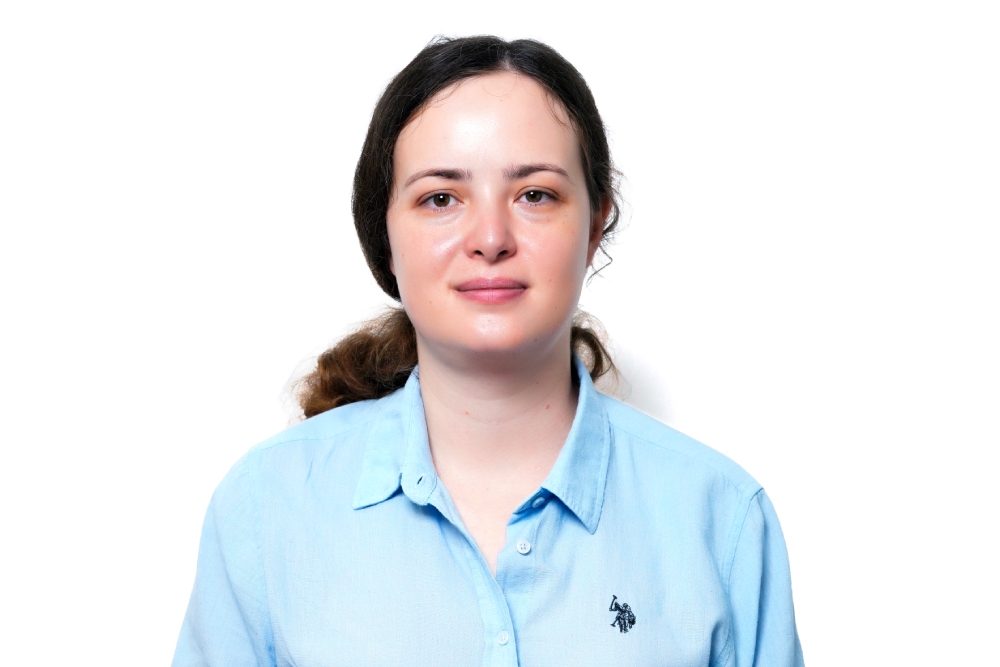
Victoria Ustenko

Associate Professor, Department of Social Sciences, School of Social & Behavioural Sciences, Amritapuri

Qualification: Ph. D.

Bio

Dr. Victoria Ustenko currently serves as Associate Professor at the Department of Social Sciences within the School of Social and Behavioural Sciences at Amrita Vishwa Vidyapeetham, Amritapuri.

She serves as an Associate Editor of “Frontiers in Water” (Section: Water and Human Systems), a Q1 journal (Impact Factor 2.8; CiteScore 5.5), contributing to the advancement of interdisciplinary research on water governance, human systems, and sustainability. Her research contributions include Q1 publications that advance transformer-based topic modeling approaches (e.g., BERTopic) for analyzing citizen perspectives, policy framing, and governance processes, thereby positioning computational social science methods within public policy and development research.

She has demonstrated significant impact on public policy design through six government-funded research grants (2015–2020) awarded by the Government of Russia, focusing on innovation systems, human capital development, and science and technology policy, and supporting evidence-informed policy formulation at the national level. She has also held the position of Senior Researcher at the Russian Academy of Sciences, where she contributed to research on innovation systems, technological foresight, and responses to global challenges through science and innovation policy.

Currently, she serves as the Research Head of the Center for Women’s Empowerment and Gender Equality (CWEGE), which holds the UNESCO Chair in Gender Equality, coordinating interdisciplinary research on gender, water governance, and inclusive development.


Research Interests and Areas

Development Economics: Designing and evaluating interventions aimed at poverty alleviation, gender empowerment, and the creation of sustainable livelihoods. Current projects open to PhD student involvement include evaluating the determinants of success of tree and intercropping farming systems in tribal communities in Odisha (WADI project), and designing an incentive scheme to engage women in coastal areas in seaweed farming (Blue is the New Pink project).

Gender and Water Systems: Studying the determinants of safe water management practices using behavioural change frameworks, and designing interventions that strengthen women’s roles in community water governance. This work focuses on how social norms, risk perceptions, and institutional trust influence household water treatment, water safety behaviours, and collective action. Current projects open to PhD student involvement include designing evaluating interventions that train women as Water Ambassadors to deliver water quality information, support behaviour change at the household level, and mobilize communities to take collective action to improve water quality and access, in collaboration with researchers from Tel Aviv University and Delft University of Technology.

AI and Civic Participation in Governance: Developing and applying computational social science methods to understand how citizens frame public problems and how these perspectives can be meaningfully integrated into policy processes. This work applies natural language processing to examine values, concerns, and priorities expressed by citizens, and to study how these inputs align — or fail to align — with public policy agendas. We are currently open to PhD students interested in examining how citizen perspectives are reflected across different types of government policies, particularly in domains such as environmental protection, gender equality, and other areas of social and public policy, with a special focus on rural and underserved communities.

Collaborations
  • Tel Aviv University, Israel
  • Delft University of Technology, Netherlands
  • University of Groningen, Netherlands
Admissions Apply Now