Programs
- M. Tech. in Automotive Engineering -Postgraduate
- BBA (Honours) – Digital Marketing and Artificial Intelligence -Undergraduate

Reinforcing its commitment to impactful and globally relevant research, Amrita Vishwa Vidyapeetham has been recognised for pioneering work in biomedical waste management through the development of a novel framework titled Bhadran’s Point-of-Generation Segregation Theory (PGST).
Developed by Renjith Seela Bhadran, Assistant Professor in the Department of Public Health at Amrita School of Medicine, the theory represents a significant advancement in how healthcare systems approach biomedical waste handling. Moving beyond conventional disposal-focused practices, PGST introduces a behavioural-systems model that places accuracy at the point where waste is generated as the most critical factor in ensuring safety and efficiency.
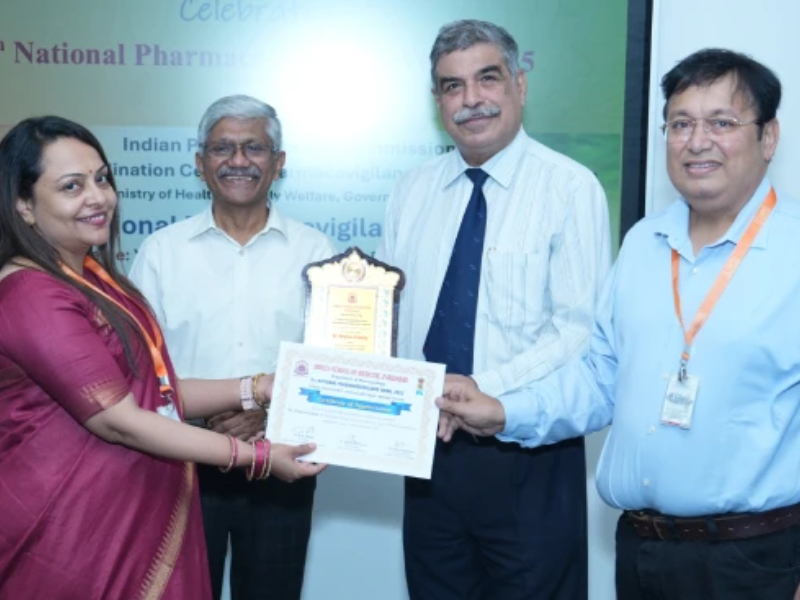
In recognition of outstanding contributions to research and academic excellence, a Certificate of Appreciation was awarded during the Research Day celebrations by Dr. D. M. Vasudevan, Dean of Research, Amrita Vishwa Vidyapeetham.
The recognition highlights impactful research contributions emerging from the institution, reflecting Amrita’s continued commitment to innovation, evidence-based practice, and academic leadership in healthcare and public health domains.
Biomedical waste management remains a global challenge, with issues such as improper segregation, environmental contamination, and occupational hazards posing serious risks. Traditional systems often focus on correcting errors at later stages, which can be costly and ineffective. Bhadran’s PGST addresses this gap by shifting attention to the source itself—emphasising that correct segregation at the moment of generation can transform the entire waste management process.
At its core, the theory proposes a simple yet powerful principle: the efficiency, safety, and sustainability of biomedical waste systems are determined by the precision with which waste is segregated at the point of origin. It further conceptualises waste segregation not merely as a routine task, but as a behavioural act influenced by cognitive, environmental, and systemic factors.
The framework integrates human behaviour with institutional systems, offering a structured and scalable approach to improving waste segregation practices. By introducing concepts such as behavioural precision and system alignment, Bhadran’s PGST enables healthcare institutions to reduce errors, enhance downstream processing efficiency, and ensure safer working conditions for healthcare personnel.
One of the key strengths of the theory lies in its practical applicability. Developed within a real-world healthcare setting, Bhadran’s PGST provides measurable tools to assess and improve segregation accuracy. Its scalable nature allows it to be implemented across hospitals, clinics, and public health systems, making it highly relevant for both developed and resource-constrained settings.
The research has gained international recognition with its publication in Scientific Reports, a reputed journal under the Springer Nature portfolio. This publication highlights the scientific rigor, originality, and global relevance of the work, positioning it as one of the early foundational contributions in behavioural precision within biomedical waste management.
Beyond academic significance, Bhadran’s PGST holds strong potential for influencing policy and practice. It can support infection control systems, guide training programmes for healthcare professionals, and be integrated into digital and AI-driven monitoring platforms. The framework also aligns with broader goals of environmental sustainability, healthcare quality, and systems strengthening at national and global levels.
Emerging from Kerala’s healthcare ecosystem, this innovation reflects Amrita’s vision of combining science with societal impact—transforming everyday healthcare practices into safer, smarter, and more sustainable systems.