


Amrita Vishwa Vidyapeetham has long been committed to fostering sustainability, climate resilience, and environmental education through strategic collaborations with global and national organizations. By working with institutions like UNESCO Chairs, international and national NGOs and local authorities, Amrita has implemented programs that directly address global challenges like climate change, resource depletion, and sustainable development.
Amrita Vishwa Vidyapeetham is proud to host the UNESCO Chair, which focuses on creating sustainable innovation through experiential learning. This collaboration helps implement global frameworks for:
Communities
Indian States
The UNESCO Chair on Experiential Learning for Sustainable Innovation and Development held an International symposium on Sustainable Innovation and Development by bringing together experts including representatives such as UNESCO Chairs, academicians and experts to deliberate, assess and evaluate the global curriculum for sustainable development from Dec 11 to 13 2023. Amrita has been spearheading the development of a global curriculum on sustainable development applicable to select 14 SDGs by virtue of the UNESCO Chair.
Participants
Countries
The symposium encompassed in-depth deliberations on global curriculum and initiatives on several thematic areas including Climate Change, Water Sustainability, Environmental Sustainability, Disaster Resilience through case studies, exploring the need, requirements, and challenges of a global curriculum for sustainable innovation and development.

Amrita hosted the Civil 20 India 2023 Working Group on Sustainable and Resilient Communities – Climate, Environment and Net Zero Targets. The working group had a total of 790+ registered CSO members, out of which 290 CSO’s were working in the area of climate, environment and net zero targets.
Organized various educational and policy-focused events addressing topics related to the environment, climate change, and achieving net-zero targets. By collaborating with prominent NGO’s through dialogues, there was knowledge sharing in the following areas from Feb’23 to June’23.
| Building Resilience in a Changing Climate | Preserving Life on Earth: The Importance of Biodiversity Conservation |
| Decoding Results Based Climate Finance (RBCF): Strategies for Success | Round Table on Green Finance |
| Climate and Biodiversity: Strategies, Challenges and Solutions | Civilization Resilience: Missing Link in Climate Action & Social Justice for Heritage Sites and Communities |
| Climate Change and Health Resilience | Reshaping Agriculture and Food Systems to face the Climate and Biodiversity Crisis |
| Climate Resilience: Bridging the gap between multihazard modeling, Technological Solutions and Community Capacity | Compassion in Disaster Management – Building Community Resilience in Disaster Prone Environments |
| Water Governance and Environmental Sustainability | Dialogue on Climate Change, Health & Disasters – Insights for the G20 |
| Adapting Architectural Design, Settlement Planning and Practice to Climate Change: An International Perspective | Gender Responsive Climate Action |
| Unveiling the Impacts of Climate Change and Fostering Environmental Sustainability in Africa | Climate Resilience Strategies for a Changing World |
Amrita’s C20 initiatives with SRC Working Group contributed to initiatives that encouraged:
This partnership has helped impact more than 200 participants, including educators and students, across schools, colleges, and communities in India.
Collaborative MoU’s in the Areas of Climate, Environment and Net Zero Targets
MoUs were signed with the following organizations to advance our journey towards achieving the UN SDGs

Collaborations with CANSA: Climate Action Network South Asia
Amrita’s partnership with CANSA is focused on advancing sustainable agricultural practices. This collaboration aims to:
The training programs developed through this partnership are helping local farmers increase productivity while reducing their environmental impact.
Industree: Empowering Rural Enterprises
Amrita’s collaboration with Industree focuses on supporting rural artisans and small-scale industries in adopting sustainable production methods. This initiative has enabled:
Through this collaboration, Amrita is helping rural communities create long-term, environmentally conscious livelihoods.
Team Environment Kenya: Raising Awareness on Environmental Sustainability
Working with the Team Environment Kenya, Amrita University has launched a series of community-based environmental education programs aimed at:
The collaborative projects supported by Vasudha Foundation have made a direct impact in educating and empowering local communities to take charge of their environmental footprint.
Disaster Resilience and Sustainable Development Workshops in Sikkim
Amrita’s educational programs have been implemented in areas where they are needed the most. In Sikkim, Amrita collaborated with the Sikkim State Disaster Management Authority (SSDMA), International Consortium on Landslides (ICL), and International Program on Landslides (IPL) to conduct:


Empowering Educators and Communities
Through its collaborations, Amrita has equipped teachers, students, and community leaders with the knowledge and skills to promote sustainability. Following the training sessions, Mrs. Ranjana Lama, a teacher at Modern Senior Secondary School, conducted a Sustainable Development awareness session for her school, inspiring both students and faculty to adopt greener practices.


Compassion Driven Chaupals (C-chaupals)
C-Choupals were held across 11 Indian states to organise inclusive and participatory meetings of all sections of rural communities across India. The discussions are held in common areas of rural villages where community members gather for discussions, an area commonly known as Chaupals. The participants included villagers, village administration, representatives, local NGO partners, health workers, Self Help Group members, farmers, and women folks among many others.
Chaupals
Villages
Participants
Indian States
Rajasthan, Haryana, Uttarakhand, Uttar Pradesh, Madhya Pradesh, Andhra Pradesh, Sikkim, Keralam, West Bengal, Maharashtra
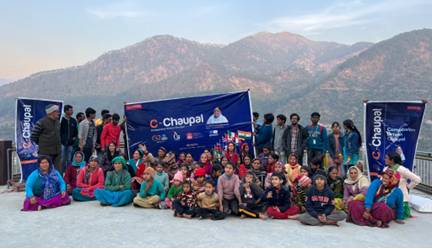


The discussions with the villagers created awareness about pressing issues related to environmental sustainability, climate change adaptation, agriculture, water conservation etc.
Global Seedball Campaign
The Global Seedball Campaign was launched in collaboration with the C20 India SRC working group with an objective to promote environmental sustainability and restoration of ecosystems by producing and distributing over a million seedballs.
The campaign was spread across 5 continents and 12 Indian states with active participation from 500,000+ stakeholders including multiple state governments, school and college students, non-governmental organisations, individuals and institutions.
The campaign helped to educate and create awareness about the importance of environmental sustainability, resilience to climate change and importance of biodiversity conservation through events such as workshops and awareness sessions.

The campaign, first launched in Keralam, India, in April 2023 quickly spread across states like Sikkim, Orissa, Telangana, AP, Haryana, Uttar Pradesh, Maharashtra, Karnataka, Tamil Nadu, Uttarakhand and Jharkhand in collaboration with various institutional partners and other eminent dignitaries.

Over a period of 7 months, more than 2 million seedballs have been produced and disbursed globally especially in areas with a special focus on fragile ecosystems. Globally the campaign was carried out successfully in North America, Europe, Japan, Africa and Australia.
Training and Certification Programs in Disaster Resilience, Sikkim, India
Building Resilience in a Changing Climate: Strategies, Solutions & Collaborations
Decoding Results based Climate Finance
Addressing Climate & Biodiversity with Local Stakeholders: Strategies, Challenges & Solutions
Climate Change: Intersections of Gender and Equity Concerns Solutions from the Frontlines
Policy Dialogue on Reshaping Agriculture and Food Systems to face the Climate and Biodiversity Crisis
Climate Resilience: Bridging the gap between multi hazard modelling, Technological Solutions and Community Capacity
Compassion in Disaster Management – Building Community Resilience in Disaster Prone Environments
Water Governance and Environmental Sustainability
Adapting Policies, Institutions and Technologies for Risk Mitigation and Building Resilience in Agriculture
Adapting Architectural Design, Settlement Planning and Practice to Climate Change: An International Perspective
Unveiling the Impacts of Climate Change and Fostering Environmental Sustainability in Africa, Kenya