


The year 2024 marked a defining phase for Amrita Vishwa Vidyapeetham in advancing the United Nations Sustainable Development Goals (SDGs) through transformative education, globally impactful research, and deep community engagement.
Major institutional milestones, including the renewal of Amrita’s UNESCO Chair on Experiential Learning for Sustainable Innovation & Development, the expansion of the E4LIFE PhD Program, and the strengthening of the International Network for Sustainable Innovation and Resilient Futures, helped drive research and action across clean energy, climate risk reduction, sustainable communities, water governance, gender equality, and rural development.
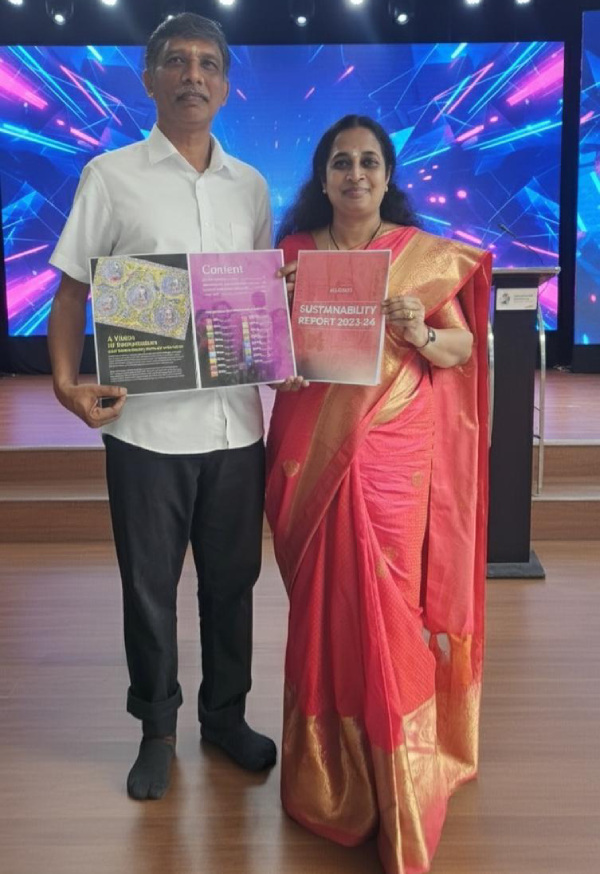
Amrita’s Sustainability Report 2024 was released on December 20, 2024, by Dr. Maneesha V. Ramesh, Pro Vice-Chancellor, and Dr. Raghuraman, Principal Investigator and Coordinator, Amrita Centre for Policy Research
“Amrita’s Sustainability Report 2024 represents a rigorous, data-driven articulation of our institutional impact across all 17 Sustainable Development Goals. By systematically measuring outcomes across education, research, innovation, community engagement, and policy, the report strengthens transparency, accountability, and evidence-based action, locally, nationally, and globally.”
— Dr. Maneesha V. Ramesh
In 2024, Amrita advanced solution-driven research across Education, Water Sustainability, Climate Action, Renewable Energy, Gender Equality, Public Health, and Sustainable Agriculture. The E4LIFE PhD Program continued to support scholars from low- and lower-middle-income countries, expanding global research capacity in sustainability. New innovations in IoT-based environmental sensing, landslide and flood early-warning systems, climate-resilient livelihoods, and community-driven disaster preparedness showcased Amrita’s leadership in science-driven societal impact.
Students Engaged in SDG-linked Projects
Sustainability Projects Across India (2024)
Communities Impacted Through Live-in-Labs® and Field Immersions
Amrita expanded its network of global partners in 2024 through collaborations with UNESCO, UNDP, INCOIS, University at Buffalo, Case Western Reserve University, Stanford SPARK, and members of the SustIN Network (150 institutions, 28 countries).
Key initiatives included:
Throughout 2024, Amrita advanced SDG 1, SDG 2, and SDG 3 by supporting communities through:
These efforts strengthened food security, reduced vulnerabilities, and promoted holistic well-being.
Amrita’s healthcare outreach in 2024 expanded across India, Kenya, Uganda, and Tanzania, delivering free screenings, health education, maternal-care sessions, and hygiene training. The ALARM 2024 Antimicrobial Resistance Campaign, featuring the social robot Haksh-E, reached thousands of schoolchildren with interactive hygiene and AMR awareness.
People Benefited Through Healthcare Outreach
In 2024, Amrita strengthened its sustainability infrastructure and community engagement:
Clean Drinking Water Access : Beneficiaries across Multiple Villages
Amrita continued to champion SDG 4 and SDG 5 through:
These programmes foster inclusive education and improve opportunities for women and girls.
Amrita advanced SDG 13 through major research efforts, training programmes, and policy dialogues, including:
Together, these actions strengthened India’s climate literacy, local adaptation strategies, and community resilience.
List of SDG Wise Reports
Amrita Vishwa Vidyapeetham Sustainability Report 2024-25: A Vision of Compassion and Responsibility through Education
Amrita Vishwa Vidyapeetham stands as a global exemplar of compassion-driven sustainable development, demonstrating how higher education institutions can serve as powerful catalysts for societal transformation. Guided by the vision of our Chancellor, Mata Amritanandamayi Devi, and under the strategic leadership of Provost Dr. Maneesha V. Ramesh, UNESCO Chair on Experiential Learning for Sustainable Innovation and Development, the university has embedded sustainability not merely as an operational goal but as a profound moral imperative that permeates every aspect of institutional life.
Our holistic approach to the United Nations Sustainable Development Goals has earned international recognition, with Amrita ranking first in India and forty-first globally in the Times Higher Education Impact Rankings 2025. This achievement reflects our unwavering commitment to harmonizing academic excellence with measurable, ground-level impact across education, research, community engagement, and campus operations.
Environmental Stewardship
Amrita has achieved Indian Green Building Council Platinum Certification, establishing a benchmark for sustainable campus development in India. Our integrated water management systems achieve a seventy-three percent reuse rate, treating and recycling 688,200 cubic meters annually while maintaining per-person consumption forty-five percent below national benchmarks. The Wave of Change initiative extends this expertise to 108 communities nationwide through trained Water Champions serving as local sustainability ambassadors.
Comprehensive energy efficiency programs have reduced consumption by up to eighty-five percent in retrofitted zones through LED lighting, automated controls, and building insulation. Our Building Energy Monitoring and Management System delivers annual savings of 379,200 kilowatt-hours and reduces emissions by 311 metric tons of carbon dioxide. Integration of solar systems, biogas digesters, and patented innovations including our Solar Electric Vehicle demonstrates commitment to renewable energy transition.
Our closed-loop waste management prioritizes prevention and resource recovery. Food waste feeds biogas digesters and composters producing energy and fertilizer, while comprehensive recycling initiatives and the Sustainable Solid Waste Management Centre advance our Zero Waste campus goal.
Social Innovation and Community Impact
The Live-in-Labs program, honored with the Times Higher Education Asia Award 2024 for Outstanding Contribution to Environmental Leadership, represents India’s most extensive experiential education platform. Operating through the E4LIFE framework of Experience, Embrace, Empower, and Engage, the program has implemented over 300 projects across 25 states, contributing more than 400,000 community service hours and reaching over one million rural residents with sustainable solutions in water, sanitation, healthcare, energy, and agriculture.
Our commitment to gender equality manifests through two UNESCO Chairs and comprehensive initiatives advancing women’s empowerment and economic participation. The inaugural E4Life PhD Programme graduated twenty-three scholars from nine countries, many from disadvantaged backgrounds, combining interdisciplinary research with community-centric solutions. Through extensive training programs, we demonstrate how education catalyzes social transformation and reduces inequalities.
Healthcare and Research Excellence
Amrita Institute of Medical Sciences delivered extensive community healthcare in 2024, serving 746 patients through Super Specialty Medical Camps, providing free heart surgeries for children through MathruSparsham, and certifying thirty-six Village Health Champions from fifteen states. Our landmark collaboration with Harvard Medical School advances critical care, pain medicine, and anesthesiology research, while partnerships with Stanford and the University of Minnesota strengthen global networks in biomedical innovation.
Between 2022 and 2024, Amrita produced over 5,000 scholarly outputs across the Sustainable Development Goals with exceptional citation impact. Thirty-seven faculty members achieved recognition among the World’s Top Two Percent Scientists for the sixth consecutive year. Our research addresses critical challenges including artificial intelligence-enabled early-warning systems for landslides that have saved lives across vulnerable regions, precision agriculture technologies enhancing food security, and marine conservation initiatives training sixty-four women in sustainable seaweed farming while restoring coastal habitats.
Global Partnerships and Student Success
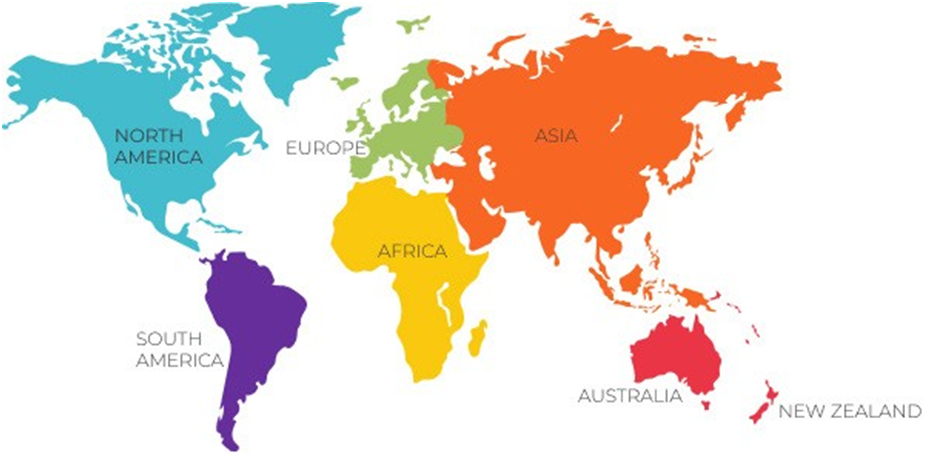
Amrita maintains seventy-four international Memoranda of Understanding with leading institutions across North America, Europe, Australia, Asia, and Africa, enabling joint degrees, faculty exchanges, and collaborative research. Strategic alliances with Harvard, Delft University of Technology, Politecnico di Milano, and industry partners including MathWorks, Renault-Nissan, and Volvo strengthen applied research capacity. At the twenty-eighth United Nations Climate Change Conference, our UNESCO Chairs contributed to high-level discussions on climate education and gender-responsive strategies.
Over 2,500 students received need-based scholarships in 2024, with comprehensive funding covering tuition, accommodation, and research support for students from disadvantaged backgrounds. The Amrita Center for Entrepreneurship Seed Grant Scheme awards competitive grants up to 200,000 rupees to student-led startups, while the ARISE 2024 Startup Festival provided incubation services and mentorship to ventures addressing sustainability challenges through socially responsible innovation.
Our Commitment Forward
Amrita Vishwa Vidyapeetham remains dedicated to deepening impact across environmental, social, and economic sustainability dimensions. Through continued innovation in education, research translation, and community partnership, we cultivate compassionate and responsible individuals who will lead the transition toward a more sustainable and just world. This report reflects our dedication to transparency, accountability, and continuous improvement in service of the United Nations Sustainable Development Goals.

Facculty & Ranking
Over 1,700 faculty members 37 recognized among World’s Top 2% Scientist (2025)

Education for Sustainable Development
Disaster Resilience
Healthcare Innovation
Sustainable Livelihood

Offers > 250+ Programs
Patent, Translation Research, Community Impact

Top 41 universities worldwide foe supporting the Nations Sustainable Development Goals (SDGs)
Amrita Vishwa Vidyapeetham adopts a holistic and compassion-driven approach to the United Nations Sustainable Development Goals (SDGs). The university integrates SDG principles across education, research, outreach, and campus operations, aiming for measurable real-world impact.
Amrita’s approach to SDGs exemplifies its mission to harmonize academic excellence with ground-level impact, positioning it as a leader in sustainable development practices and social responsibility in higher education.
Global Partnerships and Academic Networks
Amrita Vishwa Vidyapeetham maintains a broad and growing global presence through formal agreements, joint programming, research ties, and student/faculty mobility. The Amrita Center for International Programs (ACIP) continues to steer this expansion, serving as a strategic node for managing MoUs, dual degrees, exchanges, collaborative research, and global outreach.
Amrita’s academic reputation is strengthened through a robust network of international partnerships that connect its faculty and students to leading institutions around the world. These collaborations open new pathways for dual degrees, joint research, student and faculty exchanges, and co-taught courses that enhance both academic rigour and global exposure.
The partnership with UNM enables student and faculty exchanges, dual-degree pathways, and integrated coursework in engineering and computer science. This collaboration bridges American and Indian academic frameworks, encouraging collaborative research and innovation in artificial intelligence, sustainable engineering, and information systems.
Amrita’s partnership with the University of Paderborn facilitates joint curriculum development, research collaborations, and semester exchange opportunities in computer science and engineering. This academic linkage supports German–Indian cooperation in automation, embedded systems, and digital manufacturing.
A Memorandum of Understanding (MoU) between Amrita Vishwa Vidyapeetham and the University of Minnesota, Twin Cities, was formalised to advance global collaboration in research and education. The collaboration enables joint degrees, research partnerships, innovation initiatives, and technology transfer. The University of Minnesota—founded in 1851 and regarded as a top U.S. public research university—is recognised for hosting engineering, medical, law, veterinary, and agricultural schools on a single campus, making this partnership especially impactful.
A landmark Memorandum of Understanding (MoU) between the Amrita Institute of Medical Sciences (AIMS) and Harvard Medical School was signed, marking the first such partnership between an Indian hospital and the institution. The collaboration was established to advance work in critical care, pain medicine, and anaesthesiology.
Under the MoU, opportunities were created for joint research, faculty and student exchanges, specialised training programmes, and the development of advanced fellowships. The first joint research project was designated to focus on sepsis.
Five-day certificate programmes in ICU management, acute medicine, and quality assurance were proposed for postgraduate students of Amrita School of Medicine, and access was offered to Harvard’s simulation facilities for advanced training in bronchoscopy, ultrasound, and pain management.
Amrita and POLIMI have introduced dualdegree and remote-teaching models in architecture, design, and engineering. These programs combine Italian design thinking and Amrita’s technology-oriented education to foster innovation in sustainable architecture, renewable materials, and smart infrastructure.
Collaborations with institutions such as
Grenoble INP (France), University of Twente (Netherlands), Aalto University (Finland), and Halmstad University (Sweden) enable structured 3+2 and 4+1 programs, wherein Amrita students can pursue integrated bachelor’s and master’s degrees. These arrangements provide global academic mobility and align Amrita’s programs with European credit transfer and qualification systems (ECTS), ensuring academic compatibility and recognition across continents.
Beyond academic coursework, Amrita’s strategic research alliances with globally renowned universities elevate its position as a hub for knowledge creation and innovation. Formal Memoranda of Understanding and collaborative research networks link Amrita with Harvard University, Columbia University, University of Tokyo, KTH Royal Institute of Technology (Sweden), VU Amsterdam, King’s College London, University of Oxford, and several leading German, Italian, and Australian institutions.
These alliances span a broad range of disciplines including biomedical engineering, public health, data science, sustainable energy systems, and climate resilience. Joint projects focus on addressing pressing global challenges—such as climate adaptation, digital equity, and community resilience—through technology-enabled, human-centred solutions. Collaborative workshops, visiting fellowships, and joint doctoral supervision provide scholars at Amrita with opportunities to work alongside some of the world’s foremost experts, thereby fostering a culture of global academic exchange.
In fact, when Amrita entered a Letter of Intent (LoI) with the University of Arizona (UA), the collaboration was presented as “one of the largest ever international university collaborations in India,” aiming to facilitate dual-degree programs at bachelor’s and master’s levels in engineering, biotech, public health, and agriculture, benefitting some 200+ students annually for semester exchange.
Amrita Vishwa Vidyapeetham has established a Joint Centre of Excellence in Water Sustainability with Delft University of Technology (Netherlands) to advance research, education, and community impact. The Centre integrates TU Delft’s strengths in hydrology and water engineering with Amrita’s field presence and social innovation to deliver scalable solutions for sustainable water resource management, climate resilience, and water quality. Priority themes include watershed and river-basin decision support, real-time monitoring using IoT and remote sensing, flood–drought risk modelling and nature-based solutions, low-cost treatment and circular water reuse, and communitycentred water governance.
Domestically, Amrita has strengthened strategic collaborations with industry and institutions that enhance its curriculum relevance, particularly in technology, infrastructure, and applied innovation:
A notable recent partnership is with MathWorks, makers of MATLAB and Simulink, launched in August 2024. This collaboration embeds Model-Based Design for IoT (using MATLAB & ThingSpeak) into Amrita’s engineering curriculum, supported by faculty development programs and hands-on student workshops during the 2024–2025 academic session. Through its research centers (e.g., AmritaWNA — Amrita Center for Wireless Networks & Applications), Amrita leverages external collaborations in electronics, prototyping, IoT, smart systems, and technology translation.
From an academic standpoint, Live-in-Labs® functions as both a curricular component and a research platform, bridging the gap between theoretical frameworks and realworld problem-solving. It is embedded into degree programs as a credit-bearing course (e.g., 24CLT690) open to undergraduate, postgraduate, and PhD students across engineering, social sciences, health sciences, management, and humanities disciplines. Students earn credits through multi-phase engagement: pre-field orientation, participatory research design, on-site implementation, and reflective analysis.
At its core, Live-in-Labs® represents a transdisciplinary learning laboratory that redefines how higher education can contribute to sustainable development. Its academic model draws on four principles aligned with Amrita’s E4LIFE framework — Experience, Embrace, Empower, Engage.
Over a decade, Live-in-Labs® has evolved into one of India’s most extensive experiential education platforms. According to institutional data, the program has:


