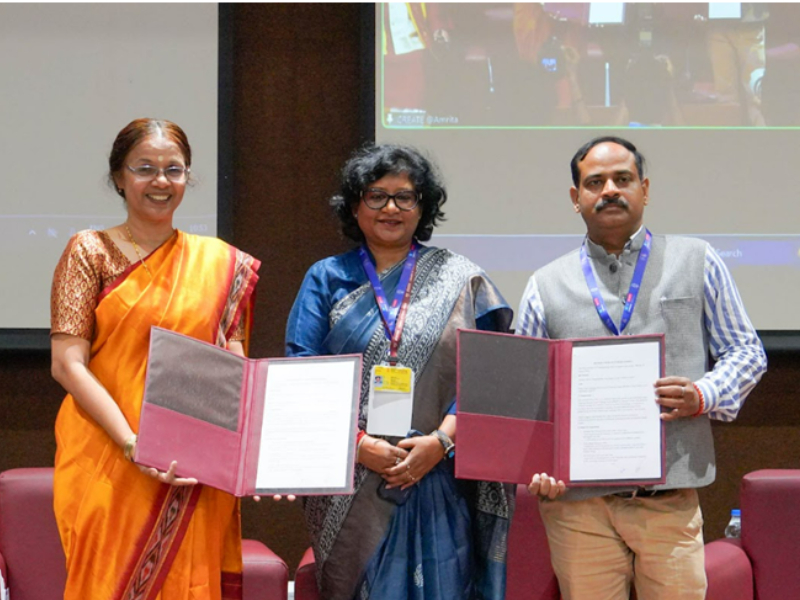


In a significant step toward advancing linguistic equity, Amrita Vishwa Vidyapeetham has formalised a Memorandum of Understanding (MoU) with the Indian Sign Language Research and Training Centre (ISLRTC). This strategic partnership is set to harness the transformative power of Artificial Intelligence to address long-standing barriers within the Deaf community, ensuring that future educational frameworks are built with inclusion by design rather than as an afterthought.
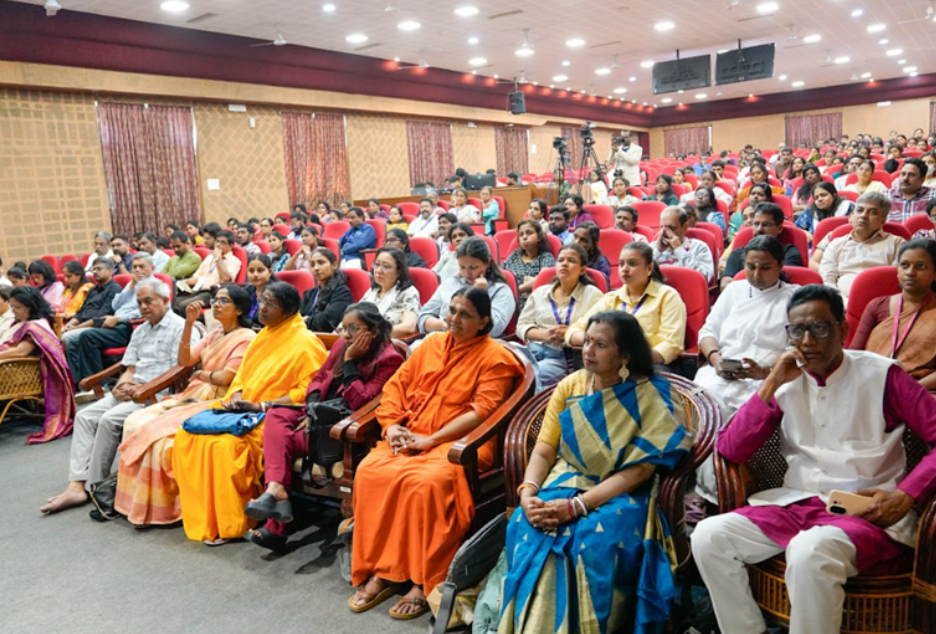
The MoUs were exchanged by the UNESCO Chairholder, Dr. Prema Nedungadi, and Shri. Kumar Raju, Director, ISLRTC, on January 12, 2026, at the Amritapuri Campus, during the International Symposium on “AI-Enabled Assistive Technologies for Inclusive Education” in the presence of Smt. Manmeet Kaur Nanda, Additional Secretary, Ministry of Social Justice and Empowerment, Government of India (online) and Ms. Tulika Pandey, Scientist-G, Ministry of Electronics and Information Technology (MeitY).
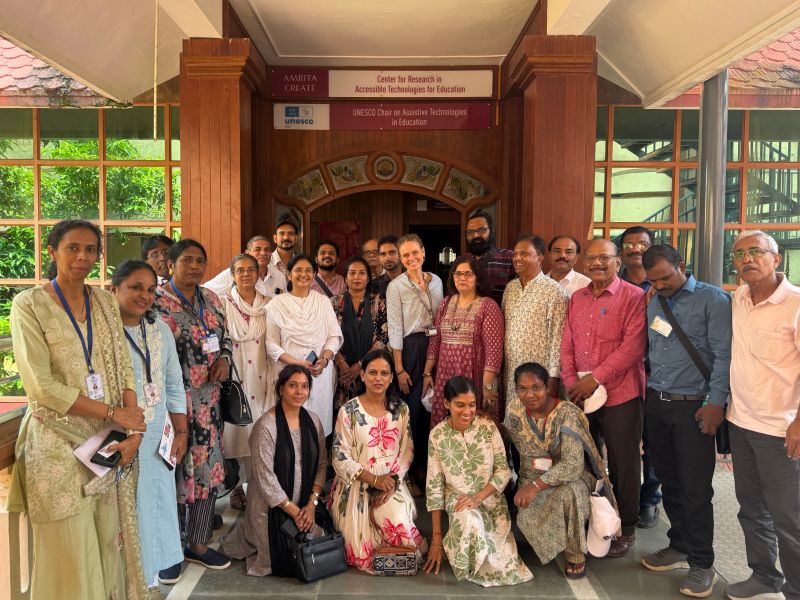
Hosted by Amrita’s UNESCO Chair on Assistive Technologies in Education and Amrita School of Computing, the symposium served as a high-profile precursor to the India AI Impact Summit 2026, in the national dialogue on AI for Inclusion and Social Good.
The Human Catalyst: From Isolation to Empowerment
The significance of this MoU is captured in the story of Anish, shared by Bri. Amrita Chaitanya, Representative of the M.A. Math. For Anish, who was born profoundly deaf, early mainstream education was a period of academic stagnation and social isolation, illustrating the vital need for specialized interventions for children with disabilities (CwD).
His trajectory shifted entirely upon joining the Amrita Speech and Hearing Improvement School (ASHIS) in Thrissur. Through a curriculum tailored to his needs—integrating sign language, speech articulation, and individualized pacing—Anish didn’t just catch up; he excelled. Today, Anish serves as a Government Assistant Engineer, a living testament to the fact that when pedagogy and environment align, disability does not dictate destiny.
From Individual Journeys to Constitutional Commitment: AI as a Digital Leveller
Bridging the gap between individual success stories like Anish’s and the broader national mandate, Smt. Manmeet Kaur Nanda, Additional Secretary, Ministry of Social Justice and Empowerment, Government of India, positioned Assistive Technology (AT) as a cornerstone of modern citizenship. In a powerful address, she asserted, “Assistive Technology is not a luxury; it is a constitutional necessity.”
Articulating a fundamental shift in the landscape of accessibility, Smt. Nanda highlighted the transition from static, “one-size-fits-all” tools to dynamic, AI-driven solutions capable of proactively dismantling the systemic barriers for persons with disabilities. To institutionalize this vision of tech-led empowerment, she announced the formal signing of the MoU.
The collaboration focuses on three critical areas of innovation to ensure that digital inclusion is a fundamental right, not a privilege:
Compassion Driven Research: Philosophy in Practice
The Amrita-ISLRTC partnership deeply reflects the foundational vision of the university’s Chancellor, Mata Amritanandamayi Devi (Amma), who advocates for technology as a catalyst for social upliftment. In this framework, innovation is measured not by its complexity, but by its capacity to serve persons most affected by inequitable systems. Compassion-driven research is at the heart of the educational system at Amrita ensuring that high-tech solutions like AI remain fundamentally human-centric.
Dr. Maneesha Vinodini Ramesh, Pro Vice Chancellor, Amrita Vishwa Vidyapeetham, expanded on this philosophy highlighting how AI serves as a modern vehicle for the university’s mission. She observed, “The educational systems Amma has established are designed to nurture each individual, providing personalized assistance wherever it is needed. As Artificial Intelligence permeates every sector of global society, it brings both challenges and profound opportunities. Our responsibility is to focus on the transformative outcomes we can deliver by strategically harnessing AI for the greater good.”
Building Inclusive Systems Through Technology and Partnership
Amrita Vishwa Vidyapeetham brings to this collaboration a strong track record of translating inclusive values into impactful, technology-driven solutions. The UNESCO Chair and Amrita CREATE, along with the AI and Disability Studies Research Group, work at the intersection of AI, education, and accessibility, have demonstrated how thoughtful design can expand participation across education and public systems.
Through the support of the Ministry of Electronics and Information Technology (MeitY), the Sign Language Accessibility for e-Governance Services project an Indian Sign Language (ISL) AI Chatbot is live on the UMANG platform making essential services, like Railway Services and E-Raktkosh, on the platform accessible for the Deaf community impacting countless lives every day.
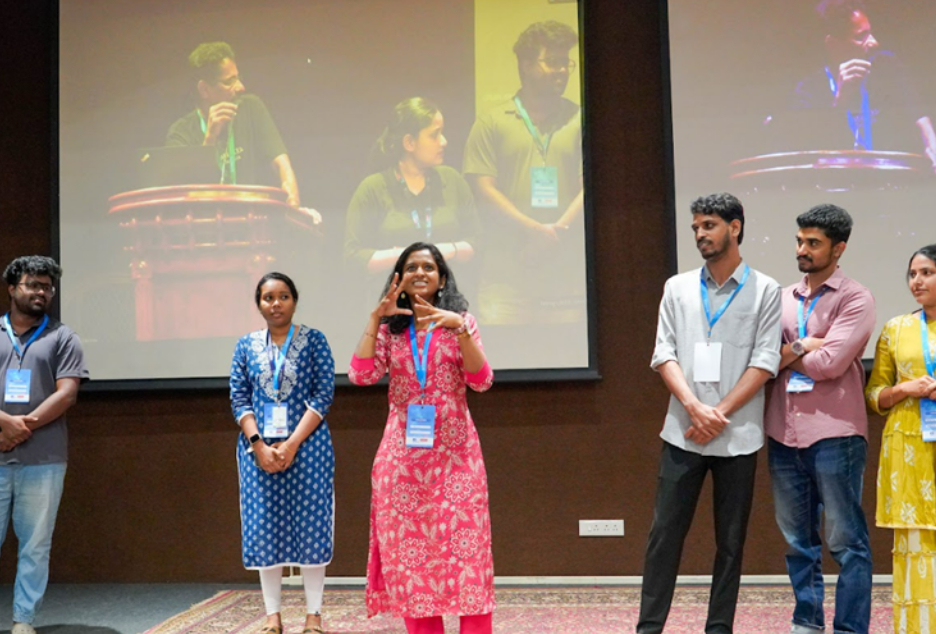
Our team of hearing, Deaf signers, and interpreters work together closely to develop our technological solutions. At the symposium, the team took center stage sharing their experience working on different projects, including ChalaChitra Vachaana. By placing Deaf experts at the forefront of our data training and development cycles, we prioritize ethical AI practices that honor the community’s linguistic heritage.
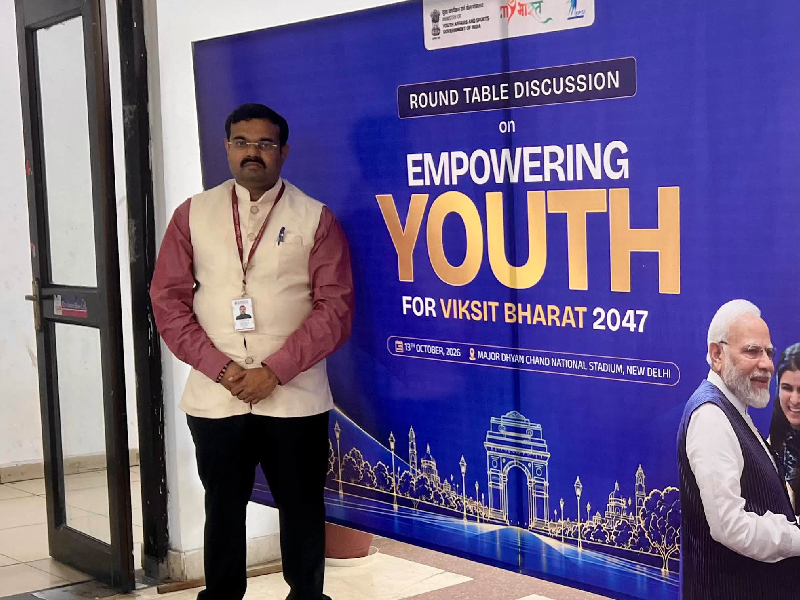
Our commitment extends into the public sphere through active participation in global inclusion summits, such as the International Purple Fest 2025, where we engage in a continuous dialogue with stakeholders to ensure our technology serves as a meaningful bridge for the Deaf community.
The Way Forward
Building on this experience, Amrita will contribute deep technical and human-centric expertise to advance scalable, inclusive solutions for the Deaf community. By combining ISLRTC’s linguistic expertise with Amrita’s technological prowess, the partnership aims to create a world where learners are never excluded because of their medium of instruction.