



Date – 31/Dec/2025
Amrita Vishwa Vidyapeetham is committed to fostering local entrepreneurship and promoting financially and socially sustainable businesses through comprehensive education, skill development, and enterprise support initiatives. The University provides entrepreneurship training, vocational education, technical assistance, professional mentoring, and access to essential business development resources. By strengthening entrepreneurial competencies, encouraging innovation, and enhancing market readiness, Amrita empowers individuals and communities to establish and sustain income-generating enterprises, contributing to economic self-reliance and long-term livelihood security.
Through its specialised centres, including AMMACHI Labs, the Centre for Women’s Empowerment and Gender Equality (CWEGE), and Amrita Technology Business Incubator (Amrita TBI), the University actively supports entrepreneurship among women, rural communities, and economically underserved populations. These initiatives combine practical skills training, technology-enabled solutions, enterprise mentoring, and market-oriented capacity building to improve access to sustainable livelihood opportunities. By enabling community members to transform their skills and locally available resources into viable business ventures, Amrita contributes to poverty reduction, inclusive economic growth, and sustainable community development.
In October 2025, Amrita Vishwa Vidyapeetham organised a three-day Seaweed Culinary Workshop and Exhibition in Rameswaram, Tamil Nadu, bringing together women from five coastal villages to strengthen their entrepreneurial skills and create sustainable livelihood opportunities. The programme focused on equipping participants with practical knowledge of seaweed-based food preparation, value-added product development, hygiene practices, and safe production techniques. Through interactive demonstrations and hands-on training, women learned how to transform locally cultivated seaweed into marketable food products, creating opportunities to develop home-based businesses and small-scale enterprises. By combining traditional coastal resources with modern processing techniques and entrepreneurial skills, the initiative encouraged participants to explore alternative sources of income and strengthen their economic independence.
The workshop also provided a platform for women to develop business ideas, gain exposure to market opportunities, and showcase their products through an exhibition. Participants gained insights into product quality, consumer preferences, and the commercial potential of seaweed-based products, helping them better understand the requirements for establishing and sustaining local enterprises. By connecting skill development with practical business opportunities, Amrita supported women in exploring self-employment, household income diversification, and community-based entrepreneurship. The initiative reflects the University’s continued efforts to nurture financially viable and socially responsible businesses while promoting women’s economic participation, sustainable use of marine resources, and long-term livelihood development in coastal communities.
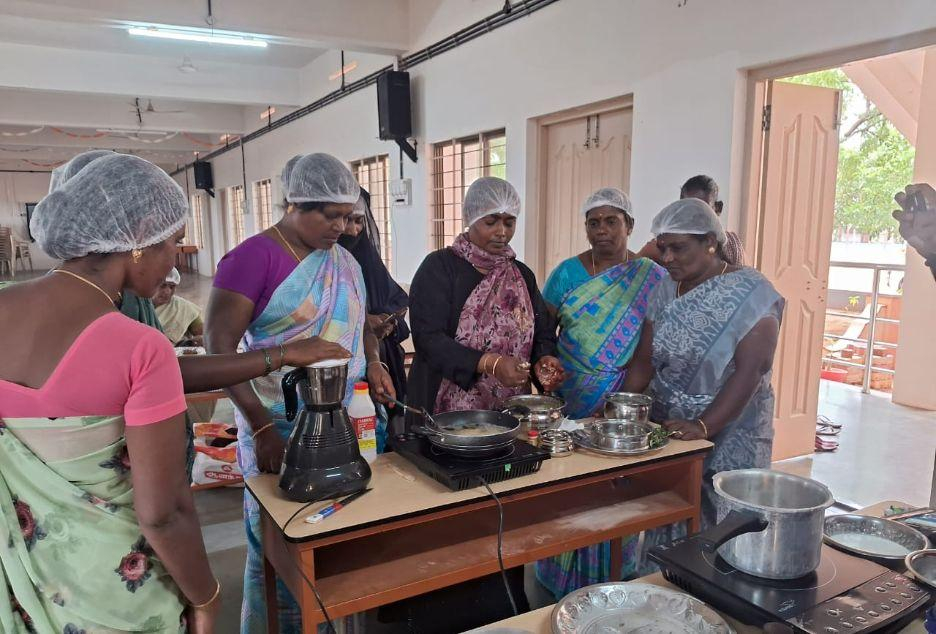
Coastal women participating in a hands-on seaweed culinary training workshop organised by Amrita Vishwa Vidyapeetham in Rameswaram, Tamil Nadu (October 2025), developing practical food-processing and value-addition skills to support local entrepreneurship, income generation, and sustainable coastal livelihoods.
In September 2025, Amrita Vishwa Vidyapeetham, through AMMACHI Labs, successfully completed a 10-day Integrated Multi-Trophic Aquaculture (IMTA) training programme for 20 women in Munaikadu village, Tamil Nadu, aimed at strengthening sustainable livelihood opportunities and encouraging community-based entrepreneurship. The programme provided participants with hands-on training in environmentally responsible aquaculture practices, marine resource utilisation, and value-added product development. By introducing practical techniques for sustainable aquaculture and exploring opportunities to generate income from locally available resources, the initiative equipped women with essential technical knowledge and skills relevant to establishing small-scale aquaculture enterprises. The training encouraged participants to explore self-employment opportunities, diversify household income sources, and develop economically viable livelihood activities within their coastal communities.
Alongside technical training, the programme integrated leadership development, time management, and essential life-skills education to strengthen participants’ confidence and ability to organise and manage entrepreneurial activities. These sessions complemented the practical aquaculture training by helping women develop the organisational and decision-making capabilities needed to pursue independent livelihood initiatives. By combining vocational education with entrepreneurship-oriented capacity building, Amrita supported participants in exploring sustainable business opportunities and strengthening their readiness to manage small-scale enterprises. The initiative highlights the University’s ongoing commitment to women’s economic empowerment, responsible marine resource management, and the development of financially sustainable, community-led livelihood opportunities in coastal Tamil Nadu.
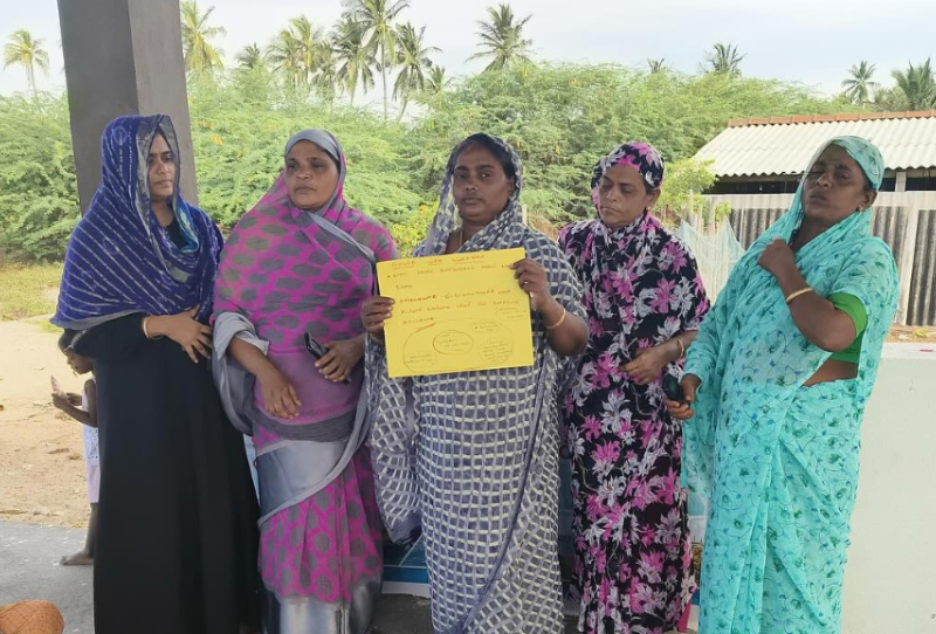
Women participants in Amrita Vishwa Vidyapeetham’s 10-day Integrated Multi-Trophic Aquaculture (IMTA) training programme in Munaikadu village, Tamil Nadu (September 2025), highlighting community-based skills development, women’s entrepreneurship, and sustainable aquaculture practices aimed at strengthening income-generating opportunities and coastal livelihoods.
In September 2025, Amrita Vishwa Vidyapeetham, through AMMACHI Labs, conducted specialised seaweed value-addition and entrepreneurship training for women engaged in seaweed cultivation across villages in Ramanathapuram district, Tamil Nadu. The initiative focused on strengthening women’s entrepreneurial capabilities by helping them transform locally cultivated seaweed into commercially valuable products, including seaweed-based soaps and pickles. Through practical demonstrations and hands-on training, participants developed essential skills in product processing, packaging, quality assurance, production planning, and order fulfilment. By introducing value-addition techniques and business-oriented production practices, Amrita enabled women to explore opportunities beyond traditional seaweed cultivation and develop the skills necessary to establish small-scale, income-generating enterprises. The programme encouraged the productive use of locally available marine resources while supporting livelihood diversification and greater economic participation among coastal women.
Beyond technical skill development, Amrita provided practical enterprise-development assistance by facilitating seaweed collection and transportation and supporting preparations for product exhibitions and distribution activities. These efforts helped participants gain exposure to important aspects of business operations, including raw material coordination, product presentation, production organisation, and market readiness. By connecting vocational training with practical assistance in enterprise management and market participation, the initiative strengthened women’s capacity to explore independent business opportunities and improve the commercial potential of their products. Through this integrated approach, Amrita continues to encourage community-based entrepreneurship, promote women’s economic independence, and support the development of financially sustainable and socially inclusive enterprises that contribute to long-term livelihood security in coastal Tamil Nadu.
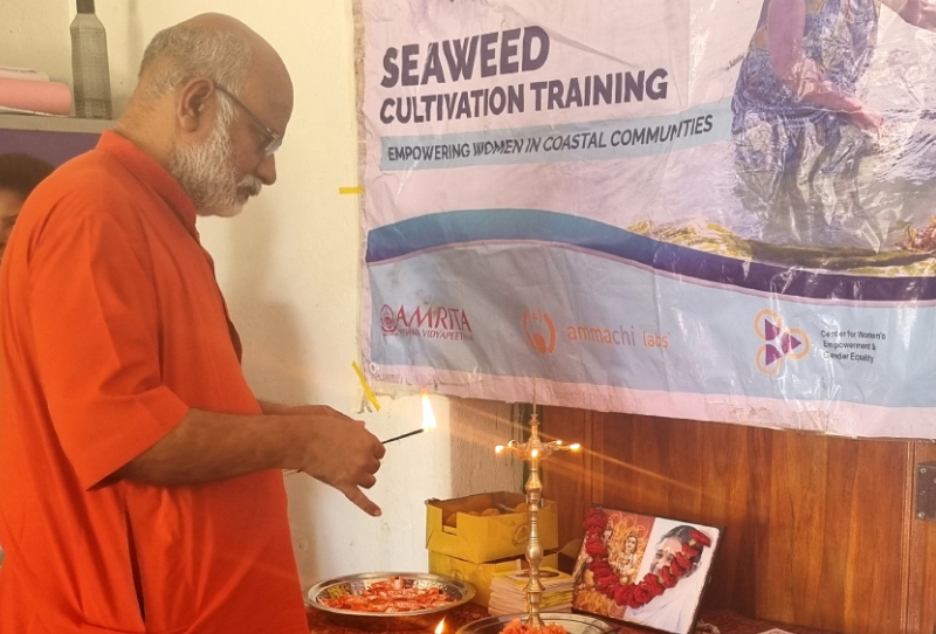
Inauguration of Amrita Vishwa Vidyapeetham’s Seaweed Cultivation Training Initiative in Ramanathapuram, Tamil Nadu (September 2025), organised through AMMACHI Labs and CWEGE to promote seaweed value addition, women’s entrepreneurship, market-oriented skills development, and sustainable livelihood opportunities among coastal communities.
In December 2025, Amrita Vishwa Vidyapeetham, through AMMACHI Labs, advanced the third phase of its mushroom cultivation initiative in Dunda village, Uttarakhand, supporting 15 women and one man in developing sustainable, income-generating rural enterprises. Building on the experience gained during earlier cultivation cycles, the programme focused on strengthening participants’ entrepreneurial capabilities, improving their practical cultivation skills, and encouraging the expansion of locally managed businesses. A significant achievement of the initiative was the participants’ decision to reinvest their earnings into establishing four additional mushroom cultivation units using their own financial resources. This development demonstrated growing confidence in enterprise management, increased financial participation, and the ability of community members to expand their livelihood activities through income generated from existing operations. By encouraging the reinvestment of earnings and the expansion of cultivation activities, Amrita helped strengthen the foundations for self-reliant and financially sustainable rural microenterprises.
Beyond practical cultivation activities, Amrita provided continued community-level coordination and facilitated access to subsidised mushroom cultivation materials through the Horticulture Department, helping participants obtain essential resources for sustaining and expanding their enterprises. This institutional support complemented the entrepreneurial efforts of local community members by reducing barriers to accessing cultivation inputs and encouraging continuity across successive production cycles. The initiative illustrates how practical skills development, access to technical resources, and locally driven financial reinvestment can contribute to the growth of small-scale rural businesses. Through this community-centred approach, Amrita continues to promote women’s economic participation, strengthen household livelihood opportunities, and support the development of financially viable and socially sustainable microenterprises in rural Uttarakhand.
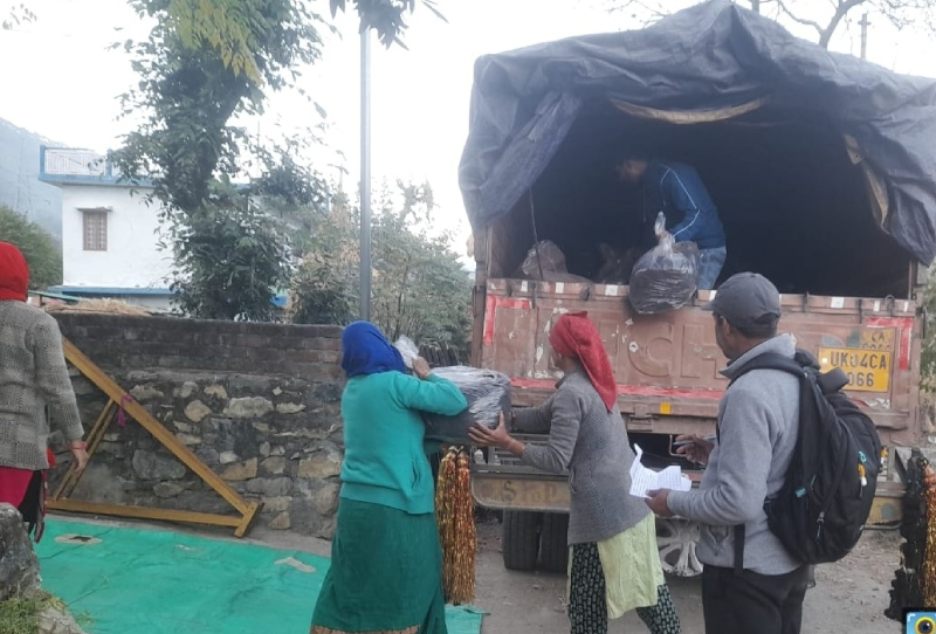
Community members in Dunda village, Uttarakhand, receiving mushroom cultivation materials as part of Amrita Vishwa Vidyapeetham’s rural entrepreneurship initiative (2025), facilitated through AMMACHI Labs to support the expansion of cultivation units, income generation, and sustainable rural microenterprise development.
Amrita Vishwa Vidyapeetham, through its Amrita Technology Business Incubator (Amrita TBI), provides comprehensive entrepreneurship development and incubation support to aspiring entrepreneurs, early-stage start-ups, and emerging businesses. The incubator offers an institutional ecosystem that combines professional mentoring, technical assistance, business development guidance, co-working facilities, and access to professional and investment networks. These resources help entrepreneurs strengthen their business ideas, develop innovative products and services, and address the practical challenges associated with establishing and managing financially sustainable enterprises. Through structured mentoring and entrepreneurship-oriented capacity building, Amrita TBI supports founders in refining business models, validating products, understanding market requirements, and developing strategies for sustainable business growth. By providing access to technical expertise and essential entrepreneurial resources, the University encourages innovation, self-employment, and the development of commercially viable business ventures.
Amrita TBI further strengthens the local entrepreneurship ecosystem through its physical incubation facilities in Kollam, Bengaluru, and Coimbatore, complemented by virtual incubation opportunities that extend support to entrepreneurs beyond these locations. These facilities provide an enabling environment where early-stage founders can access institutional infrastructure, professional guidance, collaborative workspaces, and opportunities to connect with industry experts and potential investors. The incubator supports entrepreneurs throughout important stages of business development, including product validation, enterprise planning, innovation, and business expansion. By improving access to incubation services and reducing barriers associated with starting and growing a business, Amrita contributes to the development of financially viable and socially responsible enterprises. Through its sustained commitment to entrepreneurship education, mentoring, and institutional resource sharing, the University helps strengthen local business ecosystems, encourage entrepreneurial participation, and create opportunities for long-term economic development.
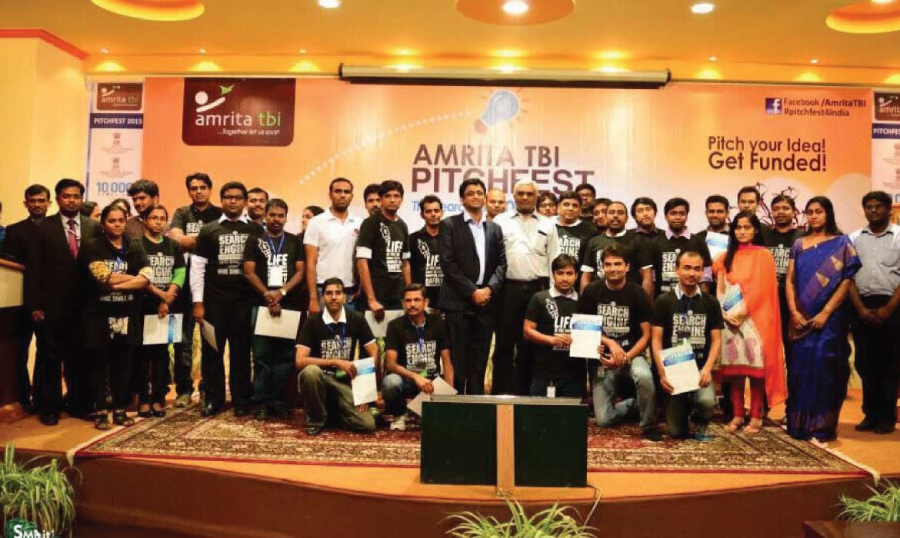
Amrita Technology Business Incubator (Amrita TBI) PitchFest, bringing together aspiring entrepreneurs, early-stage start-up founders, mentors, and industry professionals to encourage innovative business ideas, provide entrepreneurial guidance, facilitate networking, and promote the development of financially sustainable enterprises.
In 2025, Amrita Vishwa Vidyapeetham continued to strengthen local entrepreneurship and sustainable livelihood development through an integrated approach combining vocational education, practical skills training, technical assistance, enterprise-development resources, and community participation. Through initiatives implemented by AMMACHI Labs, the Centre for Women’s Empowerment and Gender Equality (CWEGE), and Amrita Technology Business Incubator (Amrita TBI), the University supported entrepreneurial opportunities among women, rural communities, and economically underserved populations. Programmes focusing on seaweed-based product development, sustainable aquaculture, mushroom cultivation, and business incubation helped participants acquire practical skills, explore innovative business ideas, and develop opportunities for income generation. By connecting locally available resources with technical knowledge, product innovation, and entrepreneurship education, Amrita encouraged the establishment and growth of small-scale enterprises that contribute to financial independence, livelihood diversification, and community-level economic development.
Amrita’s entrepreneurship initiatives also emphasised the long-term sustainability of local businesses by strengthening production capabilities, improving product quality, supporting market readiness, and facilitating access to institutional resources and technical guidance. Training programmes enabled participants to develop value-added products, improve production planning, and explore market opportunities, while initiatives such as the mushroom cultivation programme in Dunda village demonstrated how community members could reinvest their earnings to expand existing enterprises. Alongside these grassroots efforts, Amrita TBI provided mentoring, incubation facilities, technical assistance, and access to professional networks to support emerging entrepreneurs and early-stage businesses. By integrating practical enterprise development with environmentally responsible production methods and inclusive economic participation, Amrita continues to nurture financially viable and socially sustainable businesses, strengthen local entrepreneurial ecosystems, and create opportunities for long-term economic resilience among underserved communities.