Amrita Vishwa Vidyapeetham’s Bridging the Gap programme supports rural and economically disadvantaged communities in accessing essential government services and social welfare benefits. Implemented through AMMACHI Labs and the Centre for Women’s Empowerment and Gender Equality (CWEGE), the initiative equips local women Community Organisers with the skills and guidance needed to raise awareness of available schemes, assist residents with documentation and applications, and coordinate with public-service providers. The programme combines community training with practical assistance to help households navigate service-access procedures and strengthen their participation in public welfare systems.
Programme
Bridging the Gap: Enabling Access to Government Welfare in Rural India
Focus
Improving access to government welfare schemes and essential public services
Coordinating centres
AMMACHI Labs and Centre for Women’s Empowerment and Gender Equality (CWEGE)
Programme activity
Continuation of community outreach and service-access activities in 2025
1. Amrita Strengthens Community Access to Essential Public Services Through Awareness, Training and Local Facilitation
Amrita Vishwa Vidyapeetham is committed to improving access to essential public services by organising community-based training programmes, awareness initiatives, and practical assistance activities for rural and economically disadvantaged populations. Recognising that limited awareness, documentation requirements, and difficulties navigating administrative procedures can prevent vulnerable households from accessing government services, the University focuses on strengthening community knowledge and practical capabilities. Through structured awareness sessions, local outreach activities, and hands-on guidance, Amrita helps residents understand available public services, eligibility requirements, application procedures, and the documentation needed to access government welfare schemes. These initiatives seek to reduce informational and administrative barriers while enabling individuals and families to make informed decisions about accessing essential services and social protection programmes.
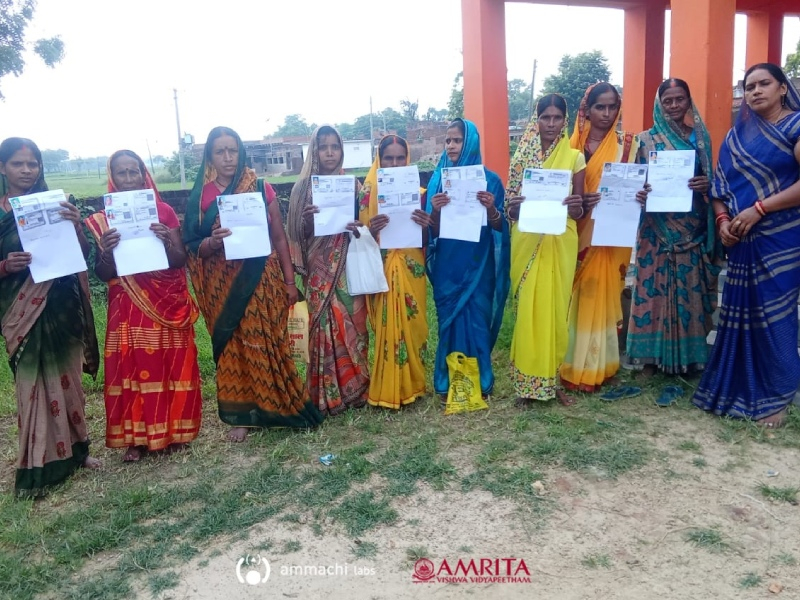
Rural women participating in Amrita Vishwa Vidyapeetham’s community outreach initiatives, displaying documentation related to public-service access, highlighting the role of AMMACHI Labs in facilitating government welfare schemes, improving awareness of essential services, and strengthening social inclusion among underserved communities.
Amrita’s community-focused programmes further support equitable access to basic services by combining practical training, local facilitation, and welfare awareness with direct guidance on public-service application processes. By assisting community members in identifying relevant government entitlements, preparing necessary documents, and understanding the procedures involved in accessing public services, the University strengthens their ability to navigate institutional systems independently. Particular attention is given to women, rural households, and economically underserved communities that may face additional difficulties obtaining essential services. Through these initiatives, Amrita promotes greater awareness of public welfare provisions, encourages community participation, and supports more inclusive access to basic services. This integrated approach contributes to reducing inequalities in service accessibility, strengthening community self-reliance, and advancing SDG 1 (No Poverty) through improved access to public services and social protection opportunities.
2. Amrita Strengthens Access to Essential Government Services Through the Bridging the Gap Programme and Community-Based Training (2025)
In 2025, Amrita Vishwa Vidyapeetham continued implementing its Bridging the Gap programme, strengthening access to essential government services and social welfare schemes among rural and economically disadvantaged communities. The initiative focused on empowering women community organisers with the knowledge and practical skills needed to assist households in understanding and accessing public services. Through community-based awareness sessions, structured training, and local outreach activities, the programme provided guidance on government welfare schemes, eligibility criteria, application procedures, and documentation requirements. Particular attention was given to helping residents navigate administrative processes, prepare identity and supporting documents, complete application forms, and use relevant digital platforms. By addressing informational, procedural, and digital barriers, the programme sought to improve the ability of vulnerable households to access government entitlements and essential services.
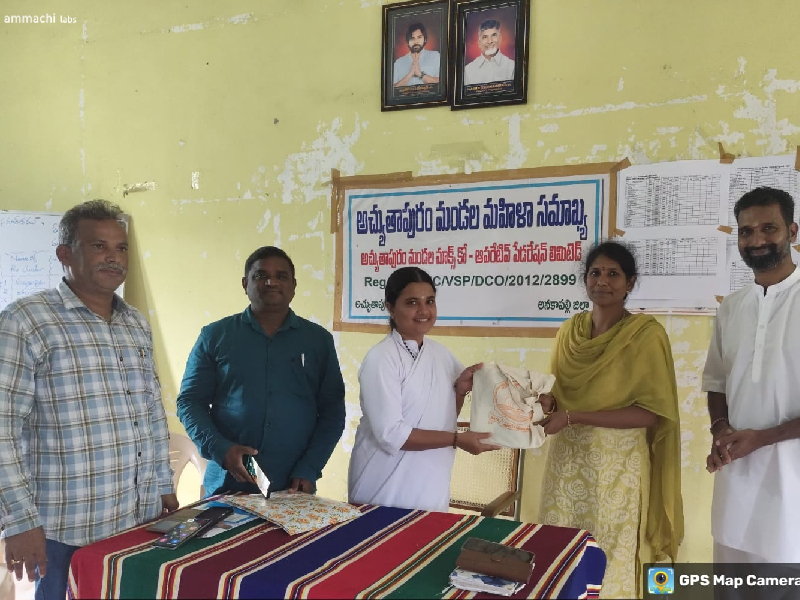
Amrita Vishwa Vidyapeetham’s AMMACHI Labs supporting grassroots community engagement and coordination with local institutions to facilitate access to essential services, strengthen social welfare assistance, and promote inclusive community development through the Bridging the Gap initiative.
The programme also strengthened community-level assistance through practical guidance on healthcare, social protection, financial inclusion, and coordination with public-service providers. Women community organisers supported residents in identifying relevant healthcare, insurance, welfare, and financial assistance schemes, while facilitating communication with responsible government departments and service offices. Their involvement extended to helping community members understand application requirements, seek appropriate services, and follow up on submitted requests. By combining welfare awareness, documentation assistance, digital guidance, and local coordination, Amrita encouraged greater community participation and more equitable access to basic services. The continuation of the Bridging the Gap programme in 2025 reflects the University’s commitment to strengthening community capabilities, reducing barriers to public-service access, and supporting the social and economic inclusion of underserved populations.
3. Amrita Expands Access to Essential Public Services Across Seven Indian States Through Community Organisers and 820 Interventions (2025)
In 2025, Amrita Vishwa Vidyapeetham strengthened community access to essential public services through its Bridging the Gap programme, extending community-based assistance across seven Indian states: Bihar, Uttar Pradesh, Uttarakhand, Punjab, Haryana, Himachal Pradesh, Tamil Nadu and West Bengal. The initiative engaged women community organisers to support rural and economically disadvantaged households in understanding government welfare schemes, accessing essential services, and navigating administrative procedures. Through locally coordinated outreach activities, awareness sessions, and practical assistance, community organisers helped residents identify relevant public-service opportunities, understand eligibility requirements, prepare supporting documentation, and seek assistance with application processes. The programme focused on reducing informational, procedural, and administrative barriers that often limit access to social protection and government entitlements, particularly among underserved communities.
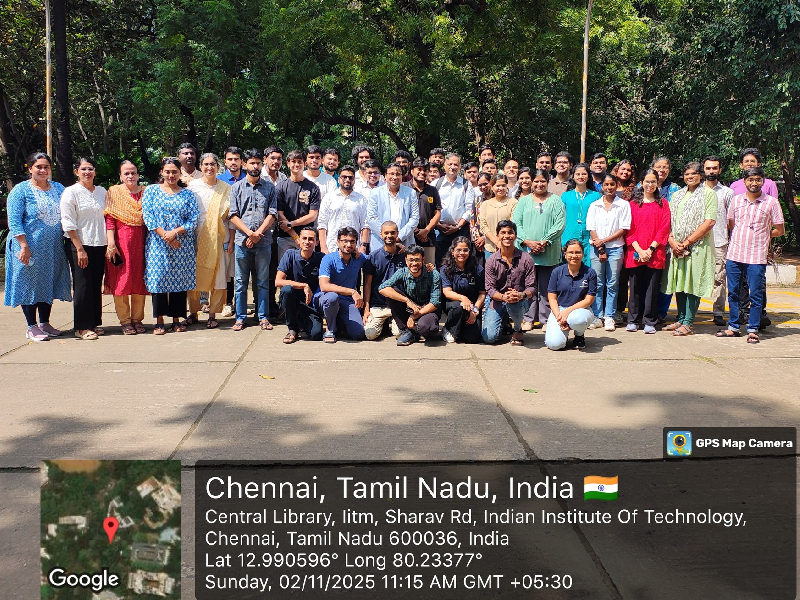
Participants gathered at IIT Madras, Chennai, Tamil Nadu, on 2 November 2025, highlighting collaborative engagement and capacity-building activities relevant to community development and improved access to essential public services.
According to the programme team’s 2025 monitoring figures, the initiative recorded 820 community-level interventions and reached 1,933 beneficiaries across the seven participating states. These interventions reflect the programme’s efforts to strengthen welfare awareness, facilitate access to healthcare and social protection schemes, support financial inclusion, and assist households in navigating government service-delivery systems. Community organisers also played an important role in connecting residents with relevant public-service offices and supporting follow-up activities related to applications and service requests. By combining local participation, practical guidance, and community-level coordination, Amrita contributed to improving awareness and accessibility of essential services while strengthening the capacity of economically vulnerable households to engage with public institutions. The programme demonstrates the University’s continued commitment to inclusive community development, equitable service access, and sustainable improvements in social and economic wellbeing.
4. Amrita Strengthens Grassroots Access to Essential Government Services Through Community Organisers and Rural Service Facilitation (2025)
Amrita Vishwa Vidyapeetham, through AMMACHI Labs, the Centre for Women’s Empowerment and Gender Equality (CWEGE), and its Amrita SeRVe initiative, strengthens access to essential government services among rural and economically disadvantaged communities across seven Indian states: Bihar, Uttar Pradesh, Uttarakhand, Punjab, Haryana, Himachal Pradesh, and West Bengal. As part of the Bridging the Gap programme, trained women Community Organisers (COs) serve as important links between rural households and government departments, helping residents understand and access public services and welfare entitlements. Through community awareness sessions, individual guidance, and practical training, these organisers assist residents in identifying relevant government schemes, understanding eligibility requirements, preparing necessary documents, and completing application procedures. Their involvement helps address common barriers such as limited awareness, complex paperwork, geographical distance, and difficulties accessing digital services, enabling vulnerable households to navigate public-service systems more effectively.
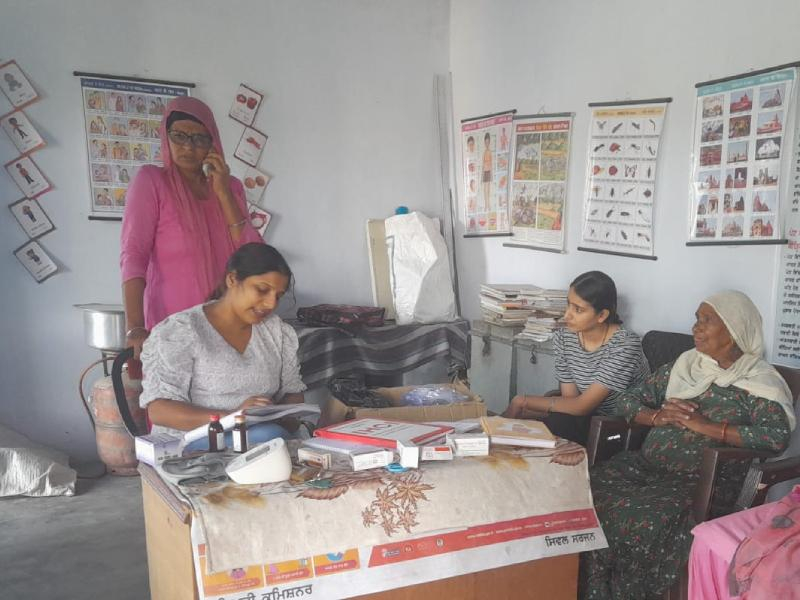
Community-level assistance with documentation and service-related enquiries in rural India, illustrating Amrita Vishwa Vidyapeetham’s grassroots approach to improving access to essential public services through local facilitation, individual guidance, and community engagement.
The programme adopts a community-centred approach by combining welfare awareness, documentation assistance, digital guidance, and continuous coordination with local government officials to improve access to essential services. Community Organisers facilitate access to healthcare programmes, identity documentation, financial inclusion initiatives, social security benefits, and livelihood-related government schemes. Beyond providing information, they support residents throughout the application process, connect eligible households with responsible service providers, and follow up on applications requiring additional assistance. By strengthening community knowledge and providing practical support at the grassroots level, Amrita encourages greater participation in public welfare programmes and helps underserved populations seek the benefits and services available to them. Through sustained engagement and collaboration with local institutions, the initiative contributes to reducing inequalities in service accessibility, strengthening community self-reliance, and promoting inclusive social and economic development across rural India.
5. Amrita Empowers Rural Women Through Community Leadership Training and Improved Access to Essential Public Services (2025)
Amrita Vishwa Vidyapeetham, through AMMACHI Labs and the Centre for Women’s Empowerment and Gender Equality (CWEGE), strengthens women’s leadership and community participation by providing training, mentoring, and practical capacity-building opportunities for local women serving as Community Organisers (COs). As part of the Bridging the Gap programme, these women receive regular guidance from CWEGE regional managers to develop the knowledge and skills required to assist rural households in accessing essential government services and welfare schemes. The training focuses on strengthening communication, leadership, problem-solving, community engagement, and practical service-facilitation capabilities. Community Organisers apply these skills by conducting welfare awareness sessions, assisting residents with documentation and applications, and coordinating with local government institutions. By equipping local women with the capabilities to guide their communities through public-service procedures, Amrita supports the development of community leadership while addressing barriers that prevent underserved households from accessing essential services.
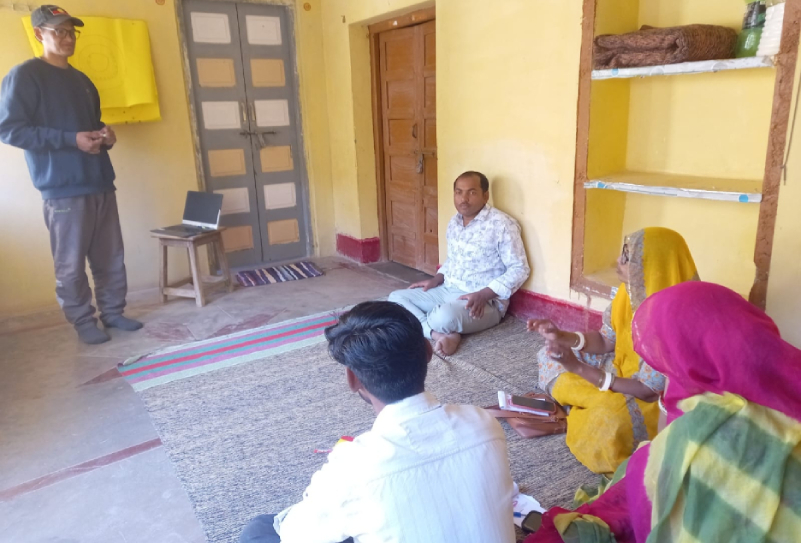
Rural community members participating in a grassroots discussion and capacity-building session, illustrating Amrita Vishwa Vidyapeetham’s community-centred approach to strengthening women’s leadership, local participation, and awareness of essential government services through practical guidance and community engagement.
The programme further promotes women’s empowerment by enabling trained Community Organisers to serve as trusted links between rural residents and public-service institutions, creating opportunities for meaningful participation in community development and local decision-making. Through individual guidance, awareness activities, and continued follow-up, these organisers help women and families understand available welfare benefits, complete application requirements, and engage more confidently with government departments. Their involvement strengthens awareness of healthcare services, social protection programmes, financial inclusion schemes, and other essential public services, particularly among households facing informational, administrative, or digital-access barriers. By combining women-led leadership development with practical assistance in accessing government entitlements, Amrita encourages greater community self-reliance, strengthens women’s participation in local development, and promotes equitable access to essential services for rural and economically disadvantaged populations.
6. Amrita Strengthens Access to Essential Public Services Through Practical Training, Community Assistance and Beneficiary Support (2025)
In 2025, Amrita Vishwa Vidyapeetham, through AMMACHI Labs and the Centre for Women’s Empowerment and Gender Equality (CWEGE), continued its efforts to improve access to essential public services through structured community training, practical assistance, and grassroots service facilitation. The Bridging the Gap programme focused on addressing the administrative, informational, and digital barriers that prevent rural and economically disadvantaged households from accessing government welfare schemes and basic services. Rather than limiting its activities to awareness generation, the programme engaged trained Community Organisers (COs) to provide individual guidance on eligibility requirements, identity documentation, application procedures, and communication with relevant government offices. These activities supported residents in navigating processes associated with healthcare, social protection, financial inclusion, identity documentation, and livelihood-related government schemes. Through hands-on assistance and community-level coordination, Amrita sought to strengthen residents’ ability to access public services and claim the government entitlements for which they were eligible.
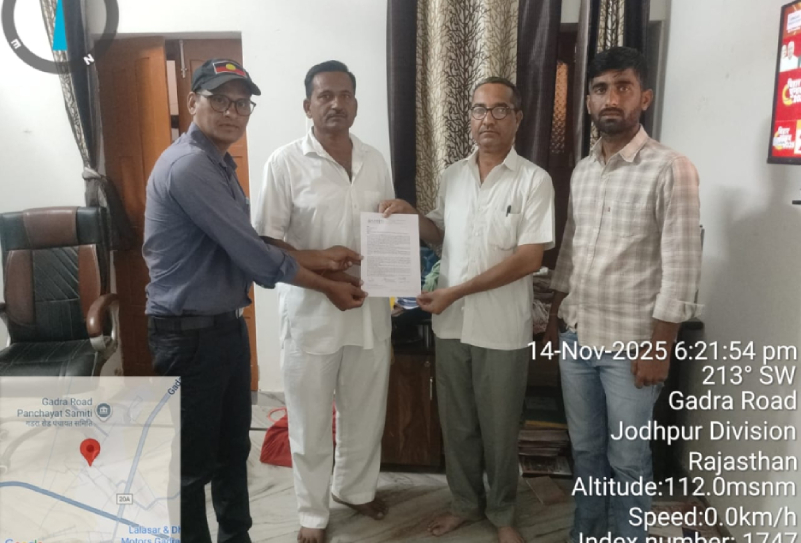
Community representatives submitting official documentation during a local coordination meeting in Gadra Road, Rajasthan, on 14 November 2025, illustrating grassroots engagement with local institutions and efforts to facilitate access to essential public services and community welfare programmes.
The programme’s implementation and community reach can be documented through organiser training records, dated community-session reports, participant attendance registers, anonymised beneficiary assistance logs, and photographs accompanied by relevant event information. Records of application follow-ups, service referrals, and coordination with government departments can further demonstrate the practical assistance provided to households beyond initial awareness and training activities. Together, these forms of documentation help establish the nature, timing, geographical coverage, and beneficiary reach of the programme’s 2025 activities, while providing a basis for assessing progress in facilitating access to essential services. By combining structured training, individual assistance, and continued engagement with public-service providers, Amrita promotes a community-centred approach that strengthens local capabilities, encourages inclusive participation, and supports more equitable access to basic services among underserved rural populations.