Collaboration with Non-Governmental Organisations for SDGs
Home Collaboration with Non-Governmental Organisations for SDGs
Date – 10/December/2025
Amrita Vishwa Vidyapeetham’s NGO Collaborations for the Sustainable Development Goals: Student Volunteering, Research Partnerships, and Educational Resource Development (2025)
Throughout 2025, Amrita Vishwa Vidyapeetham actively collaborated with non-governmental organisations (NGOs), civil society networks, and community-based organisations to advance the United Nations Sustainable Development Goals (SDGs) through three key areas: structured student volunteering programmes, collaborative research initiatives, and the development and delivery of educational and training resources. These partnerships connected the university’s academic expertise, research capabilities, and student engagement with the practical experience of NGOs working in environmental conservation, healthcare, education, gender equality, sustainable livelihoods, and community development.
These collaborations were facilitated through institutional initiatives and networks, including the National Service Scheme (NSS), Amala Bharatam Campaign (ABC), AYUDH, Embracing the World, SustIN network, and Live-in-Labs® programme. A key collaborating organisation was Mata Amritanandamayi Math, a registered non-governmental organisation holding consultative status with the United Nations Economic and Social Council (ECOSOC). Through partnerships with this organisation and other national and international NGOs, Amrita Vishwa Vidyapeetham supported community-oriented activities, knowledge exchange, applied research, skills development, and educational outreach. These engagements strengthened cooperation between academia and civil society while promoting inclusive and sustainable development.
This webpage presents the major NGO collaborations undertaken or continued by Amrita Vishwa Vidyapeetham between January and December 2025, highlighting their contributions to student volunteering, SDG-focused research, and educational resource development. The documented initiatives demonstrate the university’s commitment to SDG 17 (Partnerships for the Goals) and its contribution to other interconnected SDGs through sustained partnerships, community participation, and knowledge-sharing activities.
Amrita runs structured student volunteering programmes with NGOs and with its parent organisation, the Mata Amritanandamayi Math, so that students take part in SDG-aligned community work. Through these programmes, students apply academic learning to real sustainability challenges while contributing directly to community development.
Key volunteering initiatives with NGO partners in 2025 included:
Environmental clean-up and ecosystem restoration (SDGs 11, 14, 15)
Tree plantation and biodiversity enhancement (SDGs 13, 15)
Coastal and marine conservation with fishing communities (SDGs 5, 14)
Medical camps and preventive healthcare outreach (SDGs 3, 10)
Cleanliness, waste segregation and sanitation awareness (SDGs 6, 11, 12)
Social work placements with NGOs in health, child protection and livelihoods (SDGs 1, 3, 8, 16)
Summary of 2025 NGO Collaborations for the SDGs
Date (2025)
Collaboration
NGO / civil society partners
Type
SDGs
December
Sankalp AVSAR artisan training, Faridabad
Amrita Shree Kiran Vedi Self-Help Group
Educational resources
5, 8, 12
December
Seed ball initiative and railway-track clean-up, Coimbatore
Mata Amritanandamayi Math (Amala Bharatam Campaign), local environmental groups
Volunteering
11, 12, 15
12–18 September
Ocean conservation rural camp and beach clean-up, Rameswaram
Rotary Club, TERI, GEF SGP, Transworld
Volunteering
4, 5, 14
September
IMTA and seaweed value-addition training
GEF SGP, TERI, Transworld
Educational resources
5, 8, 14
September
ISL Labs and teacher exchange at ASHISH
ASHISH (Mata Amritanandamayi Math)
Educational resources
4, 10
September
Amrita SeRVe village medical camp, Bihar
Mata Amritanandamayi Math (Amrita SeRVe), ASHA workers
Volunteering
3, 10
Aug–Sep
ICSRF 2025 NGO Conclave and I4I Roundtable
NGOs from across India, Gates Foundation, EkStep Foundation
Research
4, 11, 13, 17
2025
C20 South Africa Summit
3,000+ civil society organisations
Research and policy
5, 10, 13, 16, 17
2025
MSW field placements and internships
Pallium India, Foundation for Development Action, social service societies, Viswas, Akkara Foundation, Kudumbashree NRO
Volunteering
1, 3, 8, 16
2–7 July
NSS Special Camp, Ettimadai and Madukkarai
Village communities, temple committees, government school, panchayat
Volunteering
4, 6, 11, 15
30 June
NSS tree plantation and Amala Bharatam
Amala Bharatam Campaign
Volunteering
13, 15
21 June
International Day of Yoga
Amrita Darshanam
Volunteering
3
April
Vruthi 2025 Clean Kerala Conclave recognition
Malinyamuktha Nava Keralam people’s campaign
Recognition
6, 12
6 and 19 April
Viswamrit women’s skills certification
Vishwakarma Navothan Foundation
Educational resources
4, 5, 8
World Cleanup Day 2025: Amrita Vishwa Vidyapeetham’s Collaboration with Mata Amritanandamayi Math for Student Volunteering and Environmental Sustainability
In September 2025, Amrita Vishwa Vidyapeetham collaborated with Mata Amritanandamayi Math through its Amala Bharatam Campaign (ABC) to organise large-scale cleanliness drives and environmental sustainability activities as part of World Cleanup Day 2025. Launched by Mata Amritanandamayi Math in 2010, the Amala Bharatam Campaign is a nationwide cleanliness movement promoting environmental awareness, responsible waste management, and community participation. Through this NGO-led initiative, Amrita Vishwa Vidyapeetham mobilised thousands of students, faculty members, doctors, and staff across its Amritapuri, Coimbatore, Kochi, Bengaluru, Nagercoil, and Faridabad campuses, demonstrating how university–NGO collaboration can tackle the United Nations Sustainable Development Goals (SDGs) through student volunteering programmes and community-based environmental action.
At the Coimbatore campus, nearly 3,000 students and 300 staff members participated in cleanliness drives across seven locations and undertook sapling-planting activities. At Amritapuri, volunteers extended cleanliness campaigns, environmental awareness programmes, and afforestation activities to neighbouring panchayats in Kollam and Alappuzha districts, strengthening community engagement beyond university premises. At Kochi, students, doctors, and staff participated in cleaning hospital and campus surroundings to promote environmental hygiene and public health. The Faridabad campus conducted cleanliness activities in collaboration with local environmental groups, further strengthening partnerships between Amrita Vishwa Vidyapeetham and community-based organisations. These initiatives provided practical volunteering opportunities for students while encouraging environmental responsibility, teamwork, and active participation in sustainable community development.
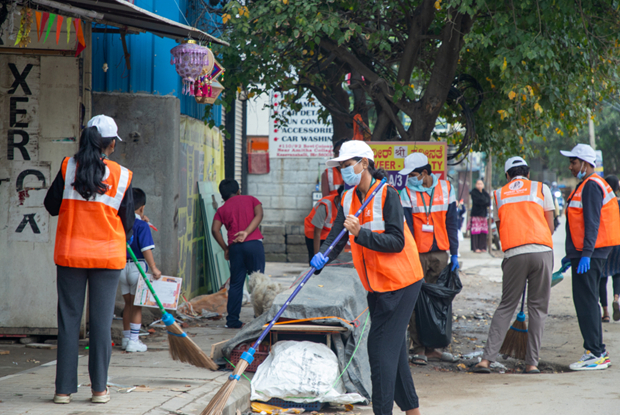
Students of Amrita Vishwa Vidyapeetham participating in a community cleanliness drive during World Cleanup Day 2025, organised in collaboration with Mata Amritanandamayi Math (NGO) under the Amala Bharatam Campaign, promoting environmental sustainability, responsible waste management, and community engagement in support of SDGs 11, 12, and 17.
Through World Cleanup Day 2025, Amrita Vishwa Vidyapeetham and Mata Amritanandamayi Math demonstrated effective NGO collaboration for tackling the SDGs through student volunteering, environmental awareness, and community outreach. The initiative contributed to SDG 3 (Good Health and Well-being) by promoting cleaner and healthier surroundings, SDG 11 (Sustainable Cities and Communities) through community cleanliness and improved public spaces, SDG 12 (Responsible Consumption and Production) through waste-management awareness, SDG 15 (Life on Land) through sapling planting and afforestation, and SDG 17 (Partnerships for the Goals) through sustained cooperation between the university, the NGO, and local environmental organisations. The collaboration illustrates how coordinated university–NGO partnerships can mobilise student volunteers and communities to achieve practical environmental and social sustainability outcomes.
Ocean Conservation Rural Camp 2025: Amrita Vishwa Vidyapeetham’s Collaboration with the Rotary Club and TERI (NGO) for Marine Conservation and Student Volunteering
From 12 to 18 September 2025, Amrita Vishwa Vidyapeetham collaborated with the Rotary Club and The Energy and Resources Institute (TERI), a non-profit research organisation, through coastal conservation and community-based environmental initiatives in Rameswaram, Tamil Nadu. The seven-day Ocean Conservation Rural Camp engaged 55 Master of Social Work (MSW) and Bachelor of Social Work (BSW) students from the Amritapuri campus across four coastal villages: Olaikuda, Sambhai, Vadakadu, and Munaikadu. The programme was connected with the university’s wider Ocean Farming initiatives, supported through partnerships involving TERI, the UNDP–GEF Small Grants Programme, Transworld, and the Ministry of Environment, Forest and Climate Change. These activities demonstrated how collaboration with NGOs and non-profit organisations can strengthen student volunteering, community engagement, and practical action toward the United Nations Sustainable Development Goals (SDGs).
During the rural camp, student volunteers conducted environmental awareness sessions for coastal women, educational programmes in local schools, socioeconomic surveys, and community conservation activities focusing on marine biodiversity, seagrass restoration, sustainable seaweed farming, and responsible resource management. Students also contributed to seagrass restoration covering approximately 0.9 hectares of seabed in Olaikuda, supporting marine ecosystem conservation. During the same week, Amrita Vishwa Vidyapeetham’s Ocean Farming team collaborated directly with the Rotary Club, alongside the Indian Navy, temple staff, and local residents, to organise a mass beach clean-up in Rameswaram. Participants cleaned approximately 0.308 kilometres of coastline and collectively pledged to protect marine ecosystems. These activities connected university-led student volunteering with NGO participation and community-based environmental action.
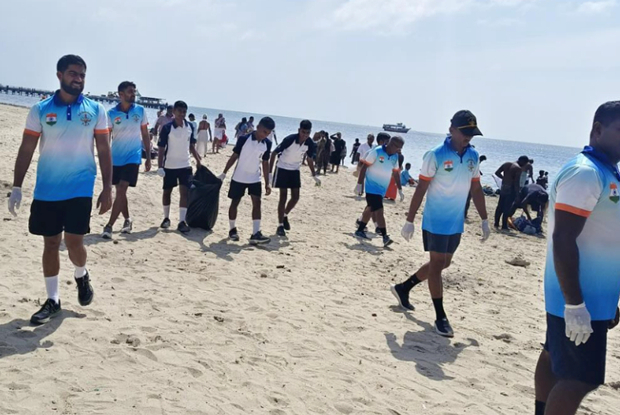
Students and volunteers participating in a beach clean-up drive at Rameswaram, Tamil Nadu, as part of Amrita Vishwa Vidyapeetham’s 2025 marine conservation initiatives in collaboration with the Rotary Club (NGO), the Indian Navy, and local communities, promoting coastal cleanliness, marine biodiversity protection, and SDGs 14 and 17.
Through these initiatives, Amrita Vishwa Vidyapeetham strengthened its collaboration with NGOs and civil society organisations to tackle the SDGs through student volunteering programmes, environmental education, and coastal ecosystem restoration. The partnership supported SDG 4 (Quality Education) through experiential learning and school outreach, SDG 5 (Gender Equality) through engagement with coastal women, SDG 14 (Life Below Water) through marine conservation and seagrass restoration, and SDG 17 (Partnerships for the Goals) through cooperation among academic institutions, non-profit organisations, public agencies, and local communities. The initiative illustrates how university–NGO partnerships can translate student participation into practical contributions to environmental sustainability and resilient coastal livelihoods.
Amrita SeRVe Village Medical Camps 2025: Amrita Vishwa Vidyapeetham’s Collaboration with Mata Amritanandamayi Math for Community Healthcare and Rural Well-Being
In September 2025, Amrita Vishwa Vidyapeetham collaborated with Mata Amritanandamayi Math through its Amrita SeRVe village-adoption programme to support community healthcare and rural development initiatives in underserved villages. Amrita SeRVe is a community development programme of Mata Amritanandamayi Math, implemented in association with Amrita Vishwa Vidyapeetham to improve the well-being of rural communities. As part of community service activities organised in September 2025, a free medical camp was conducted in an Amrita SeRVe village in Bihar, demonstrating how university–NGO collaboration can contribute to the United Nations Sustainable Development Goals (SDGs) through community health outreach and partnerships with local healthcare providers
The medical camp was conducted with the participation of government hospital doctors, Auxiliary Nurse Midwives (ANMs), and Accredited Social Health Activists (ASHAs), bringing essential healthcare services closer to rural residents. Community members received health screenings for fever, blood sugar levels, and blood pressure, along with free medicines based on their healthcare needs. A total of 99 villagers benefited from the medical camp, highlighting the initiative’s direct contribution to improving access to basic healthcare services. Through the Amrita SeRVe partnership, the activity connected NGO-led rural outreach with public healthcare professionals, supporting preventive health awareness, early identification of common health concerns, and accessible medical assistance for underserved communities.
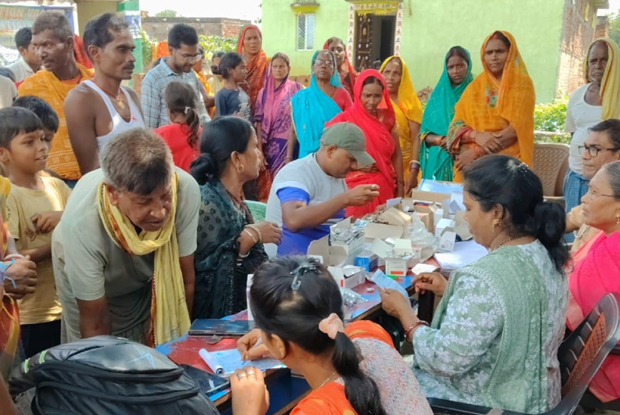
Rural villagers receiving free healthcare services and medicines during the Amrita SeRVe Village Medical Camp in Bihar, organised through Amrita Vishwa Vidyapeetham’s collaboration with Mata Amritanandamayi Math (NGO) and local healthcare professionals in September 2025, promoting accessible healthcare, community well-being, and SDGs 3, 10, and 17.
Through this initiative, Amrita Vishwa Vidyapeetham and Mata Amritanandamayi Math strengthened their collaboration to tackle the SDGs through community-based healthcare outreach and rural development activities. The programme contributed to SDG 3 (Good Health and Well-being) by providing free health screenings and medicines, SDG 10 (Reduced Inequalities) by improving access to essential healthcare for rural populations, and SDG 17 (Partnerships for the Goals) through cooperation among the university, the NGO, government healthcare professionals, and community health workers. The initiative demonstrates how university–NGO partnerships can support inclusive healthcare delivery and improve the well-being of underserved rural communities.
Social Work Field Placements and Internships 2025: Amrita Vishwa Vidyapeetham’s Collaboration with Pallium India, Foundation for Development Action, and Other NGOs for Community Development and Student Engagement
In 2025, Amrita Vishwa Vidyapeetham strengthened its collaboration with non-governmental organisations (NGOs) through supervised field placements and internships for Master of Social Work (MSW) students, connecting academic education with practical community development, social welfare, healthcare, and inclusive development initiatives. As documented in the Department of Social Work’s May 2025 newsletter, participating organisations included Pallium India, Foundation for Development Action, Thalassery Social Service Society, Trivandrum Social Service Society, Viswas (Palakkad), and Akkara Foundation (Kasaragod). Additional field placement partners included Kudumbashree National Resource Organisation, Walkaroo Foundation, and the District Child Protection Unit, Trivandrum. These collaborations provided students with opportunities to engage with organisations working on social challenges while contributing to the United Nations Sustainable Development Goals (SDGs) through supervised community-based fieldwork.
The field placements covered diverse areas of social development, including palliative care and pain relief through Pallium India, community development through Foundation for Development Action, social welfare services through Thalassery Social Service Society and Trivandrum Social Service Society, social justice and victim support through Viswas, and community welfare through Akkara Foundation. Other placements provided exposure to women’s self-help groups and sustainable livelihoods through Kudumbashree National Resource Organisation, corporate social responsibility initiatives through Walkaroo Foundation, and child protection services through the District Child Protection Unit. Through these NGO and institutional partnerships, MSW students gained practical experience in understanding community needs, social inequalities, healthcare challenges, livelihood concerns, and the role of civil society organisations in supporting vulnerable populations. The placements were jointly assessed by Amrita Vishwa Vidyapeetham faculty members and agency supervisors, strengthening academic–NGO coordination and connecting professional social work education with field-based learning.
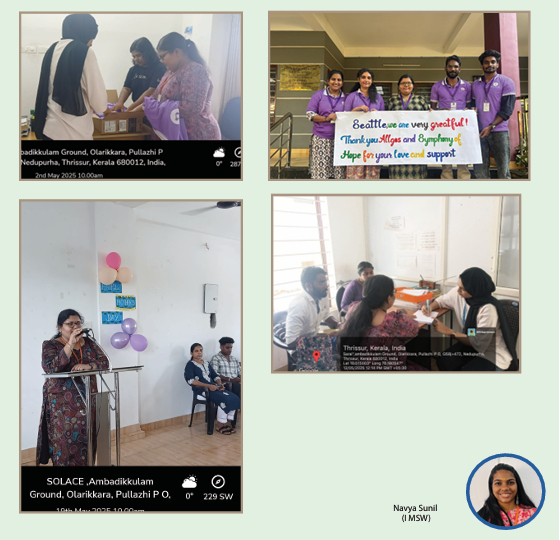
Master of Social Work (MSW) students of Amrita Vishwa Vidyapeetham participating in supervised fieldwork, community engagement, and social welfare activities at SOLACE, Thrissur, Kerala, demonstrating university–NGO collaboration through experiential learning, community service, and support for vulnerable populations in alignment with SDGs 3, 10, and 17.
Through these structured field placements and internships, Amrita Vishwa Vidyapeetham collaborated with NGOs to support the SDGs through student field engagement, experiential learning, and community-oriented social work activities. The initiative aligned with SDG 1 (No Poverty) through community development and livelihood-related engagement, SDG 3 (Good Health and Well-being) through exposure to palliative care and healthcare services, SDG 5 (Gender Equality) through women’s empowerment and self-help group initiatives, SDG 8 (Decent Work and Economic Growth) through livelihood development, SDG 10 (Reduced Inequalities) through social welfare and support for vulnerable communities, and SDG 16 (Peace, Justice and Strong Institutions) through social justice and child protection activities. The programme also supported SDG 17 (Partnerships for the Goals) by strengthening cooperation between the university and civil society organisations. These collaborations demonstrate how university–NGO partnerships can integrate student learning with practical social development efforts and contribute to building socially responsible professionals.
Organisation
Type
Focus area
Pallium India
NGO
Palliative care and pain relief
Foundation for Development Action
NGO
Community development
Thalassery Social Service Society
NGO
Social welfare and community services
Trivandrum Social Service Society
NGO
Social welfare and community services
Viswas (Palakkad)
NGO
Social justice and victim support
Akkara Foundation (Kasaragod)
NGO
Community welfare
Kudumbashree National Resource Organisation
Community network
Women’s self-help groups and livelihoods
Walkaroo Foundation
CSR foundation
Corporate social responsibility programmes
District Child Protection Unit, Trivandrum
Government
Child protection
NSS Community Volunteering 2025: Amrita Vishwa Vidyapeetham’s Collaboration with Namma Navakkarai NGO, Mata Amritanandamayi Math, and Local Community Organisations for Sustainable Development
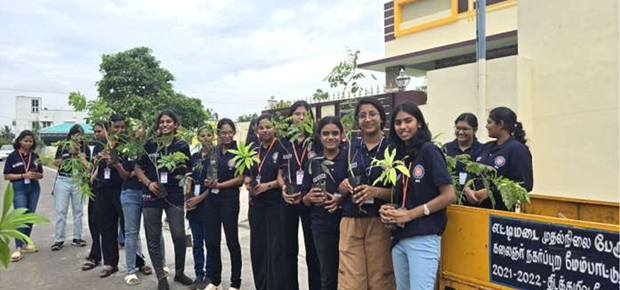
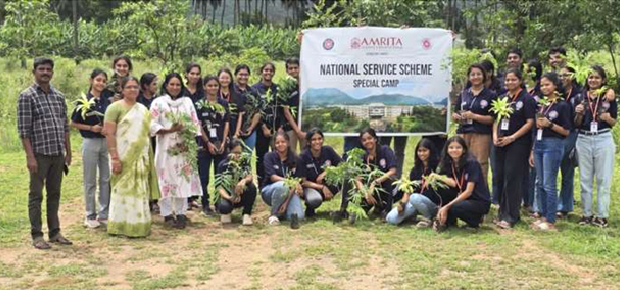
In 2025, Amrita Vishwa Vidyapeetham strengthened its collaboration with non-governmental organisations (NGOs), particularly Namma Navakkarai and Mata Amritanandamayi Math through the Amala Bharatam Campaign, alongside local government bodies, schools, and community organisations, to promote environmental sustainability, public health, sanitation, and community development through National Service Scheme (NSS) activities and student volunteering programmes. These initiatives connected academic institutions with civil society organisations and local communities, enabling students to participate in practical activities addressing the United Nations Sustainable Development Goals (SDGs). A significant example was the NSS Special Camp organised by Unit V at the Coimbatore campus from 2 to 7 July 2025, involving 28 student volunteers working with village communities, temple committees, a tribal settlement, a government school, and local panchayat authorities. Volunteers planted native saplings in Ettimadai, organised village and temple cleanliness drives, conducted waste segregation activities, and presented street plays on sanitation and environmental awareness. The programme also included a three-kilometre awareness march promoting responsible waste disposal, plastic pollution prevention, and disease prevention, alongside cleanliness and educational engagement activities at the Government Panchayat Union Elementary School in Madukkarai.
Students of Amrita Vishwa Vidyapeetham participating in a tree plantation drive during the NSS Special Camp 2025 at Ettimadai, Coimbatore, promoting environmental conservation, biodiversity protection, and community engagement through student volunteering in support of SDGs 13, 15, and 17.
Amrita Vishwa Vidyapeetham further strengthened environmental volunteering through the NSS Unit IV Tree Plantation and Amala Bharatam Campaign on 30 June 2025, during which 30 volunteers planted 80 bamboo saplings and collected plastic and non-biodegradable waste around the Coimbatore campus. Another important NGO collaboration involved Namma Navakkarai, a local environmental organisation, whose volunteers worked with students from Amrita School of Business, Coimbatore, and officials from the Madukkarai Forest Division on a seed-ball preparation initiative supporting ecological restoration. During World Cleanup Day 2025, faculty and staff also participated in a railway-track cleanliness drive in the Navakkarai area, collecting 13 bags of waste. These activities demonstrated the value of university–NGO partnerships in promoting environmental responsibility, biodiversity conservation, waste management, and community participation. Additional community engagement initiatives included the International Day of Yoga on 21 June 2025, organised by NSS volunteers in association with Amrita Darshanam to promote physical and mental well-being, and a World Toilet Day sanitation awareness campaign in November 2025 across KurvaKhurda and Mamadadodi villages in Raichur, Karnataka. The sanitation campaign, conducted with local panchayat authorities and community leaders, engaged approximately 150 participants in KurvaKhurda and 240 in Mamadadodi, encouraged responsible sanitation practices, and included a follow-up survey covering 72 households.
Through these initiatives, Amrita Vishwa Vidyapeetham demonstrated collaboration with NGOs and community organisations to tackle the SDGs through student volunteering, environmental education, sanitation awareness, and community-based sustainability activities. The partnership with Namma Navakkarai provided a direct example of NGO engagement in environmental restoration, while the Amala Bharatam Campaign supported student participation in cleanliness and ecological protection activities. The wider NSS programmes strengthened cooperation with public institutions, schools, and local communities, extending the impact of volunteering beyond university campuses. Collectively, these activities contributed to SDG 3 (Good Health and Well-being) through health and hygiene awareness, SDG 4 (Quality Education) through experiential learning and community education, SDG 6 (Clean Water and Sanitation) through sanitation outreach, SDG 11 (Sustainable Cities and Communities) through cleanliness initiatives, SDG 12 (Responsible Consumption and Production) through waste segregation and plastic pollution prevention, SDG 13 (Climate Action) and SDG 15 (Life on Land) through tree planting and ecological restoration, and SDG 17 (Partnerships for the Goals) through collaboration with NGOs and community stakeholders. These programmes illustrate how sustained university–NGO cooperation can mobilise student volunteers, strengthen environmental awareness, and support practical progress toward sustainable development.
Research Collaboration with NGOs
In 2025, Amrita carried out applied research with NGOs, not-for-profit research institutes, foundations and civil society networks. These collaborations combine Amrita’s research capacity with partners’ community reach, so that solutions are co-designed, tested in the field and monitored for impact.
ICSRF 2025 NGO Conclave and Investments for Innovation Roundtable: Amrita Vishwa Vidyapeetham’s Collaboration with the Gates Foundation, EkStep Foundation, Mata Amritanandamayi Math, and Civil Society Organisations for Sustainable Development
In August–September 2025, Amrita Vishwa Vidyapeetham strengthened its engagement with non-governmental organisations (NGOs), philanthropic foundations, and civil society organisations through the International Conference on Sustainable & Resilient Futures (ICSRF 2025), held at its Amritapuri campus. A significant component of the conference was the NGO Conclave, which brought together civil society organisations from across India to connect grassroots development experiences with academic research and sustainable development strategies. The conclave provided a platform for dialogue on climate action, sustainable livelihoods, community health, education, governance, and social resilience. Through engagement with organisations including Mata Amritanandamayi Math, Amrita Vishwa Vidyapeetham promoted knowledge exchange between researchers, development practitioners, and community-based organisations, supporting collaborative approaches to addressing the United Nations Sustainable Development Goals (SDGs).
The conference also featured an Investments for Innovation Roundtable, bringing together representatives from the Gates Foundation and EkStep Foundation, alongside the Asian Development Bank, the Economic Research Institute for ASEAN and East Asia (ERIA), and industry stakeholders. Discussions explored how philanthropic funding, development finance, technological innovation, and institutional partnerships could accelerate sustainable development solutions and expand their reach to underserved communities. Another important outcome was the launch of the SREE geo-platform for community-led resilience, designed to support the use of geographic information and community knowledge in resilience planning. By making the platform accessible to NGO and community partners, Amrita Vishwa Vidyapeetham created opportunities for civil society organisations to engage with research-informed tools and strengthen local approaches to sustainable development.
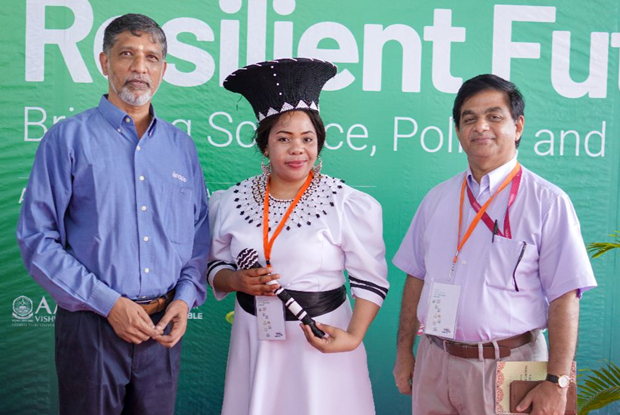
Dr. Raghu Raman of Amrita Vishwa Vidyapeetham with participants at the International Conference on Sustainable & Resilient Futures (ICSRF 2025), highlighting engagement with NGOs, civil society organisations, and international stakeholders to advance sustainable development, knowledge exchange, and global partnerships in support of SDG 17.
Through the NGO Conclave, innovation roundtable, and SREE geo-platform, Amrita Vishwa Vidyapeetham facilitated collaboration between academic researchers, NGOs, philanthropic foundations, development institutions, and grassroots organisations to advance SDG-related research, knowledge exchange, and community-oriented innovation. These initiatives supported SDG 4 (Quality Education) through knowledge sharing and research engagement, SDG 11 (Sustainable Cities and Communities) through community resilience planning, SDG 13 (Climate Action) through dialogue on climate adaptation and sustainability, and SDG 17 (Partnerships for the Goals) through multi-stakeholder cooperation and innovation partnerships. ICSRF 2025 demonstrated the university’s role in connecting civil society expertise with academic research and institutional resources to support collaborative responses to complex sustainability challenges.
Civil 20 South Africa Summit 2025: Amrita Vishwa Vidyapeetham’s Collaboration with the C20 Civil Society Network for SDG Policy Research, Social Inclusion, and Global Sustainable Development
In 2025, Amrita Vishwa Vidyapeetham continued its engagement with the Civil 20 (C20) network, an international platform connecting non-governmental organisations (NGOs) and civil society organisations, through participation in the C20 South Africa Summit. Building upon its leadership during India’s G20 Presidency in 2023, when the Chancellor of Amrita Vishwa Vidyapeetham chaired C20 India, the university contributed to ongoing international civil society dialogue on sustainable development and inclusive policymaking. Dr Krishnashree Achuthan represented the perspectives of C20 India at the C20 South Africa Summit, connecting the university’s experience in research, community development, and social innovation with global civil society discussions. The C20 South Africa process brought together more than 3,000 civil society organisations across 14 working groups, providing an extensive international platform for examining social, economic, environmental, and governance challenges related to the United Nations Sustainable Development Goals (SDGs).
The C20 South Africa process supported the development of a civil society policy pack addressing debt justice, gender equality, the care economy, climate justice, disability inclusion, and ethical artificial intelligence governance. These policy priorities reflected the collective contributions of participating civil society organisations and working groups, connecting grassroots experiences with evidence-informed recommendations for international development discussions. Through its continued participation in the C20 network, Amrita Vishwa Vidyapeetham contributed to international knowledge exchange and civil society policy dialogue, particularly on issues involving social inequalities, responsible technology, inclusive development, and environmental sustainability. The initiative demonstrated how academic institutions can engage with NGO networks to connect research perspectives and community experiences with broader policy discussions.
Through its participation in the C20 South Africa Summit 2025, Amrita Vishwa Vidyapeetham strengthened its engagement with international NGO and civil society networks to advance SDG-focused policy dialogue, research exchange, and collaborative advocacy. The initiative aligned with SDG 5 (Gender Equality) through discussions on women’s rights and the care economy, SDG 10 (Reduced Inequalities) through disability inclusion and economic justice, SDG 13 (Climate Action) through climate justice priorities, SDG 16 (Peace, Justice and Strong Institutions) through inclusive governance and ethical AI policy, and SDG 17 (Partnerships for the Goals) through international cooperation among academic institutions and civil society organisations. This engagement illustrates the role of university–civil society partnerships in connecting academic knowledge, grassroots priorities, and international policy processes to support sustainable and equitable development.
SustIN Research Partnerships: Amrita Vishwa Vidyapeetham’s Collaboration with CANSA, Industree Foundation, Team Environment Kenya, WOTR, and Vasudha Foundation for Climate Action and Sustainable Development
In 2025, Amrita Vishwa Vidyapeetham continued its engagement with non-governmental organisations (NGOs) through the SustIN network, building upon research and knowledge-exchange partnerships established in earlier years. The network includes Climate Action Network South Asia (CANSA), Industree Foundation, Team Environment Kenya, Watershed Organisation Trust (WOTR), and Vasudha Foundation, organisations working across climate action, sustainable livelihoods, environmental education, and community resilience. These partnerships connect academic research with civil society expertise and grassroots development practices, supporting collaborative approaches to addressing the United Nations Sustainable Development Goals (SDGs). Through SustIN, Amrita Vishwa Vidyapeetham provides an institutional platform for engaging NGO partners in sustainability-related knowledge exchange and interdisciplinary research.
The SustIN partnerships address interconnected environmental and socioeconomic challenges, including climate-resilient agriculture, sustainable artisan livelihoods, environmental education, and watershed governance. Collaboration with organisations such as CANSA and Vasudha Foundation connects the network with climate action and sustainability policy expertise, while engagement with Industree Foundation brings perspectives on artisan livelihoods and inclusive economic development. Partnerships involving Team Environment Kenya and WOTR extend the network’s relevance to environmental education, community resilience, and natural resource management. By connecting university researchers with organisations possessing practical experience in community-based sustainability initiatives, Amrita Vishwa Vidyapeetham supports the exchange of research knowledge, field-level insights, and approaches to sustainable development.
Through these ongoing partnerships, Amrita Vishwa Vidyapeetham demonstrates its commitment to collaborating with NGOs to tackle the SDGs through research partnerships and knowledge exchange. The network’s thematic activities align with SDG 1 (No Poverty) through sustainable livelihoods, SDG 4 (Quality Education) through environmental education, SDG 6 (Clean Water and Sanitation) through watershed governance, SDG 8 (Decent Work and Economic Growth) through artisan livelihoods, SDG 13 (Climate Action) through climate resilience and adaptation, SDG 15 (Life on Land) through sustainable natural resource management, and SDG 17 (Partnerships for the Goals) through university–NGO cooperation. SustIN illustrates how sustained partnerships between academic institutions and civil society organisations can connect scientific knowledge with community development priorities and support long-term sustainability efforts.
Indian Sign Language Labs 2025: Amrita Vishwa Vidyapeetham’s NGO Collaboration with Mata Amritanandamayi Math and ASHISH for Inclusive Education and Digital Learning Resources
In September 2025, Amrita Vishwa Vidyapeetham, through Amrita CREATE and the UNESCO Chair on Assistive Technologies in Education, collaborated with the NGO Mata Amritanandamayi Math through its institution, Amrita Speech and Hearing Improvement School (ASHISH), Thrissur, to promote inclusive education and accessible digital learning resources for children with hearing and speech disabilities. The university team, including sign language users and an interpreter, conducted a full-day engagement with ASHISH teachers, students, and parents to understand classroom challenges, identify educational needs, and explore opportunities for improving assistive learning technologies. As part of the collaboration, Amrita Vishwa Vidyapeetham introduced Indian Sign Language (ISL) Labs, a free, gamified digital learning resource available through the national OLabs platform, designed to make Indian Sign Language learning more accessible and engaging. The initiative demonstrated how university–NGO collaboration can support the United Nations Sustainable Development Goals (SDGs) through the development and dissemination of inclusive educational resources.
The engagement emphasised two-way knowledge exchange and participatory educational technology development, with ASHISH teachers sharing their experience and specialised teaching methods for speech improvement and communication development. These practical insights informed discussions on the human-centred design of assistive educational tools, ensuring that technological solutions respond to the needs of teachers and learners. The university team also conducted introductory Indian Sign Language activities for students, parents, and teachers, while promoting awareness of bilingual Deaf education and the importance of accessible communication. The sessions encouraged interest in Indian Sign Language among participating students, including a Grade 10 class that expressed a desire to learn ISL. By connecting the university’s digital education expertise with the practical knowledge of a specialised educational institution, the collaboration supported the development of more inclusive, context-sensitive approaches to teaching and learning.
Through this initiative, Amrita Vishwa Vidyapeetham and its NGO partner, Mata Amritanandamayi Math, through ASHISH, strengthened collaboration to tackle the SDGs through accessible educational resources, knowledge exchange, and inclusive learning technologies. The programme contributed to SDG 4 (Quality Education) by expanding access to free Indian Sign Language learning tools and supporting inclusive teaching practices, SDG 10 (Reduced Inequalities) by addressing communication and educational barriers experienced by children with hearing and speech disabilities, and SDG 17 (Partnerships for the Goals) through cooperation between university researchers, educators, and an NGO-run educational institution. The collaboration illustrates how academic institutions and civil society partners can combine technological innovation with classroom experience to develop educational resources that support equitable learning opportunities and long-term educational inclusion.
Viswamrit Women’s Skills Training 2025: Amrita Vishwa Vidyapeetham’s NGO Collaboration with Vishwakarma Navothan Foundation for Women’s Empowerment and Vocational Education
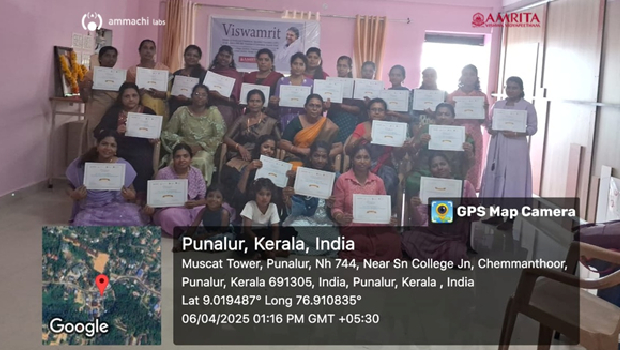
In April 2025, Amrita Vishwa Vidyapeetham, through AMMACHI Labs, collaborated with the NGO Vishwakarma Navothan Foundation (VNF) to implement the Viswamrit project, a community-based vocational education initiative aimed at strengthening women’s skills, economic independence, and sustainable livelihood opportunities in Kerala. The partnership focused on delivering structured tailoring and vocational skills training to women associated with self-help groups in Punalur and Kannur. By combining the university’s expertise in community-based skills development with the NGO’s grassroots engagement, the initiative provided practical educational opportunities for women seeking to improve their employability and income-generating capabilities.
The Viswamrit programme delivered a tailoring and skills development curriculum, enabling participating women to acquire practical vocational competencies relevant to self-employment and local livelihood opportunities. In April 2025, 48 women successfully completed the training and received certificates, including 24 women in Punalur on 6 April 2025 and 24 women in Kannur on 19 April 2025. The certification activities recognised participants’ successful completion of the programme and demonstrated the implementation of vocational education through university–NGO cooperation. The initiative also strengthened community-based learning by engaging women from self-help groups and providing structured training intended to support their long-term economic participation.
Women artisans receiving vocational training completion certificates under the Viswamrit project in Punalur, Kerala, on 6 April 2025, organised by Amrita Vishwa Vidyapeetham’s AMMACHI Labs in collaboration with Vishwakarma Navothan Foundation (NGO), empowering 24 women through tailoring and skills development in support of SDGs 4, 5, 8, and 17.
Through this collaboration, Amrita Vishwa Vidyapeetham and Vishwakarma Navothan Foundation demonstrated how university–NGO partnerships can contribute to the Sustainable Development Goals through vocational training curricula, skills education, and women’s economic empowerment. The initiative supported SDG 4 (Quality Education) by providing practical vocational learning opportunities, SDG 5 (Gender Equality) by strengthening women’s skills and economic participation, SDG 8 (Decent Work and Economic Growth) by supporting employability and livelihood development, and SDG 17 (Partnerships for the Goals) through cooperation between an academic institution and an NGO. The programme illustrates how collaborative skills education can create opportunities for women from community-based self-help groups to develop practical capabilities for sustainable livelihoods.
Ocean Farming Training Curriculum 2025: Amrita Vishwa Vidyapeetham’s NGO and Non-Profit Collaboration with TERI and Development Partners for Coastal Women’s Empowerment and Marine Sustainability
In 2025, Amrita Vishwa Vidyapeetham, through AMMACHI Labs, advanced an ocean farming education and skills development initiative involving The Energy and Resources Institute (TERI), a not-for-profit research organisation, with support from the UNDP–GEF Small Grants Programme and other development partners, including Transworld. Implemented in coastal communities of Tamil Nadu, the initiative focused on developing and delivering practical training modules in sustainable aquaculture, seaweed cultivation, marine conservation, and livelihood development. The programme combined technical education, community participation, and environmental awareness to strengthen coastal women’s capabilities and support sustainable ocean-based livelihoods. Through engagement with non-profit and institutional partners, the initiative connected academic expertise with community-oriented education and sustainable development priorities.
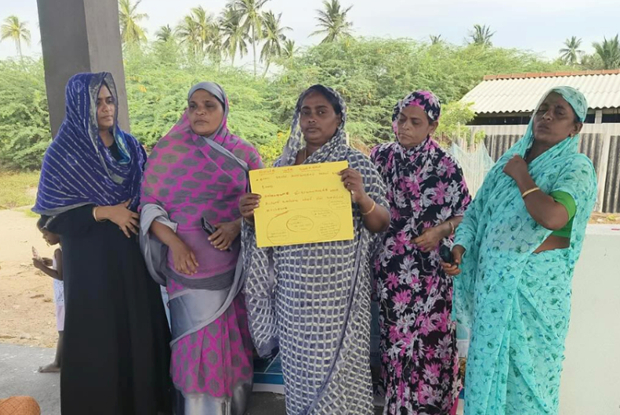
The training curriculum included a 10-day Integrated Multi-Trophic Aquaculture (IMTA) programme in Munaikadu during September 2025, involving 20 coastal women who completed three hours of practical training each day. Additional workshops introduced seaweed value-addition techniques, including the production of seaweed-based soaps and pickles, alongside indigenous cultivation practices, packaging, and quality assurance. The programme also incorporated Life Enrichment Education (LEE) modules covering leadership, time management, personal development, and an “Ideal Village” visioning exercise, encouraging participants to identify priorities for community improvement. On 21 November 2025, World Fisheries Day, AMMACHI Labs also conducted community awareness activities on sustainable fishing and marine conservation in Thondi, Solaikudi, and Sambai, with participation from the Thangachimadam Panchayat Fisheries Department. These activities expanded access to practical educational resources and promoted awareness of responsible marine resource management.
Coastal women participating in a community-based learning and “Ideal Village” visioning activity under the Ocean Farming Training Programme 2025 in Munaikadu, Tamil Nadu, conducted by Amrita Vishwa Vidyapeetham’s AMMACHI Labs with support from TERI (non-profit research organisation) and development partners, promoting women’s empowerment, sustainable livelihoods, marine conservation, and SDGs 4, 5, 8, 14, and 17.
Through the Ocean Farming initiative, Amrita Vishwa Vidyapeetham strengthened its engagement with non-profit and development partners to support SDG-related educational programmes, technical skills development, and community-based environmental learning. The programme contributed to SDG 4 (Quality Education) by providing structured vocational and life-skills training, SDG 5 (Gender Equality) by expanding women’s access to technical knowledge and livelihood opportunities, SDG 8 (Decent Work and Economic Growth) through sustainable aquaculture and seaweed-based enterprise skills, SDG 14 (Life Below Water) through marine conservation education, and SDG 17 (Partnerships for the Goals) through cooperation among academic, non-profit, development, and community stakeholders. The initiative illustrates how practical training curricula and community-oriented educational resources can support inclusive coastal development and long-term environmental sustainability
Vruthi 2025 Clean Kerala Conclave: Recognition of Amrita Vishwa Vidyapeetham’s Environmental Sustainability, Community Awareness, and NGO-Relevant Initiatives
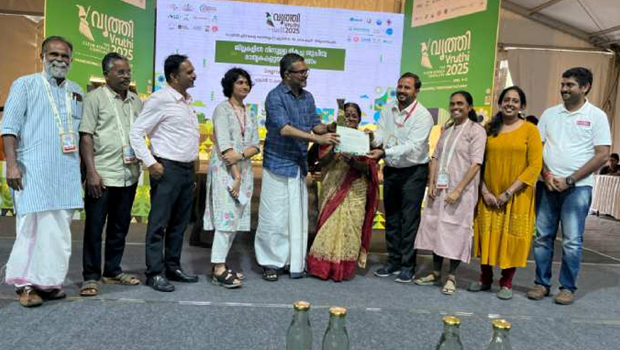
In April 2025, Amrita Vishwa Vidyapeetham was honoured at the Vruthi 2025 Clean Kerala Conclave, organised in connection with the Malinyamuktha Nava Keralam (Waste-Free New Kerala) people’s campaign. The recognition acknowledged the university’s contributions to environmental sustainability, waste management, and community awareness through initiatives involving composting, recycling, zero-waste practices, and sustainable consumption. The conclave provided a platform to recognise institutional contributions to Kerala’s broader cleanliness and environmental protection efforts. Amrita Vishwa Vidyapeetham’s recognition highlighted the importance of connecting university-led sustainability initiatives with public awareness and community participation.
A significant aspect of the recognition was the university’s promotion of Saukhyam reusable sanitary pads, an initiative combining menstrual health awareness with environmentally sustainable alternatives to disposable menstrual products. By encouraging the use of reusable menstrual hygiene products, Amrita Vishwa Vidyapeetham supported efforts to reduce disposable sanitary waste while promoting women’s health, menstrual hygiene awareness, and responsible consumption. Alongside this initiative, the university’s composting, recycling, and zero-waste activities demonstrated practical approaches to reducing environmental pollution and encouraging sustainable behaviour. These efforts contributed to broader community awareness of waste reduction, environmental responsibility, and sustainable everyday practices.
Representatives of Amrita Vishwa Vidyapeetham receiving recognition at the Vruthi 2025 Clean Kerala Conclave in April 2025 for the university’s contributions to sustainable waste management, recycling, zero-waste initiatives, community environmental awareness, and the promotion of Saukhyam reusable sanitary pads, supporting SDGs 3, 5, 6, and 12.
Through its recognition at Vruthi 2025, Amrita Vishwa Vidyapeetham demonstrated its contribution to community-oriented sustainability initiatives and public awareness programmes addressing the United Nations Sustainable Development Goals (SDGs). The recognised activities supported SDG 3 (Good Health and Well-being) through menstrual hygiene awareness, SDG 5 (Gender Equality) through the promotion of accessible menstrual health solutions, SDG 6 (Clean Water and Sanitation) through improved sanitation awareness, and SDG 12 (Responsible Consumption and Production) through waste reduction, recycling, and reusable products. The recognition reflects the university’s efforts to connect environmental innovation, public health awareness, and community engagement with sustainable development priorities.
In 2025, Amrita Vishwa Vidyapeetham collaborated with NGOs and civil society through all three routes: student volunteering, applied research and the development of educational resources. Thousands of students volunteered with the Mata Amritanandamayi Math, Rotary Club, Namma Navakkarai and community organisations. They cleaned public spaces, restored seagrass, planted trees and ran health and sanitation campaigns.
Researchers worked with the GEF Small Grants Programme, TERI, the Martha Farrell Foundation, the Gates Foundation, EkStep Foundation and the C20 civil society network on ocean livelihoods, inclusion and SDG financing. With partners such as ASHISH and the Vishwakarma Navothan Foundation, Amrita developed training curricula and digital tools that communities continue to use.