Water Management Educational Opportunities at Amrita Vishwa Vidyapeetham
Home Water Management Educational Opportunities at Amrita Vishwa Vidyapeetham
Last Updated : December 20, 2025
Overview
Amrita Vishwa Vidyapeetham is committed to advancing sustainable water management through education, research, experiential learning, and community engagement. The university’s initiatives aim to equip students, researchers, and members of local communities with the knowledge and practical skills required to address water-related challenges.
During 2025, Amrita strengthened its water management educational activities through community-based water quality assessments, participatory learning programmes, research conducted by students ranging from graduate to doctoral levels, and field interventions undertaken through its Live-in-Labs® and Jivamritam initiatives.
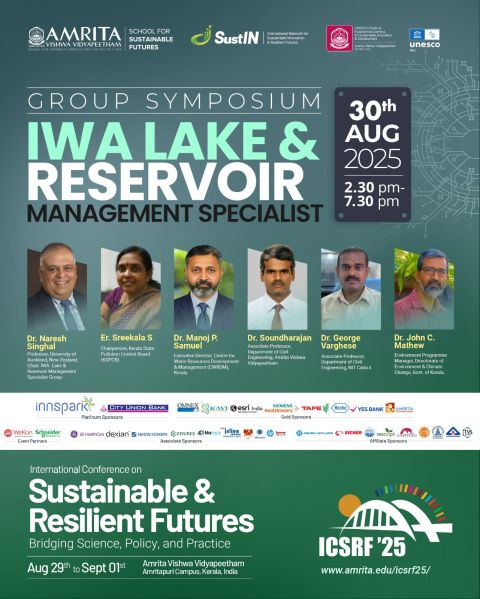
The university also organized the International Conference on Sustainable & Resilient Futures (ICSRF 2025), with representatives from 30+ countries, including UNESCO, UN ESCAP, government, academia, industry, and civil society. The conference included the International Water Association (IWA) Symposium on Lake and Reservoir Management and an NGO Conclave. These events provided opportunities for knowledge exchange on sustainable water resource management, environmental conservation, and community resilience.
These activities reflect Amrita’s approach of integrating scientific knowledge with local experience. Rather than limiting water education to classroom instruction, the university facilitates opportunities for communities to understand their water resources, identify risks, participate in developing solutions, and acquire skills for managing water infrastructure.
World Water Day 2025: Water Quality Assessment and Community Capacity Building
To commemorate World Water Day 2025, Amrita Vishwa Vidyapeetham initiated a community-oriented programme combining water quality testing with educational engagement in rural communities.
The initiative involved water quality testing in 36 villages across India, alongside community engagement sessions aimed at strengthening local capacity to understand and address water-related challenges.
The programme integrated scientific water quality assessment with community-based learning and engagement. Through interactions with local residents, the university sought to enhance awareness of water quality, promote responsible household-level water use and management practices, encourage community participation in identifying and addressing local water-related challenges, and strengthen communities’ capacity to make informed decisions regarding sustainable water management.
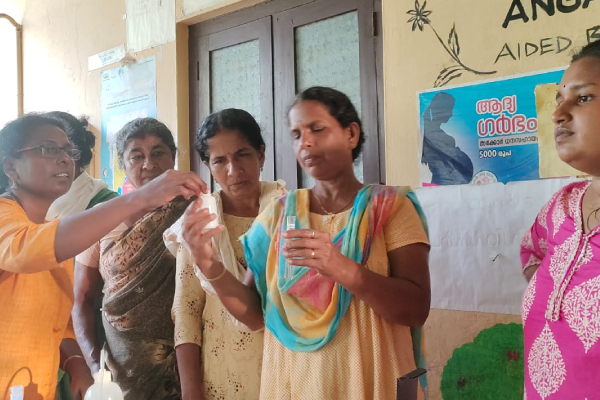
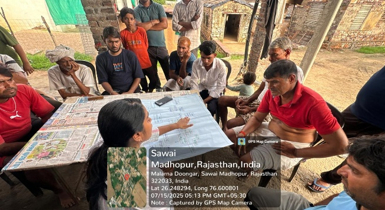
Training community members to do water quality testing
Experiential Water Management Education Through Live-in-Labs®
Amrita Vishwa Vidyapeetham’s Live-in-Labs® programme provides students with opportunities to apply academic knowledge to real-world sustainability challenges through direct engagement with rural communities. Water management is an important focus of these activities, integrating scientific assessments, participatory learning, community awareness, and the development of locally appropriate solutions.
During 2025, student-led water sustainability initiatives were carried out across several communities in India, including Naala village in Uttarakhand, Harirampura village in Rajasthan, and Nani Borvai village in Gujarat, among others.
These initiatives demonstrate the geographical reach of Amrita’s experiential education programmes and their emphasis on addressing water challenges in diverse rural settings. The activities provide two complementary educational opportunities: students gain practical experience in water resource assessment, participatory research, and sustainable technology development, while community members engage in learning about water quality, safe drinking water practices, and community-based sustainable water management.
Naala Village, Uttarakhand: Water Safety Education and Community Management
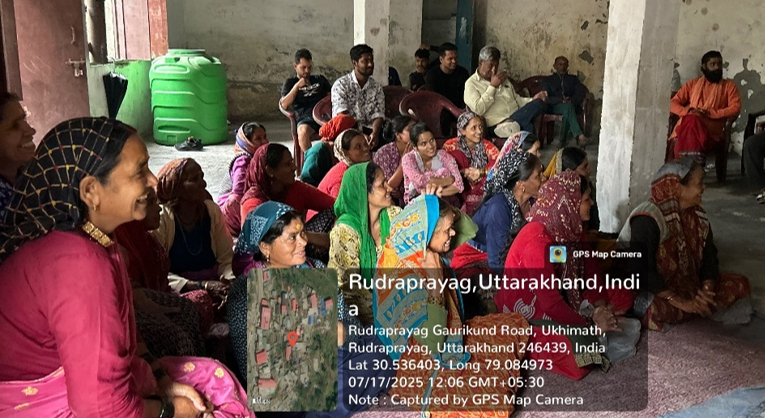
In July 2025, a Live-in-Labs® student team undertook a community water sustainability project in Naala village, Rudraprayag district, Uttarakhand, in collaboration with the local government authorities. .
Field assessments identified microbial contamination in the existing piped water supply, including the presence of E. coli and total coliform bacteria. These findings highlighted the importance of improving community awareness of drinking water contamination and its potential health implications.
The student team conducted participatory rural appraisal activities, household interactions, group discussions, and awareness sessions to understand community concerns and strengthen water-related knowledge.
Educational activities included storytelling and illustrated posters explaining biological contamination, interactive demonstrations of water filtration, and discussions with women on safe water handling, boiling, and filtration practices.
Children participated in educational sessions at a local tuition centre, where visual demonstrations and animated videos were used to explain safe drinking water, hygiene, and waterborne diseases.
A community Water Management Committee was established through a participatory process. Committee members received practical training on operating the installed water filtration system, regulating water flow, cleaning procedures, and safety precautions.
Community members also participated in decisions concerning the location of the water system, its operating schedule, and access arrangements, water conservation measures to be practised etc. These activities provided practical experience in participatory water governance and strengthened local responsibility for the infrastructure.
The initiative demonstrates how student-led water management education can be integrated with technology implementation, enabling community members to develop both awareness and practical operational skills.
Harirampura Village, Rajasthan: Participatory Water Education and Solution Development
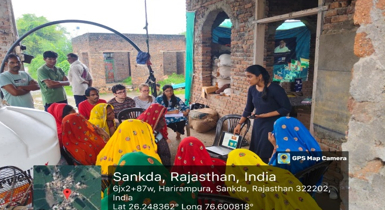
In Harirampura village, Rajasthan, Amrita students and researchers undertook a community-based initiative addressing drinking water quality challenges through participatory assessment and solution development.
The initiative applied Human-Centered Design (HCD) and Participatory Rural Appraisal (PRA) approaches to understand the community’s experiences with drinking water and identify locally appropriate responses.
Household interviews, field surveys, and community interactions provided opportunities for residents to communicate concerns about water quality, water availability, and perceived health-related problems.
The educational dimension of the initiative involved bringing community knowledge and scientific assessment into a shared problem-solving process. Residents participated in identifying priorities and considering possible solutions, while students gained experience in understanding the technical and social dimensions of rural water management.
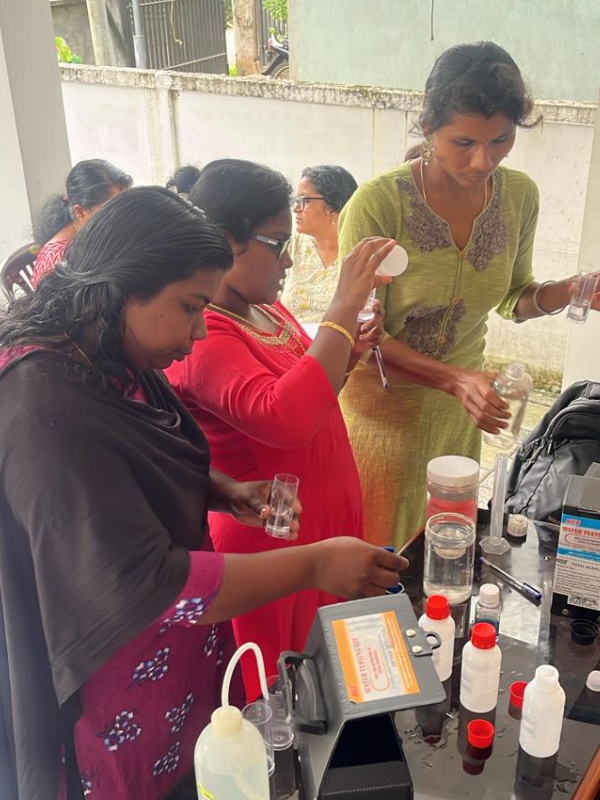
The activities also included water quality testing demonstrations and the implementation of a Jivamritam water filtration system, connecting scientific assessment and practical water treatment interventions.
The initiative demonstrates Amrita’s commitment to experiential education and participatory approaches that encourage communities to contribute actively to water-related decision-making.
Amrita students and researchers addressing drinking water quality challenges, in Harirampura village, Rajasthan
Community-Based Water Sustainability Assessment in Nani Borvai Village, Gujarat
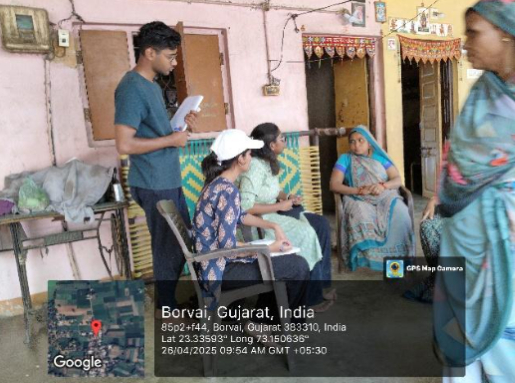
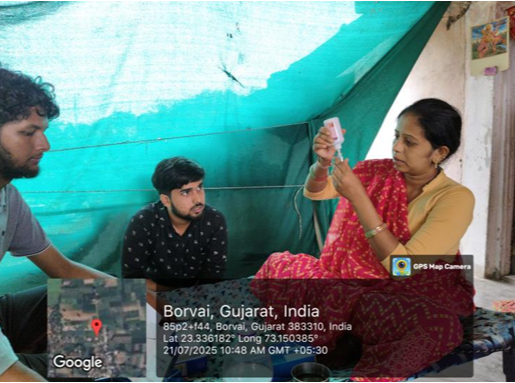
As part of the Live-in-Labs® programme, a student team conducted participatory water and sanitation assessments in Nani Borvai village, Aravalli district, Gujarat. Through household interviews involving approximately 50 families, transect walks, focus group discussions, and community interactions, the team identified challenges related to drinking water quality, accessibility, sanitation, and wastewater management. The assessment revealed that households relied on a distant open well for drinking water because piped borewell water was considered unsuitable for consumption, placing a significant burden on women and girls responsible for water collection. Community discussions, particularly with women’s groups, helped identify local priorities and potential solutions, including water quality testing, household water storage awareness, community-based filtration, rainwater harvesting, and improved maintenance of existing water sources. The initiative provided an experiential learning opportunity for students while engaging community members in identifying practical approaches to safe drinking water access and sustainable water management.
Student team conducting participatory water and sanitation assessments in Nani Borvai village
The university’s approach emphasises the integration of technical knowledge with an understanding of local water challenges, community priorities, and the social and environmental factors influencing water sustainability.
Through field engagement, students have opportunities to apply concepts related to water quality, drinking water safety, participatory assessment, and sustainable water management in diverse community settings. Such engagement also creates opportunities for knowledge exchange between students and residents.
The initiatives also highlight the importance of sustained collaboration between students, researchers, and local communities in strengthening water literacy, practical capabilities, and community participation in sustainable water management.
Advanced Research Education in Water Sustainability
Amrita supports advanced research education in water sustainability through its doctoral programmes and interdisciplinary research activities, including those associated with the Amrita School for Sustainable Futures.
Doctoral research provides opportunities to investigate complex water challenges using interdisciplinary methods that integrate technical analysis, environmental sustainability, and social dimensions of water management. The university’s research environment encourages scholars to examine water sustainability as a multidimensional challenge requiring scientific understanding, stakeholder engagement, and context-sensitive solutions.
At the postgraduate level, through the E4Life PhD Program on Water Sustainability (Amrita School for Sustainable Futures), four PhD scholars completed their research topics such as:
Scalable community-toolkit approaches for water sustainability (300 communities across Kerala)
Reviving river culture and enhancing flood resilience (rural Karnataka)
Reducing water scarcity and improving sanitation (villages in Uttar Pradesh)
Participatory digital platforms for water quality management (Alappad, Kochi)
Together, these doctoral submissions demonstrate Amrita’s interdisciplinary approach to water sustainability education, combining technological, environmental, behavioural, and community-oriented perspectives.
Water Management Education Through ICSRF 2025
The International Conference on Sustainable & Resilient Futures (ICSRF 2025) provided an interdisciplinary platform for researchers, practitioners, government representatives, civil society organizations, and other stakeholders to exchange knowledge on sustainability and environmental management.
Water-related technical sessions and discussions addressed the conservation and management of water bodies, sustainable water infrastructure, climate resilience, and scientific approaches to managing water resources.
IWA Symposium on Lake and Reservoir Management
The IWA Symposium on Lake and Reservoir Management, held on 30 August 2025 as part of ICSRF 2025, provided an opportunity for participants to learn from experts working in water resources, environmental protection, and sustainable water management.
The symposium featured technical presentations on:
Water and land management strategies for climate resilience
Community-based water management through the Jivamritam Programme,
Integrated management and conservation of wetlands
Reservoir management strategies for pumped storage and energy security, Lake pollution challenges and management approaches,
These sessions introduced participants to scientific, technological, and institutional approaches for protecting lakes, reservoirs, wetlands, and other water resources.
By bringing together expertise from academic institutions and public agencies, the symposium facilitated professional learning and knowledge exchange on water management challenges and potential solutions.
NGO Conclave: Knowledge Sharing With Grassroots Organizations
The NGO Conclave, held during ICSRF 2025 on 31 August–1 September 2025, brought together more than 100 NGOs, social innovators, and civil society leaders for discussions on grassroots sustainability, community resilience, and collaborative development.
The conclave provided opportunities for participating organizations to interact with researchers, practitioners, and sustainability experts. Its thematic discussions included WASH, community health, climate resilience, and community-led sustainable development.
Organized alongside the wider ICSRF 2025 programme, including the IWA Symposium, the conclave created opportunities for civil society organizations to engage with scientific and practical knowledge relevant to water sustainability.
These discussions helped connect water sustainability with wider environmental and development challenges, encouraging interdisciplinary approaches to water resource management and resilience.