



Last Updated: 12th December 2025
Amrita Vishwa Vidyapeetham advances water security through partnerships and collaborative initiatives involving rural communities, local governments, academic institutions, research organizations, civil society groups, and water management professionals.
The university adopts an interdisciplinary and participatory approach to addressing water-related challenges, integrating scientific research, technological innovation, community empowerment, and institutional cooperation. These collaborations support improved drinking water management, sustainable use of water resources, and the development of locally appropriate solutions to water security challenges.
During 2025, Amrita continued its cooperative water security initiatives through the Jivamritam Purified Drinking Water Programme, its academic collaboration with Delft University of Technology (TU Delft), community-based research and monitoring activities, and student-led Live-in-Labs® projects.
The university also facilitated national and international knowledge exchange through the International Conference on Sustainable & Resilient Futures (ICSRF 2025), including the International Water Association (IWA) Symposium on Lake and Reservoir Management and the NGO Conclave.
The Jivamritam Purified Drinking Water Programme is a major community-oriented initiative through which Amrita collaborates with rural communities and local institutions to address drinking water quality and management challenges.
The programme follows a participatory approach that combines decentralized water purification technologies with community involvement in the planning, operation, maintenance, and management of shared drinking water facilities. During 2025, nine new Jivamritam community water purification systems were deployed, extending the programme’s reach and strengthening opportunities for community-based water management
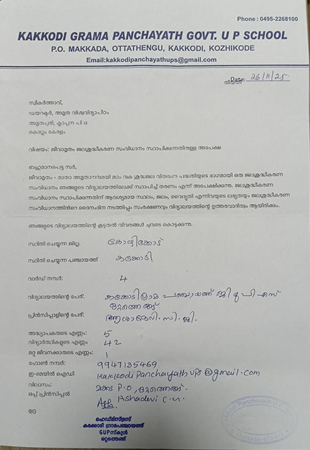
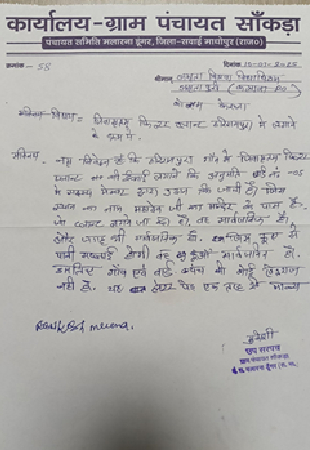
A central feature of Jivamritam is the strong stakeholder engagement comprising the university students and researchers, the local government authorities, and the community members. These stakeholders contribute to identifying local water challenges, facilitating infrastructure deployment, and establishing arrangements for continued operation and maintenance. The programme encourages local ownership and collective responsibility, recognizing that long-term water security depends on both reliable technologies and effective community adoption. By integrating institutional expertise with local participation, Jivamritam provides a practical model for cooperation on decentralized drinking water management.
Amrita Vishwa Vidyapeetham’s Joint Centre of Excellence in Water Sustainability, established in collaboration with Delft University of Technology (TU Delft), the Netherlands, represents a sustained international partnership aimed at addressing water security and sustainability challenges through interdisciplinary research, academic exchange, and capacity building. The Centre brings together faculty members, researchers, and doctoral scholars from both institutions to undertake collaborative research in sustainable water treatment, hydrology, water resource management, technology adoption, and community-based water sustainability. The partnership facilitates joint research projects, doctoral supervision, exchange of scientific expertise, and the development of innovative approaches to addressing water-related challenges. The collaboration has resulted in joint international research publications co-authored by researchers from Amrita and TU Delft. Further strengthening this cooperation, faculty members from TU Delft delivered keynote addresses at the International Conference on Sustainable & Resilient Futures (ICSRF 2025), organized by Amrita Vishwa Vidyapeetham, facilitating international knowledge exchange and scientific dialogue on sustainability and resilience. Through collaborative research, joint publications, academic engagement, and international conferences, the Centre contributes to strengthening institutional partnerships and advancing evidence-based solutions for sustainable water management and long-term water security.
The International Conference on Sustainable & Resilient Futures (ICSRF 2025) provided a platform for cooperation and knowledge exchange among representatives from 30+ countries, including UNESCO, UN ESCAP, government, academia, industry, and civil society, The conference facilitated interdisciplinary discussions on water security, environmental conservation, climate resilience, sustainable infrastructure, and community-based development. . Mr. Tim Curtis, Director of the UNESCO New Delhi Regional Office for South Asia and UNESCO Representative to Bhutan, India, the Maldives and Sri Lanka, participated as a guest of honour and addressed the conference, highlighting the importance of international partnerships, education, and sustainable development. His participation also reflected the longstanding institutional engagement between UNESCO and Amrita.
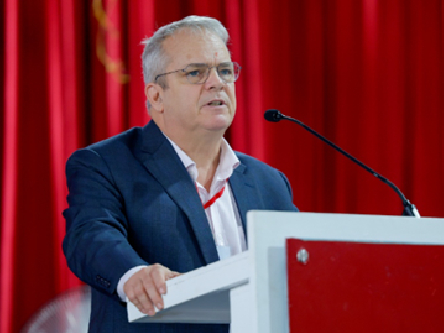
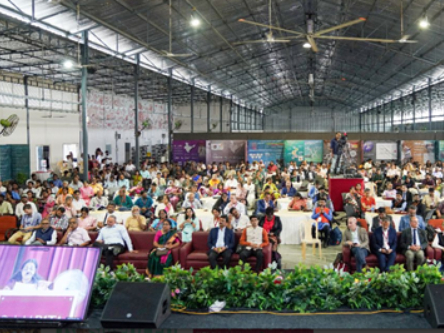
The IWA Symposium on Lake and Reservoir Management, held on 30 August 2025, brought together experts from academic institutions, public agencies, and water resource management organizations to discuss scientific and institutional approaches to sustainable water management.
The symposium included presentations on:
Contributions from organizations such as the Centre for Water Resources Development and Management (CWRDM), the Kerala State Pollution Control Board, and the Government of Kerala provided opportunities for dialogue between academic researchers and public institutions involved in water and environmental management. The symposium strengthened knowledge exchange on the conservation and management of lakes, reservoirs, wetlands, and other water resources.
The NGO Conclave, organized during ICSRF 2025 on 31 August–1 September 2025, brought together more than 100 NGOs, social innovators, and civil society leaders.
The conclave facilitated interaction among grassroots organizations, researchers, practitioners, and other sustainability stakeholders, with discussions addressing community resilience, WASH, climate adaptation, and sustainable development.
Organized alongside the wider ICSRF programme, the conclave created opportunities for civil society organizations to engage with scientific and practical knowledge relevant to sustainable water management.
This engagement is significant because NGOs play an important role in translating scientific knowledge into community-oriented development activities and supporting local participation in water security initiatives.
The conclave contributed to building connections between academic expertise and grassroots organizations, creating opportunities for future cooperation on water sustainability challenges.
Amrita’s Live-in-Labs® programme promotes cooperation between university students, researchers, local communities, and village institutions to identify and address water-related challenges.
During 2025, student-led water sustainability activities were undertaken in Naala village, Uttarakhand; Harirampura village, Rajasthan; Nani Borvai village, Gujarat; among others. These initiatives involved participatory assessments, household interactions, water quality investigations, and community engagement to understand local water challenges and identify context-appropriate responses.
In Naala village, students worked with community members to assess drinking water challenges associated with water quality, distribution infrastructure, and existing water management practices.
The activities involved field observations, water quality assessments, and community interactions to understand local conditions and identify opportunities for improving drinking water management.
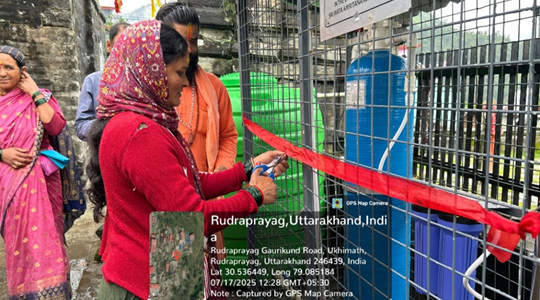
In Harirampura, students collaborated with village representatives, local residents, and the community water committee to address drinking water challenges.
Activities included household assessments, water quality testing, community engagement, and installation of a Jivamritam water filtration system.
The inauguration of the system involved the village Sarpanch, Upa-Sarpanch, and members of the water committee, demonstrating cooperation between the university and local governance structures.
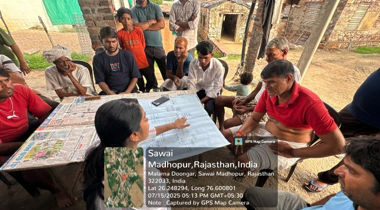
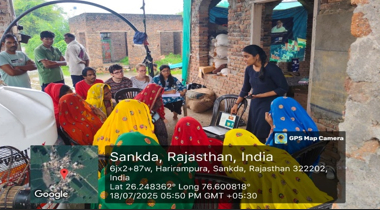
As part of Amrita Vishwa Vidyapeetham’s Live-in-Labs® programme, a student team collaborated with residents of Nani Borvai village in Aravalli district, Gujarat, during 2025 to assess local water security challenges and identify community-driven solutions. Through participatory rural appraisal methods, including transect walks, household interviews involving approximately 30 families, focus group discussions, and consultations with community representatives, the team investigated drinking water availability, quality, accessibility, and sanitation conditions.
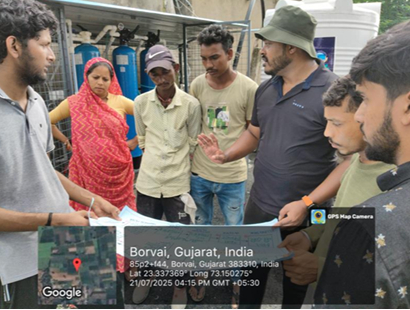
The assessment revealed that although piped borewell water was available, residents considered it unsuitable for drinking and depended on a distant open well, placing a considerable burden on women and girls responsible for collecting water. Discussions with women’s groups and other community members helped prioritize drinking water access as a major concern and identify potential solutions, including water quality testing, community-based filtration, safe water storage practices, rainwater harvesting, and improved maintenance of existing water sources. The initiative demonstrated cooperation between the university and local communities in identifying water security challenges, integrating community perspectives into proposed solutions, and promoting participatory approaches to sustainable water management.
These activities demonstrate the role of experiential learning and participatory engagement in connecting academic expertise with local knowledge and community priorities.
The GEL-IoT research project, included work associated with Pulincunnoo Panchayat in Alappuzha district and Kulasekharapuram Panchayat in Kollam district, Kerala.
The activities involved water quality investigations, field-based monitoring, laboratory assessments, and interactions with local communities.
Community engagement activities introduced participants to water quality testing and interpretation, strengthening opportunities for cooperation between researchers and local residents. By combining scientific assessments with community participation, the project supports shared understanding of water-related challenges and contributes to informed local water management.
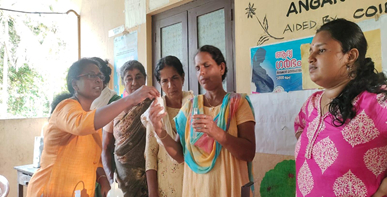
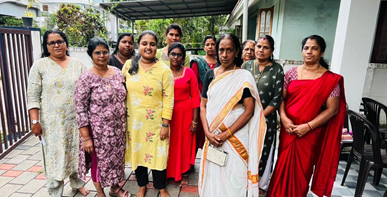
GEL-IoT research project, included work associated with Pulincunnoo Panchayat
Amrita Vishwa Vidyapeetham strengthened its cooperation on water security through interdisciplinary research addressing community participation, water resource sustainability, climate resilience, and technology-enabled water management. During the 2025 evaluation period, five research theses contributed to understanding and addressing water security challenges across different regions of India. These included
Collectively, these research initiatives contribute to the knowledge base for cooperative water security by connecting scientific research with community-level challenges, participatory approaches, and evidence-based water management.