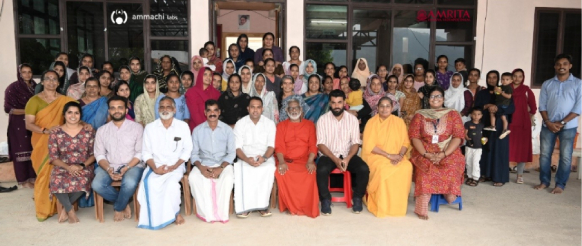
Amrita Vishwa Vidyapeetham is committed to promoting diversity and inclusivity within its academic community. As part of this commitment, the University encourages and supports women’s applications to subjects where they remain underrepresented. Fields such as STEM (Science, Technology, Engineering and Mathematics) have historically experienced gender imbalances. By actively encouraging women to pursue these disciplines, Amrita Vishwa Vidyapeetham seeks to reduce this gap and foster a more balanced and representative learning environment.
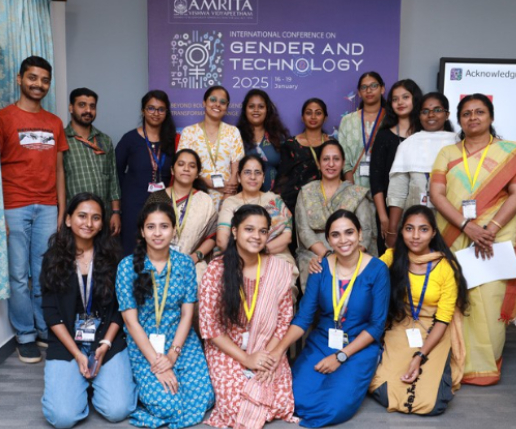
To support this objective, the University implements direct approaches, including university outreach and collaboration, testimonies from women students and organized an International Conference on Gender and Technology. These are complemented by indirect approaches, such as communicating existing Amrita field projects addressing women’s under-representation.
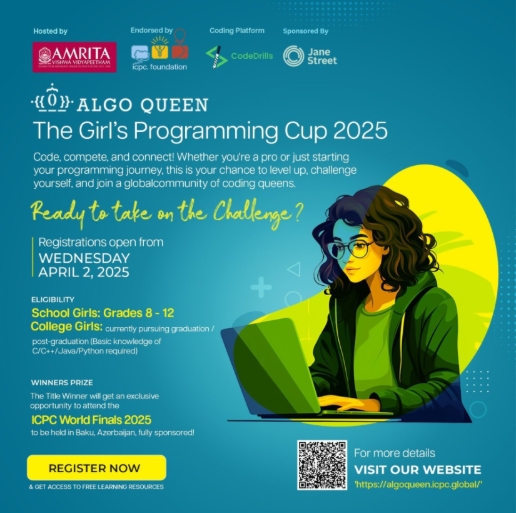
In 2025, Amrita Vishwa Vidyapeetham, in collaboration with the ICPC Foundation, organised ICPC AlgoQueen 2025, a global competitive programming competition for women students.
The initiative created a dedicated and supportive environment for girls to strengthen their coding skills, confidence and problem-solving abilities. Students from schools and universities were able to compete, collaborate with peers and demonstrate their programming skills.
Through mentorship, training and competition, the initiative encouraged greater participation of women in STEM and technology, while promoting programming as both a valuable career skill and an engaging area of learning.
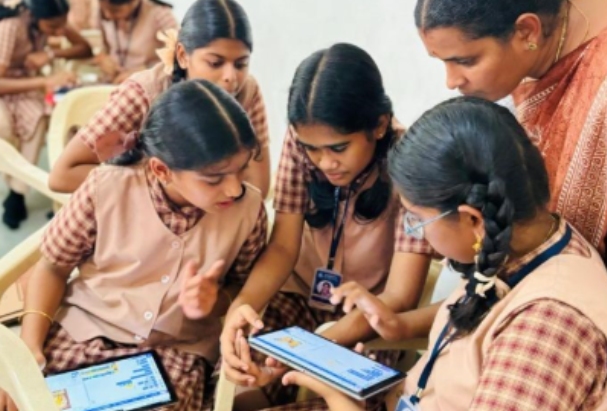
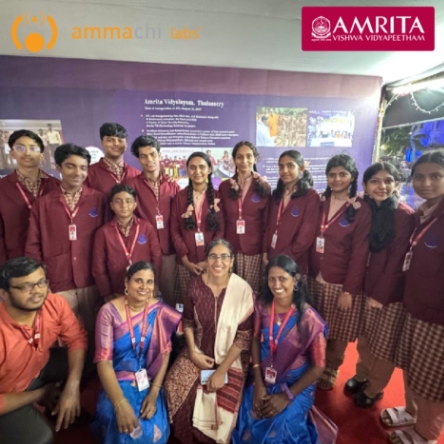
The Second Foundation from AMMACHI Labs conducted more than 25 technology and STEM workshops across Tamil Nadu and Kerala from August 2024 to December 2025. The workshops aimed to develop 21st-century skills among schoolchildren and encourage girls’ participation.
The workshops covered game development, Artificial Intelligence (AI), the Internet of Things (IoT), and 3D modelling, using hands-on, practical and peer-to-peer learning to develop technical skills and foster innovation.
From August 2024 to December 2025, a total of 216 schoolgirls (representing 42% of the total student participants) participated in these activities, providing them with opportunities to engage with emerging technologies and develop their skills and confidence through practical learning and mentoring.
Students demonstrated strong passion and curiosity as they engaged with the tools and concepts driving modern technology. Their enthusiasm and commitment to learning were a source of inspiration for everyone involved.
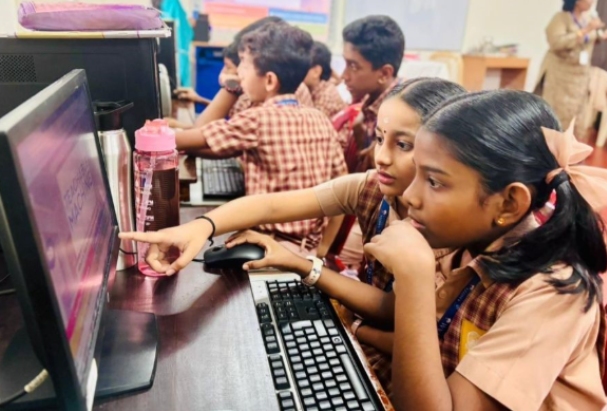
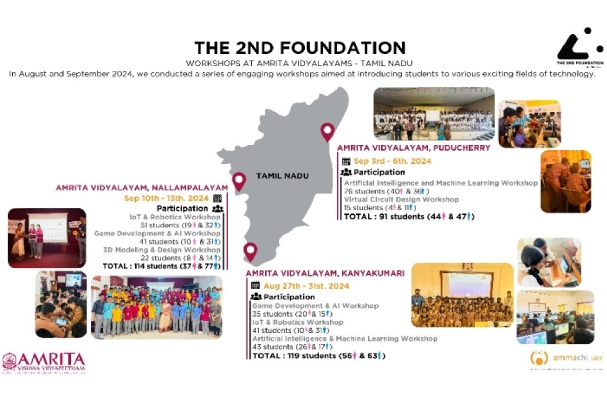
The Atal Tinkering Labs (ATLs), an initiative of the Atal Innovation Mission (AIM), NITI Aayog, provide creative workspaces for innovation, curiosity and STEM learning, equipped with 3D printers, robotics kits and digital tools.
For the past nine years, AMMACHI Labs researchers have supported ATL setups across Amrita Vidyalayam schools in India, mentoring 707 students, including 301 girl students (43%), through the Second Foundation Initiative. In February and August 2025, 38 of the 93 students trained were girls.
As part of the Amritavarsham 72 celebrations, seven Amrita Vidyalayam ATL schools—Mangaluru, Nagapattinam, Trichy, Chennai, Puthiyakavu, Thalassery, and Amrita Kairali Vidya Bhavan (Trivandrum)—showcased their innovations on September 26–27, 2025.
Through mentoring, hands-on learning and access to technology, the initiative provides girl students with opportunities to develop their skills, creativity and confidence.
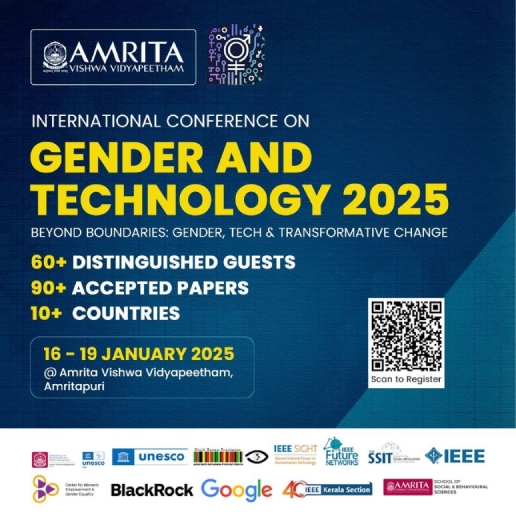
The International Conference on Gender and Technology (ICGT) 2025, held at Amritapuri from 16–19 January 2025, provided a broad outreach platform addressing gender equality and women’s participation in technology. Organised by Amrita University in collaboration with UNESCO and IEEE, the conference brought together 500+ participants, including students, academics, policymakers, government representatives, industry leaders and civil-society organisations (ICGT 2025 Final Conference Report, pp. 2–4).
The conference explicitly aimed to raise awareness about gender equality issues in AI and other technologies. The report notes that many members of the audience were young students who were inspired by the invited speakers (p. 4). Its objectives also included facilitating collaboration among academics, policymakers, industry representatives, students and civil society, with participation from organisations including Google, BlackRock, UNESCO, the Global Compact Network India, Union and State governments, ANRF and CSIR (p. 4).
The conference therefore combined student outreach and inspiration with broad university, government, industry and civil-society collaboration, creating a platform to promote greater awareness and participation of women in technology.
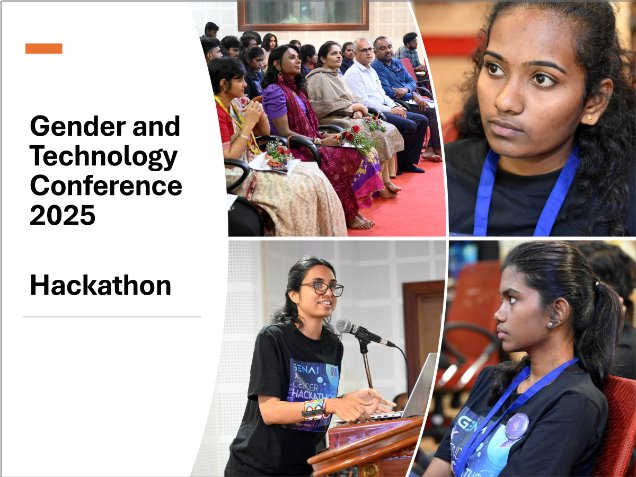
The GenAI x Gender Tech Hackathon 2025, organised by Amrita’s School of Social and Behavioural Sciences in collaboration with the UNESCO Chair on Gender Equality and Women’s Empowerment, brought together students from across the globe to explore AI solutions addressing challenges faced by women and marginalised communities. The initiative specifically addressed women’s underrepresentation in AI, encouraging participants to explore applications including a Career Planner Bot for girls to explore career paths based on their interests and abilities. Participants received mentorship and support, alongside expert-led workshops on AI, technology and gender. The initiative also brought together university, industry, NGO and international partners, providing students with opportunities to develop skills and explore future pathways in AI and technology.
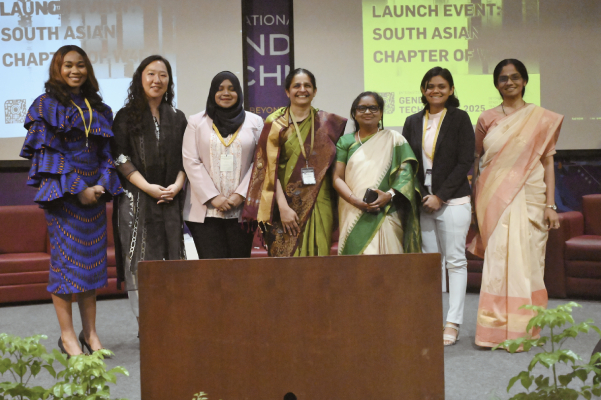
Launched in January 2025 during the International Conference on Gender and Technology (ICGT), the Women for Ethical AI South Asia Chapter (W4EAISAC) was co-chaired by Amrita University and UNESCO’s Regional Office for South Asia.
The Chapter directly addresses the underrepresentation of women in AI, aiming to promote equal representation and actively encourage greater participation of women in AI research, design and policy-making. It brings together academia, industry, government and civil society across South Asia to build capacity and amplify women’s voices in the AI ecosystem. The launch and objectives of W4EAISAC are documented in the ICGT 2025 Final Conference Report (pp. 3–4).
By December 2025, the network comprised 55 members across Bangladesh, Bhutan, India, the Maldives, Nepal and Sri Lanka. The initiative also included collaboration with the University of Delhi, whose Institute of Informatics and Communication worked with UNESCO on the regional AI and Gender Outlook Study, extending university-level collaboration on gender representation in AI.
During the International Conference on Gender and Technology (ICGT) 2025, UNESCO hosted the Asia-Pacific regional launch of its Global Education Monitoring (GEM) Report 2024, focusing on women and girls’ participation in STEM. The report examines leadership in education and ways to advance gender equality in STEM (ICGT 2025 Final Conference Report, p.3).
The accompanying panel discussion examined gender gaps in digital skills and STEM enrolment, noting that only a few countries reported more than 50% female STEM graduates. The panel emphasised the need to address structural inequalities and promote inclusive and sustainable technological solutions (p. 3).
The conference also aimed to raise awareness about gender equality issues in AI and other technologies, and the report notes that many members of the audience were young students who were inspired by the invited speakers (p.4).
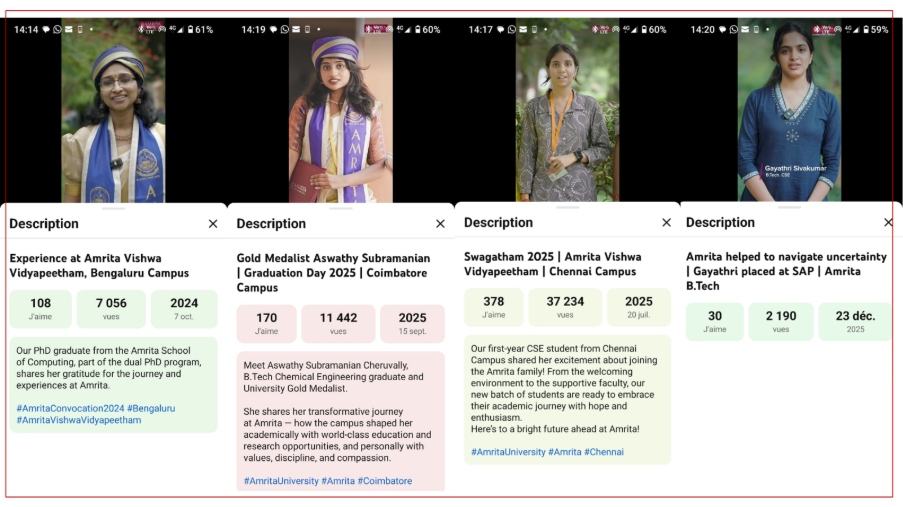
At Amrita Vishwa Vidyapeetham, we recognize that the experiences and achievements of our women students are powerful examples of the opportunities available through higher education in STEM. Sharing the voices and experiences of women students in STEM—including their challenges, achievements and opportunities—helps encourage prospective women applicants to consider pursuing higher studies in subjects where women remain underrepresented.
Examples include Gayathri, a B.Tech graduate placed at SAP; a first-year B.Tech Computer Science and Engineering student at the Chennai campus; Aswathy Subramanian, a B.Tech Chemical Engineering graduate and University Gold Medalist; and Joksna, a PhD graduate from the Amrita School of Computing.
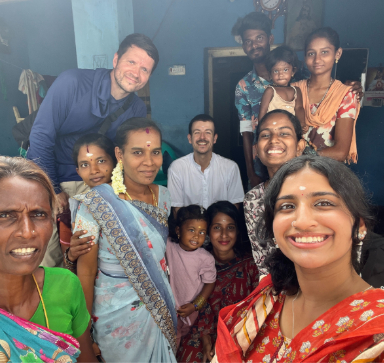
Amrita Vishwa Vidyapeetham uses outreach, experiential learning and collaboration with other universities and community stakeholders to increase women’s exposure to fields where they remain underrepresented. These initiatives provide practical exposure to areas including the blue economy, technology, entrepreneurship and environmental sustainability, while creating pathways towards further academic engagement. The impact of such exposure on subsequent academic choices is illustrated by the experience of Giulia Niolu, a student from the University of Trento, whose participation in an Amrita Live-in-Labs project in 2025 encouraged her to join a bilateral programme and pursue further studies at Amrita.
“I am Giulia Niolu, a student at the University of Trento. After completing a Bachelor’s degree in Philosophy, I participated in an Amrita Live-in-Labs programme offered by Amrita Vishwa Vidyapeetham’s Office of Sustainable Development from January 14 to March 17, 2025.
My internship, “Rurban Environmental Protection Via Community-Based Waste Management Project: A circular economy approach,” focused on waste management in the village of Bhatta, Uttar Pradesh. I contributed to data collection and analysis on rural waste management and gained a deeper understanding of its social and environmental impacts, including the cultural, economic and infrastructural barriers to sustainable solutions.
The experience provided practical and theoretical learning through direct engagement with a rural community and encouraged a multidisciplinary approach to sustainability challenges.
Driven by my deep interest in Indian culture and philosophy, this internship encouraged me to join the bilateral agreement programme and attend courses at Amrita as part of my Master’s degree in Cognitive Science, Social Work and English Literature. This allows me to explore further themes that first sparked my curiosity during the Live-in-Labs experience.” Giulia Niolu – University of Trento
Below is an overview of relevant activities from July 2024 to December 2025.
In summer 2025, Anusha Sharma, a female University of Arizona student in Global Studies and Human Rights Practice, participated in Amrita Vishwa Vidyapeetham’s Live-in-Labs® programme in the Seaweed Livelihood & Coastal Resilience Initiative in Solakuddi, Tamil Nadu.
Working with women from the coastal community, she participated in activities including seaweed production, seagrass restoration, marine ecology and ocean mapping. The project, supported by AMMACHI Labs and the Centre for Women’s Empowerment and Gender Equality, addressed gender disparities in the marine sector and provided the student with direct exposure to women’s participation in the blue economy.
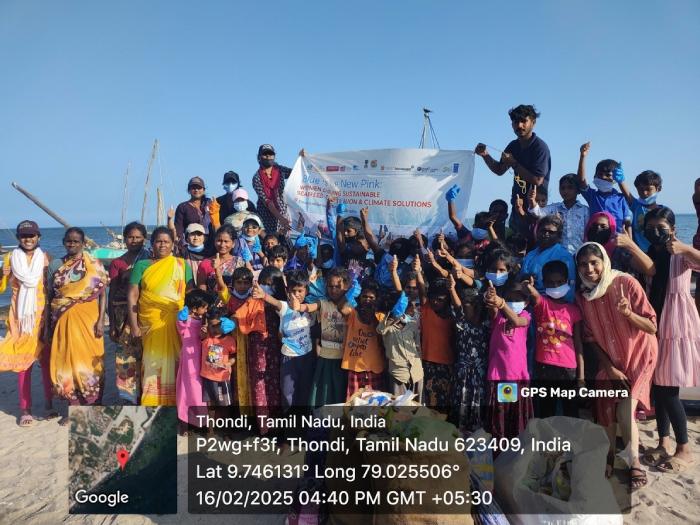
On 7 October 2024, Amrita launched “Blue is the New Pink: Women Driving Sustainable Seaweed Cultivation and Climate Solutions”, empowering 100 coastal women through training in seaweed cultivation, seagrass restoration and aquaculture.
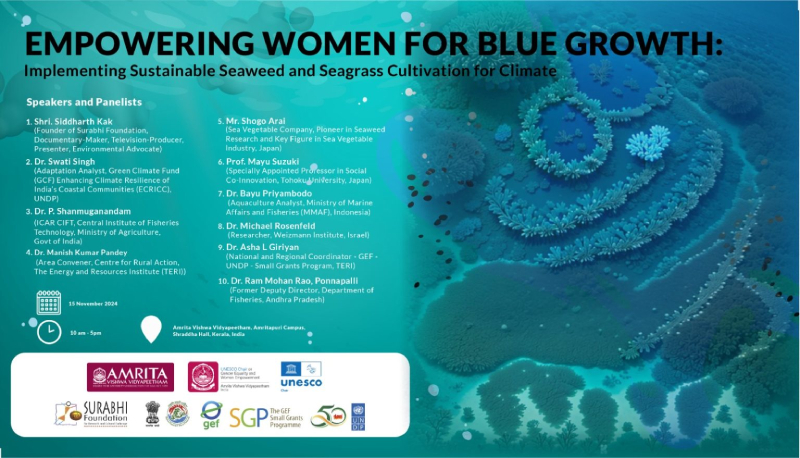
The initiative was complemented by the “Harmonising Livelihoods for Dugong Conservation” project and the “Empowering Women for Blue Growth” workshop on 15 November 2024, which brought together experts, policymakers and women PhD students.
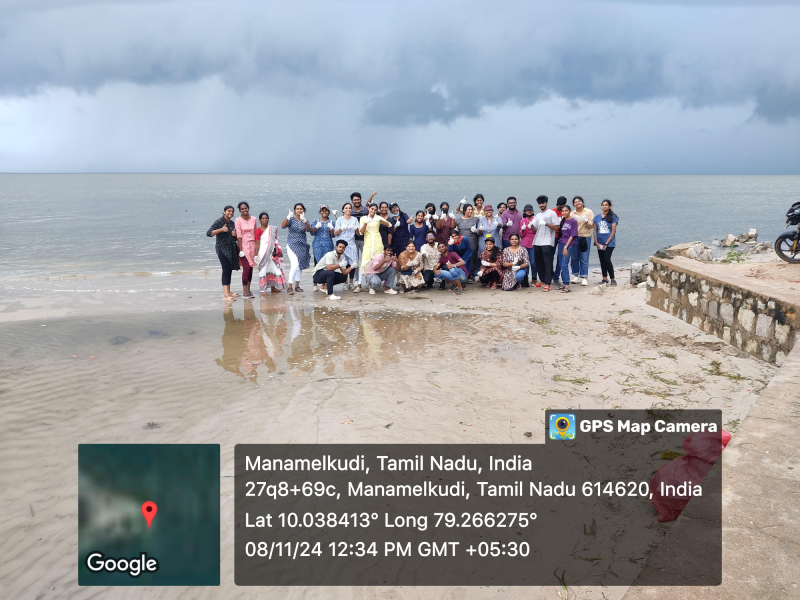
On 8 November, 60 Amrita students participated in fieldwork and community engagement related to marine conservation and the blue economy.
In February 2025, 46 Amrita MSW students (34 women and 12 men), from Amrita Vishwa Vidyapeetham Coimbatore conducted a 20-day fieldwork programme across six coastal villages in Ramanathapuram, delivering awareness sessions on marine conservation, seaweed farming and sustainable practices. Students also conducted digital literacy workshops for local residents, particularly women, and school awareness sessions on responsible marine resource management and substance abuse prevention.
In 2025, Beatriz Winters, a female student in the University of Arizona’s Human Rights Practice MA, participated in Amrita Vishwa Vidyapeetham’s Live-in-Labs® programme, working with women entrepreneurs in Kerala. Through workshops on entrepreneurship, leadership and financial literacy, she applied her academic training while engaging directly with women’s community enterprises. The experience provided cross-university exposure to women’s entrepreneurship and community development.
The School of Social and Behavioural Sciences, through AMMACHI Labs and the Centre for Women’s Empowerment and Gender Equality, has been actively involved in relief and rehabilitation efforts following the Wayanad landslide in July 2024.
From 31 October to 10 November 2024, 22 women MSW students participated in Amrita’s Wayanad post-disaster livelihood assessment, gaining field experience in community development, disaster resilience and sustainable livelihoods. The project provided women students with practical exposure to these areas through direct engagement with affected communities.
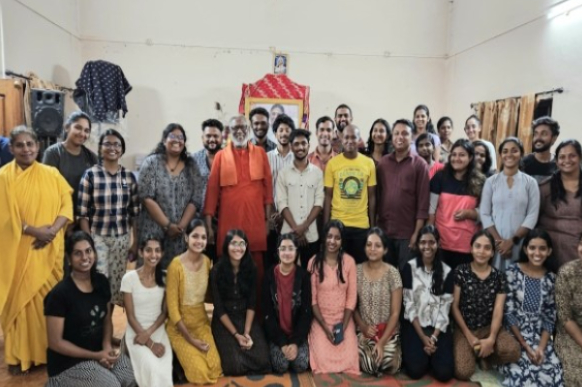
On 13 December 2024, the Amrita Sustainable Livelihood & Disaster Resilience Program launched a Skill Development Training Center in Meppadi. Phase 1 provided 60 women with tailoring training and 30 with computer skills, creating opportunities for new livelihoods and trades.