Back close

Planar Resonator based Sensor for Adulteration Detection

Dept/Center/Lab: Amrita Center for Wireless Networks and Applications (AWNA)

Project Incharge:Dr. Aiswarya S.
Planar Resonator based Sensor for Adulteration Detection

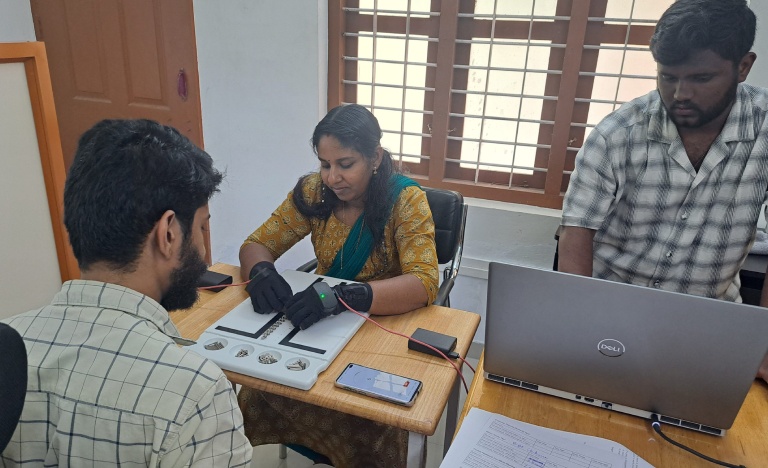
The development of microwave sensors for adulteration detection involves a comprehensive literature survey to identify various adulterants present. A microwave resonator is designed using simulation software, leveraging the variation in material properties to detect adulteration. Following design optimization, the sensor is fabricated and experimentally tested to validate simulation results, ensuring accuracy and reliability. Successful prototypes are then refined for productization, aiming to offer a practical solution for real-time adulteration detection in the food industry, ensuring consumer safety and maintaining oil quality standards.

Name of Staff and Students from Amrita : Prof. K A Unnikrishana Menon, Ms Meenu L, Dr Sreedevi K Menon

Publication Details

  1. Aiswarya, S., Sreedevi K. Menon, Massimo Donelli, and L. Meenu. “Development of a Microwave Sensor for Solid and Liquid Substances Based on Closed Loop Resonator.” Sensors 21 (2021): 8506.
  2. Aiswarya, S., L. Meenu, K. A. Menon, Massimo Donelli, and Sreedevi K. Menon. “A Novel Microstrip Sensor Based on Closed Loop Antenna for Adulteration Detection of Liquid Samples.” IEEE Sensors Journal 24, no. 2 (2024): 1405-1414.

Related Projects

Development of Ultra High Performance Polymer-Carbon Fibre Composite for Future Generation Aviation and Defence
A Human-Centered AI Framework for Multilingual Rural Field Reporting, Qualitative Insight, and Community Support
Intervention Impact Assessment with Language AI 
Value addition to seabukthorn through isolation & characterisation of pharmacologically active compounds
Use of soil isolate as an exoelectricigen in a dual chambered Microbial Fuel Cell (MFC)
Admissions Apply Now