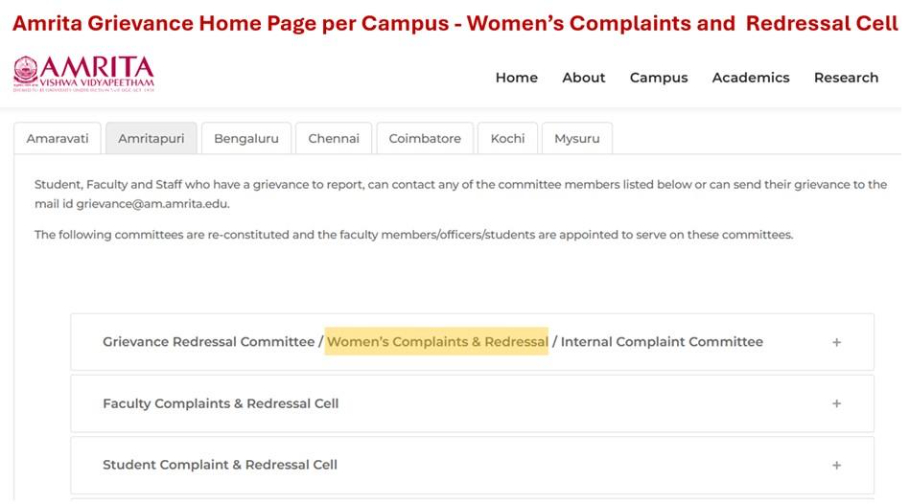
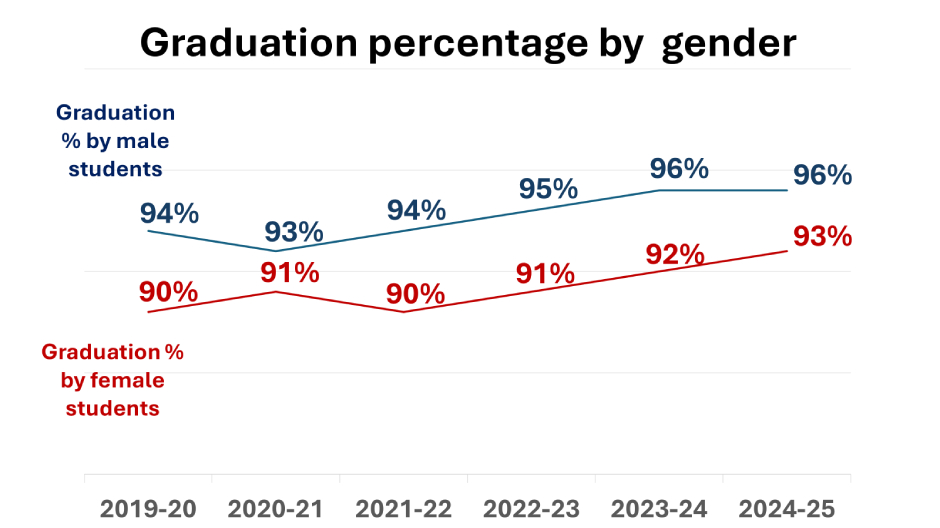
Amrita Vishwa Vidyapeetham systematically tracks and compares graduation rates by gender to identify and mitigate performance disparities. Through centralized academic tracking systems, student progress is regularly monitored to assess the graduation likelihood of women compared to men.
To close gender-based academic gaps, the university provides targeted support schemes, including dedicated academic mentorship and remedial programs, alongside flexible assistance designed to address challenges unique to female students.
Comparative tracking demonstrates steady progress: in the 2024–25 academic year, the female graduation rate rose to 93% (a 1% increase from 92% in 2023–24), narrowing the gap relative to the male graduation rate of 96%. Female graduation rates have consistently maintained a high benchmark above 90% since 2019–20.
All students, teachers, and parents can track student’s progress from a management system “AUMS” at any time. This proves to be a very valuable tool to track the progress of female students.
1.1 AUMS
Amrita has developed an integrated world-class University Management System which includes an e-learning platform, Amrita Vidya, web-based software for effective management of learning services.
AUMS supports all the major institution-wide administrative and academic services including admission module, administration module, academics module, accounts module, examination module, library, research, rankings, accreditation to name a few.
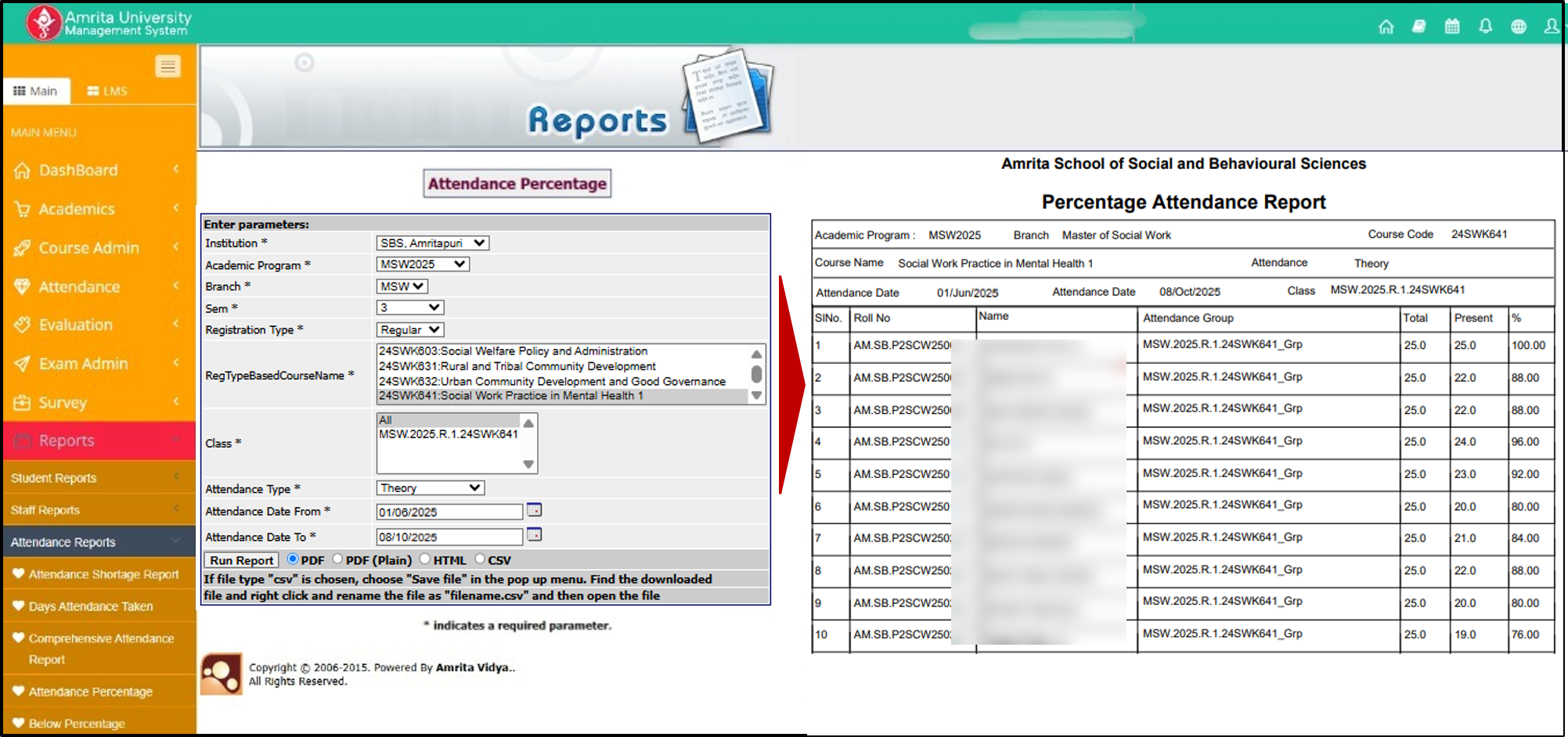
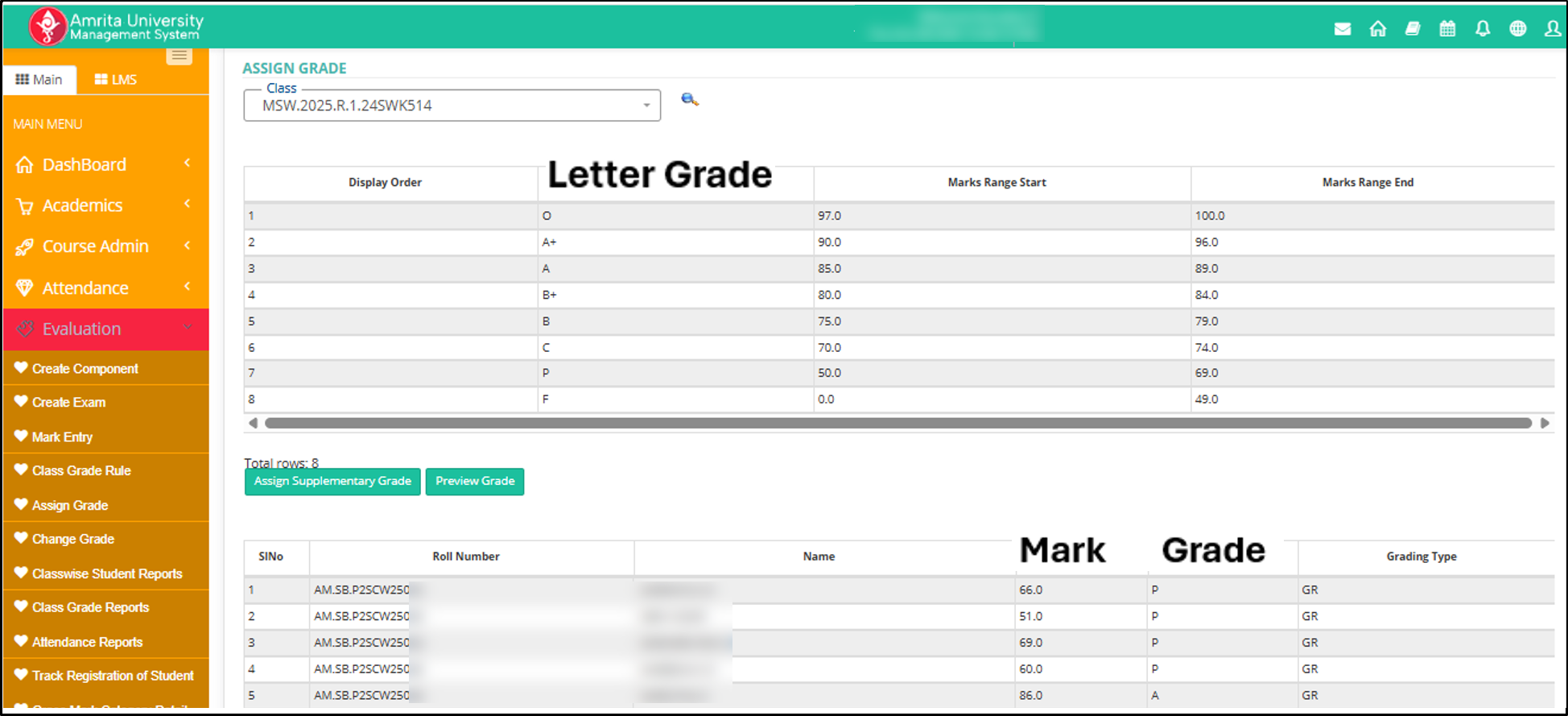
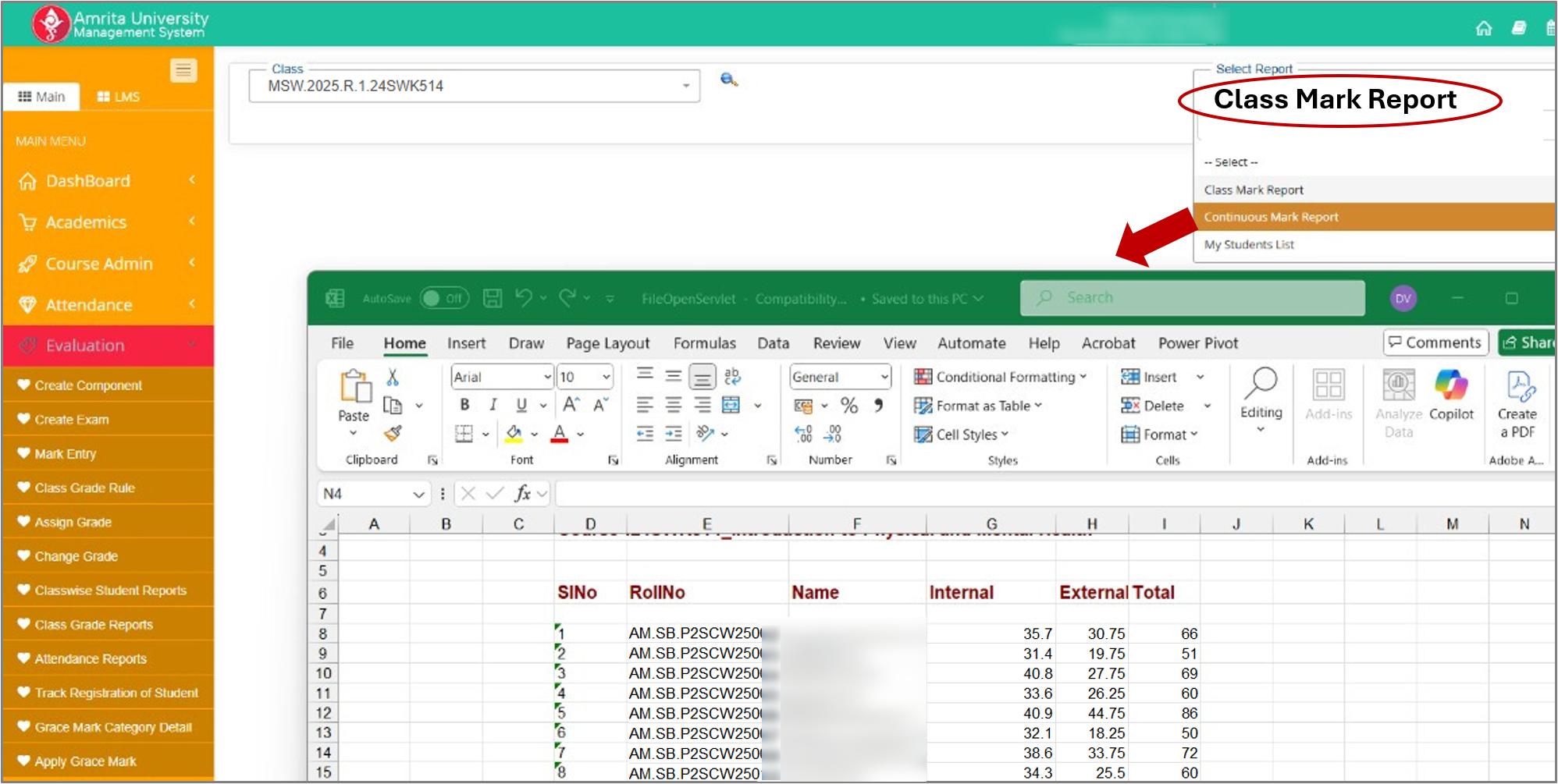
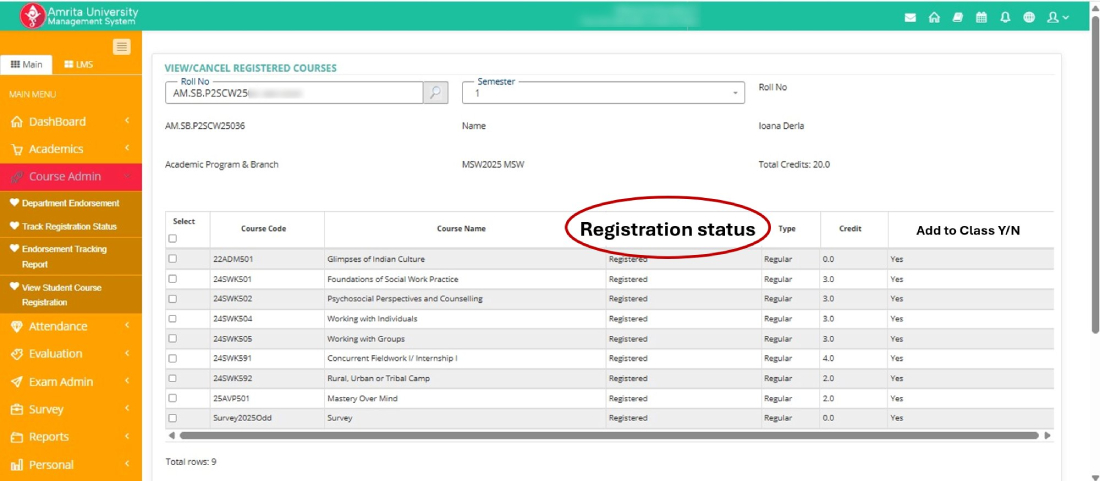
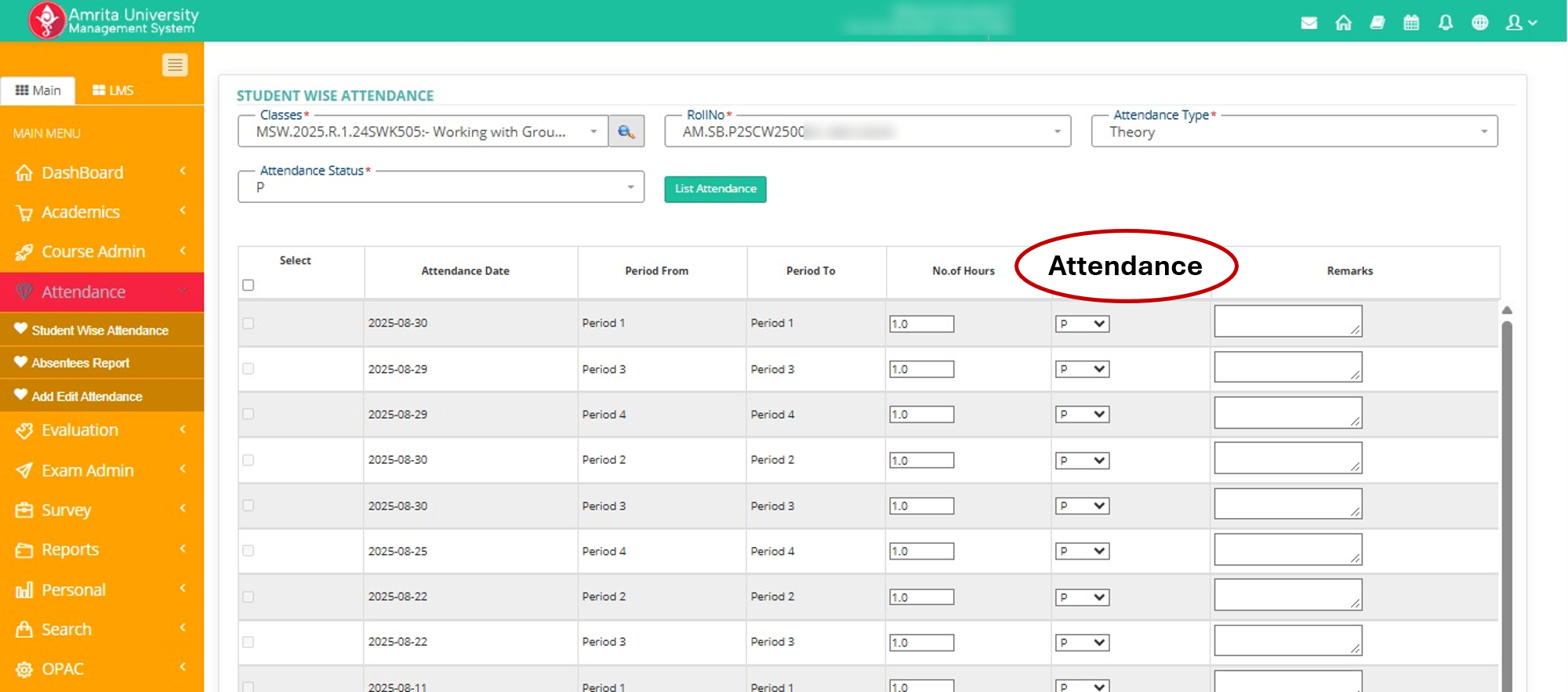
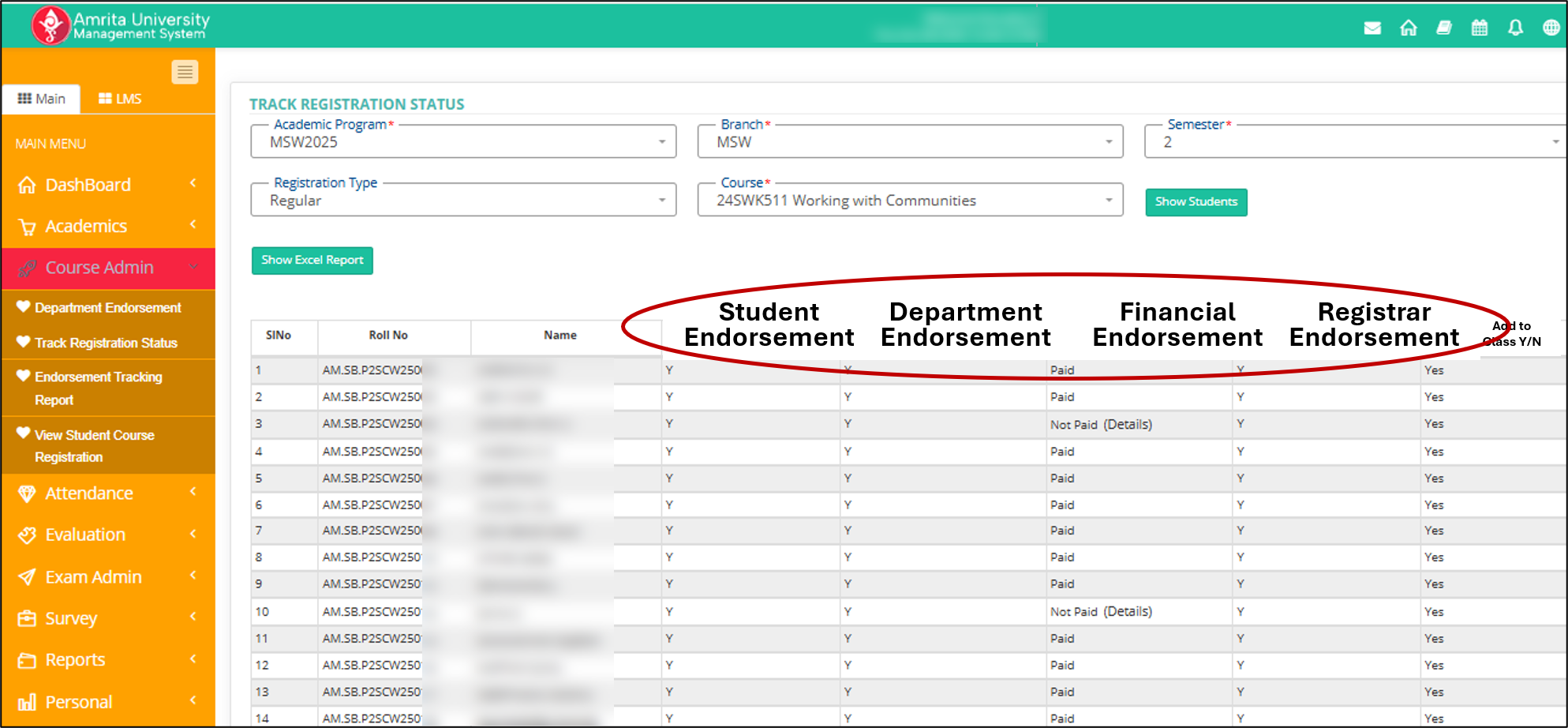
Below are some screenshots from July 2024 to December 2025
Attendance Report
Grades
Marks
Student Course Registration
Student Wise Attendance
Track Registration
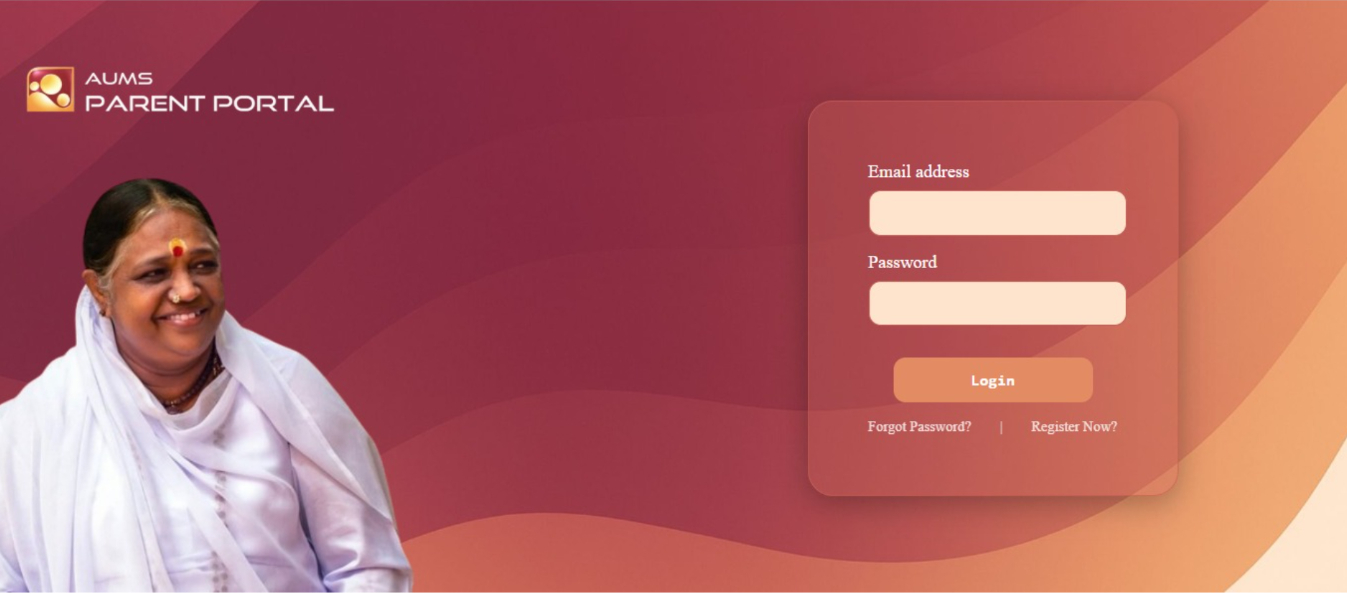
1.2 Amrita Parent Portal
Parents can register to monitor their children’s academic progress and view additional aspects of their life at Amrita Vishwa Vidyapeetham. The registration and authentication process consists of three steps, detailed in the Registration Help Document.
2.1 Class Counsellors and Student Counsellors
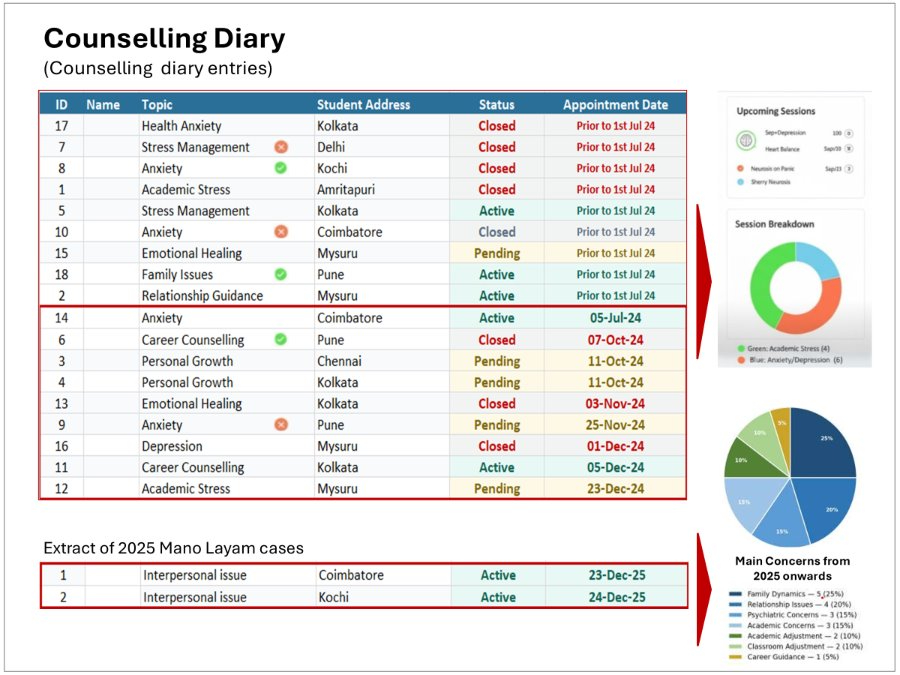
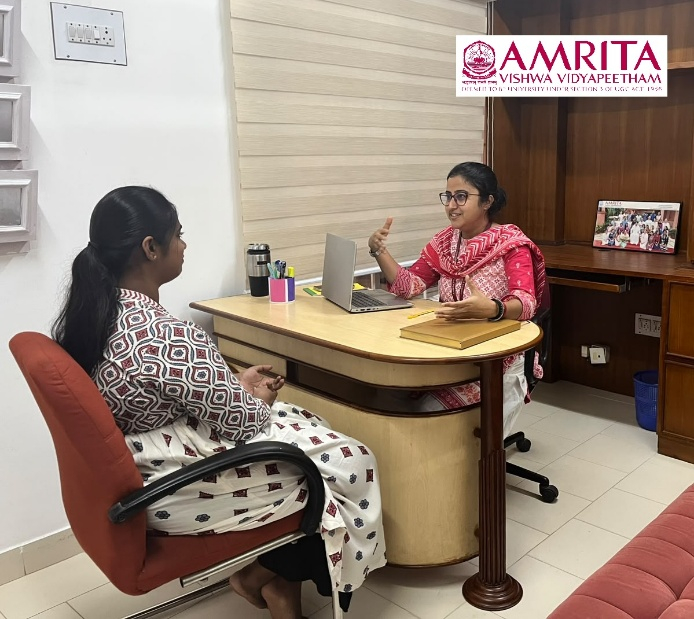
Departments assign students to a Class Counsellor (usually one for 20 students) to guide course planning, advise on academic programmes and monitor progress. A Faculty Advisor coordinates the Class Counsellors. They pay particular attention to female students’ academic progress and any issues they may face. Students needing further support can approach the psychologist or psychiatrist available on campus.
The Mano Layam Centre for Wellbeing, established under the School of Social and Behavioural Sciences, became operational in 2025 at Amritapuri and was later expanded to Coimbatore. From mid-2025, it supported 25 cases, including 17 women, through confidential counselling and mentoring.
2.2. Access to women high management mentors
Our female students can request mentorship on critical personal and academic issues from women in top management and senior faculty counsellors at Amrita Vishwa Vidyapeetham. This mentorship is generally reserved for complex topics that cannot typically be addressed by class counsellors. Access to female leaders in top management offers several advantages:
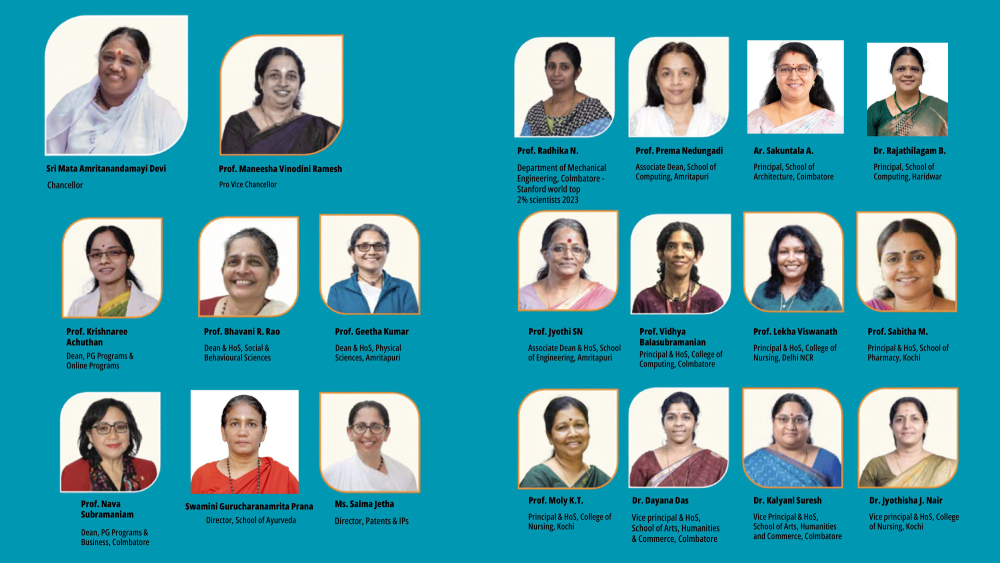
Role Modeling and Representation: Seeing women in leadership helps students visualize themselves in similar roles, breaking down internal and societal barriers. These mentors demonstrate that leadership positions are attainable, particularly in areas where women are underrepresented.
Targeted Guidance and Insights: Women leaders offer perspectives on navigating professional challenges, including gender-related stereotypes, work-life dynamics and biases. Their understanding of both academic and professional landscapes enables tailored guidance.
Building Confidence and Resilience: Mentoring helps build self-confidence and resilience. Female mentors who have reached senior management provide guidance on resilience and self-advocacy, helping students manage personal and professional challenges.
Networking and Opportunities: Mentors can help students expand their professional networks by connecting them with influential figures in their fields, potentially leading to internships, employment and collaborations that may otherwise be less accessible.
Encouragement for Lifelong Learning: Mentorship can foster a commitment to continual growth and further learning. Seeing mentors’ dedication to education and professional development can inspire female students to develop the same commitment to their careers, in line with the Chancellor’s educational goals.
Bri. Deepthi, a PhD student, recounts her conversation with Dr. Maneesha V. Ramesh, Pro Vice Chancellor of Amrita Vishwa Vidyapeetham.
“As a PhD scholar at Amrita Vishwa Vidyapeetham, working under the guidance of Dr. Maneesha V. Ramesh, Pro Vice Chancellor of Amrita University, Dean of the School for Sustainable Futures and UNESCO Chair on Experiential Learning has been a truly transformative experience. Her visionary leadership in IoT, AI-based landslide early warning systems and sustainable development, combined with her hands-on mentoring approach, has deeply influenced my research outlook. Dr. Maneesha’s vision of integrating interdisciplinary research—spanning computer science, earth sciences, and sustainability, reflected through initiatives like Live-in-Labs® and Jivamritam—has shown me how research can directly uplift communities while advancing scientific innovation. What inspires me most is her ability to combine deep technical expertise with compassion and purpose. Dr. Maneesha is not only an exceptional scientist but also an inspiring role model who empowers her scholars to think innovatively, work collaboratively, and pursue research with social purpose. Her constant encouragement, technical insight, and empathetic guidance make her a true pillar of academic and personal growth. Dr. Maneesha’s mentorship has shown me that with the right guidance, research can go beyond publications to create real-world impact—a lesson that continues to motivate me every day, which has eventually shaped my academic journey.” – Bri Deepthi (Vipina Valsan)

A unique feature at Amrita is that, when physically present at Amritapuri and not travelling, our Chancellor, Sri Mata Amritanandamayi Devi, is available every day for several hours to answer students’ questions, from Bachelor’s to PhD level. She advises, mentors and supports students who seek her guidance and encouragement to pursue their studies. This opportunity has been available since the early years of the institution.
Women students have also benefited from this access. Dr. Parvathy V. describes in her testimony how she received continuous mentoring from the Chancellor from her BSW studies through her academic and professional journey. Dr. Radhika Mohan is another example.
“It is with immense pride and gratitude that I share the exceptional opportunities I received as an Amrita alumnus during my undergraduate, postgraduate, and PhD studies at Amrita. One of the most significant opportunities was the direct guidance and mentorship of our esteemed Chancellor, Dr. Sri Mata Amritanandamayi Devi. Having direct access to her wisdom and expertise is a rare privilege, and it has been a highlight of my time at Amrita.
During my undergraduate studies, the Chancellor’s projects and initiatives, particularly the community outreach programs, inspired me. Her personal guidance and mentorship extended beyond academics, shaping my extracurricular and co-curricular activities, which were closely linked to societal service and community-benefiting projects.
The Chancellor’s mentorship continued throughout my postgraduate program in Master of Social Work, where she provided academic and emotional support, significantly influencing my performance and mental well-being. Her guidance also played a pivotal role in my PhD research, ensuring its successful completion. Having a female mentor with expertise and compassion is invaluable for women like me.
I am deeply grateful for the unwavering support I received from the academic and management teams at Amrita.” Dr. Parvathy V.
“I have been fortunate to receive the guidance and mentorship of inspiring women leaders throughout my personal, academic and professional journey at Amrita. Having been nurtured by our Chancellor, Sri Mata Amritanandamayi Devi (Amma), since my early childhood, her questions and personal interactions with me over the years deeply influenced my understanding of life and inspired me to pursue resilience as the focus of my PhD research.
During my doctoral journey, I was privileged to receive the academic guidance of Dr. Preethi Menon, my PhD Guide, and Dr. Bhavani Rao R, Dean, School of Social and Behavioural Sciences, who served as my Co-Guide and Doctoral Committee member. Beyond academics, Dr. Bhavani has been instrumental in shaping my professional journey through opportunities in research, project management, training and academic leadership. Her continued mentorship has been particularly valuable in my current responsibilities as Vice Chairperson of the Department of Psychology and Centre in Charge of Mano Layam – Centre for Wellbeing.
Having access to accomplished and compassionate women mentors, including the highest levels of institutional leadership, has been an invaluable part of my journey at Amrita. Their guidance has strengthened my confidence, resilience and ability to lead with compassion and responsibility.” Dr. Radhika Mohan
2.3 Surveys and feedback to evaluate the impact of the mentoring and identify student issues
2.3.1 Mentoring feedback
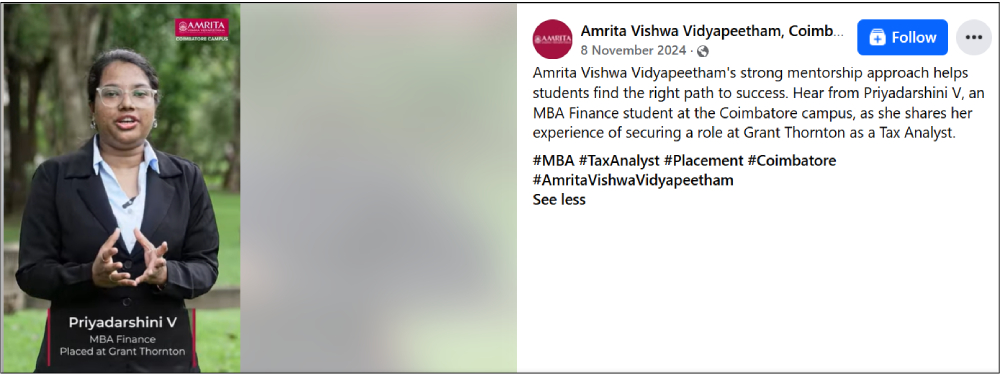
Mentorship is critical for student success, especially for women who may face unique academic and social challenges. Amrita Vishwa Vidyapeetham continuously evaluates its mentorship programs to ensure their effectiveness and identify areas for improvement. Feedback and testimonies from students are regularly collected to assess the quality and impact of mentoring. In 2024, several such feedbacks were gathered and recorded. For instance, Priyadarshini V, an MBA Finance student at the Coimbatore campus, shared her mentoring experience, which helped her secure a position at Grant Thornton as a Tax Analyst.
2.3.2 Exit survey for graduated students and long-term feedback from Alumni
Exit surveys of graduating students are valuable tools for understanding the overall student experience and identifying systemic barriers that may still exist. They provide direct insights into the aspects of education that supported or hindered students’ success.
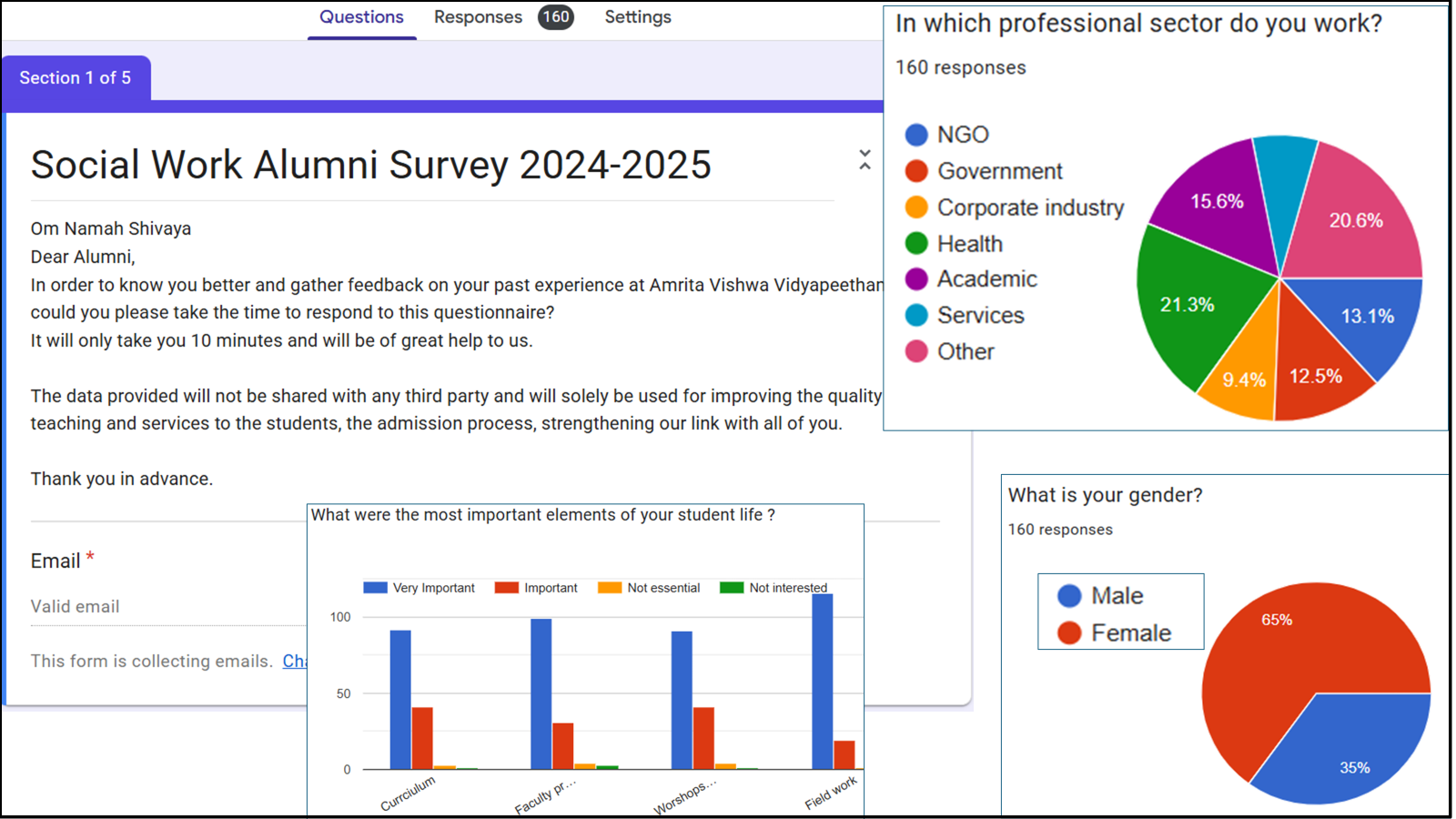
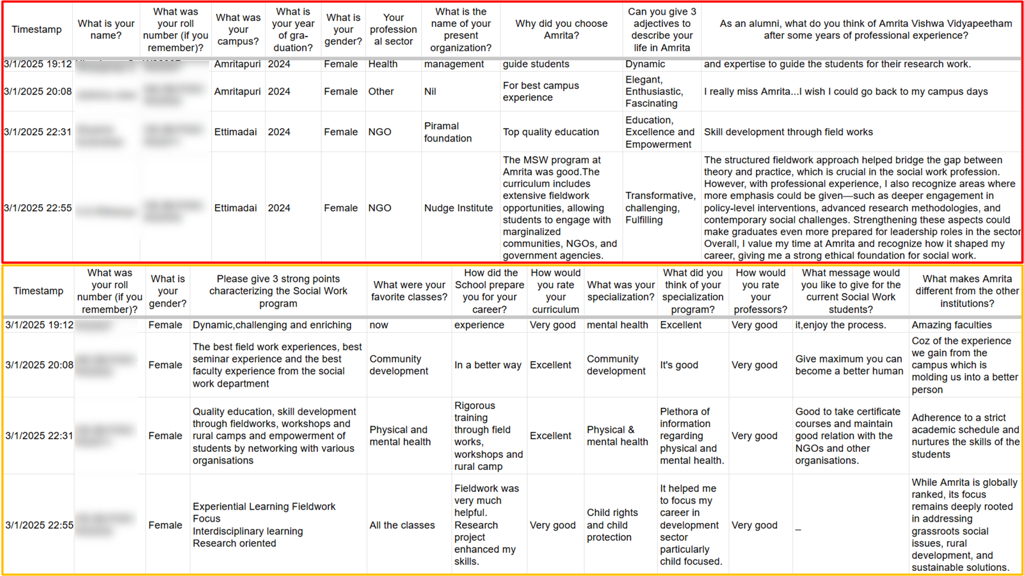
In 2025, we conducted an alumni survey of students from the 2024 graduating batch and analysed the findings by gender, including overall feedback on Amrita, satisfaction levels and time to employment.
Follow-up surveys or interviews with women and men alumni can provide valuable insights into the respective long-term impacts of their education and the challenges they may face after graduation. This feedback can help identify skills, resources or support mechanisms that could enhance the long-term success of future students.
Should a student fail in an examination, several remedial provisions are made available to support them. Considering the specific challenges faced by female students during the course of their study, their case may receive particular consideration when evaluating available solutions.
3.1. Supplementary Examinations
Students, who fail or secure an “F” grade in a non-semester course (i.e. courses not offered in the ongoing semester), can apply to write supplementary examinations for the course during the prescribed schedule from the Examination Office, paying the prescribed fee.
Students who have secured an ‘F’ grade in a course may take the supplementary examination for a maximum of three additional attempts (excluding the end-semester examinations) with the same internal marks awarded in their immediate previous exam. If students exhaust all three additional attempts, they will appear for their supplementary exam for the entire 100 marks. The internal marks will not be applicable.
If students wish to improve their internal marks, they can do so by re-registering for the course by choosing any of the appropriate remedial options. In this case, the internal marks obtained by the student will be valid for the end-semester of the reregistered course with three more supplementary attempts.
Course Registration with Category
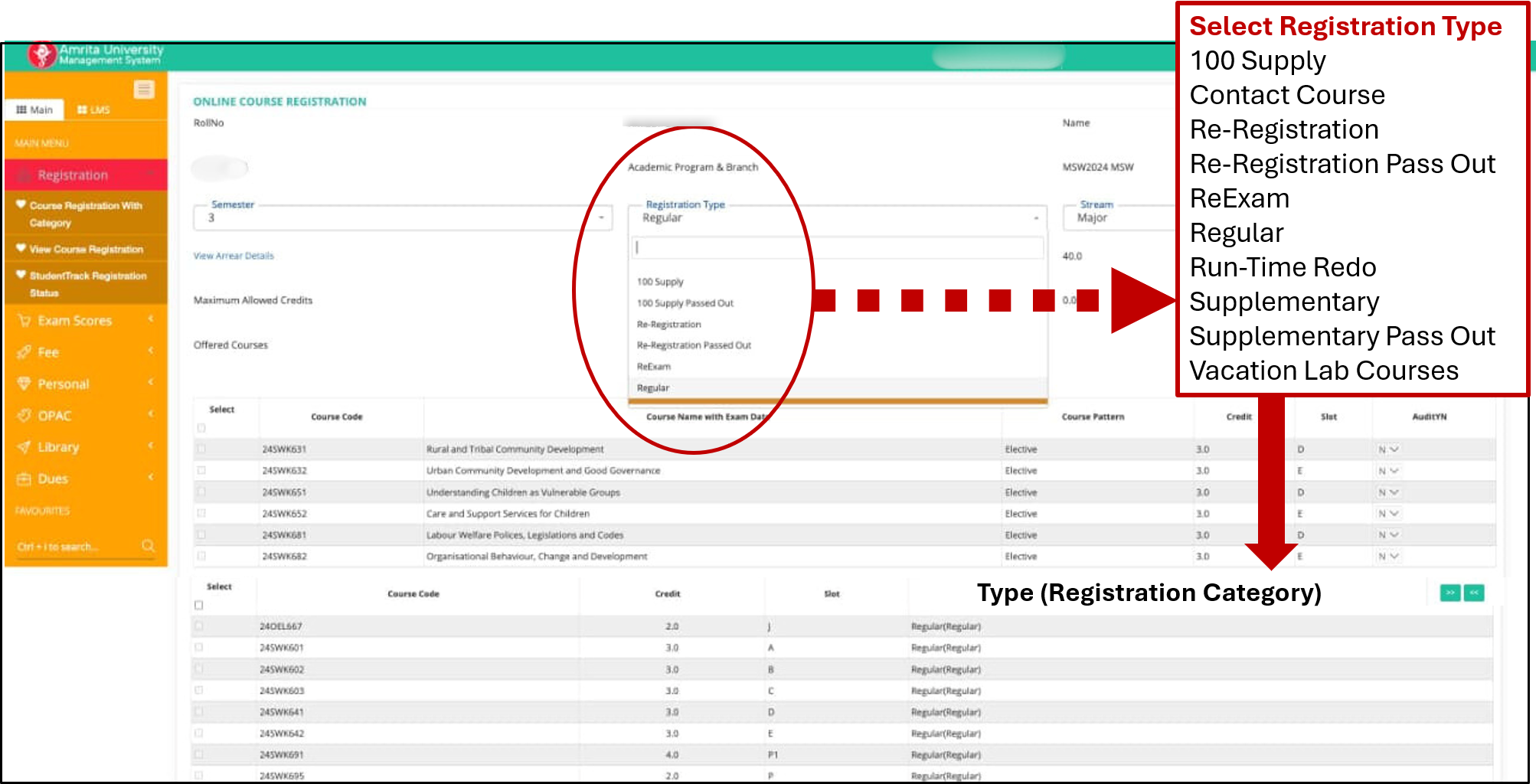
3.2. Re-registration
Remedial options are offered to enable students, including women, to complete the dropped courses or clear the failed courses. Remedial options described in this section are primarily offered to help students improve their internal assessment marks.


Amrita Vishwa Vidyapeetham buses are available for transporting students and staff from the city and suburbs to the college in all its campuses. Example of commuting route for bus services at Coimbatore: Click here