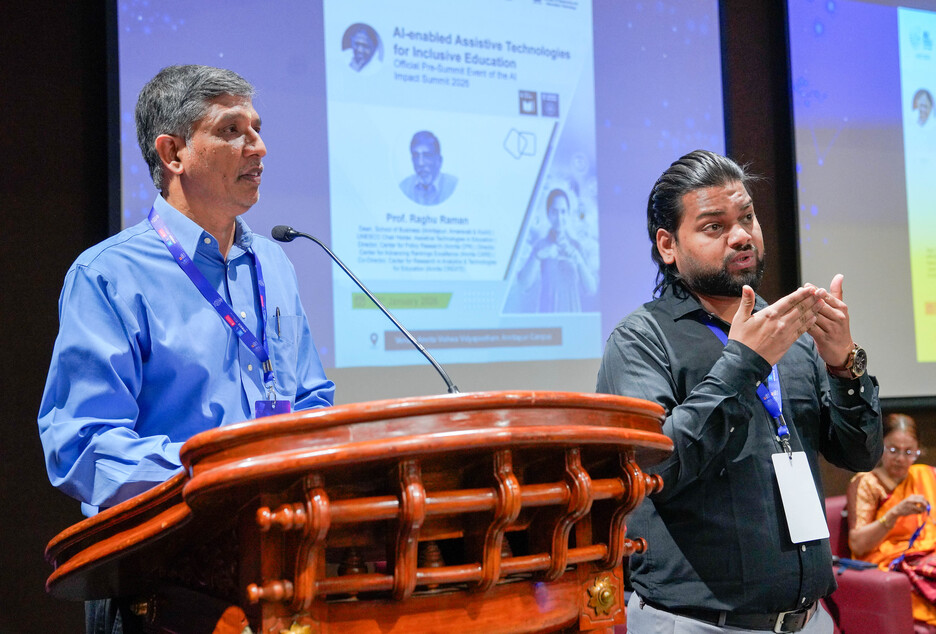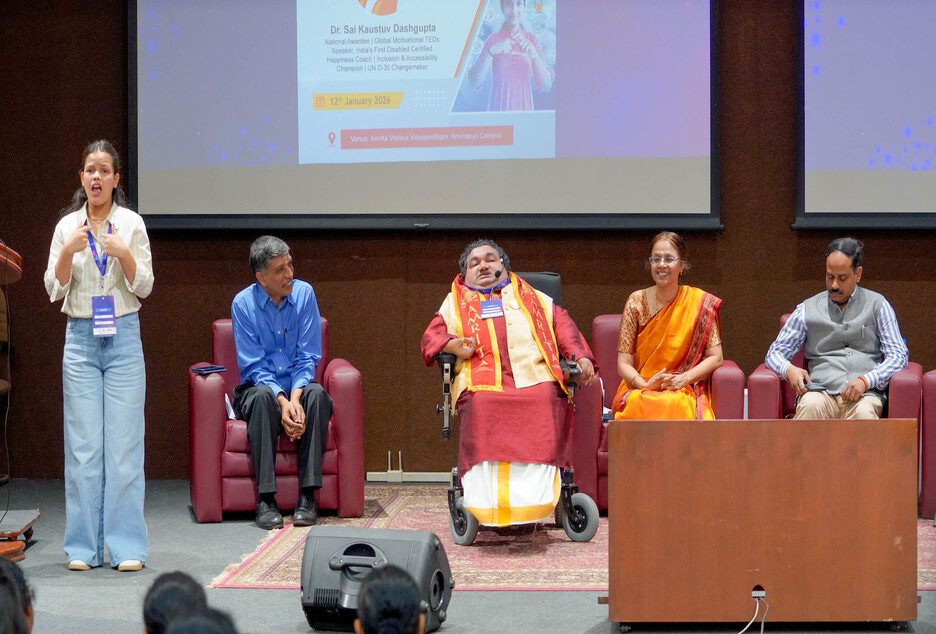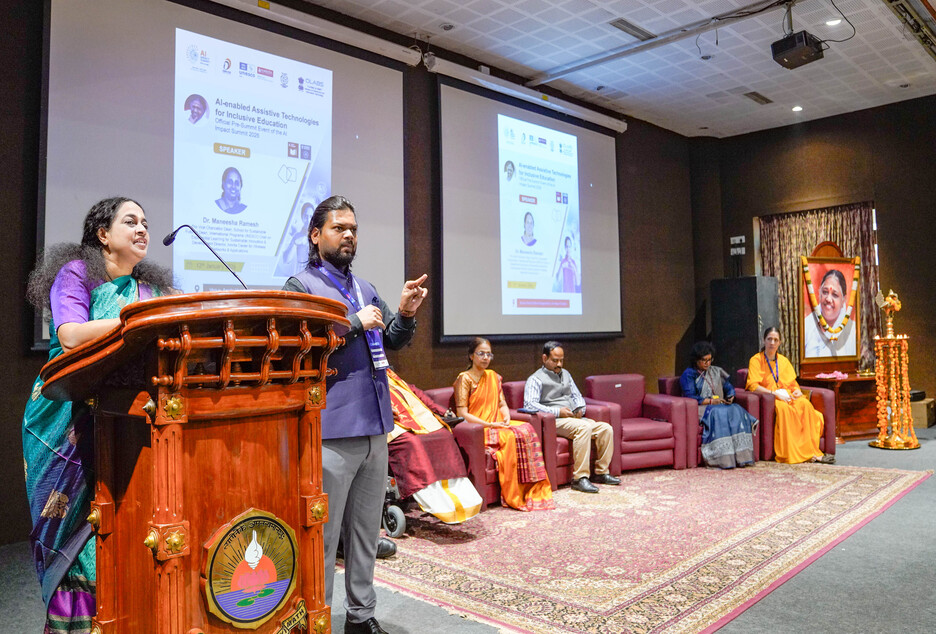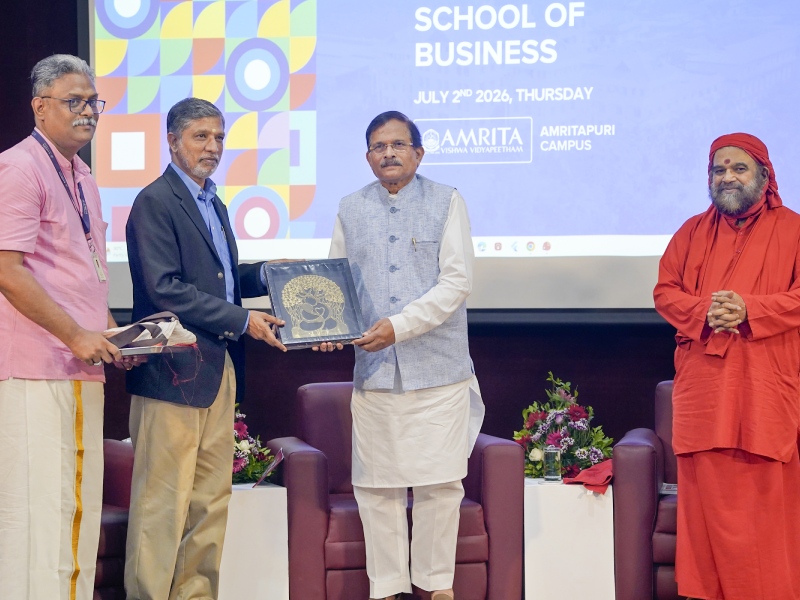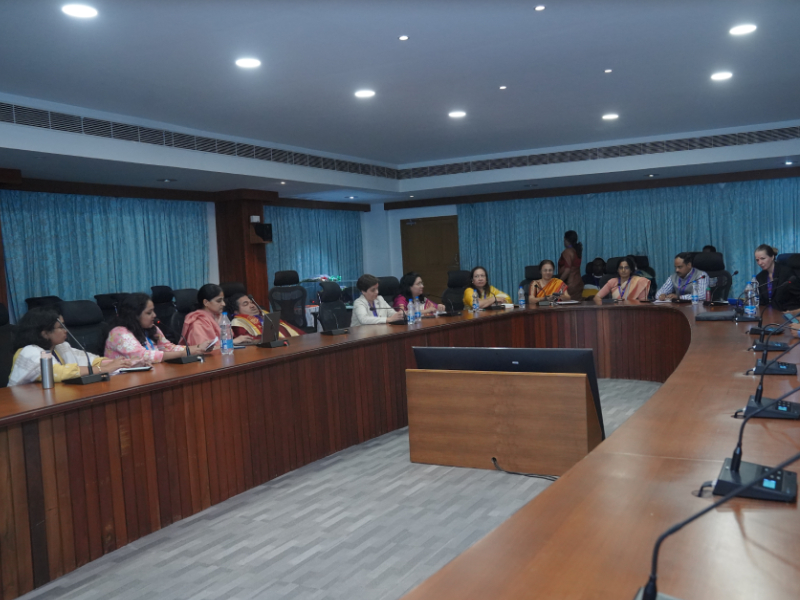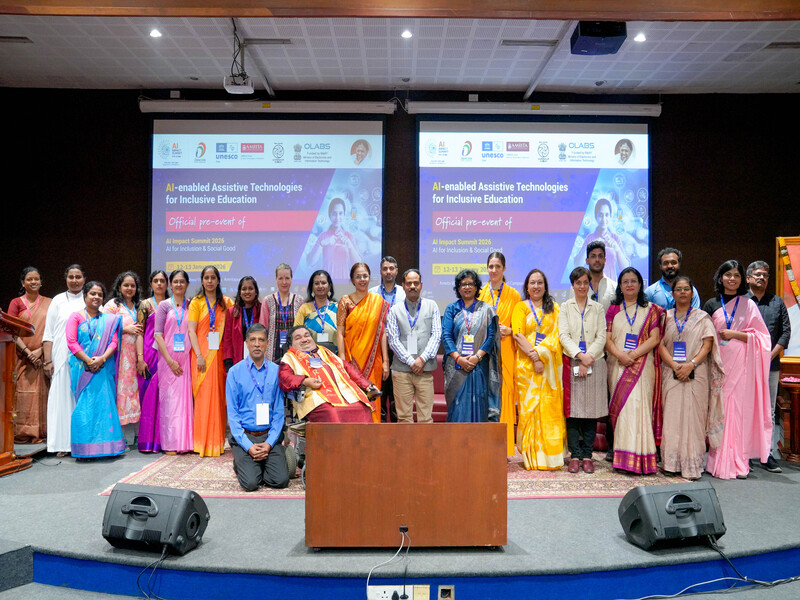


A Pre-Summit Event of the India AI Impact Summit 2026, “International Symposium on AI-Enabled Assistive Technologies for Inclusive Education” was hosted by the UNESCO Chair on Assistive Technologies in Education at Amrita Vishwa Vidyapeetham, Amritapuri Campus, Kerala, on 12-13 January 2026. The symposium marked a key milestone in a broader series highlighting the transformative potential of artificial intelligence, with a particular focus on its role in education and the advancement of equitable access to learning.
The symposium brought together policymakers, from three ministries, along with technologists, educationalists, researchers, innovators, and accessibility advocates, to explore inclusive and responsible AI-driven educational solutions, especially for Persons with Disabilities (PwDs).
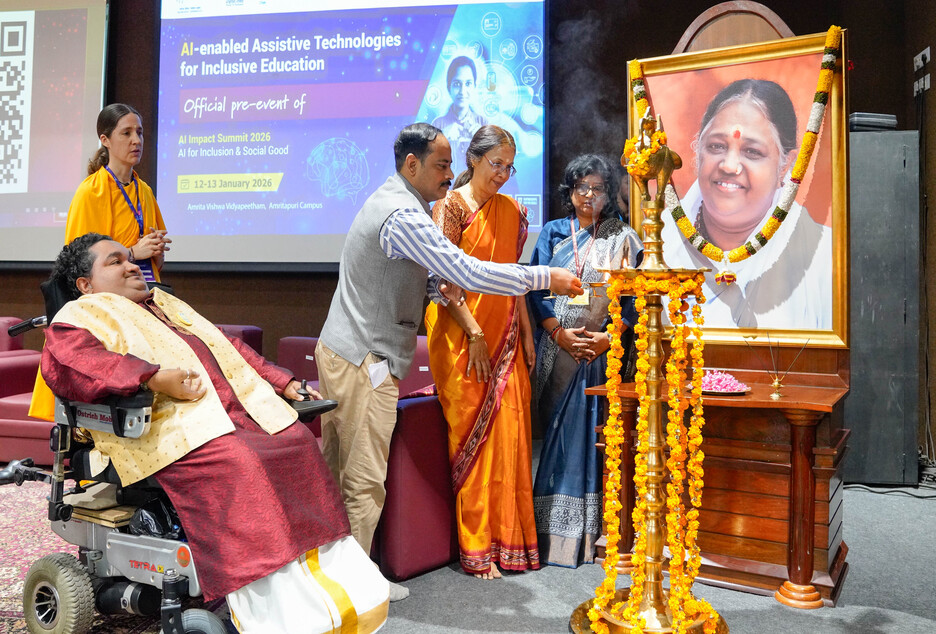
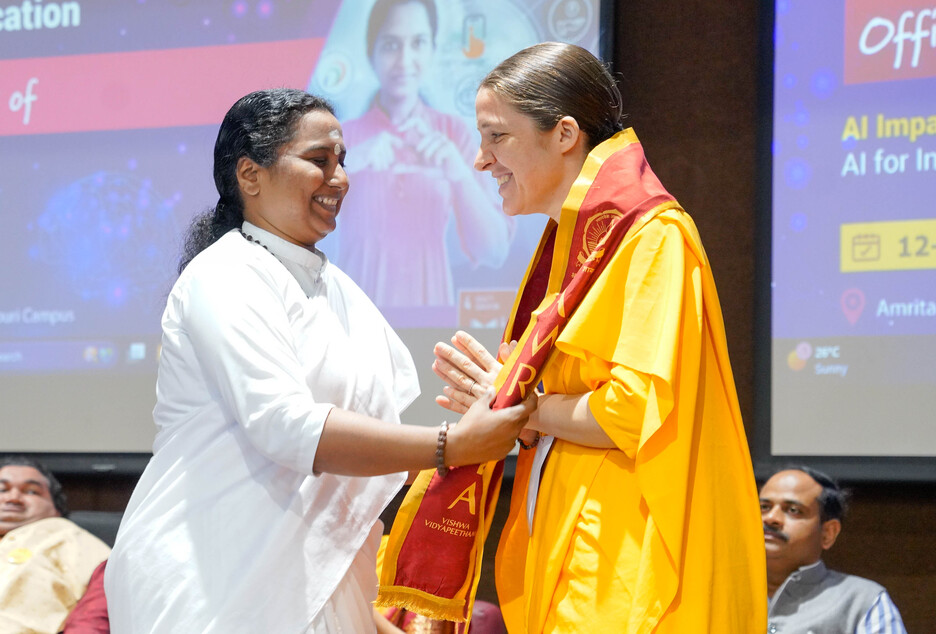
The two day programme was inaugurated by Smt. Tulika Pandey, Scientist-G, Ministry of Electronics and Information Technology (MeitY), Govt. of India, in the presence of Smt. Manmeet Kaur Nanda, Additional Secretary, Ministry of Social Justice & Empowerment, Govt. of India (online); Dr. Maneesha Vinodini Ramesh, Pro Vice Chancellor, Amrita Vishwa Vidyapeetham; Dr. Sai Kaustuv Dashgupta, Inclusion & Accessibility Champion; Shri. Kumar Raju Director, Indian Sign Language Research and Training Centre (ISLRTC); Prof. Amarendra Prasad Behera, Joint Director, CIET-NCERT; Bri. Amrita Chaitanya, Mata Amritanandamayi Math; and UNESCO Chairholders Dr. Prema Nedungadi, Associate Dean, Amrita School of Computing, and Dr. Raghu Raman, Dean, School of Business.
Chief Guest, Smt. Manmeet Kaur Nanda, Additional Secretary, Ministry of Social Justice & Empowerment, Govt. of India, said, “Assistive Technology is not a luxury, it is a constitutional necessity. Today, Artificial Intelligence is the most powerful enabler of this mandate… In education, our focus today is revolutionary. Adaptive learning, platforms customized content to individualized learning styles, is what we should always look to make our education more and more inclusive.
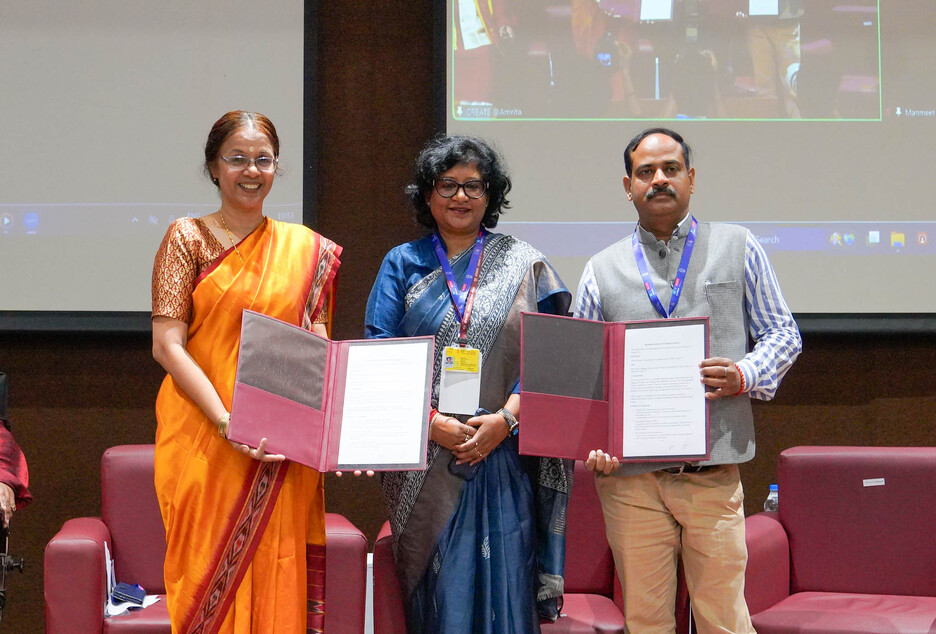
The MoU between Amrita Vishwa Vidyapeetham and ISLTRC marks a commitment to advance collaborative research and innovation in Deaf education and assistive technologies, aligned with the United Nations Sustainable Development Goals 4 (Quality Education) and 17 (Partnerships for the Goals) while contributing to national priorities aligned with Viksit Bharat 2047. This partnership will accelerate the AI-powered sign language interpretation systems ensuring that no student is left behind because the medium of instruction does not accommodate their mode of communication.
UNESCO Chair, Dr. Prema Nedungadi said, “Inclusion cannot be achieved just with technology nor with just policy in isolation. It requires a platform that is designed to be inclusive, institutions that are ready to adopt it, and sustain solutions and evaluation frameworks that tell us whether access and participation are truly improving. As we look ahead, three priorities must guide India’s roadmap; accessibility must be treated as a core design requirement across digital and educational initiatives; sustained investment in capacity building for educators, developers, and institutions is essential. We must adopt shared evaluation frameworks that measure real inclusion outcomes–not just deployment or usage statistics.”
In the Provost’s address, Dr. Maneesha Vinodini Ramesh said, “AI is influencing nearly every aspect of our lives, while these advances provide immense opportunities and important questions around equity, access, and responsibility. In education, these questions become even more critical. If AI-enabled systems are designed without an understanding of diverse learner needs, social context, and lived realities, they risk reinforcing exclusion rather than addressing it. Inclusive education, therefore, demands not only innovation but human-centric design and responsible innovations. Under the guidance of our Chancellor Sri Mata Amritanandamayi Devi, Amrita Vishwa Vidyapeetham, is built with this as one the major vision where it looks into education for a living, but education for life.”
Dr. Raghu Raman remarked that at Amrita, AI goes beyond artificial intelligence and reflects what the institution calls “AMMA’s Intelligence”—a guiding force rooted in compassion that shapes and nourishes all its work. Emphasising the need for action-oriented inclusion, he quoted AMMA, saying, “True compassion is not just to feel for another, but to act so that no one is left behind.”
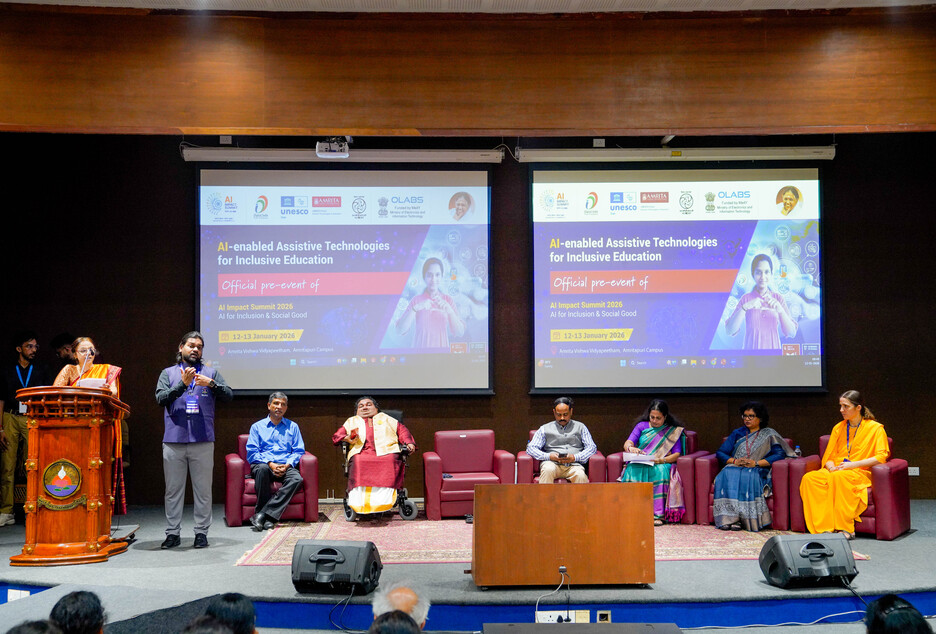
The event featured two high-impact panel discussions “Indian Sign Language, multimodal AI, and deaf-led accessibility solutions” and “From research innovation in Assistive Tech to scalable national impact” with Prof. Ulrike Zeshan, Emeritus Professor, University of Lancashire; Dr. Varsha Gathoo, Former HoD Education, AYJNISHD; Jayasudan Munsamy, Founder & CEO, DeepVisionTech Pvt. Ltd; Prof. Vaishali, Kolhe, Associate Professor, TISS; Dr. Priyanka Jain, Associate Director, CDAC; Prof. Vinod Namboodiri, Lehigh University, USA; and Huma Masood, Senior Programme Officer, UNESCO.
The symposium also featured a National Workshop for Teachers on Virtual Online Laboratories (OLabs), organized in collaboration with NCERT CIET and supported by ISLRTC, with active participation from teachers of Deaf schools and special educators.