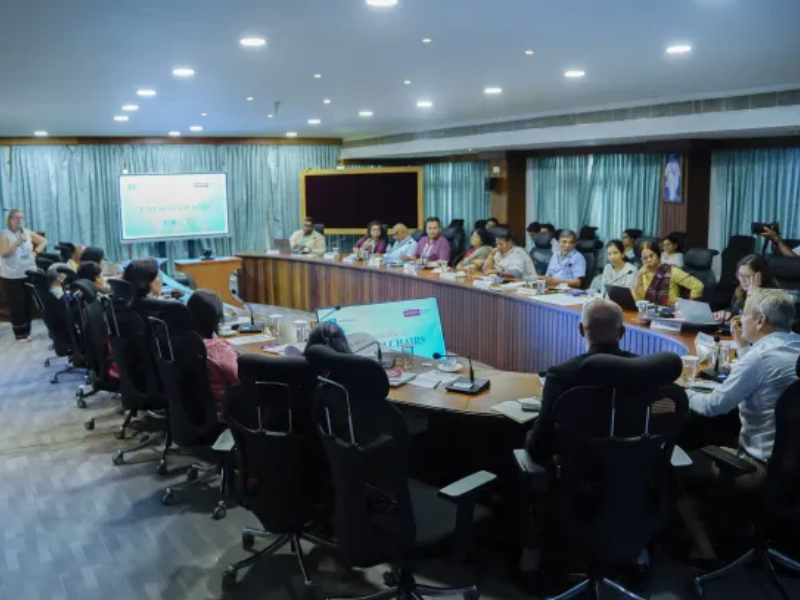
The UNESCO Chair on Experiential Learning for Sustainable Innovation and Development at Amrita Vishwa Vidyapeetham participated in the Roundtable of UNESCO Chairs in South Asia 2026, held from 13–14 May 2026 at Amrita’s Amritapuri Campus, which brought together UNESCO representatives, UNESCO Chairs, and academic leaders from across South Asia to discuss UNESCO’s priorities for 2026–27.
The roundtable focused on Advancing Gender Equality, Mobilizing Cultural Diversity, and Engaging Meaningfully with Youth, while also addressing the cross-cutting challenges of Digital Transformation and Environmental Crises.
Among the distinguished participants were Mr. Tim Curtis, Director and Representative of the UNESCO Regional Office for South Asia, Ms. Susan Vize, Head of Office and UNESCO Representative to Bangladesh, and Mr. Jaco Du Toit, Head of Office and UNESCO Representative to Nepal.
Addressing the gathering, Mr. Tim Curtis emphasized the importance of UNESCO Chairs within UNESCO’s global knowledge ecosystem, noting that “UNESCO Chairs are an integral part of UNESCO’s global activities and networks and represent one of the organization’s greatest strengths.”
Dr. Maneesha V. Ramesh, Chairholder of the UNESCO Chair on Experiential Learning for Sustainable Innovation and Development and Pro Vice Chancellor of Amrita Vishwa Vidyapeetham, delivered the welcome address and presented the Chair’s achievements over the past two years, along with its strategic roadmap for 2026–2027. She also delivered the closing remarks and actively contributed to the regional deliberations throughout the roundtable.
The Chair highlighted its ongoing and proposed initiatives in areas including smart cities, water governance, circular water systems, digital twins for rural capacity building, heritage-based livelihood generation, sustainability and resilience dashboards, impact indicators, global curriculum development, and South Asian engagement through Amrita’s Live-in-Labs®️ program.
The Chair also presented its work related to ocean vulnerability, mangrove and biosphere conservation, climate-resilient communities, stakeholder capacity building, certificate programs, sustainable agriculture, disaster resilience, human-animal conflict, and the water-health-agriculture nexus.
The discussions explored possibilities for collaboration with UNESCO India Headquarters in jointly guiding students of the E4Life PhD Program in thematic areas aligned with UNESCO priorities.
Deliberations during the roundtable addressed critical regional challenges including landslides, floods, droughts, glacial lake outburst floods, multi-hazard risk, access to education, digital inclusion, livelihood enhancement, and community empowerment.
The delegates also met with Amrita’s Chancellor, Sri Mata Amritanandamayi Devi, Amma, and engaged in discussions on the role of education, compassion-driven leadership, sustainability, and community engagement in shaping inclusive and resilient futures.
As part of the roundtable, the UNESCO representatives and participating Chairs also visited the Live-in-Labs ® ️ experiential learning exhibition area, where they interacted with faculty, researchers, and students working on community-centered innovations and sustainable development initiatives.
The roundtable further created opportunities for engagement with UNESCO representatives from India, Nepal, and Bangladesh, as well as UNESCO Chairs working across diverse thematic areas. These interactions helped identify new avenues for regional collaboration and knowledge-sharing toward building sustainable and resilient communities.
The vision of the UNESCO Chair on Experiential Learning for Sustainable Innovation and Development is rooted in building a knowledge society by empowering youth, who in turn empower communities. This vision is inspired by the guidance of Amrita’s Chancellor, Sri Mata Amritanandamayi Devi, Amma, and her message of compassion-driven action.
The Chair continues to advance education, research, experiential learning, innovation, and community engagement toward building peaceful, inclusive, sustainable, digitally empowered, and resilient societies across the region.