Bio Signals Processing & Rehabilitation Robotics Lab. We listen to the human body — its muscles, heart, brain, and breath and turn what it tells us into rehabilitation technology.
Bio Signals Processing & Rehabilitation Robotics Lab. We listen to the human body — its muscles, heart, brain, and breath and turn what it tells us into rehabilitation technology.
The Bio-signals processing & Rehabilitation Robotics (BSRR) Lab is an interdisciplinary research group focused on the acquisition, analysis, and application of human physiological signals for advancing rehabilitation engineering and healthcare technologies. The laboratory is dedicated to bridging the gap between fundamental biomedical signal processing and real-world clinical rehabilitation needs. Welcome to BSRR Lab — where rehabilitation is engineered through biosignals.
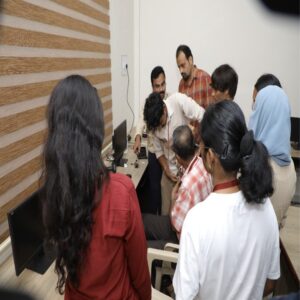
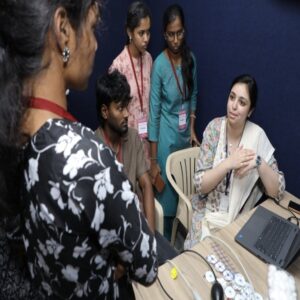
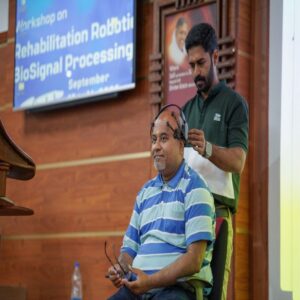
Our work involves the use of both clinical-grade and advanced research instrumentation to acquire high-fidelity physiological data directly from human participants. These include surface electromyography (sEMG), electrocardiography (ECG), electroencephalography (EEG), respiratory signals, pulse measurements, blood pressure, and grip force dynamics. By integrating multimodal biosignal acquisition, we aim to capture a comprehensive understanding of human physiological responses under various conditions, particularly in rehabilitation and assistive scenarios.
A central focus of the lab is the development of robust signal-processing pipelines and intelligent computational frameworks for extracting meaningful features from complex and often noisy biosignals. We employ advanced techniques from digital signal processing, statistical modeling, and machine learning—including deep learning approaches—to interpret physiological data with high accuracy and reliability. These methodologies enable us to identify patterns, assess functional recovery, and derive clinically relevant insights that can support diagnosis, monitoring, and therapeutic interventions.
Positioned at the intersection of biomedical engineering, applied physiology, and computational intelligence, the BSRR Lab addresses critical challenges in rehabilitation science. Our research is driven by practical and translational questions: How can recovery be quantified more precisely and objectively? How can assistive and rehabilitative devices be controlled in a more intuitive and human-centric manner? And how can rehabilitation protocols be adapted dynamically to suit individual patient needs?
Through this work, we aim to contribute to the development of personalized, data-driven rehabilitation systems that enhance patient outcomes, improve quality of life, and support clinicians in delivering more effective and responsive care. The lab also actively fosters collaboration across disciplines, encouraging innovation at the convergence of engineering, medicine, and human-centered design
The BSRR Lab is exactly such a group. We acquire multi-modal physiological signals from human participants using clinical and research grade instrumentation, process them with modern signal-processing methods, and apply them to problems in rehabilitation engineering. Our work covers the full chain from electrode to algorithm to application. We are interested in research that is honest about real-world constraints: noisy signals, individual variability, limited data, and the gap between laboratory accuracy and clinical usefulness.
It is based in the School of Artificial Intelligence at Amrita Vishwa Vidyapeetham, Coimbatore.
Contact us : bsrrlab@gmaill.com

To build a research environment where human bio signals, modern signal processing, and artificial intelligence come together to produce rehabilitation technology that is rigorous, reproducible, and clinically meaningful.

The lab works toward this vision through four commitments:
The lab works on a range of problems around biosignals, rehabilitation, and human–machine interaction. Instead of fixed themes, our work is better described through the following focus areas:
EEG-Based Brain Signal Analysis
Studying brain activity to understand mental state during tasks, including stress, attention, workload, and engagement. This also includes exploring how brain activity relates to physiological responses during rehabilitation and interaction tasks.
Surface EMG for Upper- and Lower-Limb Applications
Muscle signals are used for gesture recognition, prosthetic/orthotic control, and movement analysis. This includes both hand/wrist tasks and lower-limb activities like gait and sit-to-stand transitions.
EMG-Based Human–Machine Interaction
Using EMG signals to control assistive or robotic systems in a way that feels natural to the user, with a focus on real-time performance and usability.
Speech and Swallowing-Related Signal Analysis
Work on speech-related muscle activity and biosignals, including speech recognition using EMG and monitoring of neck muscle behaviour.
Neck Fatigue and Muscle Activity Monitoring
Studying muscle fatigue in the neck region during prolonged tasks, with applications in ergonomics, rehabilitation, and assistive support.
Cardiovascular Monitoring (ECG and PPG)
Using ECG and PPG to study heart activity and blood flow, including heart-rate variability, recovery patterns, and wearable monitoring approaches.
Multimodal Biosignal Integration
Combining EMG, ECG, PPG, EEG, respiration, and other signals to get a more complete understanding of human state during rehabilitation or interaction tasks.
Stress, Fatigue, and Engagement Assessment
Using physiological signals to estimate how a person is feeling and performing — including stress levels, mental workload, fatigue, and engagement.
Machine Learning for Biosignal Analysis
Applying machine learning and signal-processing techniques to interpret complex biosignals, with a focus on models that generalise well across users.
Image Processing for Biomedical Applications
Applying image-processing techniques to analyze visual data in healthcare and rehabilitation, including feature extraction, pattern recognition, and integration with biosignal data for improved assessment and monitoring.


Dr. Akhil V. M.
Assistant Professor (Sr. Gd), School of Artificial Intelligence, Coimbatore
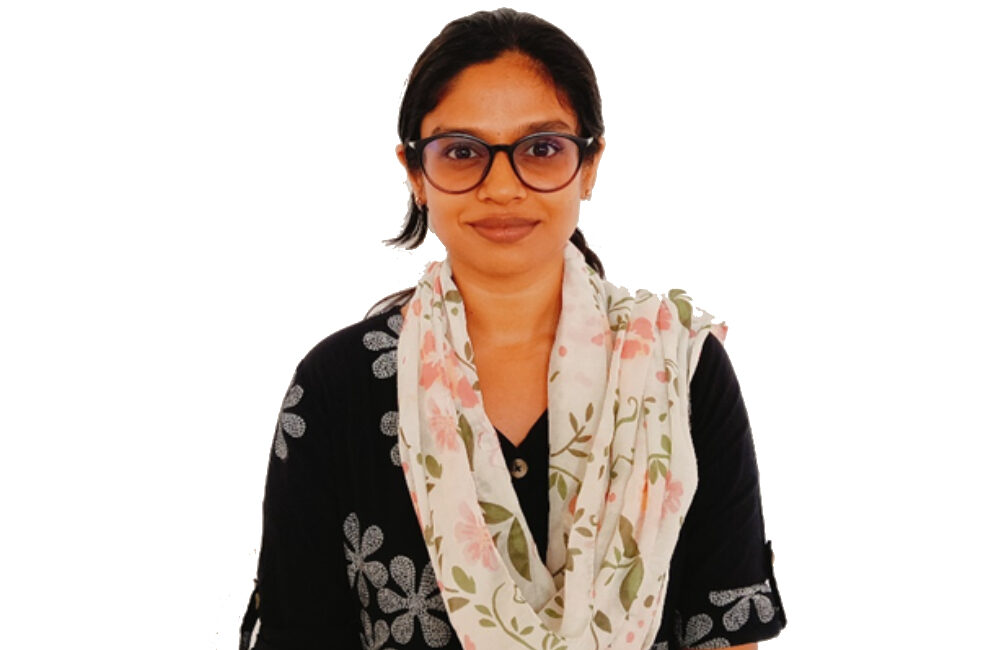
Dr. Amrutha Veluppal
Principal, Amrita School of Medicine, Kochi

Afsheen E.
Ph. D. Student
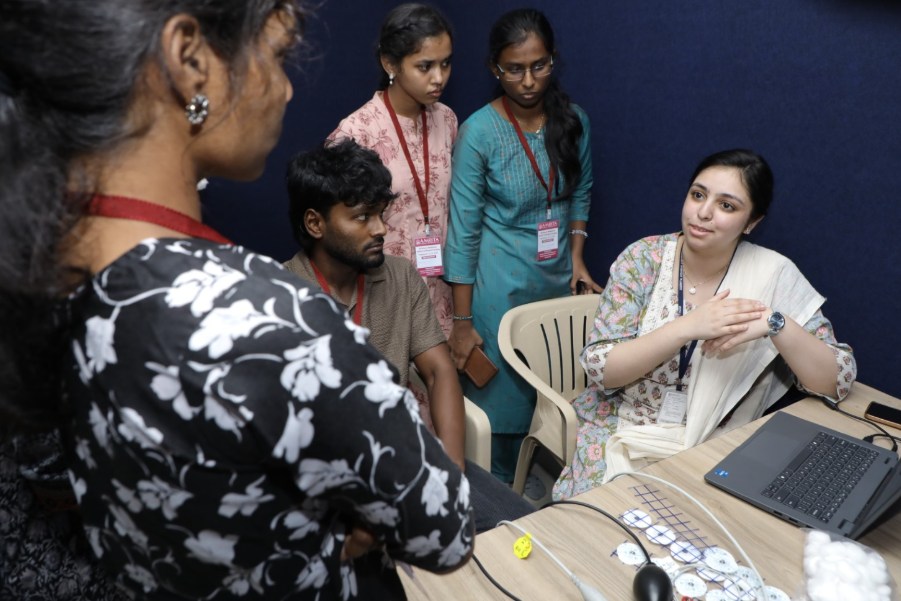
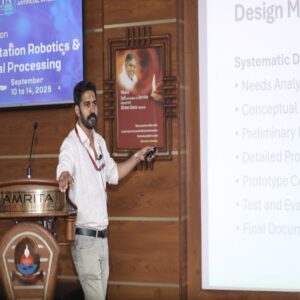
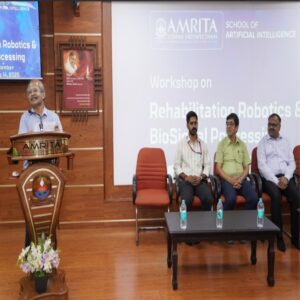
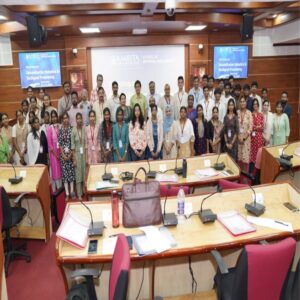
Date: September 10 -14, 2025
Aalekh is a vibrant creative community where art speaks, emotions flow, and imagination knows no limits. The club encourages students to explore diverse art forms, experiment freely, and express themselves with confidence. Through interactive workshops, art sessions, exhibitions, and collaborative projects, Aalekh creates a nurturing space where ideas come alive and every student discovers their own artistic voice.
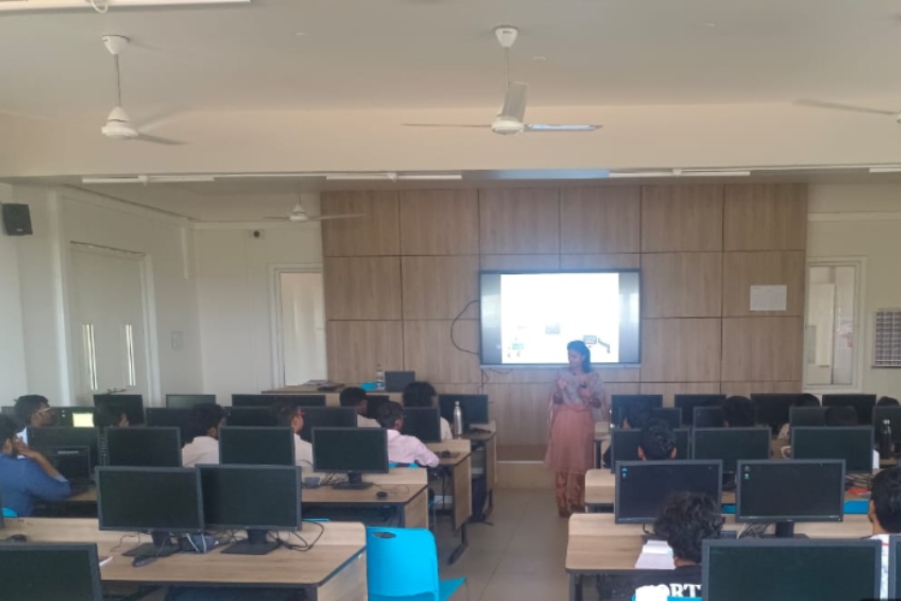
Date: January 8, 2026
Abhaya stands as a strong and compassionate platform committed to women’s empowerment, safety, and inclusion on campus. The club fosters open conversations, awareness initiatives, and action-oriented programmes that ensure every woman feels heard, respected, and supported. Abhaya nurtures confidence and collective strength, contributing to a campus culture rooted in dignity, equality, and mutual respect.