



In 2025, Amrita Vishwa Vidyapeetham actively engaged with national and state government authorities, regional non-governmental organisations (NGOs), and civil society networks to contribute to evidence-based Sustainable Development Goal (SDG) policy development, strategic planning, and implementation. Through structured, long-term institutional partnerships, the university supported key stages of the SDG policy-development cycle, including identifying development problems and challenges, developing policies and strategies, modelling potential future risks and outcomes, monitoring and reporting on interventions, and enabling adaptive management. These collaborations integrated academic research, technological innovation, participatory community assessments, and capacity-building initiatives to inform government and NGO approaches to sustainable development.
Three institutional units contributed to these policy-oriented engagements:
Institutional leadership strengthened these government and NGO relationships through direct participation in strategic partnerships and policy-oriented discussions. Dr. Maneesha Vinodini Ramesh, Pro Vice-Chancellor of Amrita Vishwa Vidyapeetham, contributed to state-government collaborations addressing disaster preparedness, climate resilience, and technology-supported risk management. Dr. Krishnashree Achuthan represented Civil 20 India in international civil society engagements, contributing perspectives on inclusive development and sustainable governance.
Collectively, these institutional engagements demonstrate Amrita Vishwa Vidyapeetham’s involvement in providing scientific evidence, technical expertise, community-based insights, and strategic recommendations to government authorities and civil society organisations for SDG-related policy development during 2025. By linking research with policy discussions, programme implementation, and stakeholder feedback, the university supported more informed, inclusive, and adaptive approaches to sustainable development at regional and national levels.
| Element of the Metric | 2025 Evidence (sections below) |
| Identifying problems and challenges | Wayanad hazard and site assessments with KSDMA (3.1); Live-in-Labs® village needs assessments (3.9); NDMA–UN Women workshop on women in DRR (3.5) |
| Developing policies and strategies | Co-authorship of NITI Aayog’s Pathways to Progress report (3.4); C20 South Africa 2025 policy process (3.6); Governance and Policy track at ICSRF 2025 (3.7) |
| Modelling likely futures with and without interventions | AI-based regional multi-hazard risk platform and landslide flume laboratory for Wayanad (3.1); risk-assessment models for Sikkim (3.2); Odisha multi-hazard modelling (3.3) |
| Monitoring and reporting on interventions | Government-approved IoT landslide monitoring in Wayanad (3.1); Sikkim early-warning operations (3.2); SREE community data platform launched in 2025 (3.7); ATL Sarthi cluster reporting to NITI Aayog (3.4); SANKALP–AVSAR scheme delivery (3.8) |
| Enabling adaptive management | Training of government staff on early-warning dashboards and alerts (3.1); SSDMA capacity-building MoU (3.2); multi-stakeholder NGO and CSO networks (3.9) |
In 2025, Amrita Vishwa Vidyapeetham collaborated with the Government of Kerala, Kerala State Disaster Management Authority (KSDMA), and Wayanad District Administration to contribute to evidence-based disaster risk reduction, climate resilience, and regional SDG policy development. Following the devastating Wayanad landslides of 30 July 2024, the university engaged in technical assessments to identify disaster-related problems and challenges, evaluate landslide-prone areas, and develop scientific strategies for disaster preparedness and risk mitigation. Building on expert assessments at Mundakkai, the Government of Kerala issued G.O. (Rt) No. 208/2025/DMD in April 2025, formally granting permission for fieldwork associated with Amrita’s proposed Artificial Intelligence (AI)-enabled Internet of Things (IoT) landslide early-warning system. This government authorisation demonstrates Amrita Vishwa Vidyapeetham’s direct technical involvement in regional disaster risk-management planning and the development of evidence-based approaches to sustainable development.
The collaboration focused on developing policies and strategies, modelling likely future disaster scenarios, and strengthening scientific monitoring systems to support government decision-making. The proposed initiative includes a dynamic regional multi-hazard risk management platform integrating remote sensing, in-situ environmental sensors, and AI-based predictive models to assess landslide vulnerability and potential hazard conditions. It also incorporates site-specific IoT-based landslide monitoring systems using wireless sensor networks in high-risk locations, supported by Amrita’s advanced landslide flume laboratory for simulating landslide behaviour under different environmental conditions. The regional risk-assessment platform was proposed for development over approximately one year, while site-specific monitoring was envisaged over approximately three years. These technical approaches provide a framework for identifying high-risk areas, assessing potential future outcomes, comparing risk conditions, and informing disaster risk-reduction strategies.
A further objective of the university–government partnership is to support monitoring and reporting on interventions and enabling adaptive management through real-time environmental observations, risk-visualisation dashboards, and proposed technical training for government personnel. These systems are intended to assist district and state authorities in interpreting hazard information, monitoring changing risk conditions, evaluating preparedness measures, and adapting disaster management strategies in response to emerging evidence. The initiative also forms part of broader Wayanad recovery efforts, toward which Chancellor Sri Mata Amritanandamayi Devi committed ₹15 crore, including support for early-warning deployment. Through this collaboration, Amrita Vishwa Vidyapeetham contributed scientific expertise, predictive modelling approaches, and technology-based recommendations to government disaster risk-management planning, demonstrating direct university involvement in SDG-related policy and strategy development. The initiative contributes to SDG 11 (Sustainable Cities and Communities), SDG 13 (Climate Action), and SDG 17 (Partnerships for the Goals) by strengthening disaster resilience, climate adaptation, institutional cooperation, and evidence-based regional governance.
Official Government Evidence (2025):
Government of Kerala, Disaster Management Department — G.O. (Rt) No. 208/2025/DMD, April 2025.
On10 May 2025, Amrita Vishwa Vidyapeetham strengthened its collaboration with the Government of Sikkim through a Memorandum of Understanding (MoU) with the Sikkim State Disaster Management Authority (SSDMA)to advance evidence-based disaster risk reduction, climate resilience, and sustainable community development in the Eastern Himalayas. The agreement was signed by Shri Prabhakar Rai, Director of SSDMA, and Dr. Maneesha Vinodini Ramesh, representing Amrita Vishwa Vidyapeetham, formalising an ongoing university–government partnership. The collaboration provides a framework foridentifying disaster-related problems and challenges, developing risk-reduction strategies, and strengthening government capacity for climate adaptation and disaster preparedness. By integrating scientific research, technological innovation, and community-based risk assessments, the partnership supports government efforts to address landslide vulnerability, extreme weather events, and other environmental hazards affecting Himalayan communities.

The collaboration builds upon Amrita Vishwa Vidyapeetham’s expertise in modelling likely future disaster scenarios, developing predictive risk-assessment systems, and supporting evidence-based disaster management strategies. Earlier joint initiatives included the development of an AI-enabled Internet of Things (IoT) landslide early-warning system at Chandmari, Gangtok, and a multi-hazard forecasting platform addressing Glacial Lake Outburst Flood (GLOF) risks in North Sikkim, developed in 2024. These technological initiatives provide a foundation for evaluating environmental vulnerabilities, analysing potential disaster scenarios, and informing preparedness and risk-reduction decisions. Under the 2025 MoU, the university and SSDMA also agreed to strengthen capacity-building programmes, field-based awareness campaigns, and grassroots resilience initiatives, connecting scientific knowledge with government disaster management priorities and community-level interventions.
An important component of the university–government partnership is its contribution to monitoring and reporting on disaster risks and enabling adaptive management through early-warning technologies, risk information, and community capacity development. The collaboration supports the use of scientific observations and forecasting information to help government authorities and local stakeholders assess changing hazard conditions, improve preparedness strategies, and respond to emerging risks. Planned capacity-building activities involving community members, youth volunteers, and local leaders further aim to strengthen local understanding of disaster warnings, climate-related vulnerabilities, and appropriate response measures. Through this formal partnership, Amrita Vishwa Vidyapeetham contributes technical expertise, predictive modelling capabilities, and community-oriented strategies to government disaster risk-management planning, demonstrating its involvement in SDG-related policy and strategy development. The initiative advances SDG 11 (Sustainable Cities and Communities), SDG 13 (Climate Action), and SDG 17 (Partnerships for the Goals) by promoting disaster-resilient communities, climate adaptation, evidence-based governance, and sustained university–government cooperation.
Amrita Vishwa Vidyapeetham continued its collaboration with the Government of Odisha, Odisha State Disaster Management Authority (OSDMA), and Gajapati district administration to support evidence-based disaster risk reduction, climate resilience, and regional SDG policy development. Building upon a Memorandum of Understanding (MoU) signed in March 2024, the university’s engagement focused on identifying disaster-related problems and challenges, assessing landslide-prone locations, and developing scientific strategies for disaster preparedness and risk mitigation. At the request of OSDMA, Amrita undertook field assessments of vulnerable locations, including Baraghara and Madha in Rayagada block, to support the identification of landslide risks and the development of appropriate early-warning approaches. The collaboration also involved the World Bank as an international development partner, connecting academic research and technological expertise with government-led disaster resilience priorities.
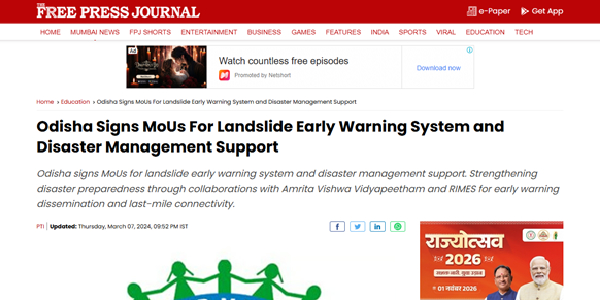
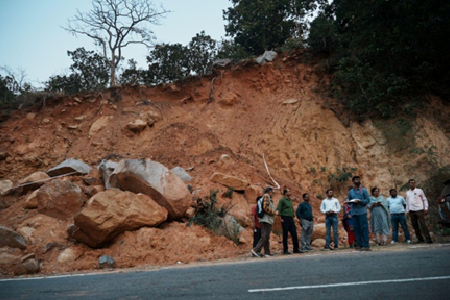
The university–government collaboration focused on developing risk-reduction strategies, modelling potential future disaster scenarios, and strengthening scientific monitoring systems to support evidence-based decision-making. The initiative included risk-assessment frameworks for identifying vulnerable locations, a proposed four-level rapid warning system for landslides, multi-hazard monitoring approaches, and Internet of Things (IoT)-enabled early-warning technologies intended for operational use by OSDMA in Gajapati and Sambalpur districts. These approaches are designed to assess environmental vulnerabilities, analyse potential hazard conditions, and provide scientific information for disaster preparedness and response planning. By combining field-based assessments with predictive technologies and hazard-monitoring frameworks, Amrita Vishwa Vidyapeetham contributed technical inputs relevant to problem identification, disaster risk modelling, and the development of government risk-management strategies.
The collaboration also provides a framework for monitoring and reporting on disaster-related interventions and enabling adaptive management through scientific observations, risk assessments, and early-warning information. The proposed monitoring systems are intended to help government authorities track changing environmental conditions, identify emerging threats, evaluate disaster preparedness needs, and adapt risk-reduction measures based on updated scientific evidence. Through its technical engagement with OSDMA, Amrita Vishwa Vidyapeetham supported government efforts to integrate scientific research, predictive modelling, and technology-based monitoring into regional disaster risk-management planning. This continuing partnership contributes to SDG 11 (Sustainable Cities and Communities), SDG 13 (Climate Action), and SDG 17 (Partnerships for the Goals) by strengthening disaster preparedness, climate resilience, institutional collaboration, and evidence-informed sustainable development strategies.
In 2025, Amrita Vishwa Vidyapeetham contributed to national-level policy research and innovation development through its engagement with NITI Aayog, Government of India, supporting evidence-based policymaking, strategic planning, and sustainable development. A significant contribution was the participation of Prof. Sujit Bhattacharya of Amrita Vishwa Vidyapeetham, former Chief Scientist at CSIR-NIScPR, as a co-author of NITI Aayog’s national policy report, Pathways to Progress: Analysis and Insights into India’s Innovation Story, released on 23 September 2025. The report examined India’s innovation ecosystem, benchmarked national innovation performance, reviewed national and state-level initiatives, and identified challenges and opportunities for strengthening research, technological advancement, and innovation-driven development. Through this contribution, the university provided research expertise relevant to identifying problems and challenges, analysing innovation performance, and developing evidence-based policies and strategies to inform national innovation priorities and sustainable economic growth.
Amrita Vishwa Vidyapeetham also strengthened its engagement with NITI Aayog’s Atal Innovation Mission (AIM) through the Atal Tinkering Labs (ATL) Sarthi Cluster Programme in Coimbatore district, for which the university was selected as the lead nodal agency in August 2024. During 2025, the university’s Institution’s Innovation Council (IIC) supported the implementation of innovation-oriented educational activities, including school innovation fairs, mini-hackathons, project exhibitions, and Mega Tinkering Day 2025. These initiatives aimed to strengthen scientific curiosity, problem-solving abilities, technological literacy, and innovation skills among school students. By coordinating educational activities across participating institutions, Amrita supported the implementation of national innovation and education strategies while generating programme-level information relevant to identifying educational challenges, assessing intervention needs, and improving innovation-development approaches.
The university’s engagement with NITI Aayog further demonstrates its contribution to monitoring and reporting on SDG-related interventions and supporting adaptive management through institutional coordination, programme evaluation, and implementation feedback. Under the ATL Sarthi initiative, the university’s role included coordinating cluster activities and supporting reporting processes associated with the Atal Innovation Mission. Such engagement can provide government stakeholders with information on programme implementation, participation, and educational outcomes, supporting evidence-informed adjustments to innovation and skills-development strategies. Together, the national policy report and ATL Sarthi collaboration illustrate Amrita Vishwa Vidyapeetham’s direct research contribution to government policy development and its operational involvement in implementing national innovation initiatives. These activities contribute to SDG 4 (Quality Education), SDG 8 (Decent Work and Economic Growth), SDG 9 (Industry, Innovation and Infrastructure), and SDG 17 (Partnerships for the Goals) by advancing inclusive innovation, research-informed policymaking, educational development, and sustained university–government cooperation.
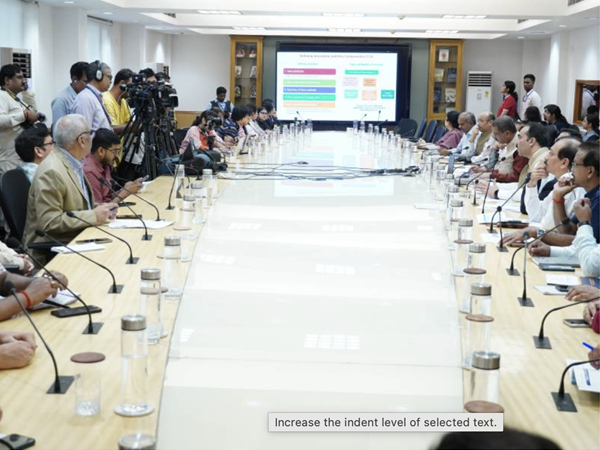
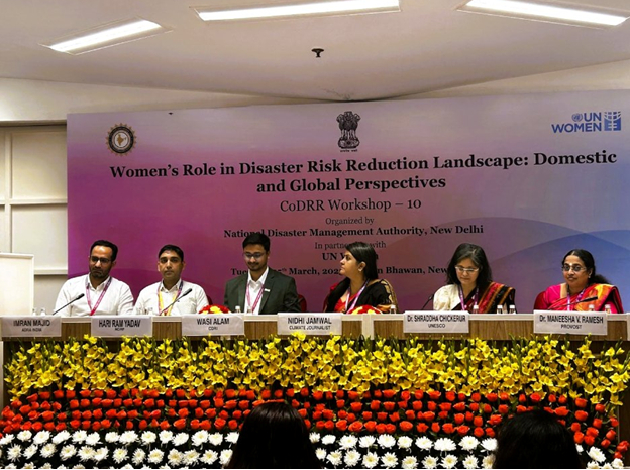
In April 2025, Amrita Vishwa Vidyapeetham contributed to national-level discussions on gender-responsive disaster risk reduction and sustainable development through its participation in the International Workshop on Women’s Role in Disaster Risk Reduction, organised by the National Disaster Management Authority (NDMA), Government of India, in collaboration with UN Women. The workshop brought together representatives from the Ministry of Home Affairs, Ministry of Women and Child Development, international organisations, and disaster management stakeholders to examine challenges affecting women’s participation in disaster preparedness, climate resilience, and community-based risk management. Dr. Maneesha V. Ramesh, representing Amrita Vishwa Vidyapeetham, participated as an invited panellist in the technical session on Skill & Capacity Building for Women. Her contribution provided academic and field-based perspectives relevant to identifying problems and challenges, informing national policy discussions, and developing inclusive strategies that strengthen women’s participation in disaster risk reduction and sustainable resource management.
During the technical discussions, Dr. Maneesha V. Ramesh presented insights from Amrita Vishwa Vidyapeetham’s community-based sustainability initiatives involving more than 5,000 communities, highlighting approaches through which women participate in measuring local water resources, assessing environmental conditions, and evaluating resource sustainability. These experiences demonstrated the importance of integrating community-generated evidence, women’s technical skills, participatory monitoring, and locally informed decision-making into disaster resilience and climate adaptation strategies. By sharing practical examples of women’s involvement in environmental assessment and resource management, the university contributed insights relevant to developing evidence-based policies and strategies, identifying capacity-building priorities, and strengthening approaches to monitoring and reporting on community-level interventions. Such participatory approaches can also inform the assessment of future environmental risks and the design of more responsive disaster preparedness measures.
The engagement further highlighted the importance of enabling adaptive management through women’s leadership, community participation, continuous monitoring, and evidence-informed improvements to disaster risk-reduction strategies. The workshop provided a national policy dialogue platform for connecting academic research and grassroots experiences with government and international development priorities. Through Dr. Maneesha V. Ramesh’s technical contribution, Amrita Vishwa Vidyapeetham provided research-informed input to discussions relevant to gender-responsive disaster risk-reduction policy and capacity-building strategies, demonstrating university involvement in national government-led SDG policy consultations. This engagement supports SDG 5 (Gender Equality), SDG 6 (Clean Water and Sanitation), SDG 11 (Sustainable Cities and Communities), SDG 13 (Climate Action), and SDG 17 (Partnerships for the Goals) by promoting women’s participation in environmental governance, inclusive disaster preparedness, sustainable resource management, and cooperation between academic institutions, government authorities, and international organisations.
In November 2025, Amrita Vishwa Vidyapeetham strengthened its engagement with international non-governmental organisations (NGOs) and civil society networks through participation in the Civil 20 (C20) South Africa Summit, contributing perspectives relevant to inclusive governance, sustainable development, and global policy discussions. Civil 20 serves as the official civil society engagement group of the G20, providing a platform for NGOs and civil society organisations to identify development problems and challenges, formulate policy recommendations, and advocate evidence-based strategies addressing social, economic, and environmental priorities. Amrita Vishwa Vidyapeetham’s engagement builds upon its institutional leadership during India’s G20 Presidency in 2023, when Chancellor Sri Mata Amritanandamayi Devi chaired Civil 20 India and the university supported its secretariat and working groups. This engagement continued through C20 Brazil in 2024 and C20 South Africa in 2025, demonstrating sustained university involvement in international civil society policy dialogue and SDG-related strategic discussions
At the C20 South Africa Summit 2025, Dr. Krishnashree Achuthan represented C20 India, contributing perspectives on digital public infrastructure, inclusive financial systems, equitable access to education, and sustainable development priorities for the Global South. These discussions addressed development challenges associated with unequal access to technology, financial exclusion, educational disparities, and barriers to inclusive economic participation. The broader C20 South Africa policy process brought together contributions from more than 3,000 civil society organisations across 14 working groups, facilitating the development of recommendations addressing sustainable development and social justice. Through its representation in this international platform, Amrita Vishwa Vidyapeetham contributed perspectives relevant to identifying policy challenges, developing inclusive policies and strategies, and strengthening cooperation between academic institutions, NGOs, and international stakeholders. The engagement also provided opportunities to exchange knowledge and discuss alternative approaches to achieving more equitable and sustainable development outcomes.
The C20 engagement demonstrates the importance of multi-stakeholder consultation, policy dialogue, and civil society participation in supporting adaptive and inclusive approaches to SDG governance. By connecting academic expertise with NGO-led discussions, Amrita Vishwa Vidyapeetham supported international exchanges concerning development priorities, institutional accountability, and policy approaches responsive to changing social and economic conditions. The wider C20 process also provides a platform for civil society organisations to advocate policy improvements and encourage continued engagement with government stakeholders. Through Dr. Krishnashree Achuthan’s participation, Amrita Vishwa Vidyapeetham contributed to international civil society discussions relevant to SDG policy development and strategy formulation, reinforcing the role of universities in connecting research, community perspectives, and sustainable development advocacy. This engagement supports SDG 4 (Quality Education), SDG 5 (Gender Equality), SDG 8 (Decent Work and Economic Growth), SDG 10 (Reduced Inequalities), SDG 16 (Peace, Justice and Strong Institutions), and SDG 17 (Partnerships for the Goals) by promoting inclusive education, equitable development, participatory governance, and international cooperation.
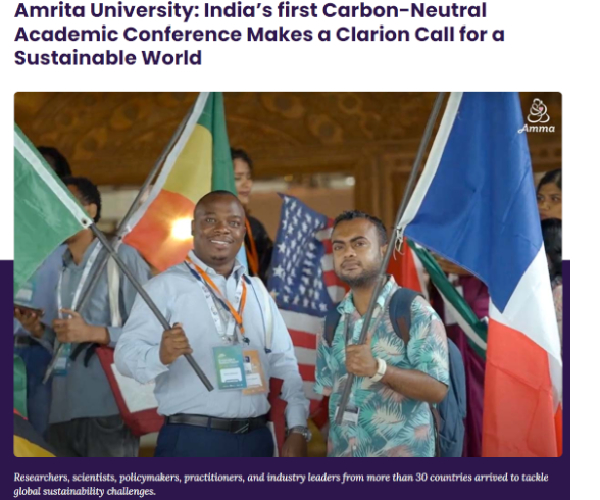
From 29 August to 1 September 2025, Amrita Vishwa Vidyapeetham collaborated with government representatives, regional non-governmental organisations (NGOs), international development organisations, and civil society networks through the International Conference on Sustainable & Resilient Futures (ICSRF 2025), held at its Amritapuri campus. Convened by the university’s UNESCO Chair on Experiential Learning for Sustainable Innovation & Development, School for Sustainable Futures, and SustIN network, the conference was recognised as India’s first carbon-neutral academic conference aligned with ISO 14068. It brought together more than 700 participants and 80 speakers from over 30 countries, including representatives of UNESCO, UN ESCAP, government institutions, academia, industry, and civil society. The conference provided a platform for identifying sustainable development problems and challenges, exchanging research-informed policy perspectives, and discussing strategies for climate resilience, sustainable agriculture, environmental conservation, and inclusive development. Smt. Uma Mahadevan Dasgupta, IAS, Additional Chief Secretary and Development Commissioner, Government of Karnataka, participated as guest of honour and delivered a keynote address on Karnataka’s organic and natural farming policy, connecting regional government priorities with academic research and sustainable development discussions.
The conference facilitated policy-oriented dialogue and collaborative strategy development through dedicated thematic tracks, including Governance, Policy & Global SDG Impact and Integrated Action for the SDGs: Connecting Local, National, and Global Efforts. Its NGO Conclave and workshops involving government and civil society experts provided opportunities to examine development challenges, exchange evidence from community-based interventions, and discuss approaches to strengthening SDG implementation. These engagements connected government policy perspectives with academic expertise, NGO experience, and community-level sustainability priorities. By facilitating discussions on developing policies and strategies, assessing future sustainability risks, and identifying potential interventions, Amrita Vishwa Vidyapeetham supported knowledge exchange relevant to regional and national SDG planning. The conference also encouraged collaboration among stakeholders working on sustainable agriculture, climate adaptation, biodiversity conservation, social inclusion, and community resilience.
An important technological contribution associated with ICSRF 2025 was the introduction of SREE, a geospatial, crowdsourced Sustainability & Resilience platform, designed to collect and organise community-generated information relevant to sustainable development and environmental resilience. The platform offers potential applications for identifying emerging problems, monitoring and reporting on interventions, analysing changing sustainability conditions, and enabling adaptive management through evidence-informed decision-making. The conference also introduced GeoSanskriti, a digital platform supporting the documentation and protection of Kerala’s sacred groves, contributing to biodiversity conservation and community-based environmental monitoring. These initiatives demonstrate how digital tools and participatory data systems can support the assessment of sustainability challenges and inform future planning. Through ICSRF 2025, Amrita Vishwa Vidyapeetham strengthened engagement with government authorities, NGOs, and international organisations by connecting scientific research, community-generated evidence, policy dialogue, and technological innovation. The initiative contributes to SDG 4 (Quality Education), SDG 11 (Sustainable Cities and Communities), SDG 13 (Climate Action), SDG 15 (Life on Land), SDG 16 (Peace, Justice and Strong Institutions), and SDG 17 (Partnerships for the Goals).
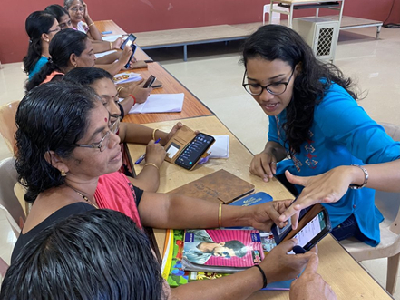
In 2025, Amrita Vishwa Vidyapeetham continued its collaboration with the Ministry of Skill Development and Entrepreneurship (MSDE), Government of India, and the World Bank through the SANKALP–AVSAR initiative, supporting national skill-development priorities, inclusive economic participation, and sustainable livelihood opportunities. Implemented through the university’s AMMACHI Labs and Centre for Women’s Empowerment and Gender Equality (CWEGE), the programme operates within the Skills Acquisition and Knowledge Awareness for Livelihood Promotion (SANKALP) framework and aims to provide vocational and life-skills training to 4,500 women and transgender individuals. The initiative addresses important development problems and challenges, including unequal access to vocational education, barriers to employment, limited livelihood opportunities, and the economic exclusion of marginalised communities. By translating national skill-development priorities into community-based training programmes, Amrita Vishwa Vidyapeetham contributes to the implementation of government development strategies and the identification of practical challenges affecting inclusive employment and economic empowerment.
During 2025, Amrita Vishwa Vidyapeetham strengthened the programme’s implementation through post-training support, livelihood guidance, and market-linkage activities, connecting vocational education with opportunities for sustainable income generation. A notable example occurred in December 2025 in Faridabad, where AMMACHI Labs and CWEGE facilitated connections between trained women artisans and an international clothing label, creating opportunities to explore market access and commercial engagement. Such activities demonstrate the importance of integrating vocational training with enterprise development, industry engagement, and continued beneficiary support. The programme’s implementation framework also provides opportunities to identify barriers to economic participation, assess training effectiveness, develop strategies for improved livelihood outcomes, and generate practical insights relevant to government skill-development initiatives. Through its community-based approach, the university supports the translation of national policy objectives into interventions addressing local employment and livelihood needs.
The university’s participation in SANKALP–AVSAR is also relevant to monitoring and reporting on development interventions and enabling adaptive management. Programme indicators such as training completion, certification, employment outcomes, enterprise formation, and market-linkage opportunities can support the assessment of intervention effectiveness and identify areas requiring improvement. Continued engagement with beneficiaries after training provides opportunities to understand implementation challenges, evaluate livelihood progress, and refine support strategies in response to emerging needs. These monitoring and feedback mechanisms are relevant to evidence-informed programme management and the continuous improvement of government-supported skill-development initiatives. Through its collaboration with MSDE and the World Bank, Amrita Vishwa Vidyapeetham demonstrates institutional involvement in implementing national SDG-related development strategies and generating practical experience that can inform future programme and policy improvements. The initiative contributes to SDG 4 (Quality Education), SDG 5 (Gender Equality), SDG 8 (Decent Work and Economic Growth), SDG 10 (Reduced Inequalities), and SDG 17 (Partnerships for the Goals) by promoting inclusive vocational education, women’s economic empowerment, equitable livelihood opportunities, and university–government cooperation.
In 2025, Amrita Vishwa Vidyapeetham strengthened its engagement with regional non-governmental organisations (NGOs), international civil society organisations (CSOs), and development partners through the Sustainability Innovation (SustIN) network, coordinated under the university’s UNESCO Chair on Experiential Learning for Sustainable Innovation & Development. The network brings together more than 50 civil society organisations across over 20 countries, facilitating collaboration on education, healthcare, gender equality, sustainable livelihoods, climate action, water and sanitation, disability inclusion, and urban resilience. Through these partnerships, the university supports identifying sustainable development problems and challenges, developing evidence-based policies and strategies, and strengthening participatory approaches to SDG implementation. By connecting academic research with grassroots experience and civil society expertise, the SustIN network provides a collaborative framework for examining community needs, evaluating development priorities, and generating insights relevant to regional NGO programmes and government policy discussions.
Amrita Vishwa Vidyapeetham’s NGO engagement includes partnerships with Climate Action Network South Asia (CANSA), Vasudha Foundation, Watershed Organisation Trust (WOTR), Gram Vikas, Energy Swaraj Foundation, and Global Peace Foundation, addressing sustainable development priorities such as climate resilience, water governance, renewable energy, rural livelihoods, and social inclusion. These collaborations provide opportunities for joint research, participatory problem identification, development of intervention strategies, community-based data collection, and knowledge exchange. Through research partnerships and field-based initiatives, the university and its NGO collaborators can examine environmental and socioeconomic vulnerabilities, assess alternative development approaches, and generate information relevant to modelling likely future conditions with and without interventions. Collaborative pilot projects and community assessments can also support monitoring and reporting on interventions, helping participating organisations understand implementation challenges, evaluate outcomes, and refine development strategies. Such university–NGO cooperation creates opportunities to connect scientific evidence and community experiences with policy-oriented recommendations and sustainable development planning.
An important component of this institutional approach is Amrita Vishwa Vidyapeetham’s Live-in-Labs® programme, which brings together students and faculty from the university and more than 30 international universities to engage with rural communities across 25 Indian states. Through participatory field assessments, direct community engagement, and interdisciplinary research, the programme supports identifying local development challenges, assessing community needs, and co-designing sustainable interventions with residents and local stakeholders. These activities generate grassroots evidence that can inform NGO programme design, government development priorities, and community-based sustainability strategies. Continued engagement with communities also provides opportunities for monitoring intervention outcomes, incorporating stakeholder feedback, and enabling adaptive management by adjusting development approaches to changing local conditions. Through the combined contributions of SustIN, formal NGO partnerships, and Live-in-Labs®, Amrita Vishwa Vidyapeetham demonstrates an institutional framework for connecting academic research, civil society participation, community-generated evidence, and SDG-related policy discussions. These partnerships support SDG 4 (Quality Education), SDG 5 (Gender Equality), SDG 6 (Clean Water and Sanitation), SDG 10 (Reduced Inequalities), SDG 11 (Sustainable Cities and Communities), SDG 13 (Climate Action), SDG 16 (Peace, Justice and Strong Institutions), and SDG 17 (Partnerships for the Goals).