



In 2025, Amrita Vishwa Vidyapeetham continued to strengthen its engagement with national and international organisations through conferences, policy discussions, roundtables and collaborative workshops. These initiatives brought together representatives from government institutions, United Nations agencies, non-governmental organisations, industry, academia and local communities to exchange ideas, share experiences and explore practical solutions to social, economic and environmental challenges.
Amrita actively contributed to these discussions by organising international conferences and bringing together experts from different fields to share their knowledge and perspectives. The university’s faculty members, UNESCO Chairholders and institutional leaders also participated in national and international forums, sharing insights from their research, community engagement and development initiatives. These interactions provided opportunities to build professional relationships, encourage knowledge exchange and explore areas for future collaboration. An important part of Amrita’s approach is connecting academic research with the everyday challenges faced by communities. Through initiatives such as Live-in-Labs®, students, researchers and faculty members work closely with rural communities across India to understand local needs and develop practical solutions in areas such as water management, healthcare, sustainable livelihoods and disaster resilience. The experiences gained through these activities contribute valuable perspectives to discussions involving policymakers, researchers, development organisations and industry professionals.
By bringing together people and organisations with different areas of expertise, Amrita Vishwa Vidyapeetham continues to encourage meaningful conversations, strengthen institutional partnerships and promote collaborative approaches to sustainable development. These engagements reflect the university’s broader commitment to using education, research and community participation to address real-world challenges and contribute to the well-being of society.
Amrita convened or took part in 13 cross-sectoral SDG dialogues in 2025, seven of them convened or co-hosted by Amrita.
| Date (2025) | Dialogue | Amrita’s role | Sectors involved | SDGs |
|---|---|---|---|---|
| December | AI Safety Conclave: Safe AI for the Global South | Convenor | Government of India (MeitY, DRDO), Government of Mauritius, UNESCO, industry, civil society | 3, 4, 9, 10, 16, 17 |
| 2025 (reported November) | C20 South Africa Summit | Participant (on behalf of C20 India) | G20 governments, 3,000+ civil society organisations | 5, 10, 13, 16, 17 |
| 14 November | Women’s empowerment initiative, Barmer, Rajasthan | Convenor and implementer | Community, women’s self-help groups, industry (Esri India) | 1, 5, 8, 11, 16 |
| 13 November | Elsevier National Conclave, Research India 2025 | Co-host | Academia, industry, policymakers | 4, 9, 17 |
| 10 October | DEI Roundtable “From Intent to Impact” | Convenor | Industry, NGOs, disability-inclusion practitioners | 4, 5, 8, 10, 17 |
| Aug–Sep | ICSRF 2025 and NGO Conclave | Convenor | UNESCO, UN ESCAP, Government of Karnataka, NABARD, NGOs, Gates Foundation, ADB, industry | 2, 3, 4, 11, 12, 13, 16, 17 |
| 9 June | FICCI Higher Education Committee | Committee member | Industry body, universities, government policy inputs | 4, 9, 17 |
| May | WSDM 2025, 3rd Pre-Summit | Special Guest speaker | Government of Uttarakhand (UCOST), scientific institutions | 9, 11, 13, 17 |
| April | NDMA–UN Women workshop on women in disaster risk reduction | Invited panellist | NDMA, central ministries, UN Women, WFP, World Bank, CDRI, NGOs | 5, 6, 11, 13, 17 |
| April | International Conference on TVET and Skills Development | Panellist | UNESCO, universities, skills sector | 4, 5, 8, 17 |
| March | Conference on Eco Interventions for Achieving SDGs | Convenor | Kerala Forest Research Institute, Ministry of Culture, academia | 12, 13, 15, 17 |
| 21–23 February | Conference on Technology for Disabled Persons, IIM Ahmedabad | Presenter | Ministry of Social Justice & Empowerment, academia, advocates | 4, 9, 10 |
| 16–19 January | ICGT 2025 and launch of Women4Ethical AI South Asia | Convenor | UNESCO, Government of Telangana, ADB, Google, IEEE, civil society | 5, 9, 10, 17 |
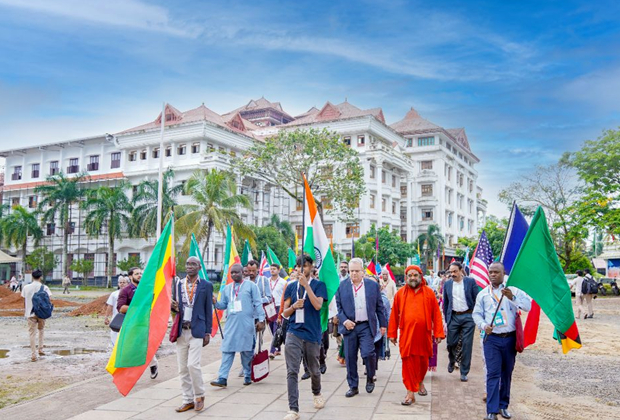
Amrita Vishwa Vidyapeetham organised the International Conference on Sustainable & Resilient Futures (ICSRF 2025) at its Amritapuri campus in Kerala during late August and early September 2025. The four-day international conference, themed “Experiential Learning, Inclusiveness & Sustainable Innovations,” brought together more than 700 participants and 80 speakers from over 20 countries. The event was organised by Amrita’s UNESCO Chair on Experiential Learning for Sustainable Innovation and Development, the Amrita School for Sustainable Futures and the SustIN network. It provided an international platform for representatives from government institutions, United Nations agencies, non-governmental organisations, academic institutions, industry and civil society to exchange ideas and discuss collaborative approaches to achieving the United Nations Sustainable Development Goals (SDGs).
The conference welcomed distinguished representatives from national and international organisations, including Mr Tim Curtis, Director of the UNESCO New Delhi Regional Office for South Asia; Smt Uma Mahadevan Dasgupta IAS, Additional Chief Secretary and Development Commissioner, Government of Karnataka; and Shri Shaji K.V., Chairman of NABARD. Representatives from UN ESCAP, TERI, international universities and other organisations also participated. Their involvement brought together diverse perspectives on public policy, community development, sustainable financing, environmental protection and social innovation, encouraging discussions that connected government priorities with academic research and practical experiences from different sectors.
A key feature of ICSRF 2025 was its emphasis on cross-sectoral dialogue and cooperation. The conference featured nine thematic tracks covering governance and global SDG impact, climate action, disaster risk reduction, sustainable agriculture, food security, healthcare, education, circular economy, livelihoods and artificial intelligence for sustainability. The dedicated track on Governance, Policy and Global SDG Impact created opportunities for researchers, policymakers, institutional leaders and development practitioners to discuss sustainability challenges, share experiences and explore approaches to strengthening cooperation between organisations working towards common development goals.
The NGO Conclave formed an important part of the conference, bringing together civil society organisations from across India to discuss their experiences in community development and grassroots sustainability initiatives. The discussions encouraged interaction between NGOs, academic researchers and representatives of other institutions, creating opportunities to understand local development challenges and identify areas for future collaboration. By connecting community-level experiences with academic knowledge and institutional perspectives, the conclave helped strengthen dialogue on social inclusion, environmental sustainability, rural development and community resilience.
Another important initiative was the Investments for Innovation (I4I) Roundtable, which brought together representatives from the Gates Foundation, Asian Development Bank, EkStep Foundation, Economic Research Institute for ASEAN and East Asia (ERIA), and industry organisations. The roundtable provided a platform for discussing sustainable development financing, social innovation and opportunities for collaboration between development agencies, financial institutions, businesses and academic researchers. Participants explored how financial support, technological innovation and institutional cooperation could help develop practical solutions to social and environmental challenges.
The conference also featured panel discussions involving representatives from government, academia, industry and civil society on multi-stakeholder governance, sustainability in education, entrepreneurship, finance and institutional cooperation. These discussions encouraged participants to exchange knowledge, understand different organisational perspectives and explore opportunities for working together on sustainability-related initiatives. The participation of organisations from multiple sectors highlighted the importance of cooperation in addressing challenges that extend beyond the responsibilities of any single institution.
ICSRF 2025 also witnessed the launch of three digital platforms: the SREE geo-platform for community-led resilience, GeoSanskriti for preserving intangible cultural heritage, and Digital Twin Rural Clusters for climate adaptation and rural development. These initiatives demonstrated how technology, academic research and community knowledge can be brought together to support sustainable development. The platforms also opened opportunities for engagement among researchers, public institutions, technology professionals and local communities. Environmental responsibility was incorporated into the organisation of the event, which was conducted as a carbon-neutral conference under the ISO 14068 standard. This reflected Amrita Vishwa Vidyapeetham’s efforts to integrate sustainability practices into major academic gatherings while encouraging participants to consider environmental responsibility as part of broader development planning.
Through ICSRF 2025, Amrita Vishwa Vidyapeetham played an active role in bringing together government representatives, international agencies, NGOs, researchers, industry professionals and community organisations for meaningful discussions on the Sustainable Development Goals. The conference encouraged knowledge sharing, strengthened connections between institutions and created opportunities to explore collaborative approaches to sustainable development. By facilitating dialogue across different sectors and regions, Amrita contributed to building relationships and encouraging collective action on challenges related to poverty, healthcare, education, climate change, environmental sustainability and community development. The conference particularly reflected the importance of SDG 17, Partnerships for the Goals, while also addressing interconnected priorities under SDG 2, SDG 3, SDG 4, SDG 11, SDG 12, SDG 13 and SDG 16. Through continued engagement with national and international partners, Amrita Vishwa Vidyapeetham seeks to strengthen cooperation, encourage shared learning and support practical initiatives that contribute to sustainable and inclusive development.
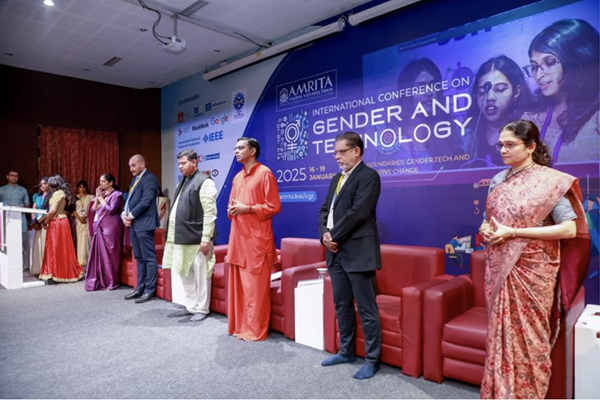
Amrita Vishwa Vidyapeetham organised the International Conference on Gender and Technology (ICGT 2025) from 16 to 19 January 2025 at its Amritapuri campus in Kerala, in collaboration with UNESCO and IEEE. The four-day conference, themed “Beyond Boundaries: Gender, Tech and Transformative Change,” brought together approximately 500 participants from government institutions, international organisations, academia, industry, civil society and research communities. With more than 60 keynote speakers, panellists and session chairs, the event provided an international platform for discussing gender equality, inclusive technological development and the role of different sectors in creating opportunities for women and underrepresented communities.
The conference encouraged dialogue among policymakers, technology professionals, researchers, industry representatives and development organisations on challenges related to gender inequality in science, technology and artificial intelligence. Representatives from organisations such as UNESCO, the Asian Development Bank, Google and Fractal Analytics participated in discussions on women’s participation in the technology sector, gender-sensitive innovation, ethical artificial intelligence and the importance of ensuring that technological progress benefits all sections of society. These interactions brought together perspectives from public policy, business, research and community development, encouraging greater understanding of the barriers women face in accessing technological opportunities.
A major focus of ICGT 2025 was strengthening cooperation between government agencies, academic institutions, technology companies and civil society organisations. The sessions explored how education, public policy, responsible technological development and institutional support can help reduce gender disparities. Participants discussed women’s under-representation in technology-related professions, challenges in accessing digital resources and opportunities to develop more inclusive approaches to technological innovation. By bringing together stakeholders from different sectors, the conference created opportunities for sharing experiences, exchanging research findings and exploring collaborative solutions to common challenges.
Academic research formed an important part of the conference, with more than 90 research papers accepted for presentation. Researchers and professionals shared findings on gender and technology, digital inclusion, artificial intelligence and social transformation. These discussions connected academic knowledge with practical challenges faced by policymakers, industries and communities, encouraging participants to consider how research can inform institutional practices, technological development and public policy.
One of the significant developments during the conference was the inauguration of the South Asia Chapter of UNESCO’s Women4Ethical AI network, co-chaired by Amrita Vishwa Vidyapeetham. The launch was attended by Ms Gabriela Ramos, UNESCO Assistant Director-General for Social and Human Sciences, and Dr Rama Devi Lanka, Director of Emerging Technologies, Government of Telangana. The chapter brings together stakeholders from India, Bangladesh, Bhutan, Nepal, the Maldives and Sri Lanka to encourage regional cooperation on gender equality and responsible artificial intelligence.
The Women4Ethical AI South Asia Chapter provides a platform for continued engagement among policymakers, researchers, technology professionals and organisations working towards inclusive technological development. Its areas of focus include gender-sensitive AI policies, regulatory incentives, opportunities for women’s participation in emerging technologies and career guidance for women. The initiative extends the discussions beyond the conference by establishing a regional network through which participating institutions can share knowledge and explore opportunities for collaboration.
Through ICGT 2025, Amrita Vishwa Vidyapeetham brought together government representatives, international organisations, industry leaders, researchers and civil society groups to discuss the relationship between gender equality and technological development. The conference encouraged meaningful exchanges between sectors that influence how technology is designed, governed and made accessible to society. It also provided opportunities to strengthen international relationships and identify shared priorities for promoting responsible innovation and equal participation in the digital economy.
The conference addressed several interconnected Sustainable Development Goals, particularly SDG 5 (Gender Equality), SDG 9 (Industry, Innovation and Infrastructure), SDG 10 (Reduced Inequalities) and SDG 17 (Partnerships for the Goals). By initiating international discussions and supporting regional cooperation through the Women4Ethical AI network, Amrita Vishwa Vidyapeetham contributed to ongoing efforts to develop inclusive technologies, strengthen gender-responsive policies and encourage collaboration among institutions working towards a more equitable digital future.
Amrita Vishwa Vidyapeetham participated in the Civil 20 (C20) South Africa Summit 2025, contributing to international discussions on sustainable development, social inclusion and global cooperation. The Civil 20 is the official civil society engagement group of the G20, providing a platform for non-governmental organisations, academic institutions, community representatives and development organisations to share their perspectives and recommendations with G20 policymakers. In 2025, the C20 process brought together more than 3,000 civil society organisations across 14 working groups, encouraging dialogue on important social, economic and environmental challenges.
Amrita’s participation built upon its earlier involvement in the Civil 20 India process during India’s G20 Presidency in 2023, when the university’s Chancellor, Sri Mata Amritanandamayi Devi (Amma), served as Chair of C20 India. This experience strengthened Amrita’s engagement with international civil society networks and created opportunities for continued participation in discussions on inclusive development, social responsibility and sustainability.
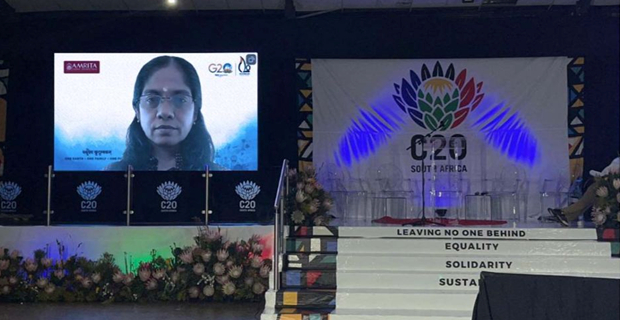
At the C20 South Africa Summit 2025, Dr Krishnashree Achuthan of Amrita Vishwa Vidyapeetham addressed the gathering on behalf of Civil 20 India. Her participation provided an opportunity to share perspectives from India’s civil society engagement and contribute to conversations involving international organisations, development practitioners, policymakers and representatives of community-based institutions. The summit encouraged participants to exchange experiences, discuss common challenges and explore ways to strengthen cooperation between civil society and government institutions.
The discussions covered several interconnected areas of sustainable development, including international financial governance, debt justice, gender equality, the care economy, climate change, environmental justice, disability inclusion, ethical artificial intelligence and just transitions. These issues highlighted the importance of bringing together different sectors to address challenges that affect communities across countries. Participants examined how public policies, institutional cooperation, technological developments and community participation can contribute to more inclusive and sustainable societies.
A central aspect of the C20 process was connecting the experiences and concerns of civil society organisations with discussions taking place at the G20 level. Through its working groups and international consultations, the C20 provided opportunities for organisations working in education, healthcare, technology, environmental sustainability, social justice and community development to contribute their perspectives to broader policy conversations. This approach encouraged interaction between grassroots organisations, researchers, government representatives and international development stakeholders.
Amrita’s involvement in the summit also reflected its continued interest in responsible technological development and inclusive innovation. Discussions on ethical artificial intelligence, disability inclusion and gender equality were particularly relevant to the university’s work in technology, social development and community engagement. By participating in these international conversations, Amrita contributed academic and institutional perspectives while learning from the experiences of organisations working in different social and geographical contexts. The summit further highlighted the importance of cooperation between civil society and public institutions in addressing global development challenges. Issues such as climate justice, equitable economic opportunities, gender-sensitive policies and responsible technology governance require coordinated efforts across governments, universities, industries and community organisations. The C20 platform encouraged these stakeholders to identify shared priorities and strengthen dialogue on policies and approaches that support sustainable development.
Through its participation in the Civil 20 South Africa Summit 2025, Amrita Vishwa Vidyapeetham continued its engagement with international civil society networks and global discussions on the Sustainable Development Goals. The university’s representation provided an opportunity to contribute to cross-sectoral dialogue, exchange knowledge with international stakeholders and maintain connections with organisations working towards social, economic and environmental sustainability.
The engagement was particularly relevant to SDG 5 (Gender Equality), SDG 10 (Reduced Inequalities), SDG 13 (Climate Action), SDG 16 (Peace, Justice and Strong Institutions) and SDG 17 (Partnerships for the Goals). By contributing to discussions involving civil society, international institutions and policymakers, Amrita Vishwa Vidyapeetham reinforced the importance of collaboration, inclusive decision-making and shared responsibility in addressing global development challenges.
In December 2025, Amrita Vishwa Vidyapeetham organised the AI Safety Conclave, bringing together government officials, international organisations, industry experts, academic researchers and civil society representatives to discuss the responsible development and use of artificial intelligence. The conclave, themed “Safe AI for the Global South,” was organised as a lead-up event to the Government of India’s India AI Impact Summit 2026. Approximately 300 participants attended in hybrid mode, creating opportunities for dialogue on how artificial intelligence can be developed and applied safely, ethically and inclusively across different sectors of society.
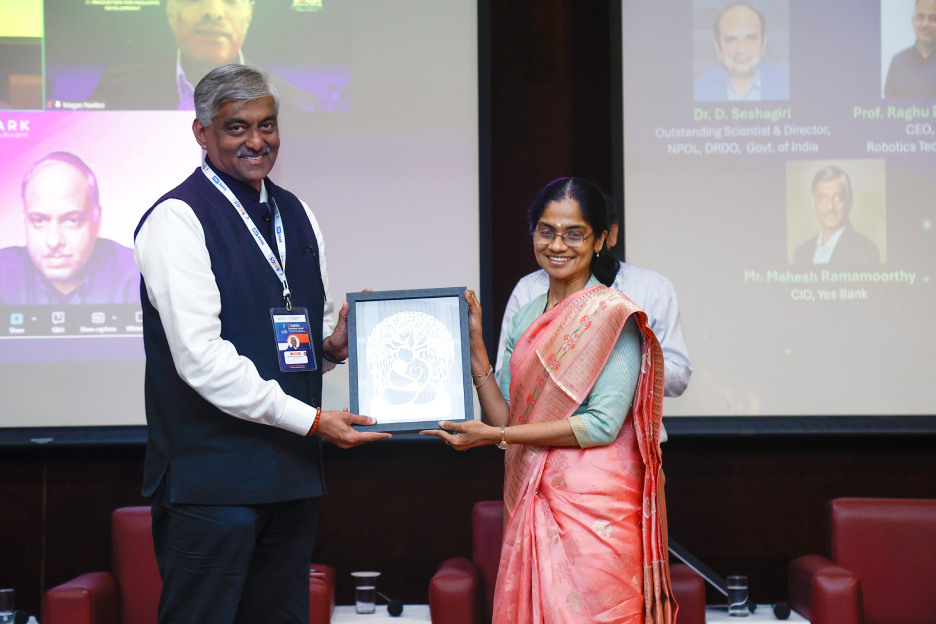
The conclave featured distinguished speakers from national and international institutions, including Shri Abhishek Singh, Additional Secretary at the Ministry of Electronics and Information Technology (MeitY) and CEO of the IndiaAI Mission; Dr Avinash Ramtohul, Minister of Information and Communication Technology, Republic of Mauritius; Ms Gabriela Ramos, Assistant Director-General for Social and Human Sciences at UNESCO; and Dr D. Seshagiri, Director of the Naval Physical and Oceanographic Laboratory (NPOL), DRDO. Their participation brought together perspectives from government, international policymaking, scientific research and technology development, encouraging discussions on the opportunities and challenges associated with the growing use of artificial intelligence.
A central focus of the conclave was strengthening cooperation between different sectors in addressing AI safety, governance and accountability. Discussions examined how governments, universities, technology companies and civil society organisations can work together to develop responsible AI systems while protecting public interests. Participants explored the importance of ethical principles, transparency, human oversight and institutional responsibility in ensuring that emerging technologies are developed and used in ways that benefit society.
The conclave featured panel discussions on the use of safe and ethical artificial intelligence in healthcare, education, banking, energy and public services. Experts discussed how AI is increasingly influencing decision-making and service delivery in these sectors, as well as the need to identify and manage potential risks. These conversations brought together professionals from different fields to exchange experiences and consider how technological innovation can be balanced with safety, reliability, fairness and public accountability.
Special attention was given to the challenges and opportunities of AI adoption in the Global South, where differences in technological infrastructure, access to digital resources and institutional capacity can influence how emerging technologies are implemented. Participants discussed the importance of developing AI governance approaches that consider local conditions and the needs of diverse communities. The discussions also highlighted the role of international cooperation in supporting responsible innovation and ensuring that the benefits of artificial intelligence are accessible beyond technologically advanced regions.
An important outcome of the conclave was the release of a white paper titled “Principles for Ethical and Safe Agentic AI Orchestration Across Infrastructure Gradients.” The document presented principles and safety guidelines for the responsible development and deployment of advanced AI systems, particularly in critical sectors in India and other countries of the Global South. It provided a foundation for further discussion among policymakers, researchers, technology developers and institutions working on AI governance and safety.
The conclave also created opportunities for engagement between public institutions, international organisations, academic researchers and technology professionals on the broader social implications of artificial intelligence. Discussions on inclusive AI governance highlighted the importance of considering different perspectives when developing technological policies and standards. By encouraging participation from multiple sectors, the event supported knowledge sharing and helped identify areas where continued cooperation could strengthen responsible AI development.
Through the AI Safety Conclave 2025, Amrita Vishwa Vidyapeetham provided a platform for national and international stakeholders to exchange ideas on ethical technology, public policy and sustainable development. The event connected discussions on technological innovation with wider concerns relating to healthcare, education, equality, institutional accountability and access to essential services. By bringing together representatives from government, international agencies, industry, academia and civil society, Amrita encouraged cross-sectoral dialogue on how artificial intelligence can be developed responsibly to meet the needs of diverse communities. The initiative addressed several interconnected Sustainable Development Goals, particularly SDG 3 (Good Health and Well-being), SDG 4 (Quality Education), SDG 9 (Industry, Innovation and Infrastructure), SDG 10 (Reduced Inequalities), SDG 16 (Peace, Justice and Strong Institutions) and SDG 17 (Partnerships for the Goals). The conclave reflected Amrita Vishwa Vidyapeetham’s continued efforts to encourage international cooperation, responsible technological innovation and constructive dialogue among institutions working towards inclusive and sustainable development.
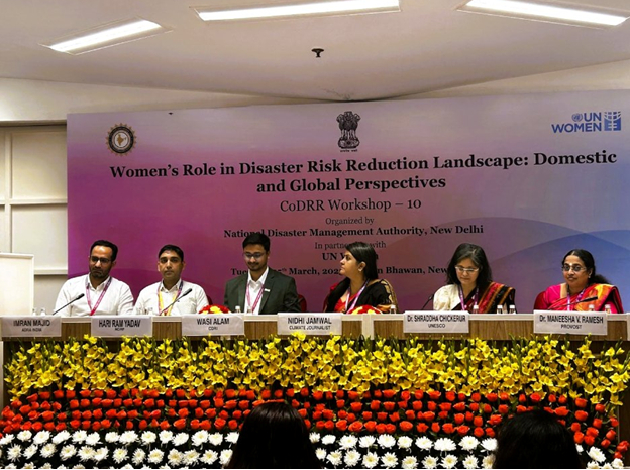
In April 2025, Amrita Vishwa Vidyapeetham participated in the International Workshop on Women’s Role in the Disaster Risk Reduction Landscape, organised by India’s National Disaster Management Authority (NDMA) in collaboration with UN Women. The workshop brought together representatives from government ministries, international organisations, disaster management agencies, academic institutions and civil society to discuss the importance of women’s participation in disaster preparedness, climate resilience and community development. Dr Maneesha V. Ramesh, Provost of Amrita Vishwa Vidyapeetham, was invited as a panellist, contributing the university’s experience in community-based sustainability and capacity-building initiatives.
The workshop provided a platform for dialogue among organisations working in disaster management, gender equality, environmental sustainability and community resilience. Participating institutions included the Ministry of Home Affairs, Ministry of Women and Child Development, National Disaster Response Force, World Food Programme, European Commission, Global Facility for Disaster Reduction and Recovery (GFDRR) of the World Bank, Coalition for Disaster Resilient Infrastructure (CDRI) and ADRA India. Their participation brought together perspectives from government, international development agencies, humanitarian organisations and research institutions, encouraging discussion on how different sectors can cooperate to strengthen disaster preparedness and support vulnerable communities.
A central focus of the workshop was recognising women as active contributors to disaster risk reduction rather than viewing them only as vulnerable populations during emergencies. Discussions explored the importance of women’s leadership, community participation, access to resources and opportunities for skill development. Participants considered how greater involvement of women in planning, decision-making and local resource management could strengthen disaster preparedness and help communities respond more effectively to environmental and climate-related challenges.
During the session on skill and capacity building for women, Dr Maneesha V. Ramesh shared Amrita Vishwa Vidyapeetham’s experience of working with women in more than 5,000 communities on water sustainability. Drawing on the university’s community engagement initiatives, she highlighted the importance of equipping women with practical skills to measure, monitor and manage local water resources. Her presentation demonstrated how community participation, scientific knowledge and appropriate technologies can support local decision-making and encourage women to take leadership roles in managing essential resources.
The discussions also highlighted the relationship between water sustainability, environmental protection and disaster resilience. Communities facing water scarcity, flooding and changing climatic conditions often require locally appropriate approaches to resource management. By involving women in monitoring water availability and participating in community planning, such initiatives can strengthen local knowledge and support more inclusive approaches to managing environmental challenges. Amrita’s experience provided a practical example of how academic institutions can work with communities to connect research and technological solutions with everyday development needs.
Another important aspect of the workshop was the opportunity for dialogue between policymakers, international agencies, disaster management professionals and organisations working directly with communities. Participants exchanged experiences on capacity building, gender-responsive disaster planning and the importance of including women’s perspectives in disaster risk reduction policies. These discussions encouraged greater understanding of how government programmes, academic research, community knowledge and international cooperation can complement one another in addressing disaster-related challenges.
Amrita Vishwa Vidyapeetham’s participation reflected its continued engagement in national and international discussions on sustainability, gender equality and community resilience. Through Dr Maneesha V. Ramesh’s contribution, the university shared insights from its field-based work and participated in discussions on strengthening women’s leadership in disaster risk reduction. The workshop also created opportunities to exchange knowledge with government agencies, international development organisations and civil society representatives working towards similar objectives. The initiative demonstrated the importance of cross-sectoral cooperation in addressing challenges that connect environmental sustainability, gender equality and disaster preparedness. By participating in discussions involving government ministries, United Nations agencies, humanitarian organisations and research institutions, Amrita Vishwa Vidyapeetham contributed to broader conversations on community resilience and inclusive development. The engagement reflected the objectives of SDG 5 (Gender Equality), SDG 6 (Clean Water and Sanitation), SDG 11 (Sustainable Cities and Communities), SDG 13 (Climate Action) and SDG 17 (Partnerships for the Goals), particularly through collaboration, knowledge exchange and the promotion of women’s participation in sustainable development.
In May 2025, Amrita Vishwa Vidyapeetham participated in the third pre-summit of the World Summit on Disaster Management (WSDM 2025), held at the Jawaharlal Nehru Centre for Advanced Scientific Research (JNCASR) in Bengaluru. Organised by the Uttarakhand Council for Science and Technology (UCOST), Government of Uttarakhand, the event focused on the theme “Technology for Climate & Disaster Resilience.” The pre-summit provided a platform for discussions on the role of science, technology, research and public policy in addressing climate-related risks and strengthening disaster preparedness. Dr Maneesha V. Ramesh, Provost of Amrita Vishwa Vidyapeetham, participated as a Special Guest speaker, sharing the university’s experience in disaster management research and community-based resilience initiatives.
The pre-summit encouraged dialogue between academic researchers, government institutions, technology experts and disaster management professionals on the growing challenges associated with climate change and natural disasters. Discussions highlighted the importance of combining scientific developments with practical disaster preparedness strategies and community participation. The event also created opportunities for exchanging knowledge on how technological innovations can support early warning, risk assessment and more effective responses to environmental hazards.
During her presentation titled “Science and Technology for Survival,” Dr Maneesha V. Ramesh discussed Amrita Vishwa Vidyapeetham’s research and practical applications of artificial intelligence and sensor-based technologies for landslide early-warning systems. She highlighted the university’s work in the Western Ghats and Northeast India, where landslide risks pose serious challenges to communities living in environmentally sensitive regions. Her presentation demonstrated how scientific research, real-time environmental monitoring and advanced technologies can contribute to identifying potential hazards and improving disaster preparedness.
A significant part of her address focused on the importance of developing disaster management solutions that respond to the actual needs of communities. Drawing on Amrita’s experience of working with more than 2,200 communities across India, she highlighted the value of involving local residents in understanding environmental risks, strengthening preparedness and developing appropriate responses to disasters. These experiences illustrated how academic institutions can work alongside communities and public agencies to connect research findings with practical approaches to disaster risk reduction.
The presentation also emphasised the need for human-centred disaster management policies. While advanced technologies can provide valuable information for monitoring environmental hazards, their effectiveness also depends on how this information reaches communities and supports timely action. Dr Ramesh highlighted the importance of integrating scientific knowledge, community awareness and local participation into disaster management planning at state and national levels. This perspective encouraged dialogue on how research institutions, government agencies and communities can cooperate to develop disaster resilience strategies that are both technologically informed and socially inclusive.
Another important aspect of the pre-summit was the opportunity to connect research and technological innovation with broader policy discussions. Climate-related disasters often affect infrastructure, livelihoods, public services and vulnerable communities, making cooperation among different sectors essential. Through discussions on technology, governance and preparedness, the event encouraged participants to consider how academic research and public institutions can work together to strengthen early-warning capabilities, improve risk communication and support community resilience.
Amrita Vishwa Vidyapeetham’s participation also provided an opportunity to share its experience in developing technological solutions for real-world environmental challenges. The university’s work on landslide monitoring and early-warning systems demonstrated the relevance of interdisciplinary research involving engineering, artificial intelligence, environmental science and community engagement. By presenting these experiences at a government-organised forum, Amrita contributed practical research perspectives to discussions on climate resilience and disaster management.
Through its participation in the third pre-summit of WSDM 2025, Amrita Vishwa Vidyapeetham contributed to cross-sectoral dialogue connecting scientific research, technological innovation, government policy and community development. The engagement highlighted the importance of cooperation between universities, government agencies, disaster management professionals and local communities in addressing climate-related risks. It also reinforced the value of sharing research-based knowledge and field experiences to support informed decision-making and more resilient communities.
The initiative was particularly relevant to SDG 9 (Industry, Innovation and Infrastructure), SDG 11 (Sustainable Cities and Communities), SDG 13 (Climate Action) and SDG 17 (Partnerships for the Goals). By contributing to a government-led platform for dialogue on disaster resilience, Amrita Vishwa Vidyapeetham supported the exchange of knowledge and ideas that can inform future collaboration in disaster preparedness, climate adaptation and sustainable community development.
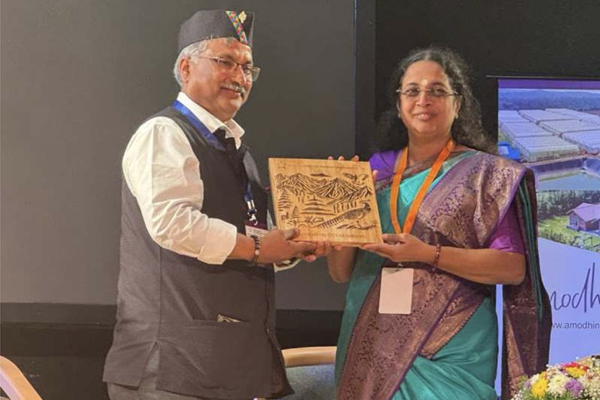
In April 2025, Amrita Vishwa Vidyapeetham participated in the International Conference on Technical and Vocational Education and Training (TVET) and Skills Development, held at Symbiosis Skills and Professional University in Pune in collaboration with UNESCO. The conference brought together educators, researchers, policymakers, industry professionals and representatives of international organisations to discuss the future of vocational education, skills development and equal access to learning opportunities. Dr Bhavani Rao, Amrita’s UNESCO Chair on Gender Equality and Women’s Empowerment, participated as a panellist, contributing her experience in gender equality, community development and women’s participation in science and technology.
A key discussion at the conference focused on “Understanding the Barriers to Women in STEM,” a panel chaired by a UNESCO Programme Specialist. The session examined the challenges that women and girls face in pursuing education and careers in science, technology, engineering and mathematics. Participants discussed how social expectations, family circumstances, educational opportunities and workplace environments can influence women’s participation in technical fields. The panel encouraged dialogue on how educational institutions, government agencies, industry and communities can work together to create more inclusive learning and employment opportunities.
During the discussion, Dr Bhavani Rao shared insights from Amrita Vishwa Vidyapeetham’s grassroots research and community engagement initiatives. Drawing on her experience working with women and communities, she highlighted how barriers to participation in STEM often begin long before women enter higher education or professional employment. She explained that social attitudes, limited exposure to technical education, unequal access to resources and a lack of encouragement can influence the educational and career choices available to girls and women.
Dr Rao also drew on her experience with the Civil 20 India 2023 Working Group on Gender Equality, which brought together civil society organisations and other stakeholders to discuss women’s empowerment and inclusive development. She emphasised that improving women’s participation in STEM requires sustained efforts involving families, schools, higher education institutions, employers and communities. While supportive policies are important, she highlighted the need for practical initiatives that encourage girls to explore technical subjects, build confidence and access opportunities for education, training and professional growth.
The conference provided an opportunity for representatives from different sectors to exchange perspectives on the relationship between technical education, employment and gender equality. Discussions highlighted the importance of connecting educational programmes with industry requirements while ensuring that women and other underrepresented groups have fair opportunities to develop relevant skills. The exchange of experiences between academic institutions, international organisations and industry professionals encouraged participants to consider how vocational education can respond to changing workforce needs without leaving sections of society behind.
Another important aspect of the discussion was the role of institutional cooperation in addressing gender disparities in technical education. Schools and universities can help students develop interest and confidence in STEM subjects, while industries can contribute through training opportunities, mentorship and inclusive employment practices. Government agencies and international organisations can support these efforts through educational programmes, policy frameworks and knowledge sharing. By bringing these perspectives together, the conference encouraged a more coordinated approach to improving women’s participation in education and employment.
Amrita Vishwa Vidyapeetham’s participation reflected its continued engagement in discussions on gender equality, education and community empowerment. Through Dr Bhavani Rao’s contribution, the university shared experiences from its research and field-based initiatives while participating in wider conversations on how education and skills development can create opportunities for women. The discussion also provided a platform for learning from the experiences of other institutions and exploring approaches to overcoming barriers faced by women in technical fields.\
The International Conference on TVET and Skills Development demonstrated the importance of cooperation among universities, UNESCO, policymakers, industry representatives and civil society in addressing challenges related to inclusive education and workforce development. By participating in the panel on women in STEM, Amrita Vishwa Vidyapeetham contributed to cross-sectoral dialogue on equal educational opportunities, skills development and women’s economic participation. The engagement was particularly relevant to SDG 4 (Quality Education), SDG 5 (Gender Equality), SDG 8 (Decent Work and Economic Growth) and SDG 17 (Partnerships for the Goals). Through knowledge sharing and participation in international discussions, Amrita continued to encourage collaboration among educational institutions, public organisations and industry stakeholders working towards inclusive and sustainable development.
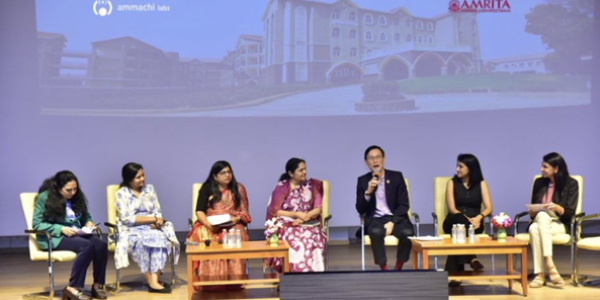
In March 2025, Amrita Vishwa Vidyapeetham organised a three-day International Conference on Synergising Eco Interventions for Achieving Sustainable Development Goals at its Kochi campus in Kerala. The conference was organised by the Departments of Commerce and Management and Visual Media and Communication, bringing together academic researchers, government representatives, policymakers, industry professionals and sustainability experts to discuss environmental challenges and explore practical approaches to sustainable development. The event provided a platform for participants from different sectors to share knowledge, exchange experiences and examine how collective efforts can support environmental protection and responsible development.
The conference focused on the importance of connecting academic research, public policy and industry practices to address pressing environmental concerns. Discussions explored ecological preservation, sustainable resource management, technological innovation and environmentally responsible products and services. By bringing together individuals with different professional backgrounds, the conference encouraged participants to look beyond their respective fields and consider how cooperation among educational institutions, government agencies, businesses and research organisations can contribute to achieving the Sustainable Development Goals.
The inaugural keynote address was delivered by Dr Kannan C. Warrier, Director of the Kerala Forest Research Institute (KFRI), a research institution associated with the Government of Kerala. His participation brought a public-sector research perspective to discussions on environmental conservation and sustainable development. Dr Harsha Bhargavi from the Ministry of Culture, Government of India, also participated as a featured speaker, contributing to the exchange of ideas between government institutions and the academic community. Researchers from Indiana Tech University in the United States and the Centre for Public Health Research added further perspectives, encouraging discussions that connected environmental sustainability with research, innovation and wider social concerns.
An important feature of the conference was its emphasis on the relationship between environmental protection and responsible economic development. Discussions on ecological preservation highlighted the need to safeguard natural resources, protect ecosystems and encourage practices that reduce environmental damage. Participants explored how research findings, technological solutions and institutional cooperation can inform approaches to conservation and sustainable resource use. These conversations reflected the importance of involving different sectors in addressing challenges that affect both the environment and society.
Another area of discussion was the development and promotion of eco-friendly products and responsible consumption practices. Participants considered the importance of reducing environmental impacts through sustainable production, innovation and greater awareness among businesses and consumers. The involvement of commerce, management and communication disciplines contributed to conversations on how sustainability can be integrated into business activities, organisational decision-making and public awareness efforts. The conference also created opportunities for interaction between national and international academic institutions, public-sector research organisations and professionals working on sustainability-related issues. These exchanges encouraged participants to share their experiences, understand different approaches to environmental challenges and identify common areas of interest. The involvement of government-affiliated experts and international researchers helped connect local environmental concerns with broader discussions on sustainable development.
The conference also examined the role of artificial intelligence and emerging technologies in supporting sustainability. Discussions explored opportunities to apply technological innovations to environmental monitoring, resource management and the development of sustainable practices. By connecting researchers with professionals from other sectors, the event encouraged the exchange of ideas on how technology can support environmental decision-making and contribute to more effective sustainability initiatives.
Through this conference, Amrita Vishwa Vidyapeetham played an active role in facilitating dialogue among academic institutions, government representatives, industry professionals and researchers on environmental sustainability. By providing a shared platform for discussions on ecological conservation, technological innovation and responsible consumption, the university encouraged greater cooperation and knowledge exchange among sectors working towards common environmental goals.
The initiative contributed to discussions relevant to SDG 12 (Responsible Consumption and Production), SDG 13 (Climate Action), SDG 15 (Life on Land) and SDG 17 (Partnerships for the Goals). The conference reflected Amrita Vishwa Vidyapeetham’s continued efforts to encourage interdisciplinary learning, strengthen connections between research and public policy, and promote collaboration in addressing environmental and sustainable development challenges.
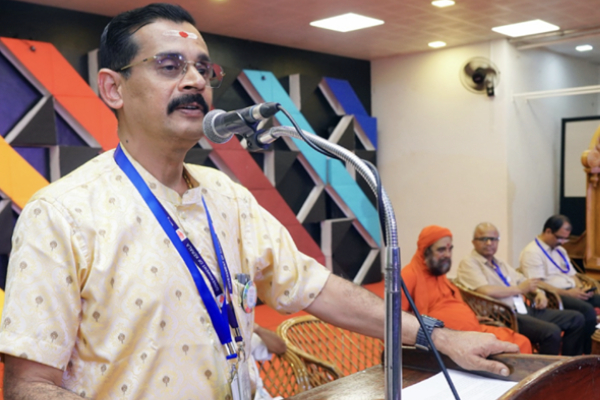
On 9 June 2025, Amrita Vishwa Vidyapeetham participated in the second FICCI Higher Education Committee meeting of 2025, organised virtually by the Federation of Indian Chambers of Commerce and Industry (FICCI). The meeting brought together approximately 45 senior leaders from universities and higher education institutions across India to discuss emerging challenges, opportunities and policy priorities in the higher education sector. Dr Prashant R. Nair represented Amrita Vishwa Vidyapeetham as a committee member, contributing the university’s perspectives on the growing role of artificial intelligence in education and the importance of collaboration between academic institutions, industry and policymakers.
The FICCI Higher Education Committee provides an important platform for dialogue between educational institutions and industry representatives on matters relating to higher education development, innovation, employability and public policy. Through its meetings and knowledge reports, the committee brings together institutional expertise and industry perspectives to develop recommendations for the Government of India. The discussions encourage universities and other stakeholders to share their experiences, identify common challenges and explore approaches to strengthening the quality, accessibility and relevance of higher education.
During the meeting, participants discussed ongoing initiatives of the committee and contributed ideas for FICCI’s knowledge reports on higher education. These reports are intended to inform policy discussions and provide recommendations on issues affecting educational institutions, students and the wider economy. The participation of senior academic leaders created opportunities for exchanging perspectives on how universities can respond to technological changes, evolving industry requirements and the need for continuous improvements in teaching and learning.
A significant area of Amrita’s contribution was artificial intelligence in education. Dr Prashant R. Nair provided inputs to FICCI’s forthcoming knowledge report on AI in education, sharing perspectives relevant to the use of emerging technologies in academic environments. Artificial intelligence is increasingly influencing how educational institutions approach teaching, learning, research and institutional management. Discussions on this subject provided an opportunity to consider how universities can adopt new technologies responsibly while maintaining educational quality, fairness and accessibility.
The meeting also highlighted the importance of cooperation between universities, industry organisations and policymakers in addressing challenges associated with technological innovation. Academic institutions contribute research expertise and practical experience in education, while industry representatives offer insights into emerging skills and workforce requirements. Policy engagement through platforms such as FICCI helps connect these perspectives and supports informed discussion on future directions for higher education.
Amrita Vishwa Vidyapeetham’s involvement reflected its continued participation in national discussions on educational development, innovation and responsible technology adoption. By contributing to the committee’s deliberations and knowledge-report preparation, the university had an opportunity to share academic perspectives with institutional leaders and support the exchange of ideas that may inform future education policies and practices.
The meeting provided a platform for cooperation among academic leaders, industry stakeholders and organisations engaged in policy development. Rather than approaching higher education challenges from the perspective of individual institutions alone, the committee encouraged participants to consider shared priorities and collective approaches to improving education and innovation across India.
Through its participation in the FICCI Higher Education Committee meeting, Amrita Vishwa Vidyapeetham contributed to national cross-sectoral dialogue on the future of higher education and the responsible use of artificial intelligence. The engagement demonstrated how universities can participate in wider policy conversations by working with industry-led organisations and other academic institutions to exchange knowledge, contribute recommendations and explore opportunities for educational improvement.
The discussions were particularly relevant to SDG 4 (Quality Education), SDG 9 (Industry, Innovation and Infrastructure) and SDG 17 (Partnerships for the Goals). By participating in a national committee that connects higher education institutions, industry and government policy processes, Amrita Vishwa Vidyapeetham supported cooperation and knowledge sharing on educational innovation and sustainable institutional development.
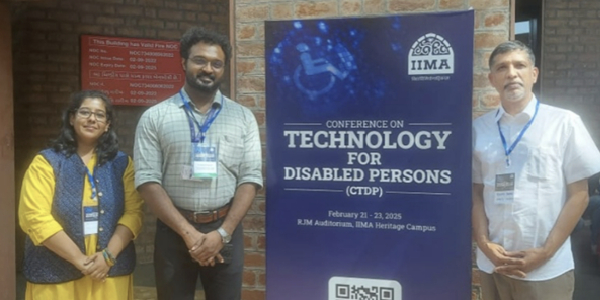
From 21 to 23 February 2025, Amrita Vishwa Vidyapeetham participated in the Conference on Technology for Disabled Persons (CTDP), organised by the Centre for Digital Transformation at the Indian Institute of Management Ahmedabad (IIM Ahmedabad). The conference brought together government representatives, academic researchers, disability rights advocates, technology entrepreneurs and organisations working towards improving accessibility for persons with disabilities. Representatives from Amrita CREATE and the Amrita School of Business attended the event, sharing the university’s research and technological initiatives aimed at making education and essential digital services more accessible to the deaf community.
The conference provided an important platform for discussions on how technology can help remove barriers faced by persons with disabilities in education, employment and access to public services. The keynote address was delivered by Shri Rajesh Aggarwal, Secretary, Department of Empowerment of Persons with Disabilities, Ministry of Social Justice and Empowerment, Government of India. His participation highlighted the importance of connecting government initiatives and public policy with academic research, technological innovation and the experiences of persons with disabilities. The involvement of disability rights advocates, researchers and technology developers also encouraged discussions on developing inclusive solutions that respond to the practical needs of different communities.
During the conference, the Amrita team presented its online Indian Sign Language learning platform, developed to support accessible learning opportunities for deaf learners. The platform uses digital technology to make sign language education more widely available, helping address communication and learning barriers. Through this presentation, Amrita contributed its experience in developing educational technologies that respond to the needs of learners who may not be adequately supported by conventional educational resources.
The team also demonstrated an artificial intelligence-driven sign language chatbot designed to improve access to the Government of India’s Unified Mobile Application for New-age Governance (UMANG) services. The technology focuses on making digital government services, including Indian Railways and e-RaktKosh, more accessible to people who communicate through Indian Sign Language. By incorporating sign language into digital interactions, the initiative explores ways to reduce communication difficulties and improve the accessibility of essential public services for the deaf community.
An important aspect of Amrita’s participation was the opportunity to connect academic research with government priorities and the experiences of disability rights organisations. Technologies designed for accessibility require an understanding of the challenges faced by users, the requirements of public service platforms and the possibilities offered by emerging digital tools. The conference encouraged interaction among these different stakeholders, providing opportunities to exchange perspectives on inclusive design, assistive technologies and the role of innovation in improving everyday accessibility.
The discussions also highlighted the importance of involving persons with disabilities and their representative organisations in the development of technological solutions. Their experiences can help researchers and technology developers understand practical barriers and identify features that make digital platforms more useful and accessible. By bringing together government officials, disability advocates, academic institutions and entrepreneurs, the conference encouraged a more collaborative approach to addressing accessibility challenges.
Amrita Vishwa Vidyapeetham’s participation reflected its continued work in developing educational and digital technologies that support persons with disabilities. Through the contributions of Amrita CREATE and the Amrita School of Business, the university shared practical examples of how artificial intelligence, sign language technologies and accessible learning platforms can support greater inclusion. The event also provided an opportunity to learn from other researchers, organisations and innovators working on assistive technologies and disability-inclusive services.
The Conference on Technology for Disabled Persons demonstrated the value of dialogue between government institutions, universities, technology developers and civil society organisations. By presenting its accessibility initiatives and engaging with stakeholders from different sectors, Amrita contributed to conversations on how research and technological innovation can be applied to social challenges. The interaction helped connect developments in assistive technology with wider discussions on inclusive education, accessible public services and equal opportunities for persons with disabilities.
Through its participation in CTDP 2025, Amrita Vishwa Vidyapeetham contributed to cross-sectoral dialogue on disability inclusion, technological accessibility and the responsible use of artificial intelligence. The engagement was particularly relevant to SDG 4 (Quality Education), SDG 9 (Industry, Innovation and Infrastructure), SDG 10 (Reduced Inequalities) and SDG 17 (Partnerships for the Goals). By sharing its work with government representatives, researchers, disability rights advocates and technology entrepreneurs, Amrita supported the exchange of knowledge and encouraged cooperation towards more accessible and inclusive digital services.
On 10 October 2025, Amrita Vishwa Vidyapeetham, through the Amrita School of Business, Kochi, and the Amrita Centre for Policy, organised a Diversity, Equity and Inclusion (DEI) Roundtable titled “From Intent to Impact: Designing a Future for All.” The event brought together representatives from industry, academia, civil society and disability inclusion organisations to discuss how institutions and businesses can create more inclusive environments. The roundtable provided an opportunity for participants to exchange experiences, examine existing challenges and explore practical approaches to promoting equal opportunities, accessibility and meaningful participation for people from diverse backgrounds.
The dialogue included industry representatives from BNY Mellon, Webpun World and Interweave, alongside civil society representatives, including the Director of the Martha Farrell Foundation, and professionals working in disability inclusion. Their participation brought together perspectives from corporate organisations, social development institutions, academic research and community advocacy. The discussions focused on moving beyond general commitments to diversity and inclusion towards practical measures that can improve accessibility, workplace participation and equal opportunities.
Dr Prema Nedungadi, UNESCO Chairholder on Assistive Technologies in Education at Amrita Vishwa Vidyapeetham, led the conversation and shared the university’s research and innovations in accessible technology. She highlighted Amrita’s work in developing artificial intelligence-based assistive solutions, including Indian Sign Language avatars created using approximately 80,000 videos and audio description technologies designed to support people with visual impairments. These initiatives demonstrated how academic research and technological innovation can contribute to reducing communication barriers and improving access to education, information and digital services.
A key focus of the roundtable was understanding how organisations can translate diversity, equity and inclusion policies into meaningful changes in everyday practices. Participants discussed the challenges that individuals with disabilities and people from underrepresented groups may experience in educational institutions, workplaces and digital environments. The conversations highlighted the importance of designing systems and services that consider different needs and abilities, rather than expecting individuals to adapt to environments that may not be accessible to everyone.
The roundtable also explored the value of involving Deaf and neurodivergent individuals directly in the development of inclusive technologies and organisational practices. Participants discussed how solutions are more likely to address practical needs when people with lived experiences contribute to their design and evaluation. This approach encouraged greater cooperation between technology developers, researchers, employers and disability inclusion practitioners, while recognising the importance of listening to the communities that accessibility initiatives are intended to serve.
Another important area of discussion was the need for stronger data, institutional frameworks and policies to support diversity and inclusion. Participants examined gaps in existing approaches and considered how organisations can assess whether their inclusion initiatives are producing meaningful results. The dialogue highlighted the importance of evidence-based decision-making, accountability and continued engagement between industry, academic institutions and civil society organisations.
The involvement of corporate representatives provided opportunities to discuss inclusion from the perspective of workplace practices, recruitment, professional development and organisational responsibility. Civil society representatives contributed insights into social barriers, equal opportunities and the importance of protecting dignity and participation. Amrita’s academic and technological contributions helped connect these perspectives with research and practical innovations in assistive technology. Together, these discussions encouraged a broader understanding of inclusion as a shared responsibility across sectors.
By convening the DEI Roundtable, Amrita Vishwa Vidyapeetham created a platform where industry professionals, academic researchers, disability advocates and civil society representatives could exchange knowledge and discuss common challenges. The event encouraged constructive dialogue on improving accessibility, developing inclusive technologies and strengthening organisational practices that support people from diverse backgrounds. It also demonstrated the importance of collaboration between institutions that influence education, employment, technology and social development. The roundtable was particularly relevant to SDG 4 (Quality Education), SDG 5 (Gender Equality), SDG 8 (Decent Work and Economic Growth), SDG 10 (Reduced Inequalities) and SDG 17 (Partnerships for the Goals). Through this initiative, Amrita Vishwa Vidyapeetham contributed to cross-sectoral dialogue on inclusive development and encouraged greater cooperation among academic institutions, businesses and civil society organisations working to build more accessible and equitable communities
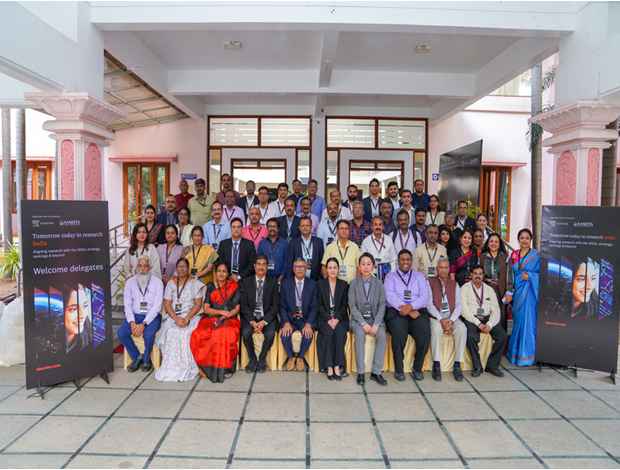
On 13 November 2025, Amrita Vishwa Vidyapeetham co-hosted the third edition of Elsevier’s National Conclave, “Tomorrow Today: Research India 2025,” at its Coimbatore campus. The event brought together more than 60 vice-chancellors, directors, deans and senior academic leaders, along with policymakers and industry representatives, to discuss the future of research and innovation in India. The conclave provided a platform for universities, research institutions and other stakeholders to exchange ideas on strengthening research collaborations, addressing societal challenges and connecting academic research with the United Nations Sustainable Development Goals (SDGs).
The conclave featured representatives from leading educational and research institutions, including IIT Madras, IIT Patna, NIT Tiruchirappalli, Manipal, VIT and the Indian School of Business. The participation of senior academic leaders, policymakers and industry representatives created opportunities for dialogue on the changing research landscape, emerging technologies and the role of universities in addressing national development priorities. The discussions encouraged institutions to consider how research activities can contribute to meaningful improvements in society, alongside advancements in scientific knowledge and technological innovation.
A central focus of the conclave was the importance of aligning academic research with real-world challenges and sustainable development priorities. Participants explored how universities and research organisations can strengthen their contributions to areas such as education, technological advancement, environmental sustainability and community development. The discussions highlighted the need for greater cooperation between academic institutions, government agencies and industry to encourage research that responds to social needs and supports long-term development.
During the conclave, Amrita Vishwa Vidyapeetham shared its experience of connecting institutional research and academic activities with the Sustainable Development Goals. The university presented its journey from institutional rankings and performance assessment towards a broader focus on the societal impact of research, education and community engagement. This perspective encouraged discussions on how universities can look beyond traditional measures of academic performance and consider the practical benefits of their work for communities and society.
Amrita also highlighted its Live-in-Labs® programme, an experiential learning initiative that brings students, faculty members and researchers into rural communities to understand local challenges and develop context-specific solutions. Through this programme, academic knowledge is connected with community experiences, encouraging interdisciplinary research and practical approaches to sustainable development. By sharing its experiences, Amrita provided an example of how universities can integrate research, education and community engagement to address development challenges.
The conclave also encouraged dialogue on strengthening collaboration between higher education institutions and industry. Participants considered how partnerships can support innovation, facilitate knowledge exchange and create opportunities for applying research findings beyond academic settings. The interaction between university leaders, research professionals and industry representatives highlighted the importance of connecting scientific advancements with practical applications that respond to societal and economic needs.
Another important aspect of the event was the exchange of institutional experiences and approaches to research development. Representatives from different universities discussed opportunities to strengthen research ecosystems, encourage interdisciplinary collaboration and improve the relevance of academic research. These conversations created opportunities for institutions to learn from one another and explore collaborative approaches to addressing shared challenges in higher education and research.
By co-hosting the National Conclave with Elsevier, Amrita Vishwa Vidyapeetham helped bring together academic leaders, policymakers, research professionals and industry representatives for discussions on research, innovation and sustainable development. The event encouraged knowledge sharing across institutions and sectors while highlighting the importance of collaborative research in addressing complex social and environmental challenges. It also provided an opportunity for Amrita to share its own experiences in community-oriented research and learn from approaches adopted by other institutions.
The conclave demonstrated the value of cooperation between universities, research organisations, industry and policymakers in advancing sustainable development. By encouraging dialogue on institutional research priorities, community engagement and societal impact, the event supported wider discussions on how academic institutions can contribute to national and global development objectives.
The initiative was particularly relevant to SDG 4 (Quality Education), SDG 9 (Industry, Innovation and Infrastructure) and SDG 17 (Partnerships for the Goals). Through its role as co-host, Amrita Vishwa Vidyapeetham contributed to national cross-sectoral dialogue, strengthened opportunities for institutional cooperation and encouraged approaches that connect academic research and innovation with the needs of society.
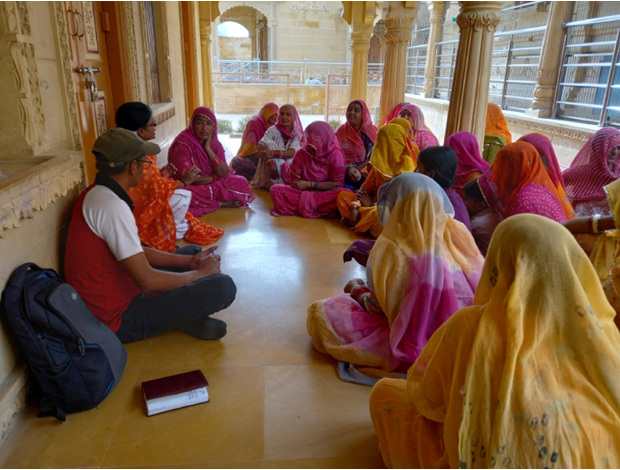
On 14 November 2025, Amrita Vishwa Vidyapeetham, through its Centre for Women’s Empowerment and Gender Equality (CWEGE), launched a community-led women’s empowerment initiative in Harsani and Girabh villages of Barmer district, Rajasthan, with support from Esri India. The programme brings together academic expertise, industry support and grassroots community participation to strengthen women’s opportunities in education, employment, leadership and local decision-making. By working directly with women and self-help groups, Amrita aims to ensure that the initiative responds to the needs and priorities identified by the communities themselves.
The initiative reflects Amrita Vishwa Vidyapeetham’s approach to community development, where local people actively participate in identifying challenges and shaping solutions. Rather than introducing programmes without community consultation, the project encourages women to share their experiences, express their priorities and participate in decisions that affect their families and villages. This approach creates opportunities for dialogue between academic researchers, industry partners, community organisations and local women, helping connect institutional knowledge and resources with practical needs at the grassroots level.
An important component of the initiative is the establishment of a solar-powered Women’s Empowerment Centre in Harsani village. The centre is designed to provide a dedicated space where women can access learning opportunities, develop practical skills and participate in activities that support their personal and professional growth. The use of solar energy also reflects an effort to incorporate environmentally responsible infrastructure into community development activities, particularly in rural areas where reliable access to resources can be a challenge.
To extend these opportunities beyond a single location, the programme also includes mobile training units serving Girabh village. These units are intended to bring educational and skill-development activities closer to women who may face difficulties travelling to established training centres. By taking training directly into communities, the initiative seeks to make participation more accessible and encourage women from different backgrounds to develop new skills.
The programme focuses on vocational education, leadership development and digital literacy. Vocational training is intended to help women build practical capabilities that can support livelihood opportunities and economic independence. Leadership activities aim to strengthen women’s confidence and participation in community decisions, while digital literacy training introduces skills that can help them access information, use technology and engage with emerging economic and educational opportunities.
The involvement of Esri India highlights the importance of cooperation between academic institutions and industry in supporting community development. Such partnerships can bring together research expertise, technological knowledge and practical resources to address challenges faced by rural communities. Amrita’s engagement with women and self-help groups adds an important community perspective, helping ensure that the programme remains connected to local experiences and development priorities.
A key strength of the initiative is its emphasis on women’s participation in decision-making. Community consultations provide opportunities for women to discuss concerns related to education, employment, access to resources and social participation. These conversations can help identify barriers that affect their everyday lives and guide the design of training and support activities. By encouraging women to contribute their ideas and experiences, the programme seeks to strengthen local leadership and support more inclusive community development.
The initiative also demonstrates how universities, private-sector organisations and grassroots groups can contribute different forms of expertise to a shared development effort. Academic institutions can support research, training and programme design, industry partners can contribute technical knowledge and resources, and community members can provide the local understanding needed to make activities relevant and accessible. Bringing these perspectives together encourages cooperation across sectors while recognising the importance of community ownership.
Through this programme, Amrita Vishwa Vidyapeetham continues its engagement with rural communities in Rajasthan, with a particular focus on strengthening women’s access to skills, knowledge and opportunities for leadership. The initiative provides a foundation for continued interaction among researchers, industry professionals, self-help groups and local residents, creating opportunities to develop practical solutions based on community priorities. The programme addresses several interconnected Sustainable Development Goals, including SDG 1 (No Poverty), SDG 5 (Gender Equality), SDG 8 (Decent Work and Economic Growth), SDG 11 (Sustainable Cities and Communities), SDG 16 (Peace, Justice and Strong Institutions) and SDG 17 (Partnerships for the Goals). By bringing together an academic institution, an industry partner and women from rural communities, the initiative illustrates how cross-sectoral cooperation and community participation can support inclusive and sustainable development.
In 2025, Amrita Vishwa Vidyapeetham initiated and participated in cross-sectoral dialogues on the Sustainable Development Goals at international, national and community levels. These dialogues brought together government ministries and agencies, UN bodies including UNESCO, UN Women and UN ESCAP, civil society organisations, industry and academia.
As a convenor, Amrita hosted platforms such as ICSRF 2025, ICGT 2025 and the AI Safety Conclave, which produced public outcomes including a white paper on safe AI, a regional Women4Ethical AI chapter and open digital platforms for community resilience. As a participant, Amrita brought evidence from Live-in-Labs® and its community programmes to forums led by NDMA, UN Women, UNESCO, the Government of Uttarakhand and the C20.
Through this work, Amrita continues to act as a neutral convenor and knowledge partner, connecting research and community experience with the policy and practice needed to achieve the SDGs.