



In 2025, Amrita Vishwa Vidyapeetham expanded educational opportunities beyond its campuses through dedicated community outreach programmes designed to promote awareness, understanding, and practical implementation of the United Nations Sustainable Development Goals (SDGs). Through initiatives undertaken by AMMACHI Labs, the Centre for Women’s Empowerment and Gender Equality (CWEGE), the School for Sustainable Futures, and other academic and community engagement centres, the University provided sustainability-focused education, vocational training, awareness workshops, and capacity-building activities for local residents, rural populations, women, youth, civil society organisations, and economically underserved communities. These programmes addressed important sustainable development challenges, including poverty reduction, sustainable livelihoods, environmental conservation, climate resilience, disaster preparedness, gender equality, and community wellbeing. By extending educational resources and practical learning opportunities to individuals outside formal academic programmes, Amrita strengthened community awareness of sustainability challenges and equipped participants with knowledge and skills to contribute to sustainable development within their communities.Amrita’s approach to community-based SDG education emphasises inclusive participation, experiential learning, knowledge sharing, and the practical application of sustainability principles in everyday life. Through hands-on demonstrations, community workshops, technical training, interactive awareness sessions, and collaborative educational activities, the University supports participants in understanding sustainable practices and developing locally relevant solutions to social, economic, and environmental challenges. Working alongside local communities, government agencies, non-governmental organisations, and development partners, Amrita encourages broader engagement in sustainability education and strengthens the capacity of community members to participate in sustainable development initiatives. These dedicated outreach activities promote lifelong learning beyond conventional classrooms, improve access to sustainability-related knowledge among underserved populations, and encourage environmentally responsible behaviour, economic self-reliance, social inclusion, and community resilience. Through this continuing engagement, Amrita contributes to advancing SDG 4 (Quality Education), particularly Target 4.7, while supporting wider progress towards the interconnected Sustainable Development Goals.
| Programme | Community participants | Educational focus |
|---|---|---|
| IMTA training, Munaikadu | 20 women | Sustainable aquaculture and life skills |
| Seaweed workshop, Rameswaram | Women from five coastal villages | Sustainable livelihoods and entrepreneurship |
| NGO Conclave, ICSRF 2025 | NGOs and civil society practitioners | SDG knowledge exchange and capacity building |
| Women at the Center, Rajasthan | Rural women and self-help groups | Vocational skills, digital literacy and leadership |
| Coastal disaster preparedness | Nearly 50 residents | Disaster awareness and coastal resilience |
In September 2025, Amrita Vishwa Vidyapeetham, through AMMACHI Labs, successfully conducted a 10-day Integrated Multi-Trophic Aquaculture (IMTA) training programme for 20 women from Munaikadu village, Tamil Nadu, extending sustainability-focused education beyond the University campus to local coastal communities. The programme provided dedicated educational activities designed to improve participants’ understanding of sustainable aquaculture practices, responsible marine resource management, environmental conservation, and livelihood development. Through hands-on demonstrations, practical training sessions, and interactive learning activities, participants gained knowledge of environmentally responsible aquaculture techniques, value-added production, and the sustainable utilisation of locally available marine resources. The programme also incorporated Life Enrichment Education sessions focusing on leadership development, time management, personal growth, and essential life skills, enabling community members to strengthen their capabilities and participate more actively in sustainable livelihood activities. By combining environmental education with practical vocational learning, Amrita made sustainability knowledge accessible to women from rural coastal communities who may have limited opportunities to participate in formal educational programmes.
The initiative further strengthened community understanding of sustainable development by connecting environmental responsibility, women’s empowerment, and local economic resilience through practical educational outreach. Participants were encouraged to explore how sustainable aquaculture practices could contribute to marine ecosystem protection, resource efficiency, and income-generating opportunities within their communities. The programme’s participatory learning approach helped women develop technical knowledge, improve decision-making capabilities, and understand the relationship between responsible production practices and long-term community wellbeing. By delivering structured sustainability education directly within the village, Amrita promoted lifelong learning, community capacity building, and the practical application of sustainable development principles beyond conventional classrooms. This initiative reflects the University’s commitment to expanding community access to education while contributing to SDG 4 (Quality Education), SDG 5 (Gender Equality), SDG 8 (Decent Work and Economic Growth), and SDG 14 (Life Below Water), alongside broader efforts towards poverty reduction and sustainable coastal development.
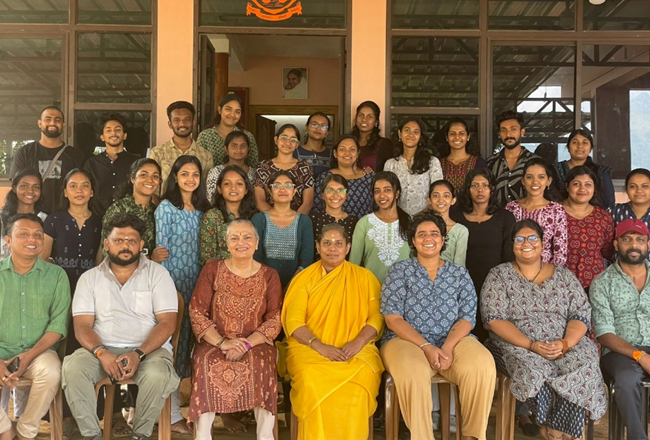
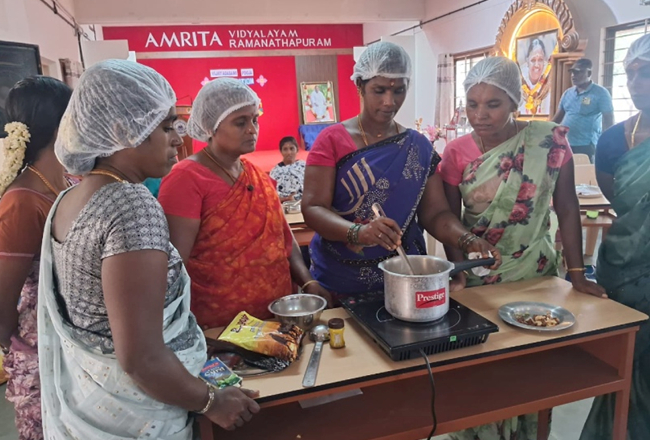
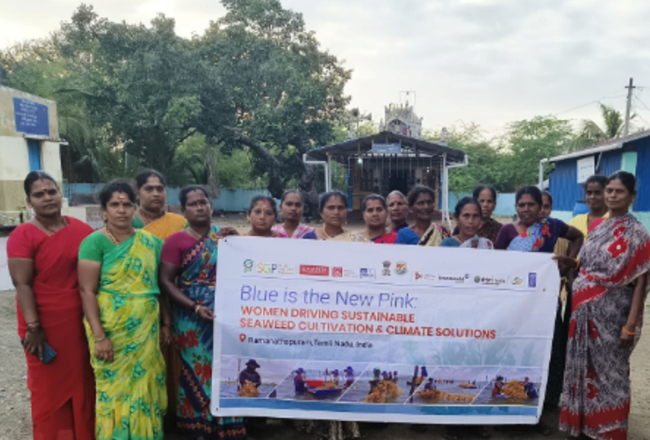
From 3–5 October 2025, Amrita Vishwa Vidyapeetham organised a three-day Seaweed Culinary Workshop and Exhibition in Rameswaram, Tamil Nadu, bringing together women from five coastal villages to promote sustainability education, practical skill development, and community empowerment. The programme extended educational opportunities beyond the University campus by providing local women with hands-on training in sustainable seaweed utilisation, food preparation, value-added product development, hygiene standards, and safe production techniques. Through interactive demonstrations, practical workshops, and knowledge-sharing sessions, participants learned how locally cultivated seaweed could be transformed into marketable food products while developing an understanding of responsible marine resource utilisation. The initiative also introduced participants to entrepreneurship-related knowledge, enabling them to explore opportunities for small-scale businesses and alternative sources of household income. By connecting environmental awareness with vocational education and practical learning, Amrita supported community members in developing skills relevant to sustainable production, responsible consumption, and long-term livelihood development.
The workshop further strengthened community understanding of the Sustainable Development Goals by integrating environmental sustainability, women’s economic empowerment, and entrepreneurship education into locally accessible learning activities. The accompanying exhibition provided participants with opportunities to showcase seaweed-based products, exchange practical knowledge, and gain exposure to market-oriented approaches to sustainable enterprise development. Through these educational activities, women explored the importance of product quality, resource efficiency, sustainable food production, and the commercial potential of locally available marine resources. By delivering structured training directly to coastal communities, Amrita encouraged lifelong learning, strengthened participants’ practical capabilities, and promoted wider community engagement in environmentally responsible livelihood practices. The programme demonstrates the University’s commitment to making sustainability education accessible beyond formal academic settings while contributing to SDG 4 (Quality Education), SDG 5 (Gender Equality), SDG 8 (Decent Work and Economic Growth), SDG 12 (Responsible Consumption and Production), and SDG 14 (Life Below Water).
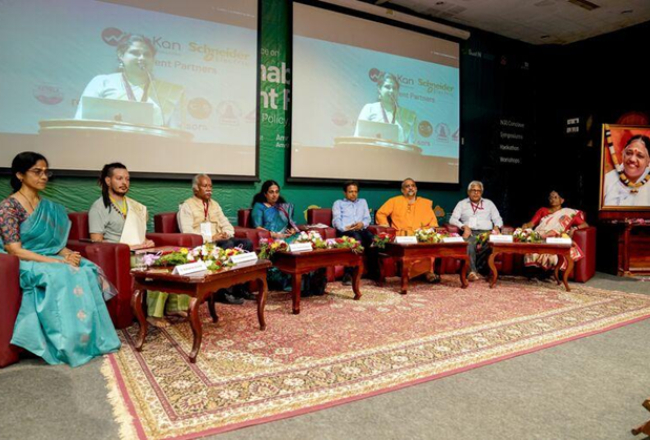
As part of the International Conference on Sustainable and Resilient Futures (ICSRF 2025), Amrita Vishwa Vidyapeetham organised an NGO Conclave on 31 August–1 September 2025, extending educational opportunities beyond the University campus through dedicated knowledge-sharing, sustainability awareness, and capacity-building activities for civil society organisations, grassroots development practitioners, researchers, and community stakeholders. The conclave provided an interdisciplinary learning platform that connected academic expertise with practical experiences in sustainable community development. Through expert-led discussions, interactive sessions, and collaborative exchanges, participants explored important Sustainable Development Goal (SDG) themes, including climate resilience, women’s empowerment, sustainable livelihoods, community health, water and sanitation, circular economy practices, indigenous knowledge, and environmental sustainability. By bringing together representatives from academia, non-governmental organisations, and community development institutions, Amrita facilitated wider access to sustainability-related knowledge and encouraged the exchange of practical approaches to addressing social, economic, and environmental challenges.
The conclave further strengthened community-oriented SDG education through specialised knowledge-sharing and capacity-building opportunities, including sessions addressing carbon credits and the Social Stock Exchange, enabling participating organisations to explore emerging mechanisms relevant to environmental sustainability, social development, and institutional capacity building. These educational activities provided a platform for participants to deepen their understanding of sustainability frameworks, exchange experiences from grassroots initiatives, and identify opportunities for applying research-based knowledge within community development programmes. By encouraging collaboration between researchers, civil society organisations, and development practitioners, the initiative supported the dissemination of sustainability knowledge beyond formal academic settings and strengthened the capacity of participating organisations to engage with sustainable development challenges. Through this inclusive approach to outreach education, Amrita promoted lifelong learning, interdisciplinary knowledge exchange, and wider public engagement with the SDGs, contributing particularly to SDG 4 (Quality Education), SDG 5 (Gender Equality), SDG 6 (Clean Water and Sanitation), SDG 13 (Climate Action), and SDG 17 (Partnerships for the Goals).
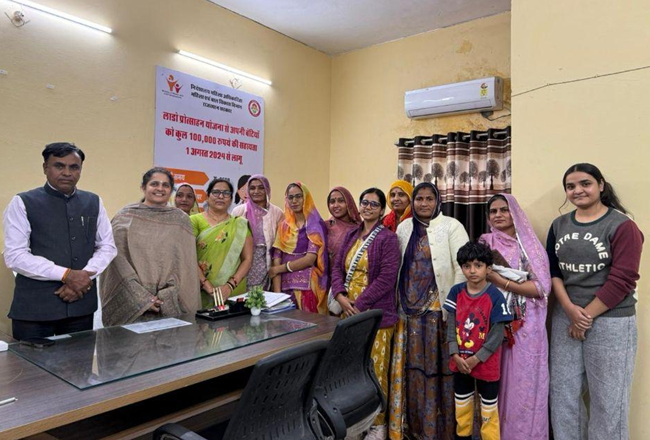
On 14 November 2025, Amrita Vishwa Vidyapeetham, through its Centre for Women’s Empowerment and Gender Equality (CWEGE), with support from Esri India, launched the Women at the Center: Skills Training and Community Capacity Building initiative in Harsani and Girabh villages of Barmer district, Rajasthan, extending educational opportunities to rural women beyond conventional university classrooms. The initiative was designed to strengthen community access to practical education through vocational skills training, digital literacy, leadership development, life-skills education, and capacity-building activities aligned with sustainable development priorities. A solar-powered Women’s Empowerment Center established in Harsani serves as a local training hub, providing an accessible environment for community-based learning and skills development. The initiative also incorporates mobile training units intended to extend educational opportunities to women in Girabh and surrounding underserved communities. Through these learning facilities and planned outreach activities, Amrita seeks to address barriers to education, strengthen women’s practical capabilities, and improve their access to knowledge and skills relevant to sustainable livelihoods and community development.
The initiative further promotes education for sustainable development by integrating women’s empowerment, digital inclusion, environmental awareness, and community leadership into locally accessible training opportunities. Its educational approach focuses on strengthening women’s self-help groups, developing communication and decision-making skills, and enabling participants to explore entrepreneurship and sustainable income-generating activities. Through vocational education, digital learning opportunities, and community-based capacity building, the programme aims to equip rural women with the knowledge and confidence needed to participate more actively in household economic decisions and local development initiatives. The use of a solar-powered training facility also provides a practical example of integrating renewable energy into community education infrastructure. By combining institutional expertise, corporate collaboration, and locally relevant learning activities, Amrita supports broader participation in sustainability education and strengthens opportunities for lifelong learning among underserved populations. The initiative contributes to SDG 4 (Quality Education), SDG 5 (Gender Equality), SDG 7 (Affordable and Clean Energy), SDG 8 (Decent Work and Economic Growth), and SDG 10 (Reduced Inequalities), while encouraging inclusive and resilient rural communities.
In December 2025, Amrita Vishwa Vidyapeetham, through AMMACHI Labs, conducted community-based disaster preparedness and awareness activities in Vadakadu, Thondi, and Sozhiyakudi villages of Ramanathapuram district, Tamil Nadu, commemorating the 21st anniversary of the 2004 Indian Ocean tsunami. The initiative extended essential disaster-risk education beyond the University campus to vulnerable coastal communities, engaging nearly 50 local residents in educational sessions focused on tsunami awareness, disaster preparedness, and community safety. Through interactive discussions and locally relevant awareness activities, participants received guidance on recognising potential tsunami warning signs, understanding coastal hazards, and identifying appropriate responses during emergency situations. The programme emphasised the importance of disaster preparedness, timely access to warning information, and practical safety measures to help coastal households better understand and respond to natural hazards. By delivering educational outreach directly within coastal villages, Amrita strengthened opportunities for community members to acquire knowledge relevant to disaster-risk reduction and environmental resilience.
The initiative further promoted education for sustainable development by connecting disaster preparedness, environmental awareness, community participation, and coastal resilience through practical learning opportunities. The awareness sessions encouraged residents to reflect on the risks faced by coastal communities and understand the importance of preparedness, collective responsibility, and informed decision-making during emergencies. By engaging local populations in discussions about tsunami risks and appropriate protective actions, the programme supported greater understanding of disaster management and the role of community knowledge in reducing vulnerability to natural hazards. This community-centred educational approach helped extend disaster preparedness information to people outside formal academic institutions while encouraging residents to apply relevant safety knowledge within their households and communities. Through continued outreach and awareness-building efforts, Amrita contributes to SDG 4 (Quality Education), particularly Target 4.7, SDG 11 (Sustainable Cities and Communities), and SDG 13 (Climate Action) by promoting lifelong learning, disaster-risk awareness, and stronger community preparedness in vulnerable coastal regions.
Amrita Vishwa Vidyapeetham’s educational outreach activities in 2025 demonstrate an integrated approach to extending sustainability education into local communities and civil society. Through community workshops, practical skills training, environmental awareness programmes, disaster-preparedness sessions, and knowledge-sharing platforms, the University helps participants develop capabilities relevant to local development challenges. By connecting academic expertise with community knowledge and encouraging active participation in sustainable practices, Amrita supports lifelong learning, inclusive education, women’s empowerment, responsible resource management, and community resilience. These initiatives contribute to SDG 4, SDG 5, SDG 8, SDG 11, SDG 13, SDG 14, and SDG 17.