


Last Updated : December 28, 2025
Amrita Vishwa Vidyapeetham promotes conscious and responsible water usage in the wider community through participatory education, community engagement, field-based research, and sustainable water management initiatives. These activities seek to improve public understanding of water availability, water quality, responsible consumption, conservation, and the importance of protecting local water resources. The university emphasizes connecting scientific understanding with local experiences and encouraging communities to participate in decisions concerning their water resources.
During 2025, the university’s contributions included community engagement through the Live-in-Labs® programme, water awareness and capacity-building activities associated with the Jivamritam Purified Drinking Water Programme, community-oriented water sustainability initiatives, and knowledge dissemination through the International Conference on Sustainable & Resilient Futures (ICSRF 2025).
Amrita’s Live-in-Labs® programme provides opportunities for students and faculty to engage directly with rural communities, understand local water-related challenges, and develop solutions through participatory approaches. During 2025, field activities in several Indian states addressed water availability, water quality, distribution, sanitation, and sustainable water management.
Naala Village, Uttarakhand: Promoting Responsible Water Use Through Community-Designed Infrastructure and Awareness
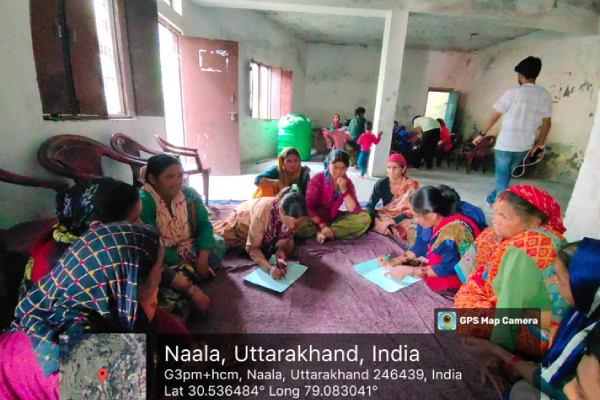
In Naala village, Uttarakhand, Amrita’s Live-in-Labs® team engaged with residents to address challenges associated with drinking water quality and distribution. Participatory assessments, household interactions, and co-design activities informed improvements to the community water system. The intervention incorporated flow-regulated taps and platforms intended to reduce water spillage and support hygienic water collection. Importantly, the team worked with community members to develop and display water awareness posters near collection points, using locally relevant illustrations and messages encouraging children and other residents to avoid wasting water. By combining infrastructure improvements with community-designed awareness materials, the initiative promoted responsible water-use behaviour at the point of consumption.
Harirampura Village, Rajasthan: Water Awareness and Community Participation
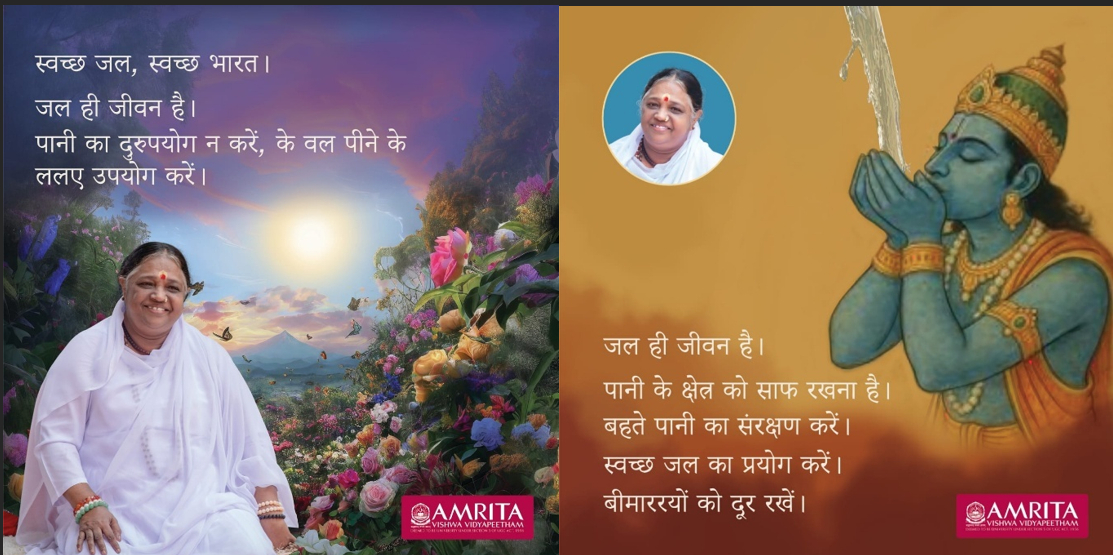
During the 2025 Live-in-Labs® programme in Harirampura village, Rajasthan, students engaged with local residents through household interviews, water quality assessments, and demonstrations using water testing kits. These interactions helped communicate the importance of drinking water quality, safe handling, and community participation in managing water infrastructure. The team also supported the installation and inauguration of a Jivamritam water filtration system in collaboration with village representatives. The activities contributed to water-related awareness and community ownership, although the available evidence primarily demonstrates water safety education rather than measured reductions in water consumption.
Nani Borvai Village, Gujarat: Participatory Assessment of Water Use and Sustainability
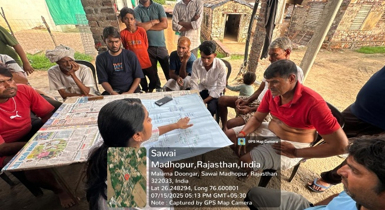
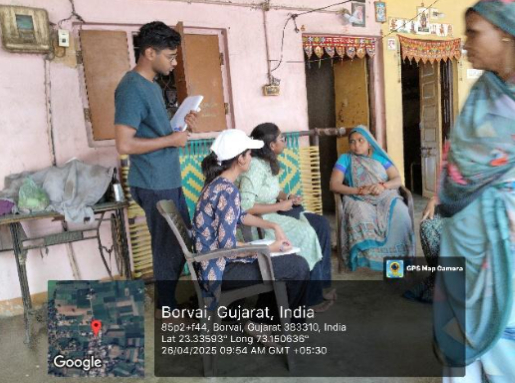
As part of Live-in-Labs® 2025, a student team conducted participatory assessments in Nani Borvai village, Aravalli district, Gujarat, from 22 April to 2 May 2025. Through household interviews, transect walks, focus group discussions, and interactions with women’s groups, the team investigated local drinking water sources, collection practices, sanitation, and challenges associated with water accessibility. The assessment identified dependence on a distant open well for drinking water because residents considered piped borewell water unsuitable for consumption. Community discussions helped identify potential approaches to more sustainable water management, including rainwater harvesting, improved water storage practices, source protection, and maintenance of existing water infrastructure. These activities encouraged community reflection on local water challenges and opportunities for responsible resource management. The suggested conservation measures were recommendations rather than documented completed interventions.
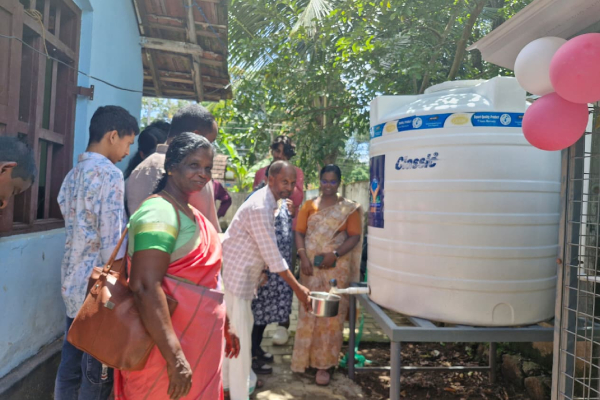
The Jivamritam Purified Drinking Water Programme combines decentralized water purification technologies with participatory community management. During 2025, nine additional community water purification systems were deployed under the programme.
Beyond providing access to purified drinking water, the programme engages community members in understanding water quality, the operation and maintenance of water treatment infrastructure, and the importance of collective responsibility for managing shared drinking water resources. Community water committees and local operators play important roles in managing these systems, supporting continued awareness and participation beyond the initial installation.
The programme encourages communities to recognize water as a shared resource requiring responsible management. Its strongest documented contribution to SDG 6.5.7 is awareness and stewardship associated with safe drinking water systems. Specific claims about reduced water wastage, conservation behaviour, or household consumption should be supported by separate evidence.
Amrita’s community-oriented water sustainability initiatives promote public participation in understanding and managing local water resources.
Mera Gaon, Hamara Jal — Community Water Stewardship
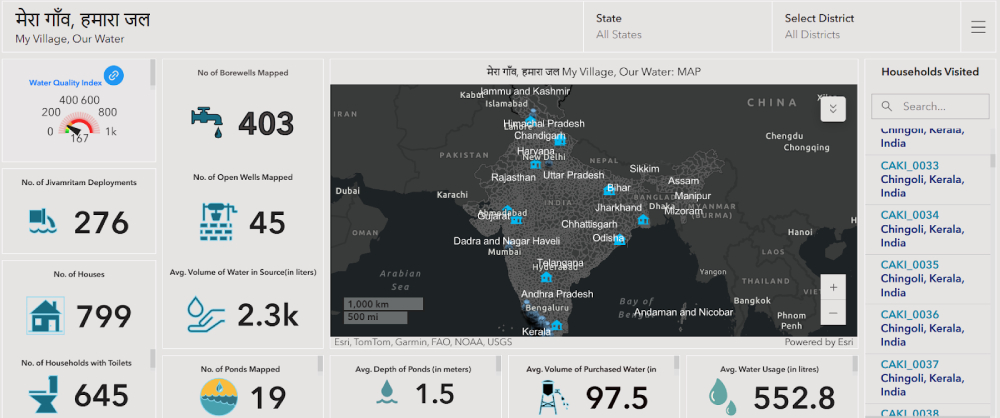
The Mera Gaon, Hamara Jal (My Village, Our Water) approach emphasizes community participation in understanding village water resources and encouraging collective responsibility for their sustainable management. Its activities include participatory water resource assessment, community discussions, and consideration of water availability, quality, and local management practices. The platform, powered by its mobile application “Empower Community”, integrates GIS-enabled spatial data and crowd-sourced inputs to create a comprehensive water sustainability and resilience index and recommendations to address community’s challenges.
This approach provides a framework for promoting responsible water use by encouraging residents to recognize the relationship between individual household practices, shared water resources, and long-term community water security.
Community Water Quality Monitoring and Engagement
Amrita’s community-oriented monitoring initiatives, including work associated with GEL-IoT in Pulincunnoo Panchayat, Alappuzha, and Kulasekharapuram Panchayat, Kollam, support the involvement of local stakeholders in understanding water quality and related environmental concerns.
Participatory monitoring can strengthen public awareness of local water conditions and the need to protect shared resources.
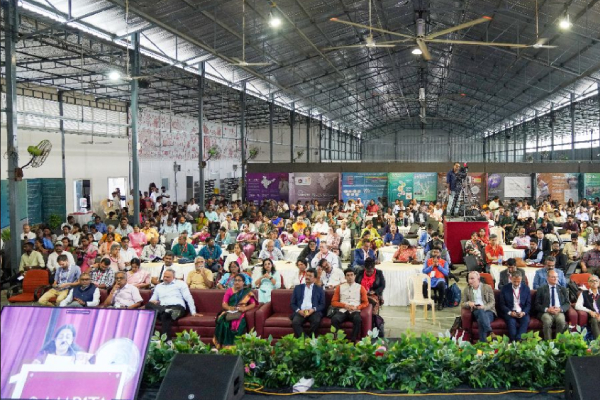
Amrita Vishwa Vidyapeetham organized the International Conference on Sustainable & Resilient Futures (ICSRF 2025), which provided a platform for knowledge exchange among researchers, practitioners, government representatives, civil society organizations, and sustainability professionals. The conference had representatives from 30+ countries, including UNESCO, UN ESCAP, government, academia, industry, and civil society,
IWA Symposium on Lake and Reservoir Management
The IWA Symposium on Lake and Reservoir Management, held on 30 August 2025, featured discussions on water resource management, pollution, conservation, and sustainable water infrastructure.
Relevant presentations included:
These sessions supported the dissemination of knowledge concerning water conservation, pollution prevention, sustainable water infrastructure, and the responsible management of water resources.
NGO Conclave 2025: Extending Sustainability Awareness to Civil Society
The NGO Conclave, organized as part of ICSRF 2025 on 31 August–1 September 2025, brought together more than 100 NGOs, social innovators, and civil society representatives. Discussions addressed grassroots sustainability, climate resilience, community health, WASH, and community-led development.
By connecting academic institutions with organizations working in communities, the conclave provided opportunities for sharing sustainability knowledge and exploring its relevance to grassroots initiatives.
For SDG 6.5.7, these activities constitute supplementary evidence of knowledge dissemination. The conference should not be presented as direct evidence of changes in household water consumption or conservation behaviour.
During the evaluation period, Amrita’s interdisciplinary research addressed water sustainability challenges across multiple geographical and social contexts. Five research themes are particularly relevant to understanding the factors that influence responsible water use and community water stewardship.
Scalable Community-Toolkit Approaches for Water Sustainability — Kerala
Research on scalable community-toolkit approaches for water sustainability, covering approximately 300 communities across Kerala, examines approaches to community participation and sustainable water management. Its relevance to SDG 6.5.7 lies in the potential for community-oriented tools to strengthen water awareness, encourage collective responsibility, and support informed local decision-making.
Reviving River Culture and Enhancing Flood Resilience — Rural Karnataka
Research on river culture and flood resilience explores the relationship between communities, river ecosystems, and water-related risks. It contributes to understanding how local knowledge, cultural relationships with rivers, and community participation can support responsible management and protection of water resources.
Reducing Water Scarcity and Improving Sanitation — Uttar Pradesh
Research undertaken in villages of Uttar Pradesh addresses water scarcity and sanitation challenges. Its relevance includes understanding household water access, sanitation practices, and opportunities to encourage sustainable water management in water-stressed communities.
Participatory Digital Platforms for Water Quality Management — Alappad and Kochi, Kerala
Research on participatory digital platforms for water quality management explores approaches to involving communities in water-related information and decision-making. Such approaches can support water awareness by making environmental information more accessible and encouraging community engagement in protecting local water resources.
Collectively, these research initiatives strengthen the knowledge base for water sustainability. However, research findings alone should not be counted as public awareness activities unless there is evidence of dissemination, training, or engagement with the wider community.