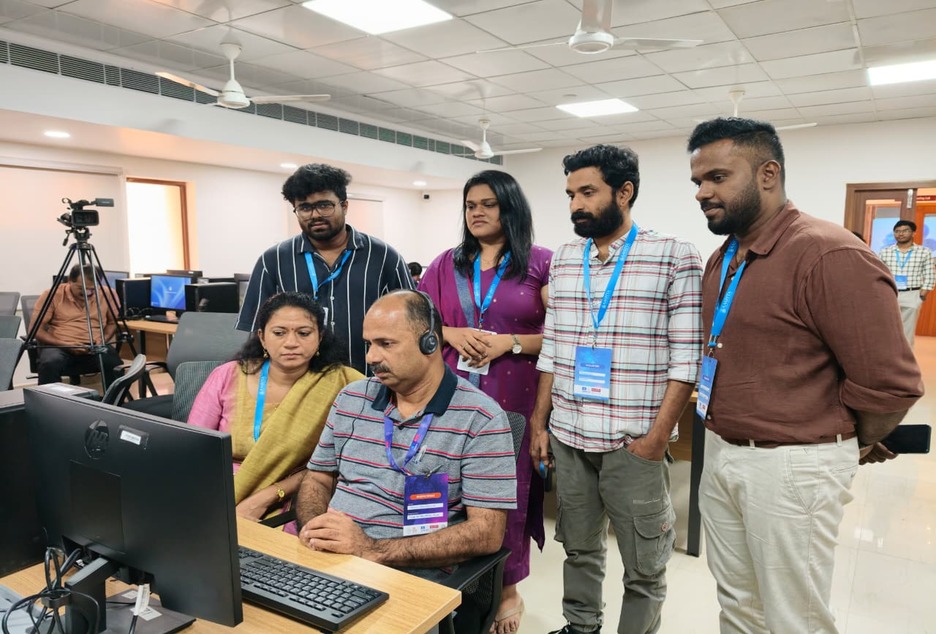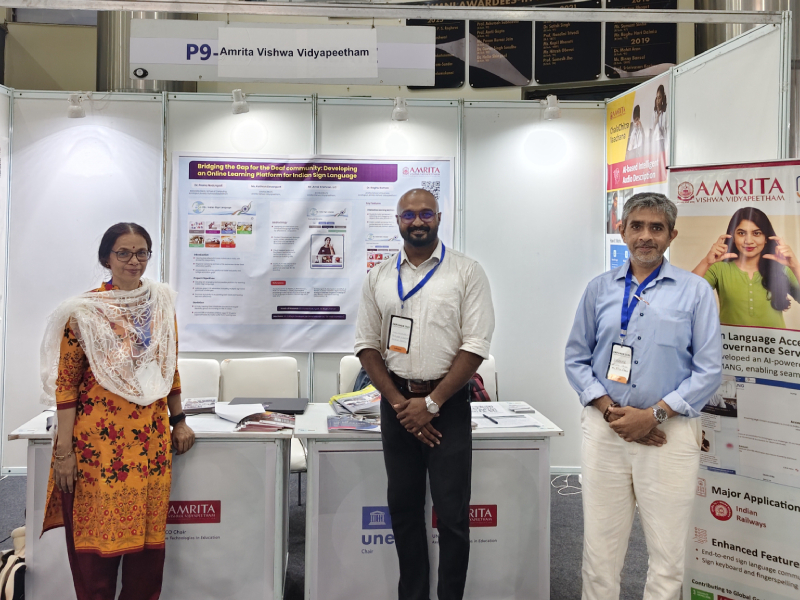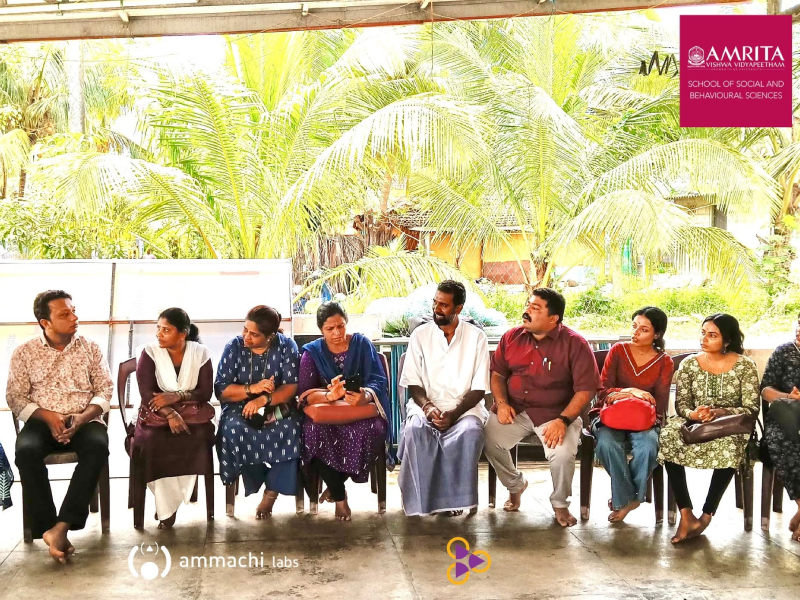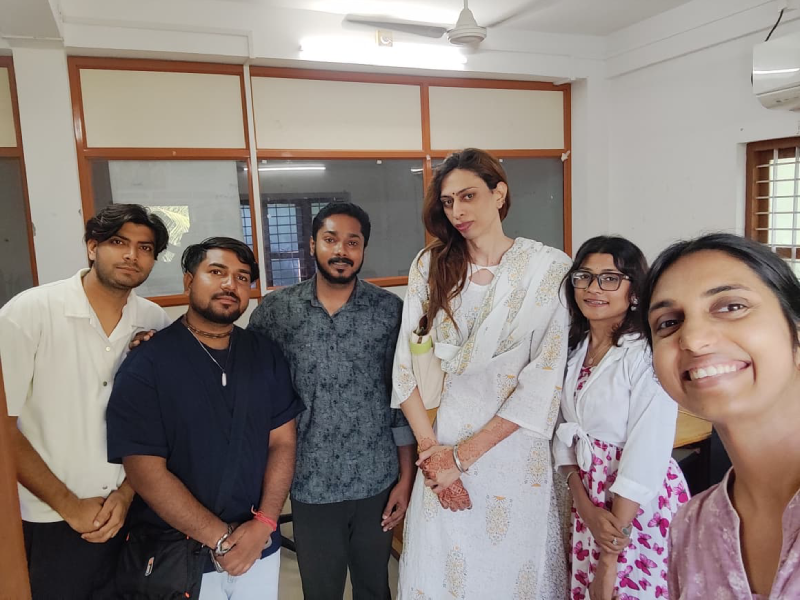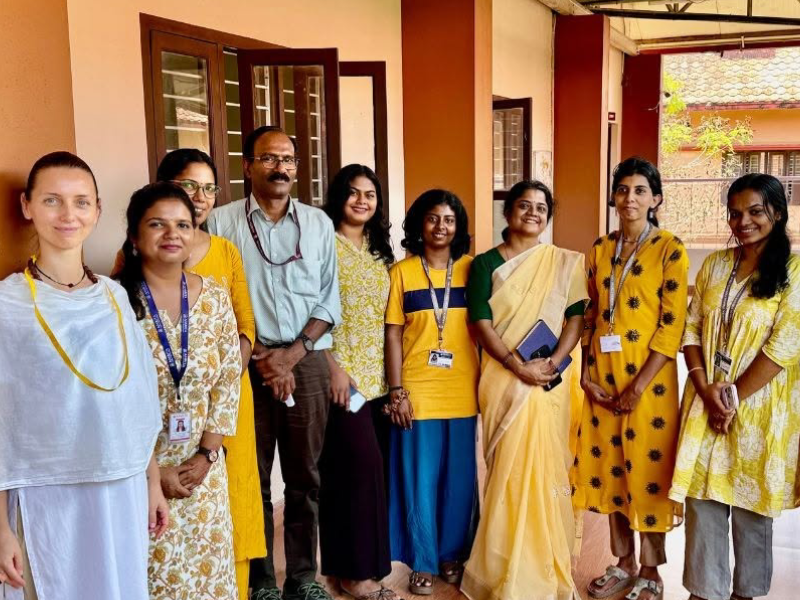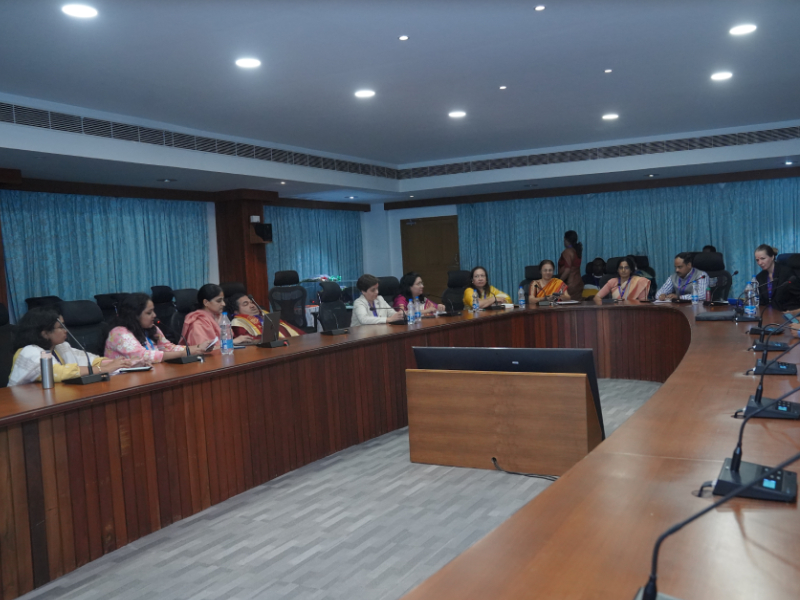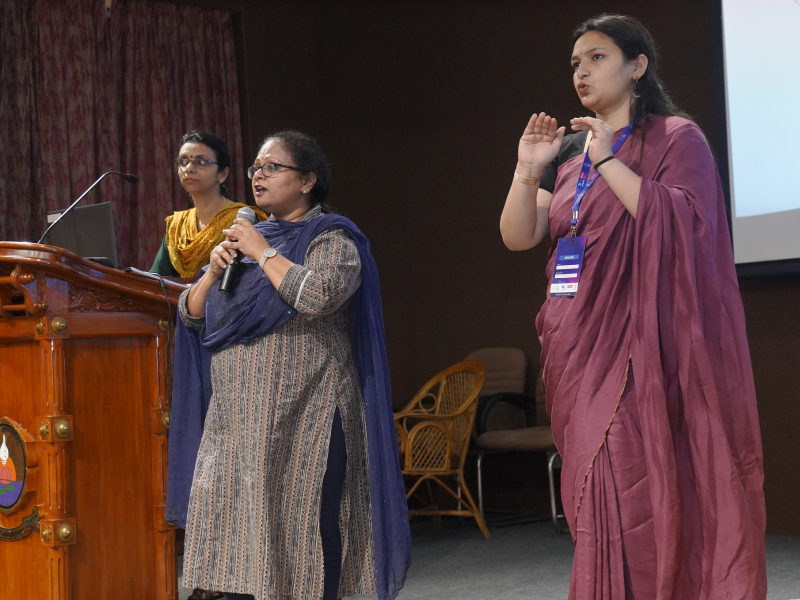


In lead up to the India AI Impact Summit 2026, the UNESCO Chair on Assistive Technologies in Education convened an “International Symposium on AI-Enabled Assistive Technologies for Inclusive Education” at Amrita Vishwa Vidyapeetham, Amritapuri Campus, Keralam, on January 12–13, 2026.
The symposium brought together educationists, leaders, and special education specialists to share perspectives on how emerging technologies, such as Artificial Intelligence, can help bridge existing learning gaps. The discussions highlighted how these innovations can advance SDG 4 (Quality Education) and SDG 17 (Partnerships for the Goals), with a strong emphasis on inclusive education and effective pedagogy for children with disabilities.
Dr. Varsha Gathoo, Former Head, Department of Education, AYJNISHD, in her keynote, highlighted the importance of why strong foundations in early learning—especially basic literacy and numeracy—are critical for every child’s future success. The session highlights that learning is not just about academics, but also about language, thinking, emotions, relationships, and sensory experiences working together.
For children with hearing loss, Dr. Gathoo emphasised that learning gaps often arise not because of lack of ability, but because these foundations are not built early or strongly enough. The key message is simple: schooling alone does not guarantee learning—intentional, inclusive teaching does. The takeaway was clear and hopeful that disability is not a barrier to learning when the environment, teaching methods, and support are right every child can learn and succeed.
From early childhood education (ECCE) to higher education, the next keynote delivered by Dr. Raji Gopal, Head-Degree (HI), National Institute of Speech & Hearing, NISH, and Dr. Raji NR, Assistant Professor, (NISH) discussed challenges in Inclusive Higher Education. By sharing their real-world teaching experiences, including both successful practices and lessons learned from classroom implementation, the session highlighted the importance of building continuity from school to college to support students’ academic and career aspirations emphasizing the need to develop independence and essential skills for success in higher education and employment.
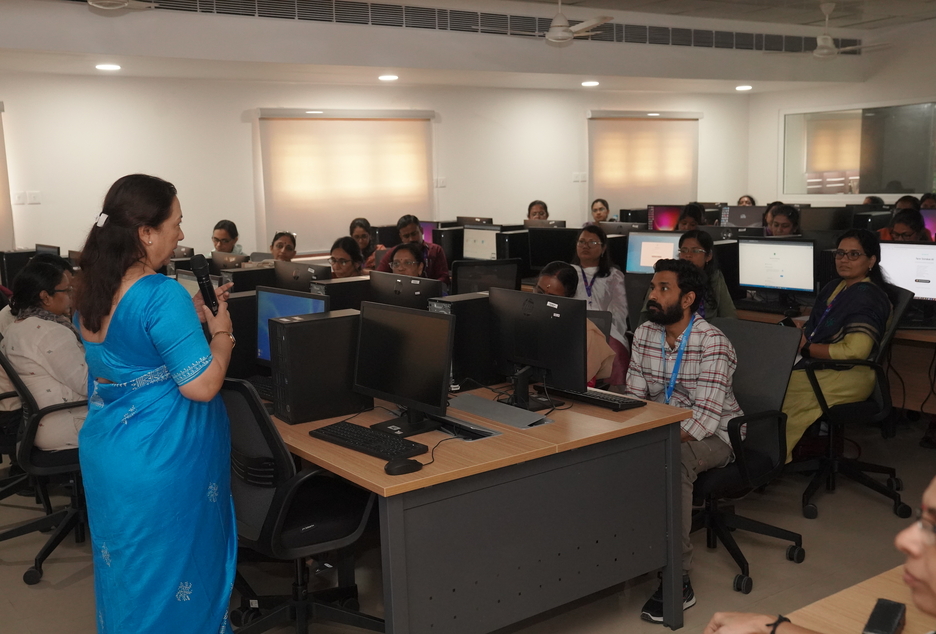
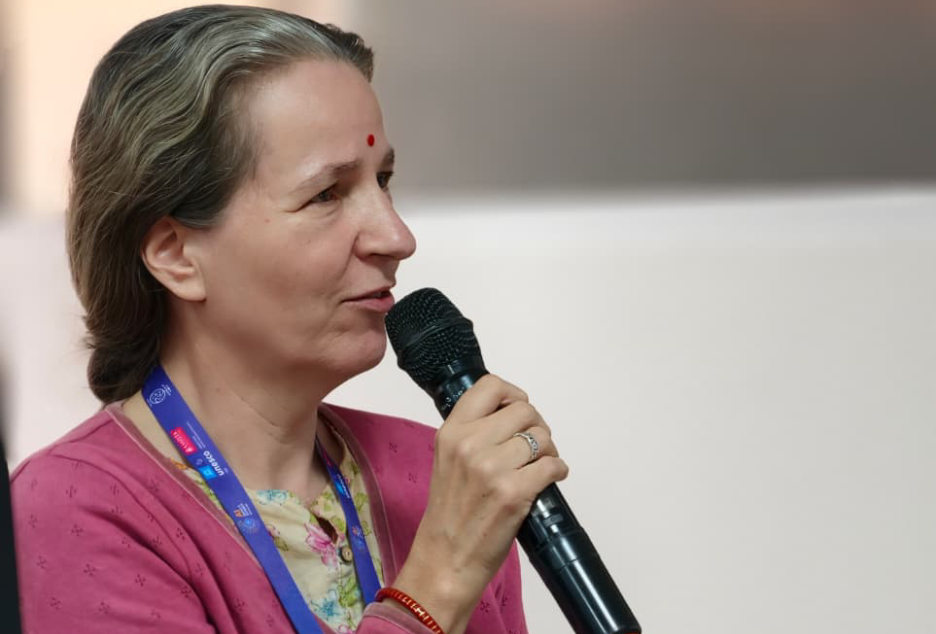
The session was followed by an engaging session on OLabs for Deaf Education brought real classroom insights from Prof. Ulricke Zeshan, Emeritus Professor, University of Lancashire and Academic Advisor, Happy Hands School for the Deaf, and Mr. Sagar Ali Khan, who shared their lived teaching experiences at Happy Hands School for the Deaf, Odisha, and demonstrated how OLabs is transforming learning for Deaf students.
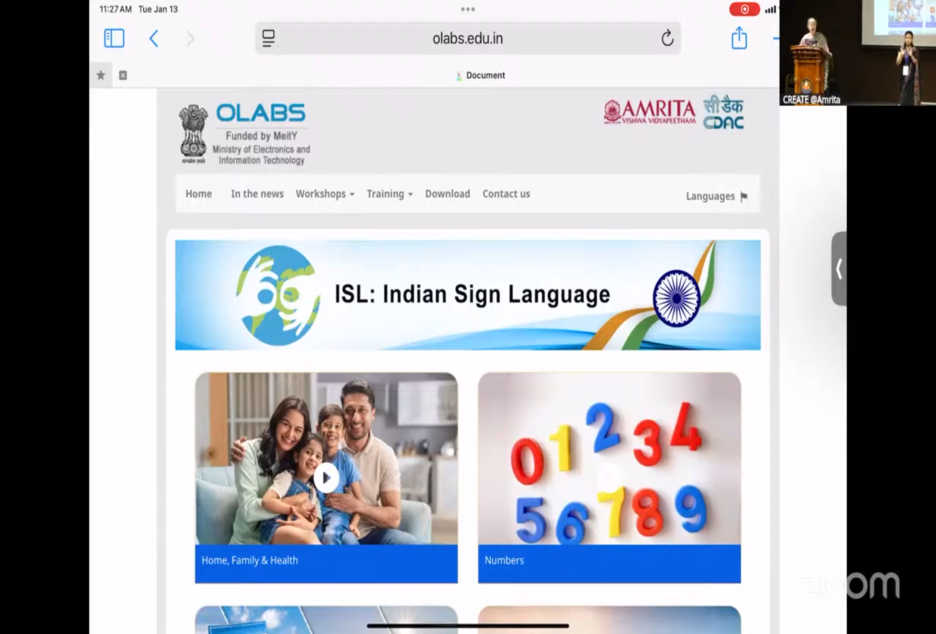
ISL OLabs demonstration was led by Ms. Kathryn Davenport, Instructional Designer, Amrita CREATE. ISL OLabs is the latest expansion of the OLabs initiative making learning Indian Sign Language more accessible. This project is supported by the Ministry of Education, the Ministry of Electronics and Information Technology (MeitY), and NCERT, this initiative represents a significant step forward in digital inclusivity. The team has been working closely with Amrita School for Speech and Hearing improvement (ASHIH).
Another demonstration of the ChalChitra Vachana: AI based Intelligent Audio Description Platform Project, was led by Amrita CREATE’s Ms. Vanichithra V and Mr. Gautham K. Dileep. The project addresses the accessibility gap in existing video and audio content for persons who are blind, Deaf, and hard of hearing (DHH) through an innovative platform that automatically generates audio descriptions for visual media. The initiative is supported by the Ministry of Electronics and Information Technology (MeitY), Government of India. A pedagogy forced session on Inclusive OLabs was led by Ms. Latika Sawney, Amrita CREATE.
Hosted by UNESCO Chair on Assistive Technologies in Education at Amrita, it is the third UNESCO Chair at the university. Amrita is now the only university in India to have three UNESCO Chairs, as this new Chair joins the Chair on Gender Equality and Women’s Empowerment (established 2016) and the Chair on Experiential Learning for Sustainable Innovation and Development (established 2020).
The symposium highlighted the transformative potential of AI-enabled assistive technologies in creating equitable learning environments and strengthening pathways for learners with disabilities—aligning academic excellence with social impact.