
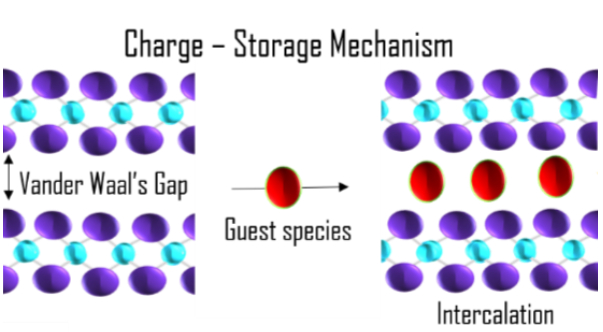
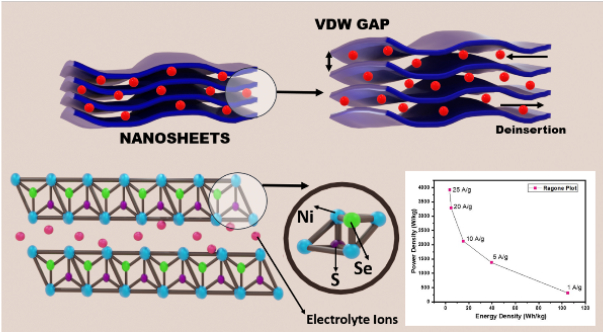
Over the past decade, noteworthy research has been made towards metal-based chalcogenide systems for energy storage and energy harvesting applications. However, the key motto of this project is to explore dichalcogenide systems for charge storage applications. The interactions between chalcogenides(X) such as sulfur, selenium, and phosphide in the transition metal dichalcogenide systems (MX2) are unsorted. Layered dichalcogenides are particularly suitable for intercalation. The interaction between chalcogenides is explored. This work aims to secure the benefit of charge storage in dichalcogenides by phase and compositional engineering.
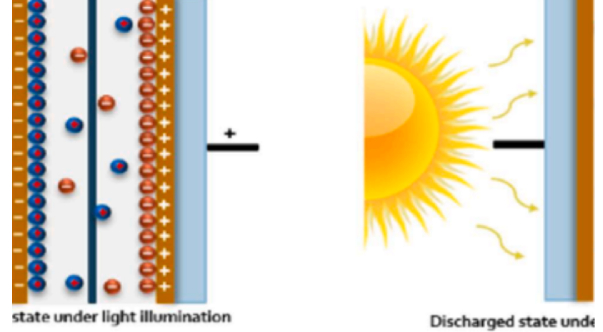
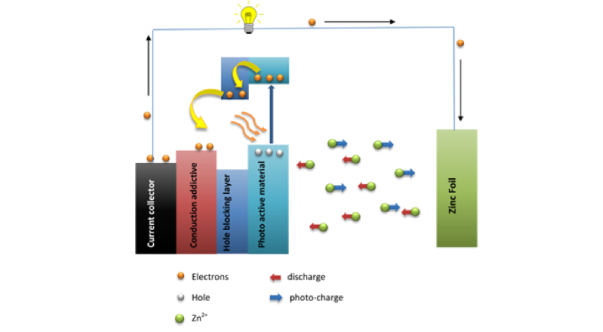
Solar cells are usually merged with an electrochemical capacitor or rechargeable batteries as solar energy is easily accessible. This may enhance the cost and complexity to the system. To address this issue, a material which is capable of harvesting and storing energy can be of immense help to reduce the cost. Therefore, we propose a photo-rechargeable system that can be charged directly from sunlight without any external solar cells. Aiding the conventional rechargeable energy storage system in saving electrical energy input and achieving large-scale application of solar energy can be enhanced by the exploiting solar energy in rechargeable energy storage system. The solar-driven rechargeable energy storage system incorporates photoelectrode which can further simplify the system than the external combination of PVs.
In-organic halide materials like cesium lead halides have drawn greater attention as novel materials for optoelectronic devices such as solar cells, LEDs, photodetectors, memory storage devices etc. Materials of a kind shows an uplifted stability and comparable optoelectronic properties along with their hybrid counterparts. Remarkably the high PLQY for the lead halide perovskites enabled them as strong candidates in the backlight as well as display technologies. Pivoting the research interest in these areas of intervention will serve as an asset for an upcoming optoelectronic era.


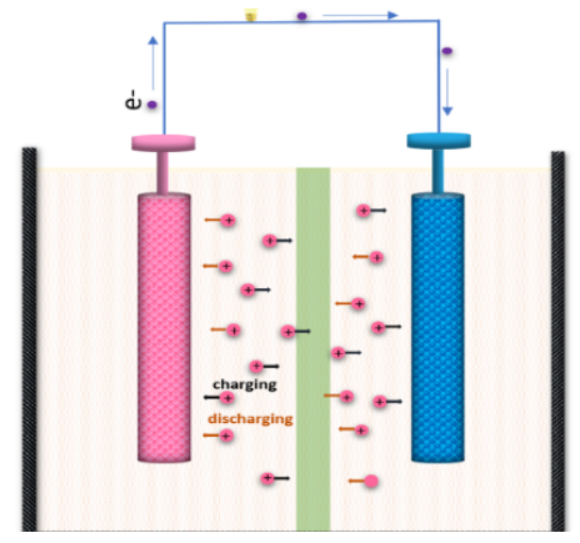
The struggle for finding a better energy storage device has gotten a substantial potential since post commercialization. Considering the safety measures, the use of organic electrolytes has raised major concern due to its flammable nature. Hence water-based electrolyte technologies have appeared since it offers higher ionic conductivities to meet the higher power density demands in the present scenario Aqueous ZIBs and SIBs are considered to have driven their way, becoming a milestone in next-generation batteries. It considers the requirement that an energy storage device should have, involving high theoretical storage ability, and long-term cycling stability.
Since the identification of photocatalysts in the 1970s, heterogeneous photocatalytic oxidation has received considerable attention, and many studies have been conducted over the last two decades on the application of heterogeneous photocatalytic oxidation processes to decompose and mineralize intractable organic compounds. It entails photoreaction acceleration in the presence of a semiconductor catalyst. When two semiconductors (SC) come into contact, an equilibrium of excited electron energy levels in the connected body is reached. The photocatalyst can be adjusted further to accommodate the Z-scheme. The placement of a metal mediator between SCI and SCII allows the generated sandwiched composite to efficiently separate the excited electron from the formed hole with enhanced redox potential in a process known as the solid mediator Z-scheme. This method is used to remove hazardous organic compounds from industrial effluents.
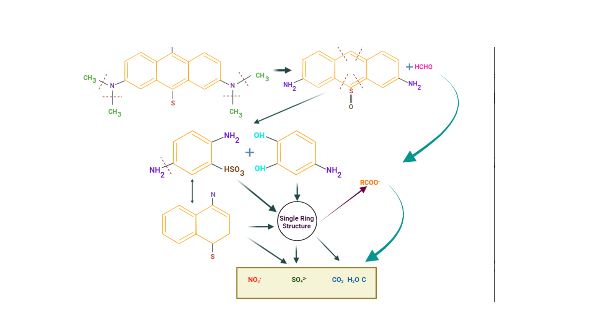
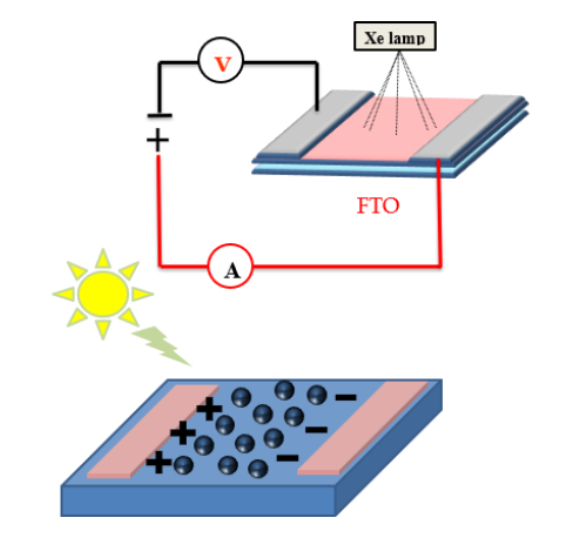
Solution processable lead halide perovskite materials has high efficiency but has always been a drawback due to its high toxicity and hazardous nature. Chemical instability and toxicity concerns have promoted the search for safer lead-free perovskite materials for photovoltaic and optoelectronic applications. Among the solution processable photoactive materials investigated for optoelectronic applications, halide perovskites have risen to prominence in recent years due to their remarkable optoelectronic properties. Lead free halide perovskites have also considerable amount of attention for photodetection, including self-powered mode. Antimony and Bismuth based perovskite materials has been particularly promising due to their self-powered photodetector performance which has lagged the lead-based counter parts. The research mainly focuses on lead free perovskite materials for self-powered photodetectors.
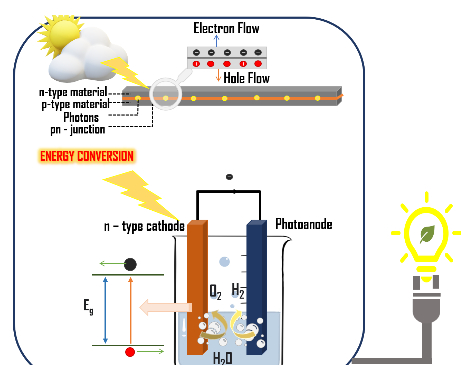
Because of the rapid depletion of fossil fuels and related environmental issues, the development of alternative renewable energy from sustainable resources has become a significant concern in recent years. Among all the available possibilities, hydrogen looks to be the most promising as a clean fuel, with the potential to be widely used in fuel cells and other energy storage and conversion devices. We are interested for conversion of the solar energy into chemical fuels (H2) by photocatalytic reactions and conversion of the greenhouse gas CO 2 into hydrocarbons fuels via photocatalytic reactions. Our focus is to development of electrode materials for photoelectrochemical energy harvesting by understanding the electronic properties of the materials such as carrier concentration, mobility, trap density, carrier diffusion length and interaction with the electrolyte.
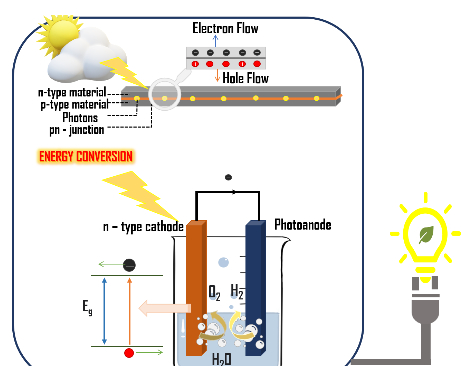
Our research focuses mainly on the development of new techniques and materials for the fabrication of low-cost thin film light absorbing layers and their multifunctional applications as a potential replacement. Zn from the quaternary chalcogenide-based semiconductor CZTS was replaced by a transition metal known as iron (Fe) to form Cu2FeSnS4 (CFTS). As they are earth-abundant and non-toxic, showing band gap in the range of 1.0-1.5 eV with higher absorption coefficient in the visible spectrum range makes them well suited for multifunctional applications such as photodetectors, solar cells, supercapacitors, memristors, etc. We adopted three different methods for the synthesis of CFTS nanoparticles which includes hydrothermal, sol-gel and successive ionic layer adsorption and reaction (SILAR) methods.
Till date, there has been immense growth in research, development, and commercialization of various kinds of solar cells from amorphous, polycrystalline, to monocrystalline forms. In addition to the monocrystalline and thin film approach, the third alternative to prepare solar cell structures is the use of powder materials. Powder technologies are the cheapest form of technologies for materials production. At the same time, although several companies and research institutions have made considerable efforts, powder methods for solar cell applications have not found widespread use yet. This study mainly focuses on fabricating and designing 3D monograin solar cells with CZTS, CFTS and perovskite materials to achieve high efficiency.
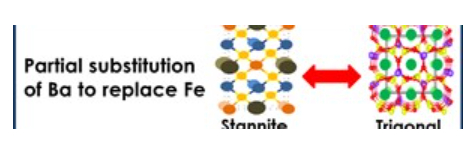
The study focusses on the structural changes of highly crystalline Cu2FeSnS4 (CFTS) thin films by a low cost and simple successive ionic layer and adsorption reaction (SILAR) technique followed by partial substitution of Fe by Ba to fabricate Cu2Fe1-xBaxSnS4 (CFBTS) thin films. Finally, CBTS thin film coated on Mo substrate was fabricated, which was then sulfurized to make it devoid of impurity peaks. This study was investigated with a basic structure consisting of Glass/FTO/CFBTS without any over layers and the photo response of these CFBTS thin films was investigated by fabricating photoelectrochemical cells.
In the current energy scenario, quantum mechanical optical response works as next-generation photovoltaics. The latest theoretical and experimental development conceptualize and realize the materials and devices based on such responses. Perovskite and perovskite-like materials are classics. We found some success in the development of the devices based on the materials and have visualized the response. Further research is underway. The place is open for discussion.
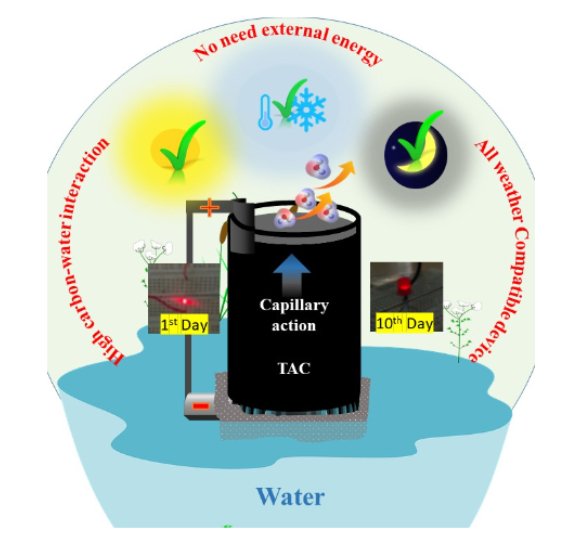
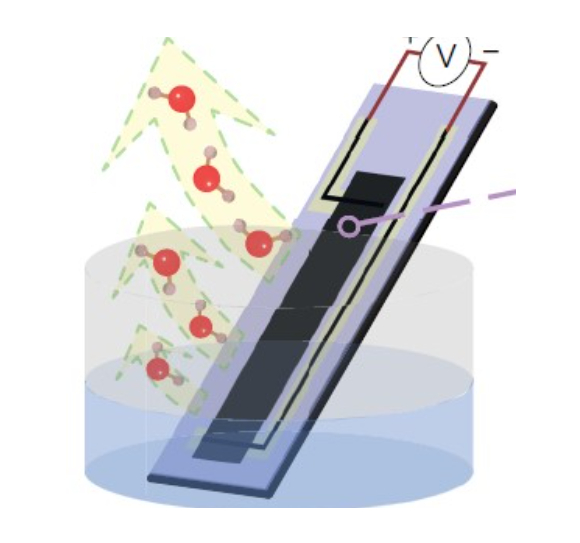
Hydro voltaic effect is analogous to photovoltaic effect in which the potential is generated by the interaction of nanostructured materials with water molecules. The non-uniformity of charge distribution at solid-liquid interface causing the formation of electrical double layer, is the reason behind hydro voltaic effect. Under pressure gradient, transportation of ions from lower to higher sides resulting voltage production. Surface functional groups and high electrical conductivity are the characteristics of hydro voltaic materials. Carbon materials shows highly efficient power generation. Hydro voltaic devices can show better performance over other energy conservation devices if it is able to substitute daily power demands.
Till date, there has been immense growth in research, development, and commercialization of various kinds of solar cells from amorphous, polycrystalline, to monocrystalline forms. In addition to the monocrystalline and thin film approach, the third alternative to prepare solar cell structures is the use of powder materials. Powder technologies are the cheapest form of technologies for materials production. At the same time, although several companies and research institutions have made considerable efforts, powder methods for solar cell applications have not found widespread use yet. This study mainly focuses on fabricating and designing 3D monograin solar cells with CZTS, CFTS and perovskite materials to achieve high efficiency.
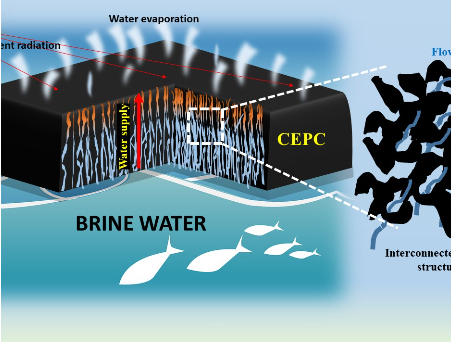
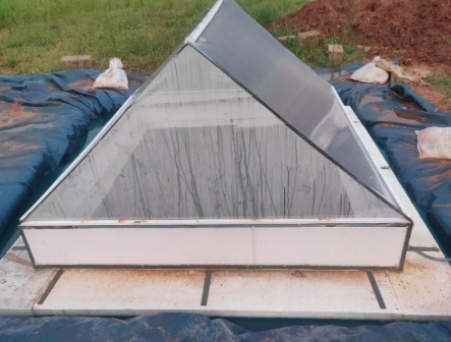
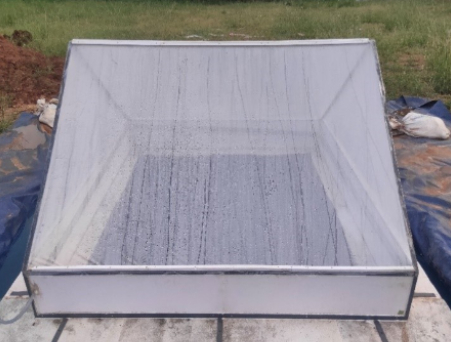
Freshwater scarcity is one of the most serious threat to the development of human civilization. To solve this issue with various strategies, Solar thermal evaporation (STE) offers a continuous high-quality freshwater without impairing any natural resources. STE used to generate freshwater from impure water by evaporation using solar light. STE providing a better efficiency due to the surface phenomena and reduction of loss in energy to the bulk. Currently, we are working on several types of STE systems such as Bio mass derived STEs and chemically modified STEs. Bio mass based STE such as Carbonized Potato STE and Pseudo stem banana STEs giving the maximum evaporation rate of 3.18 Kg m-2 h-1 and 2.5 Kg m-2 h-1 respectively under 1 sun illumination which is more than the previous reported works. The systems providing a low cost, eco-friendly freshwater production from simple fabrication methods. Collection of more than 6 liter/m2 of freshwater from Potato based STE per day under direct sun illumination offering a potential application of the work. Moreover, these devices showing its best property of salt and dye water purification. Secondly, chemically modified STE such as Cement-Carbon STE and modified carbon cloth providing a high efficient as well as high durability for a long-term application. Cement based STE providing the evaporation rate more than 2.3 Kg m-2 h-1 under 1 sun illumination and providing a constant freshwater output even after several months. Moreover, we have created a solar absorber from waste tissue paper coated on porous foam also posess high evaporation rate. This works holds the promise of significantly expanding the application domain and reducing the cost of solar powered water managing systems.
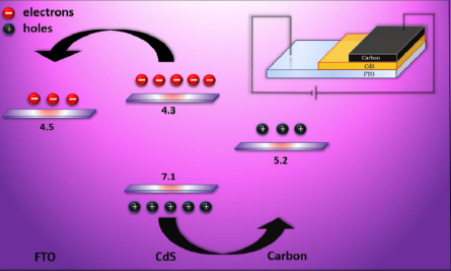
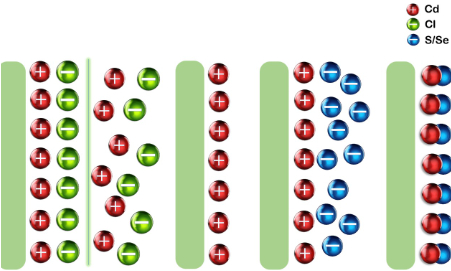
In recent years, due to the advancing developments of photonic technologies, there has been a huge demand for superfast photodetectors for thermal imaging, biosensing, environmental monitoring, and optical communication. Generally, photodetectors comprise p-n, Schottky, and organic-inorganic hetero junctions, which convert light signals to electrical signals under an external power source. However, nowadays, self-powered photodetectors that can produce electricity without an external source are in demand. So far, several methods have been used to fabricate photodetector films, among which chemical bath deposition (CBD), vacuum evaporation, spray pyrolysis, SILAR, and chemical vapor deposition can be quoted. SILAR is a method that provides exceptional low-cost and high film quality. Carbon-based electronics are a technology, with the potential of substituting and complementing opto-electronic devices based on semiconductors and metals. As carbon is known for its high hydrophobic properties, it provides outstanding stability for photoactive material as it prevents atmospheric moisture penetration. The focus of this study is to fabricate a simple and low-cost but highly stable self-powered photodetector with a device structure using only sulfide material and carbon.
Inorganic lead halide perovskites have emerged as an efficient material for various optoelectronic applications because of its superior and unique photophysical properties. The main concern that raised over the use of lead-based halide perovskites is the instability and toxicity of lead, which prompted researchers to look further for a stable and less toxic substitutes. Among various lead-free halide perovskites, the ternary copper-based halide perovskites gained much attention due to its outstanding optical properties, stability under ambient conditions, nontoxicity and low cost. This work focuses on developing copper based halide perovskites by different synthesis methods, structures and photophysical properties for various optoelectronic applications.

Get latest updates & announcements from this school in your inbox