
Back close

2 Days Workshop

Autonomous Vehicle Simulation Workshop

Build, Simulate, and Test Autonomous Driving Systems Through Hands-On Software Development.

About

Autonomous vehicles integrate perception, localization, planning, and control to navigate complex driving environments. Developing these capabilities requires practical experience with simulation tools, programming, algorithms, and systematic testing.

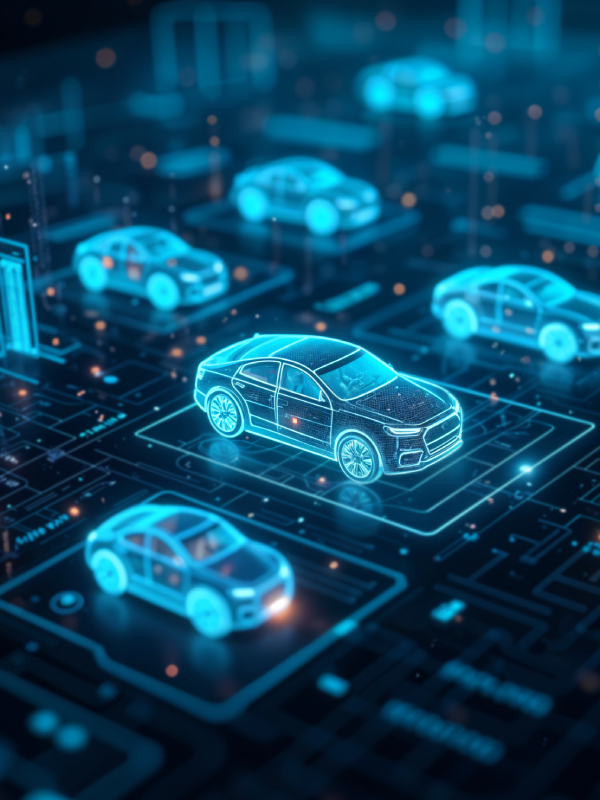
This two-day workshop introduces participants to the autonomous vehicle software development pipeline using the CARLA simulator. Through programming exercises, and practical experiments, participants will learn to configure virtual driving environments, interact with simulated vehicle sensors, implement basic perception algorithms, develop path-planning and control methods, and test autonomous driving behaviour under different traffic conditions.

The workshop emphasizes learning by doing, enabling students to progress from basic vehicle simulation to integrating software modules into a simple autonomous-driving pipeline. No physical vehicle or sensor hardware is required.

Quick Details:
  • Duration: 2 Days (Forenoon & Afternoon Sessions)
  • Simulation Platform: CARLA Simulator
  • Programming: Python
  • Focus Areas: Autonomous Vehicle Simulation, Sensor Processing, Perception, Path Planning, Vehicle Control & Scenario-Based Testing
  • Training Mode: Software-Based
  • Final Activity: Autonomous Driving Simulation Challenge

LEARNING OUTCOMES

By the end of the workshop, participants will be able to:

Autonomous Vehicle Architecture: Understand the major components of an autonomous driving system, including perception, localization, planning, and control, and how they interact.
CARLA Simulation & Python Programming: Create simulated driving environments, spawn vehicles, configure traffic scenarios, and control a virtual vehicle programmatically using Python.
Virtual Sensor Integration: Configure and acquire data from simulated RGB cameras, depth cameras, LiDAR, GNSS, and IMU sensors, and visualize the collected data.
Perception Algorithms: Explore camera-based object detection and basic lane perception, along with introductory LiDAR-based obstacle detection.
Path Planning & Navigation: Generate waypoints, understand route and path planning, and implement basic navigation logic to guide a vehicle towards a destination.
Vehicle Control: Implement and tune basic control algorithms such as PID and Pure Pursuit to follow a route and improve trajectory tracking.
Scenario-Based Testing: Evaluate autonomous driving behaviour under different traffic conditions, identify failures, and measure performance using metrics such as collision count and route completion.
Integrated Autonomous Driving: Combine selected simulation, perception, planning, and control modules into a basic autonomous-driving demonstration.

WORKSHOP SCHEDULE

DAY 1: SIMULATION, SENSORS & PERCEPTION

Forenoon Session: Simulation Fundamentals and Vehicle Programming

  • Introduction to autonomous vehicle architecture and the AV software development pipeline.
  • Introduction to CARLA, simulated maps, vehicles, and driving environments.
  • CARLA Python API fundamentals and programmatic vehicle control.
  • Practical lab: Spawn an ego vehicle and implement throttle, steering, and braking commands.
  • Configure simulated traffic and retrieve vehicle state information.

Afternoon Session: Virtual Sensors and Perception

  • Introduction to simulated RGB, depth, and semantic cameras, LiDAR, GNSS, and IMU.
  • Hands-on lab: Attach virtual sensors to the ego vehicle and visualize sensor outputs.
  • Camera-based perception using a pretrained object detection model such as YOLO.
  • Introduction to LiDAR point-cloud processing and basic obstacle detection.
  • Practical experiment: Identify surrounding objects and determine whether an obstacle is present near the vehicle.

Day 1 Deliverable: A programmatically controlled simulated vehicle with configured virtual sensors and a basic perception demonstration.

DAY 2: PATH PLANNING, CONTROL & AUTONOMOUS DRIVING

Forenoon Session: Navigation and Vehicle Control

  • Introduction to vehicle localization, position, orientation, and waypoint generation.
  • Route planning and basic path-planning algorithms.
  • Introduction to vehicle steering and longitudinal control.
  • Hands-on lab: Implement and tune PID and Pure Pursuit-based waypoint following.
  • Observe trajectory tracking, steering behaviour, and the effect of controller parameters.

Afternoon Session: Integration, Testing and Autonomous Driving Challenge

  • Introduction to modular autonomous vehicle software and ROS 2 concepts.
  • Integrate selected perception, planning, and control components.
  • Configure driving scenarios involving traffic, pedestrians, and static obstacles.
  • Hands-on experiment: Test autonomous navigation from a predefined start point to a destination.
  • Team-based autonomous-driving challenge, performance evaluation, and project demonstrations.

Day 2 Deliverable: A basic autonomous-driving pipeline demonstrated in simulation, with documented test results and performance observations.

CAPSTONE & KEY HIGHLIGHTS

  • End-to-End AV Software Experience: Understand how simulation, perception, planning, and control work together in an autonomous vehicle.
  • Hands-On Python Development: Gain practical experience in controlling simulated vehicles and processing virtual sensor data.
  • Algorithm Implementation: Experiment with object detection, waypoint navigation, and basic vehicle-control algorithms.
  • Scenario-Based Evaluation: Test autonomous driving behaviour under different traffic and environmental conditions.
  • Team-Based Capstone Challenge: Develop and demonstrate a simulated vehicle that navigates towards a predefined destination while minimizing collisions.

PREREQUISITES & REQUIREMENTS

  • Basic knowledge of Python programming is recommended.
  • Familiarity with basic programming concepts and mathematics will be helpful.
  • Prior autonomous vehicle or robotics experience is not mandatory.
  • A laptop or workstation capable of running the CARLA simulator is required. GPU-equipped systems are strongly recommended.
  • Required software installation instructions and system specifications will be communicated before the workshop.
  • The workshop is entirely software-based. No physical vehicle, LiDAR, camera, or other vehicle hardware is required.

REGISTRATION DETAILS

Admissions Apply Now