Amrita Eye Care Champions | Wayanad, India
From Sub-Saharan Africa to Honduras, and now to the rural communities of Wayanad, the Amrita Eye Care Champions initiative continues to expand its reach, building grassroots capacity to prevent avoidable blindness.
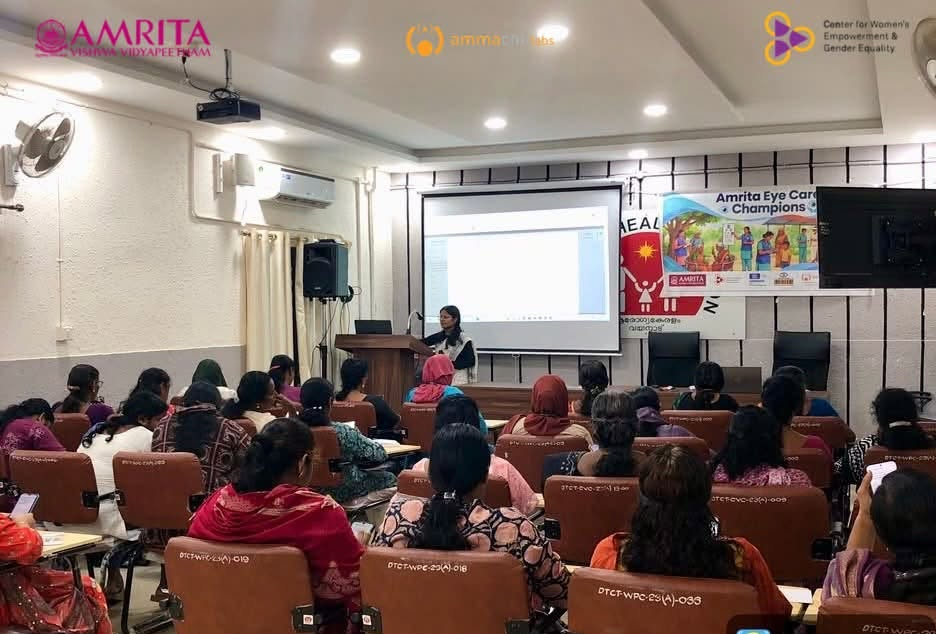
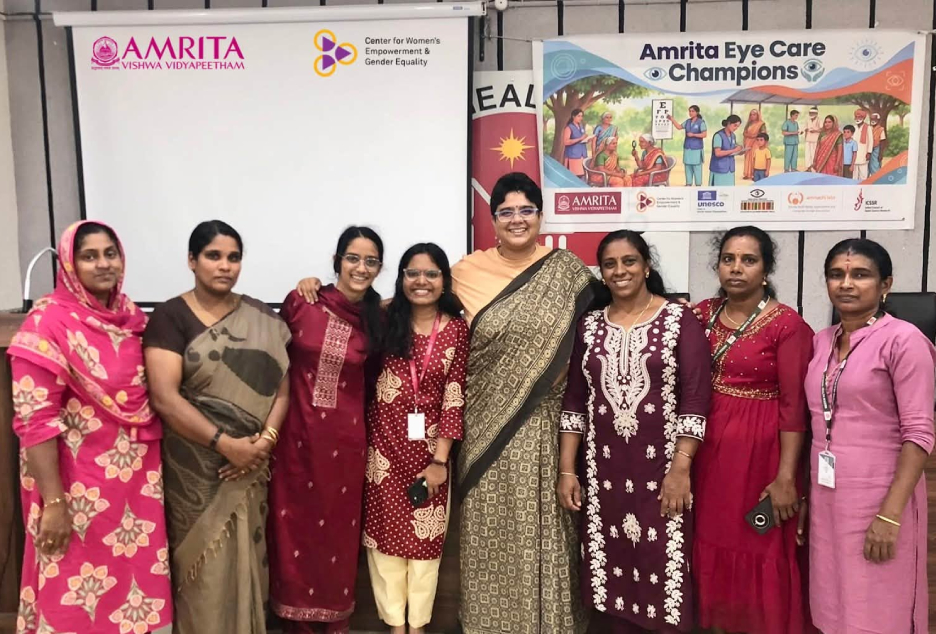
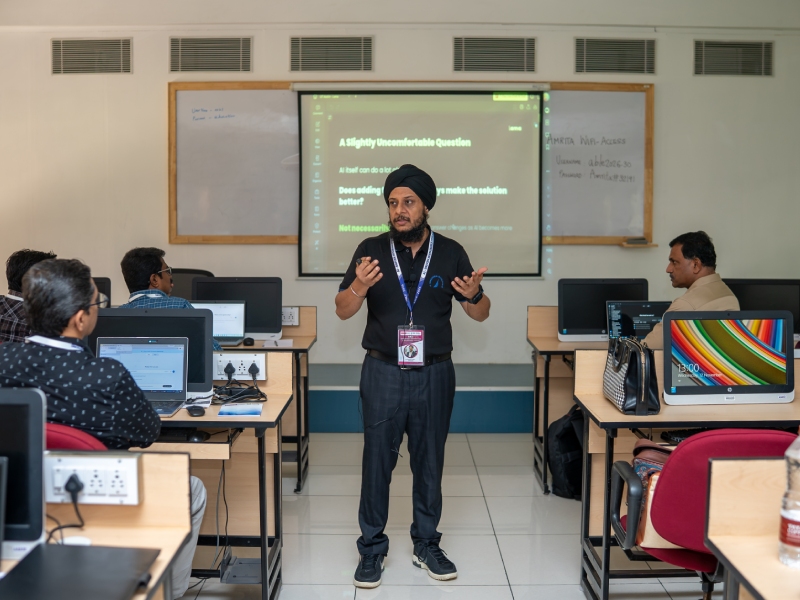
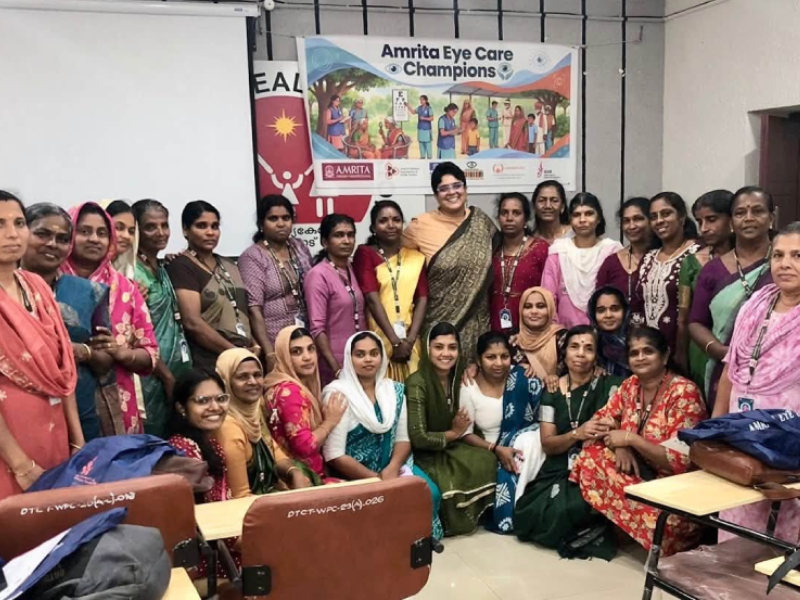
Thirty ASHA workers from Kalpetta Taluk participated in a three-day hybrid training programme held at the District Training Centre, Thariyode. The programme equipped frontline health workers with practical skills to support the early identification of vision problems and facilitate timely referrals, particularly in remote and predominantly tribal communities.
Bringing Eye Care Closer to the Community
The training combined structured digital learning with practical, hands-on instruction. By strengthening the knowledge and confidence of ASHA workers, the programme aims to bring basic eye-health awareness and early screening closer to people who may otherwise face barriers in accessing specialised eye care.
Community-Level Capacity Building
Thirty ASHA workers were trained to support early identification of vision problems and guide community members towards timely referral and care.
Learning Through a Blended Approach
The programme brought together digital instructional content and practical field-oriented training. Participants received structured learning resources designed to help them understand basic vision screening and referral processes.
From Training to Local Action
The focus of the programme extends beyond classroom learning. By placing practical eye-health knowledge in the hands of frontline workers, the initiative creates a local network capable of identifying potential vision problems and connecting community members with appropriate referral pathways.
This is particularly significant in remote and predominantly tribal communities, where early identification and timely referral can play an important role in preventing avoidable vision loss.
A Memorable Meeting with Amma
The participants also had the opportunity to meet our Chancellor, Sri Mata Amritanandamayi Devi, during her programme in Mananthavady.
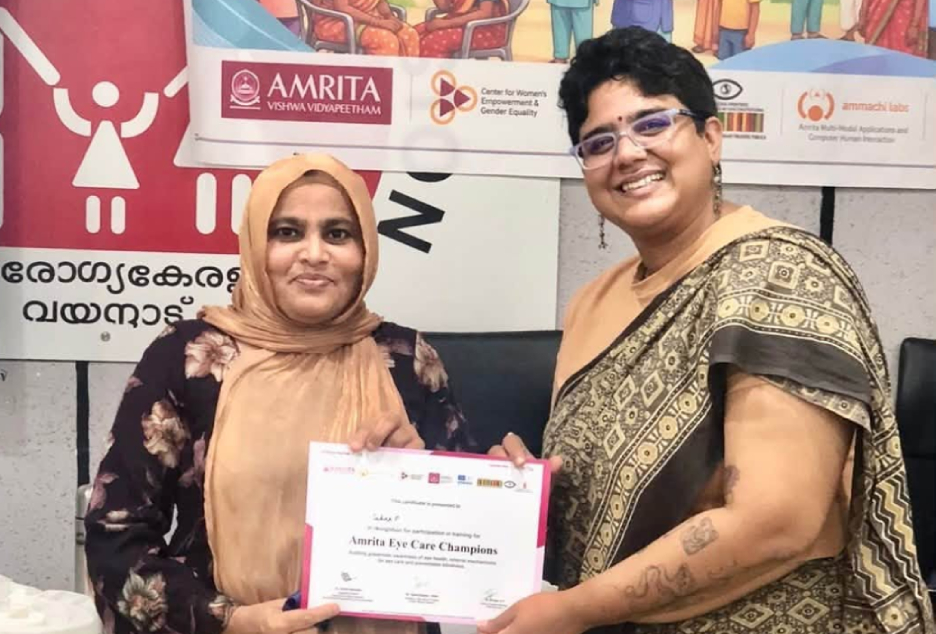
Amma lovingly blessed their certificates and offered each participant a prasad apple. The ASHA workers were deeply grateful for her darshan and blessings, making the occasion especially memorable for the participants.
Strengthening the Frontline of Eye Health
The Amrita Eye Care Champions initiative demonstrates how community-based capacity building can help extend essential health knowledge beyond conventional healthcare settings. By strengthening the capabilities of frontline health workers, the programme helps bring eye-health awareness, early screening and referral support closer to the communities that need it most.
The Wayanad programme is part of a wider effort to build grassroots capacity to prevent avoidable blindness and strengthen community-level pathways for early intervention.
Partnership & Implementation
Implemented by Amrita Vishwa Vidyapeetham’s Center for Women’s Empowerment & Gender Equality in partnership with Visió Sense Fronteres and supported by the Indian Council of Social Science Research, New Delhi.
Sustainable Development Goals
Connecting Community Action with Global Goals
The Amrita Eye Care Champions initiative contributes to healthier, more inclusive communities by strengthening frontline capacity and improving access to early eye-health support.
03 – Good Health & Well-Being
Supports early identification of vision problems, timely referral and improved access to essential eye-health knowledge at community level.
04 – Quality Education
Uses a 12-module blended learning curriculum and practical training to strengthen the knowledge and skills of frontline health workers.
10 – Reduced Inequalities
Extends eye-health knowledge and referral support towards remote and predominantly tribal communities that can face barriers to specialised care.
Bringing Eye Care Closer to Every Community
By empowering frontline health workers with practical knowledge and resources, Amrita Eye Care Champions is helping communities take an important step towards earlier detection, timely referral and healthier futures.