


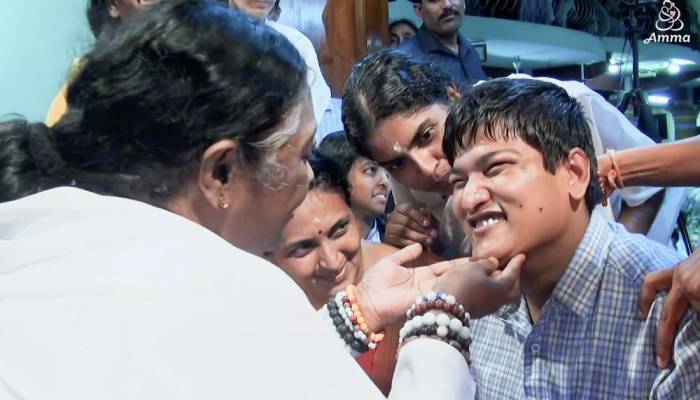
Since its proclamation in 1992 by the United Nations General Assembly, the United Nations International Day of Persons with Disabilities (IDPD) has been celebrated every year on 3 December around the world.
To lead a life with dignity
The observance of the IDPD aims to promote an understanding of disability issues and to mobilize support for the dignity, rights and well-being of persons with disabilities. The 2025 IDPD theme – Fostering disability-inclusive societies for advancing social progress.
The United Nations’ commitment to the fulfilment of all human rights for persons with disabilities has been strengthened by the widely ratified Convention on the Rights of Persons with Disabilities (CRPD) and by the 2030 Agenda for Sustainable Development.
The Convention reaffirms the universality, indivisibility, interdependence and interrelatedness of all human rights and fundamental freedoms and the need for persons with disabilities to be guaranteed their full enjoyment without discrimination.
Amma’s Vision: Empowerment for self-confidence and independence
Through the Ashram (Mata Amritanandamayi Math), Amma has already led transformative educational initiatives for children with disabilities.
In 1996, the Amrita Speech and Hearing Improvement School opened, one of the few schools in Keralam that uses evidence-based methods to support spoken-language development in Deaf children.
In 2009, the Amrita Institute for Differently Abled began with two schools for students with intellectual disabilities (Down syndrome, epilepsy, autism and other learning disabilities). By listening carefully and going to their level of understanding, this therapeutic approach supports development at a pace the child chooses.
Amrita’s Mission: Spearheading tech-enabled empowerment
In September 2025, Amrita Vishwa Vidyapeetham and UNESCO launched a new Chair on Assistive Technologies in Education.
With a vision to champion educational access for people with disabilities, the Chair on Assistive Technologies in Education aims to bridge global research with practical solutions based on the latest AI, audio and video solutions.
The new UNESCO Chair makes Amrita the only university in India to host three Chairs, working together at the intersection of inclusive education, gender equality, and global sustainability.
This new Chair joins the Chair on Gender Equality and Women’s Empowerment (established 2016) and the Chair on Experiential Learning for Sustainable Innovation and Development (established 2020).
The agreement was formally signed by Audrey Azoulay, Director-General of UNESCO, and Dr P. Venkat Rangan, Vice Chancellor of Amrita. Dr Prema Nedungadi, Associate Dean with the School of Computing, and Dr Raghu Raman, Dean with the School of Business, serve as Co-Chairs.
“Amma has always taught that true compassion means empowering every individual to live with dignity and independence. She has established schools for children with intellectual disabilities and for the Deaf,” said Dr Nedungadi.
Alongside these initiatives, Amrita University is developing technologies that strengthen communication and accessibility—tools that support spoken-language development, provide audio description for blind and low-vision users, and advance sign-language innovation for Deaf communities, she added.
Alongside, Amrita University is creating technologies that give voice to the voiceless, sight to the blind through audio description, and communication to the Deaf through sign language innovation,” said Dr Nedungadi.
Assistive Technologies: Spearheading Independent, Inclusive and Personalized
The Chair will focus on developing AI-enabled chatbots, Indian Sign Language (ISL) video recognition, and audio description tools, in addition to capacity-building through academic training and international collaboration.
It is also developing an ISL-integrated accessibility interface for e-Governance services, with an initial version already implemented on the UMANG platform, developed by the Ministry of Electronics and Information Technology (MeitY) and the National e-Governance Division (NeGD).
Guided by universal design principles, research and technological solutions are co-created with persons with disabilities, neurodivergent individuals, with active input from disability leaders and the broader community—ensuring that accessibility is built into every project, not retrofitted later.
This forward-thinking dedication reflects Amma’s continued leadership in aligning academic excellence, compassion-driven research with on-the-ground initiatives.
Research publication: “Vision transformer-powered conversational agent for real-time Indian Sign Language e-governance accessibility” published in Nature Scientific Reports, Sept 2025.
Article link: https://www.nature.com/articles/s41598-025-12667-3
Project: https://www.amrita.edu/project/sign-language-accessibility-for-e-governance-services/
Live on UMANG platform: https://web.umang.gov.in/landing/accessibility)
User feedback from International Purple Fest 2025, which demonstrates social impact - how research has translated into empowering the Deaf community using AI-chatbot: https://www.linkedin.com/feed/update/urn:li:activity:7392444083132100608
Website link: https://www.amrita.edu/project/ai-disability-studies/
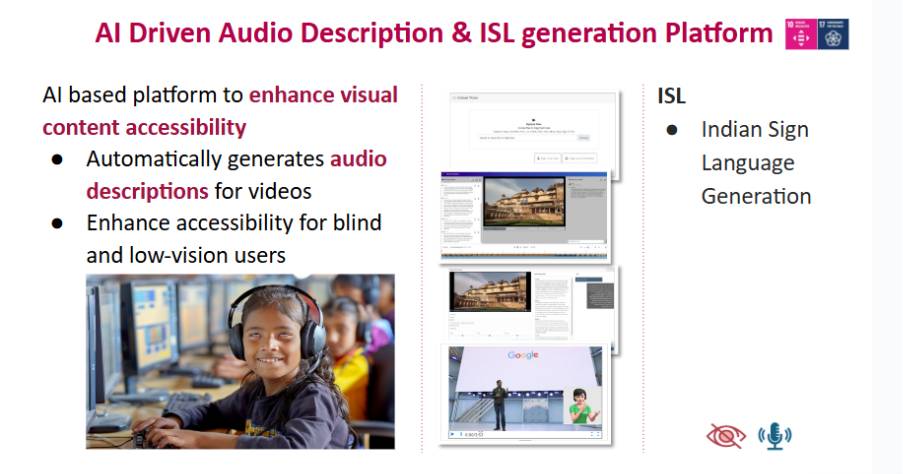
ChalaChitra Vaachana offers user-friendly web and mobile interfaces for generating intelligent audio descriptions. These descriptions are translated into Indian Sign Language (ISL) videos. The platform utilizes advanced AI models to accurately interpret scenes in videos. It supports a wide range of video formats and generates precise and detailed descriptions. The platform supports various output formats and includes features that enable content creators to review and edit descriptions. The project aligns with UN SDGs, making educational content more accessible (SDG 4) and bridging existing accessibility gaps (SDG 10).
Link: https://www.amrita.edu/project/chalachitra-vaachana-ai-based-intelligent-audio-description-platform/
Sign Language Accessibility for e-Governance Services (Completed)
A hearing-impaired-friendly web application to ensure accessibility to e-Governance services is under development. In India, e-Governance accessibility for Divyangjan is a challenge. Amrita Vishwa Vidyapeetham and CDAC are developing an accessibility interface integrating Indian Sign Language (ISL) into e-Governance services to make e-Governance accessible for deaf individuals.
The updated interface will be implemented across 25 UMANG services, increasing accessibility. The UMANG platform is a mobile e-Governance app developed jointly by the Ministry of Electronics and Information Technology (MeitY) and the National e-Governance Division (NeGD) to promote Mobile Governance in India.
https://www.amrita.edu/project/sign-language-accessibility-for-e-governance-services/
OLabs: Online Educational Science Labs using AR/VR Technology
The immersive teaching-learning experience employs elements of gamification that drive user engagement. Moreover, instruction provided to the learner using Virtual Labs also reduces teaching time.
At the same time, the AR/VR experience as a differential teaching tool can help increase learner motivation in students with special needs. Physics, Chemistry, Biology, and other lower-class science labs are under development.
https://www.amrita.edu/project/online-educational-science-labs-using-arvr-technology/
Indian Sign Language labs: https://www.olabs.edu.in/?pg=bindex&bsub=isl
Early Identification and Personalized Support for Learning Disabilities (Broad overview)
Amrita CREATE is dedicated to developing effective strategies for measuring and addressing learning disabilities in children. By bringing together professionals from diverse fields, we are creating reliable assessment methods and innovative and cost-effective solutions that provide personalized learning experiences, automate routine tasks, and adapt learning materials to individual needs.
These include using technologies such as Automatic Speech Recognition (ASR) and pattern recognition to provide customized feedback and support, NLP to enable text-to-speech or speech-to-text software, AR and VR to offer immersive learning experiences, and cognitive robots to improve social development and reinforce learning. Ultimately, the goal is to empower children with learning disabilities, enhance their understanding and retention of information, and improve their overall well-being.
Patent Granted
Amrita Learning: Equality in Education
Link: http://leq.amritacreate.org/condition/dyslexia
Technology for Speech Enhancement for Articulation Error
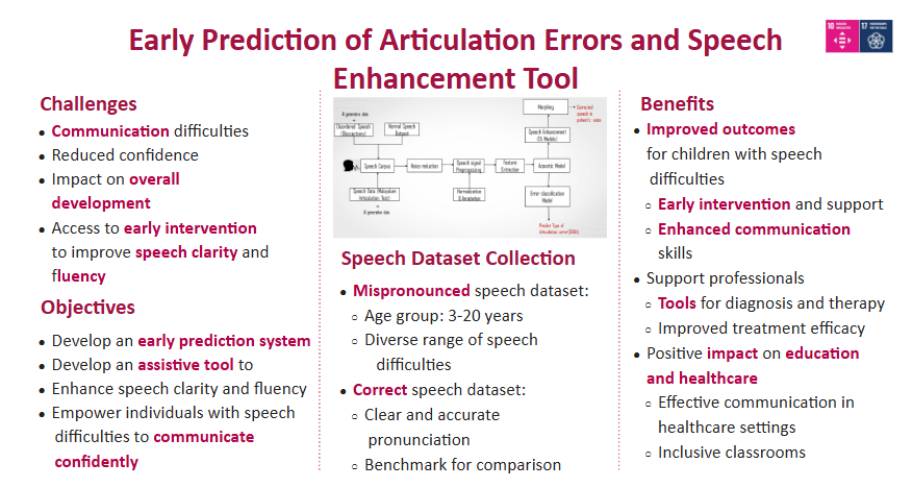
We are pursuing cutting-edge solutions for improving voice articulation in individuals who experience difficulties with communication. Leveraging the latest advancements in Automatic Speech Recognition (ASR), our team is developing technology to detect and correct pronunciation errors as they happen, thereby enhancing speech more effectively. We anticipate that this project will significantly improve confidence and overall communication outcomes.
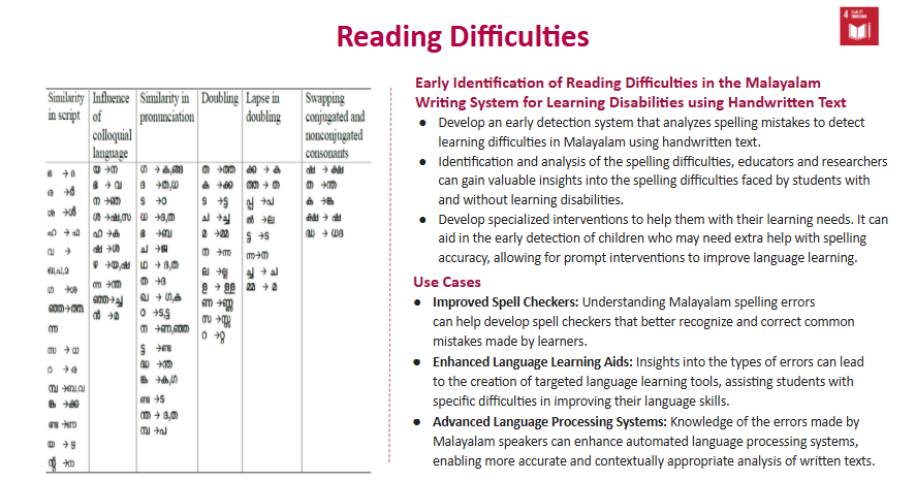
Filed visit: 12 September 2025 – Visit to ASHISH
A team from Amrita CREATE and the UNESCO Chair visited the Amrita Speech and Hearing Improvement School (ASHISH) to engage with students, teachers, and parents, exploring co-designed solutions for Deaf and hard-of-hearing learners.
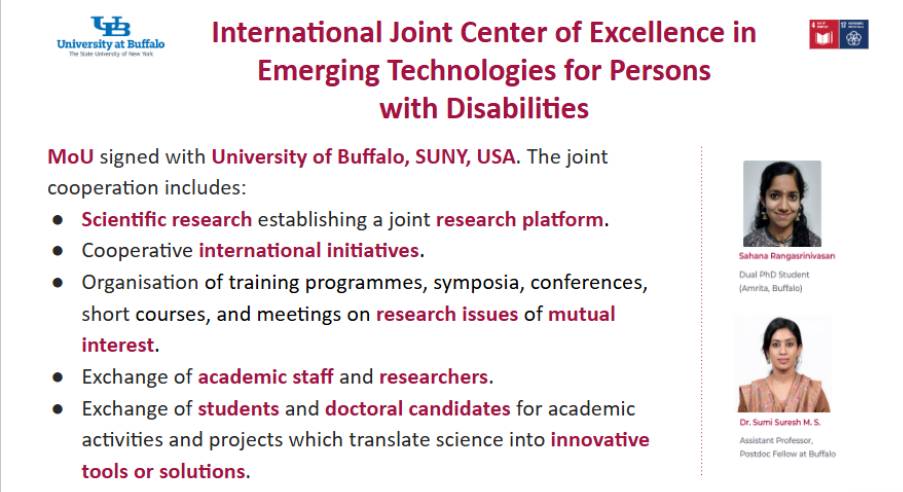
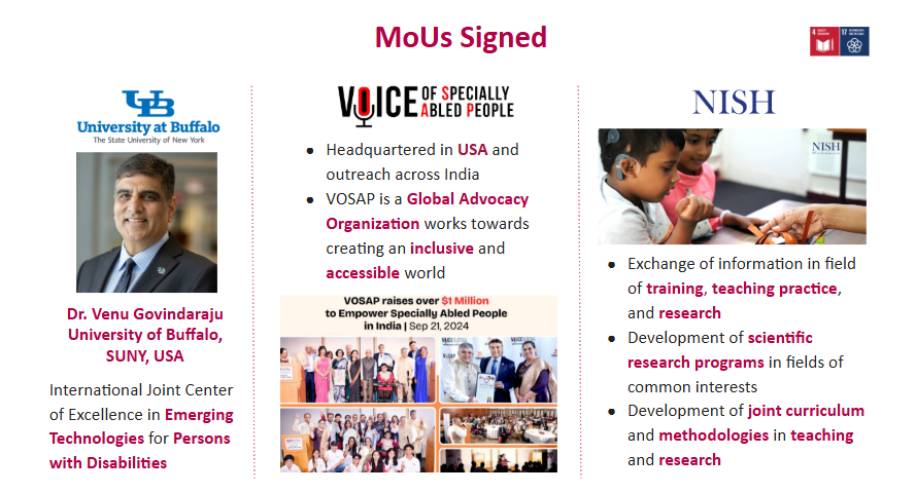
2 July 2025
Inclusive Design at NIOS “Education Without Walls”
At NIOS’s consultation on the future of open schooling, an Amrita professor contributed expertise on inclusive design aligned with NEP 2020. Focus areas included accessible content formats, universal design for learning, and flexible models for diverse learners.
23 September 2025 – Webinar: Advancing Indian Sign Language
A national-level webinar brought together experts to discuss ISL interpretation, technology, higher education access, and the role of AI in scaling ISL support.
12 October 2025 – International Purple Fest Goa
Amrita showcased assistive technologies including ISL-enabled chatbots and accessible educational platforms supporting Deaf and visually impaired users.
3 October 2025 – EMPOWER 25, IIT Delhi
Amrita demonstrated inclusive technologies and accessible STEM tools, highlighting pathways from research prototypes to national-scale deployment.
10 October 2025 – DEI Roundtable: “From Intent to Impact”
A DEI roundtable led by the UNESCO Chairholder explored embedding inclusion into institutional policies and practices.
14 October 2025 – Driving Inclusion: Assistive Technologies
The Chairholder emphasized ISL-enabled chatbots, ISL OLabs, and accessible learning ecosystems supporting inclusive education for India’s Deaf and hard-of-hearing community.
SDG linkage:
Announcement as appointment as Chair
The Govt of India has appointed Amma as the Chair of the country’s Civil 20 (C20), an official engagement group of the Group of 20 (G20). The G20 is the premier intergovernmental forum for the world’s developed and emerging economies to address financial stability on a global basis. The C20 is its platform for civil society organizations (CSOs) to bring forth non-government and non-business voices to the G20 leaders.
References
Amma Initiates ₹50 Crore Humanitarian Project as Part of Civil 20 India (2023)
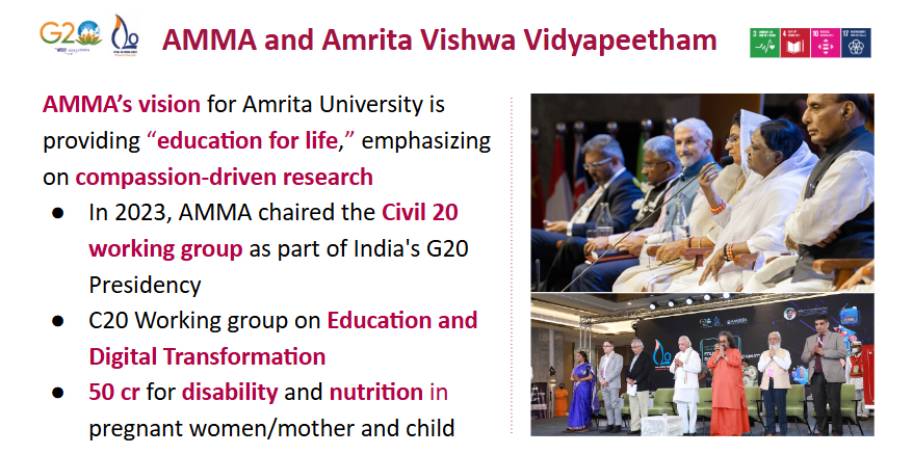
Amma has initiated a ₹50 crore ($6 million+) project to support the welfare of people with disabilities and pregnant women who are malnourished. Work will take place in underdeveloped districts across India, as well as in other developing nations.
Reference
https://www.amrita.edu/news/humanitarian-initiatives-civil-20-india/
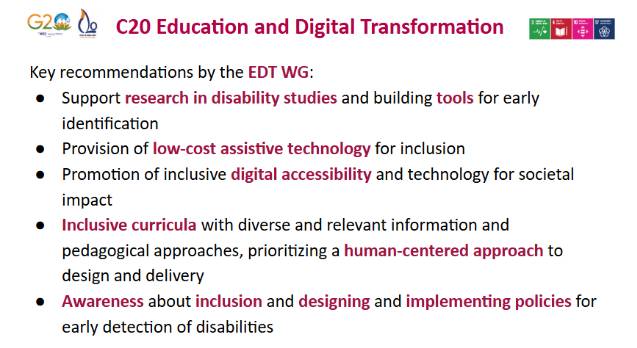
One of the key themes the Civil C20 Working Group on Education and Digital Transformation—led by Amrita Professor Prema Nedungadi, Associate Dean, School of Computing, Amrita University; Director, Amrita CREATE, and C20 India Coordinator—is focusing on is Education for Persons with Disabilities.
Recently, during the Civil 20 Education and Digital Transformation Summit held in the month of May an MoU was signed between Amrita Vishwa Vidyapeetham and the University at Buffalo, USA in this area.
Establishment of Special Schools
Amrita Special School For Mentally Handicapped, Institutes For Mentally Challenged, Thoppumpady, Ernakulam
(v) Other initiatives
Amma gives wheelchairs to Keralam’s poorest (2004)
https://www.amritapuri.org/4873/gives-wheelchairs.aum
3) Other Amrita Research (Broad)
Down Syndrome
(Dr. Prem Nair mentioned this initiative is imp)
Dr. Sheela Namboothiri, Head, Paediatric Genetics, Amrita Hospital talks about lack of attention and awareness about genetic disorders in India
Video: Dr. Sheela Namboothiri, Head, Paediatric Genetics, Amrita Institute of Medical Sciences, Kochi
Dr. Sheela Namboothiri, Head, Paediatric Genetics, Amrita Institute of Medical Sciences, Kochi
Tell us something about Amrita’s role in supporting children with Down Syndrome (2017)
In the past 11 years we have seen around 750 children with Down syndrome and it is important to do something extra for the patients rather than saying that you have a condition for which you have no cure.
The aim of setting up the group
Read more at
India’s first device for speech impairment (2023)
Netravaad: Device that turns eye signs to speech for people with speech issues
HuT Labs develops India’s first device that enables people with speech impairment to communicate with the world by using simple eye signs
Mobility
(i) Amrita University Develops Innovative Gesture based Wheelchair for Elderly (2015)
https://ammachilabs.org/amrita-university-develops-innovative-gesture-based-wheelchair-for-elderly/
(ii) India’s first self-driving wheelchair (2018)
https://www.facebook.com/amritapuricampus/photos/a.834537383284795/2148320078573179/?type=3
(iii) Amrita Develops “Maruti” (2020)
A Remote Controlled Wheelchair during COVID Pandemic Social Distancing
(iv) Chetak – A service robot (2021)
Prosthetics
(i) Design and Control of Myo-Electric Prosthetic Arm
Features of the Arm
Targeted Customers
Medical Interventions
(i) Amrita hospital carries out the first-ever double hand transplant in India (2015)
https://www.amrita.edu/news/amrita-hospital-performs-indias-first-two-double-hand-transplants/
(ii) India’s first double forearm transplant at Amrita Hospital (2016)
https://www.amritapuri.org/64808/forearm.aum
(iii) Asia’s first upper arm double hand transplant done at Kochi’s Amrita Hospital (2017)
(iv) First In Asia: Amrita Hospital, Kochi Performs First Robotic DBS Implantation On Parkinson’s Patient (Neurodegenerative) (2017)
Although not curative, DBS significantly improves the quality of life and helps in reducing the medication burden and prolongs the functionality of the patient by almost a decade (helps significantly improve motor fluctuations)
(v) Bilateral hand transplants at Amrita School of Medicine (2022)
(vi) DBS used to treat patient diagnosed with dystonia, a movement neurological disorder (2022)
Reema, when was brought to Amrita was unable to open her eyes and even talk. DBS is a neurosurgical procedure that involves the implantation of a neuro-stimulator (brain pacemaker) in the patient’s body which, through wires connected to the head, sends electrical impulses to specific areas in the brain.
DBS is a well-recognized treatment for disorders like Parkinson’s, epilepsy, movement disorders, chronic pain, depression, and obsessive-compulsive disorders once they fail to respond adequately to medical treatment.
(vii) 10 years after historic hand transplant, recipient helps other patients (2023)
Advanced Technologies
(i) Amrita Hospital, Kochi Officially Launches South Asia’s First Extended Reality Ecosystem in Healthcare
Applications of XR in patient and disease management in patients with disabilities (pathways to make accessing healthcare less stressful and less intrusive)
Amrita Hospital launches neurological disorders center
Other Amrita Centers
At the Amrita Mind Brain Center, we explore the brain and mind organization and function using experimental methods, computational neuroscience, and cognitive modelling from an interdisciplinary perspective going through the effects of neurotransmitters, network dynamics, and behaviour, during normal and disease conditions.
We also look into modelling various neurological disorders such as Parkinson’s and Alzheimer’s to identify exact mechanisms or how they implicate neurons at different brain regions involved in cognitive functioning.
https://www.amrita.edu/center/mind-brain/about
As part of the School of Sustainable Development, the program works with the Schools of Spiritual & Cultural Studies, Biotechnology, Engineering, Computing, Ayurveda, and Social & Behavioral Sciences. M.Sc in Yoga and Cognitive Science program is designed to provide students with an exceptional platform to cultivate their expertise and succeed in their desired careers. This is a postgraduate course provided by Amrita Vishwa Vidyapeetham at the Amritapuri Campus.
https://www.amrita.edu/program/mscyoga-and-cognitive-science/
Department of Physical Medicine and Rehabilitation
Department of Physical Medicine & Rehabilitation (PM&R) at Amrita hospital, Faridabad, is one of the extensive Rehabilitation Centre in the country where comprehensive medical rehabilitation services are available for short- and long-term occurrence to provide the highest quality of care for a wide variety of patients worldwide. Patients coming to Department of PM&R are first examined by a specialist doctor in OPD who investigates the case, diagnoses it and advises treatment. PM&R speciality wing, involves restoring function to promote healing and restoration for a person who has been disabled as a result of a disease, disorder, or injury.
What is Rehabilitation
Rehabilitation involves the use of physical agents and therapeutic exercise to help patients


