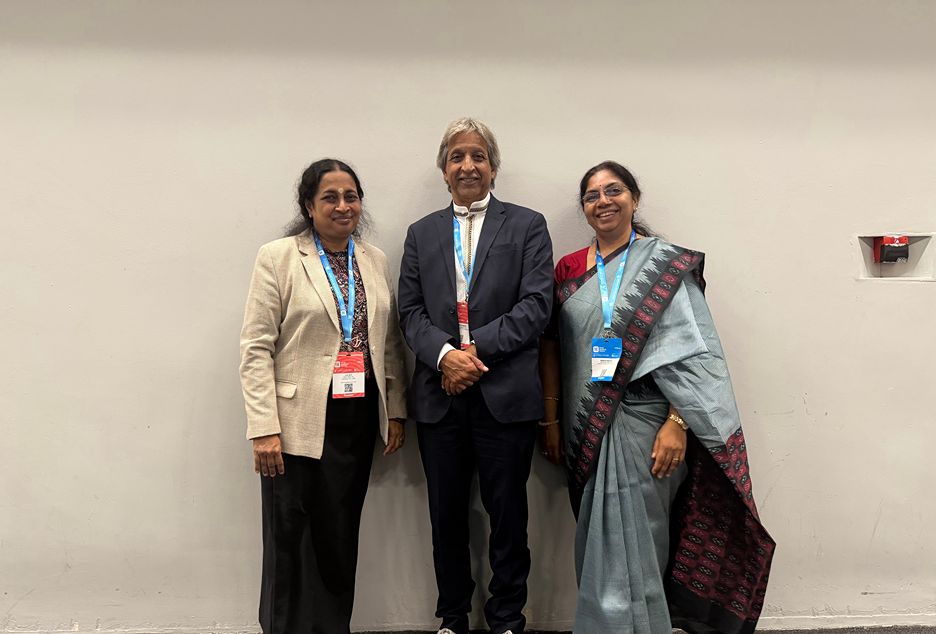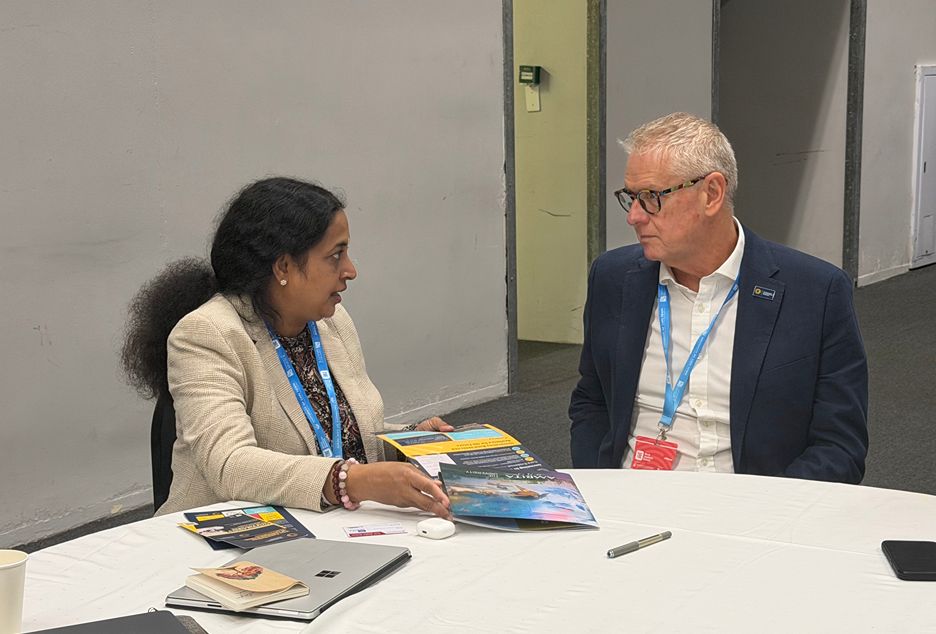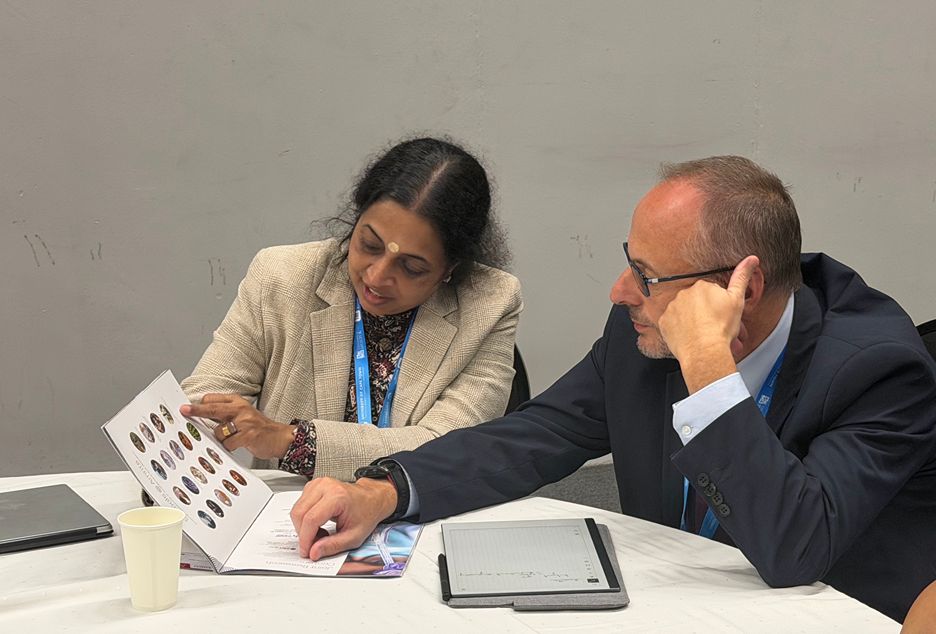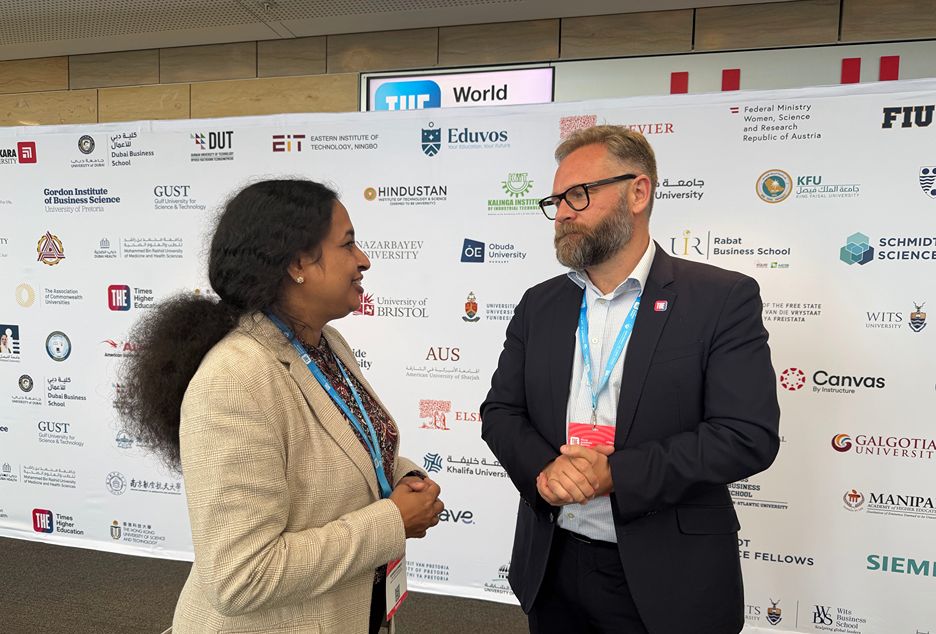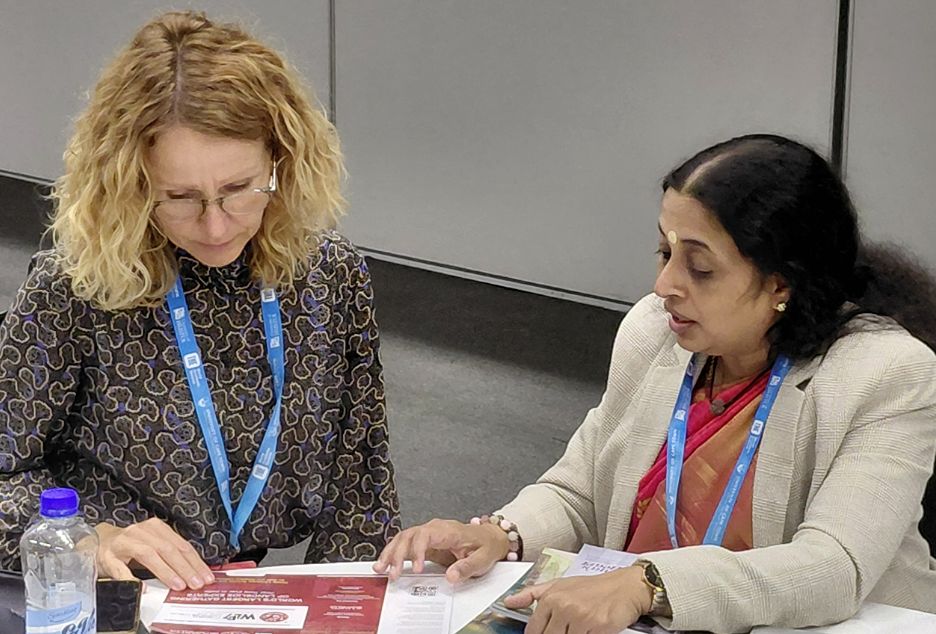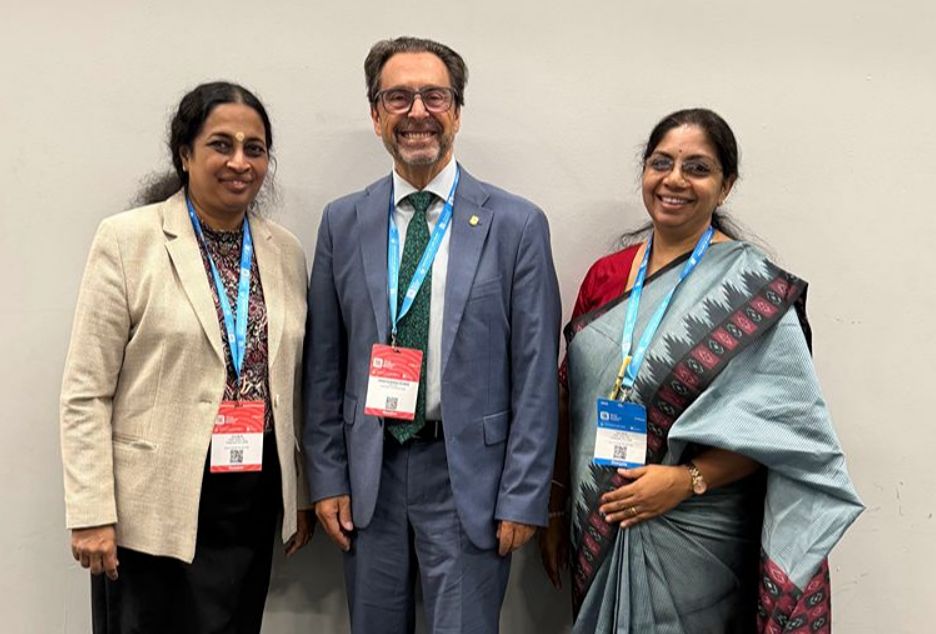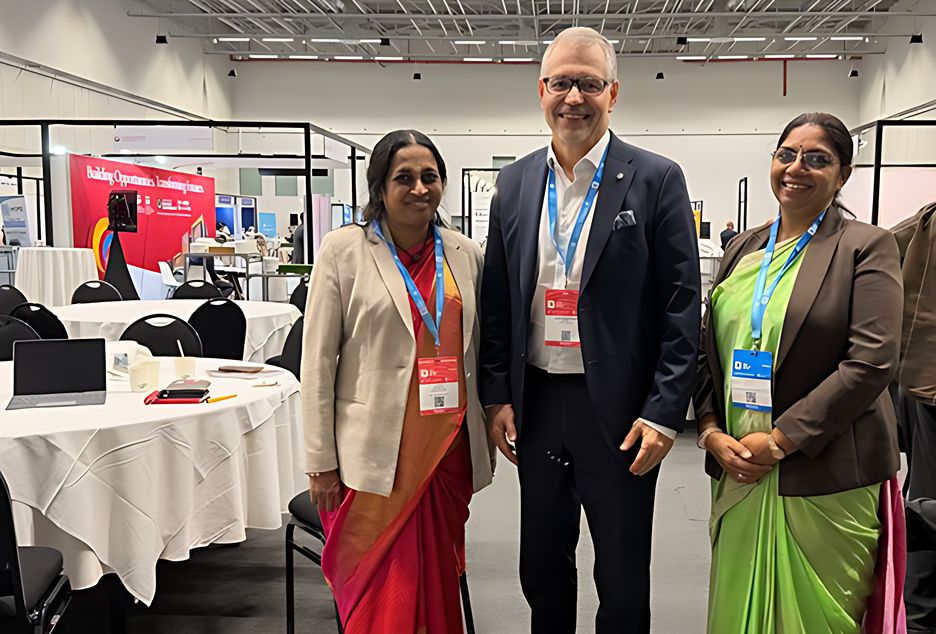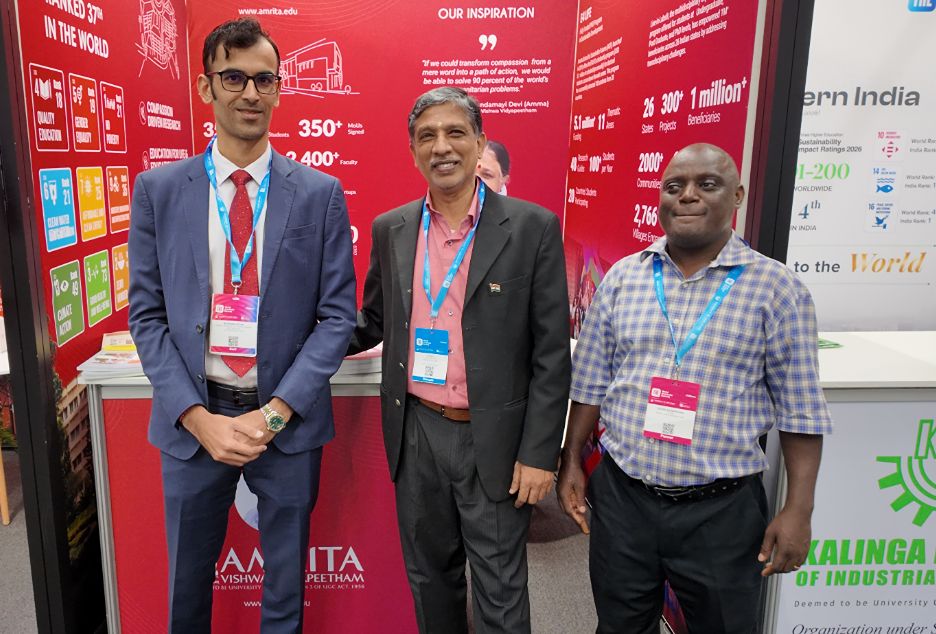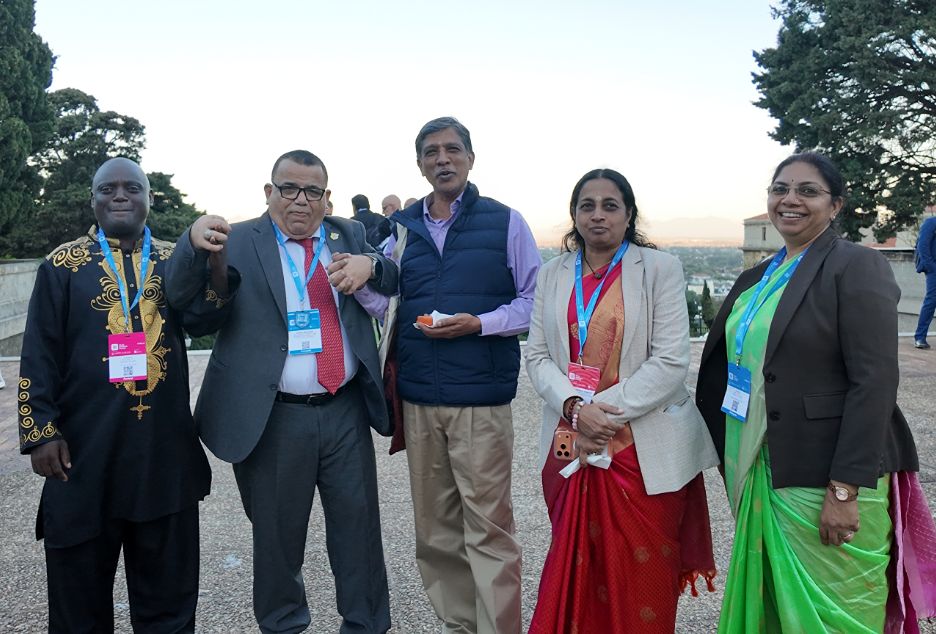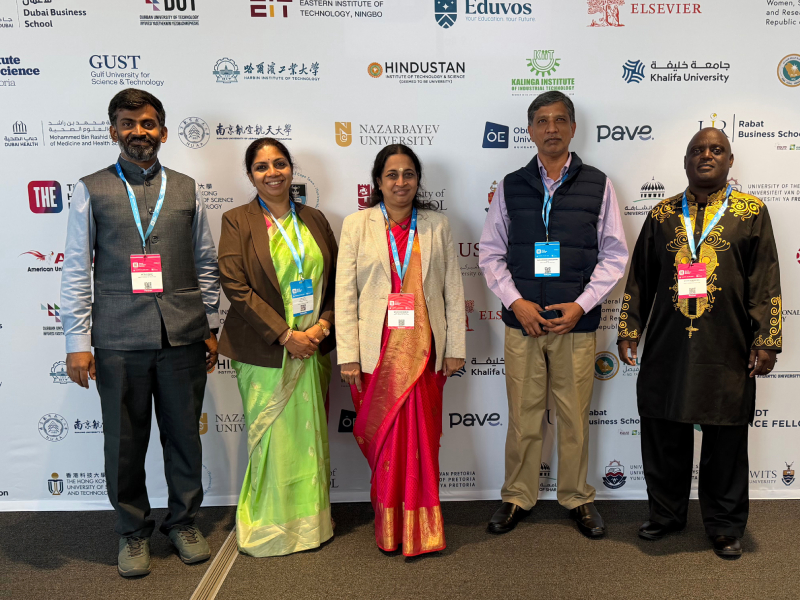
Amrita Vishwa Vidyapeetham shared its perspectives on critical thinking, teaching and assessment, and community-based learning at the Times Higher Education (THE) World Academic Summit 2026, held in Cape Town, South Africa, from September 29 to October 1, 2026. The summit, which also saw the announcement of the THE World University Rankings 2027, brought together higher education leaders from around the world to examine the role of universities in shaping knowledge, justice and sustainable futures.
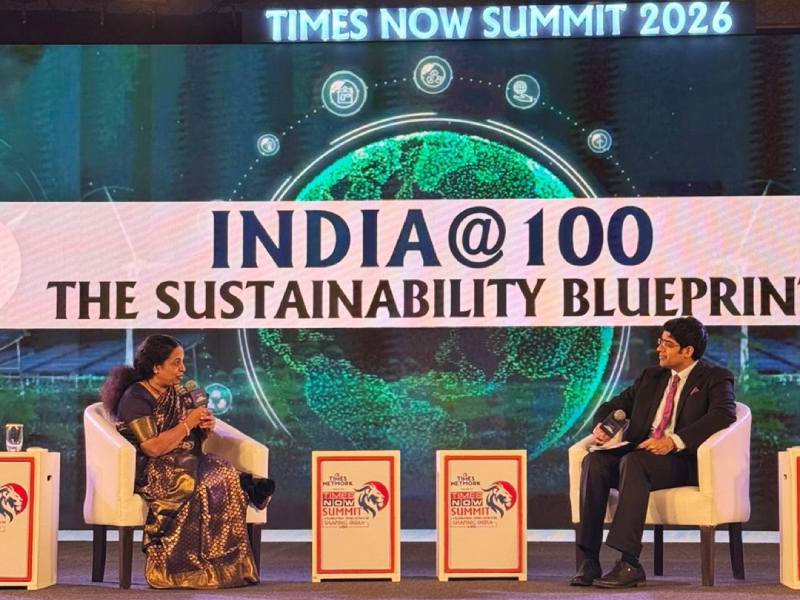
Dr. Maneesha V. Ramesh, Pro Vice-Chancellor, Amrita Vishwa Vidyapeetham, spoke on the panel “The university reset: How is South Asia remapping higher education for the age of AI?”, where she discussed how universities can help students develop independent judgement and use artificial intelligence responsibly.
Responding to the panel’s opening question on whether South Asian universities can become globally competitive, Dr. Maneesha said there was a strong possibility, precisely because the region’s universities have always been rooted in their own culture and lived for the needs of society. She recalled the guru–shishya parampara of India’s ancient seats of learning, Nalanda and Takshashila, where a close bond between teacher and student gave learners autonomy while shaping them into thinkers — a capacity, she said, that is needed all the more today.
That capacity is tested when information is already in every student’s hand. The challenge, she said, is to help students recognise bias in what AI tells them and judge whether it is right or wrong, and this calls for a change in the teacher’s role. “Teachers need to transform from providing information to being facilitators of the teaching–learning process, co-creating the information and the analysis along with the student and AI. You cannot stand separately and say, ‘I know everything.’ That perspective is completely gone,” she said.
Assessment must change with it. Open-book examinations, once the easy option, no longer work when students can simply obtain the answer from AI; the answer, she said, is a return to viva voce, oral questioning, dialogue and debate that draw out students’ thinking, together with continuous feedback. Amrita, she noted, has been moving from a discipline-oriented to a problem-oriented approach, in which students see and experience a problem — in the classroom, the laboratory or the community — and evaluate the process themselves. In one classroom exercise, AI-generated answers to an assignment are opened up before the class, and student groups are asked to critically identify what is wrong with them and explain their reasoning
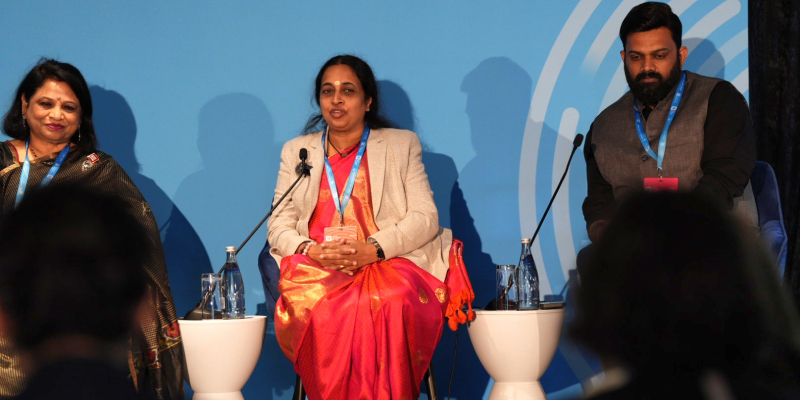
Drawing on Amrita’s Live-in-Labs® programme, in which students live in communities, understand their challenges and co-create sustainable solutions with residents, Dr. Maneesha described a new tension in the classroom: faculty expect human-centred design, and students increasingly return with AI-generated models and designs. The answer, she said, is not to reject such work but to use AI itself for feedback and then take the ideas back to the community. “When they come up with a solution, you don’t throw it away because it’s from an AI model. You send them back to the community to work on the ideas. There, collective and human intelligence play a bigger role than AI alone,” she said.
She also outlined Amrita’s multi-level approach to AI readiness, which builds capacity not only in students but in faculty and partners such as industry, with ethics and data considerations integrated into academics and research; governments, she added, must carry this into policy and regulation. Universities have weathered every decade’s new technology and the fears that accompanied it, she observed, and will adapt again — provided they work as a united ecosystem, thinking about change from both global and local perspectives.
“It is very important that we provide education for life, not education for living alone,” Dr. Maneesha said, recalling that this value once lived in every community in India and that Chancellor Amma had made ‘education for life’ the university’s guiding vision. She closed by invoking Amma’s call for compassion-driven research to solve global challenges. “If we keep that in focus, whatever technology or change comes, we will still be problem-oriented and working to solve the challenges prevalent in our society. Universities have to become the fulcrum for this change to happen in society,” she said.
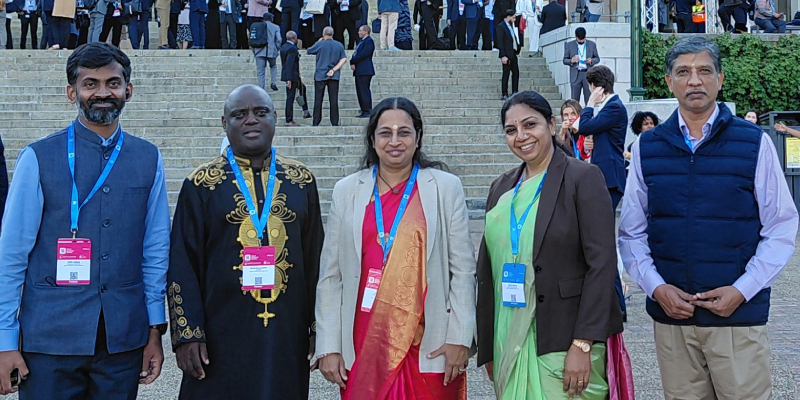
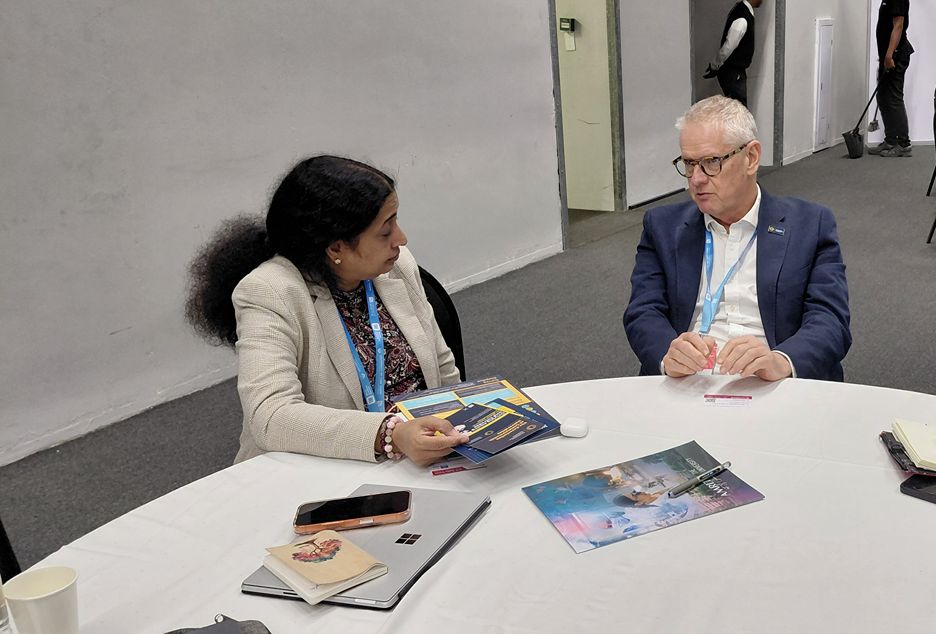
The Amrita delegation also included Dr. Raghu Raman, Dean, School of Business; Ms. Sindhu Manoj, Associate Director, Centre for International Programs; Mr. Nitin Kumar M., Scientific Officer-II (Disaster Risk Reduction), Center for Wireless Networks and Applications; and Dr. Douglas Marowa, an Amrita alumnus from Zimbabwe. On the sidelines of the summit, the delegation held discussions with leaders from Durban University of Technology, Tampere University, the University of Barcelona, SOAS University of London, IMT Atlantique and the Association of Commonwealth Universities.