From 2–4 October 2026, Amrita Vishwa Vidyapeetham participated in EMPOWER 2026, the 9th Annual Assistive Technology Conference at IIT Delhi, with an exhibition booth of AI-enabled accessibility solutions, an invited presentation by the Chairholder and a poster on early Indian Sign Language adoption


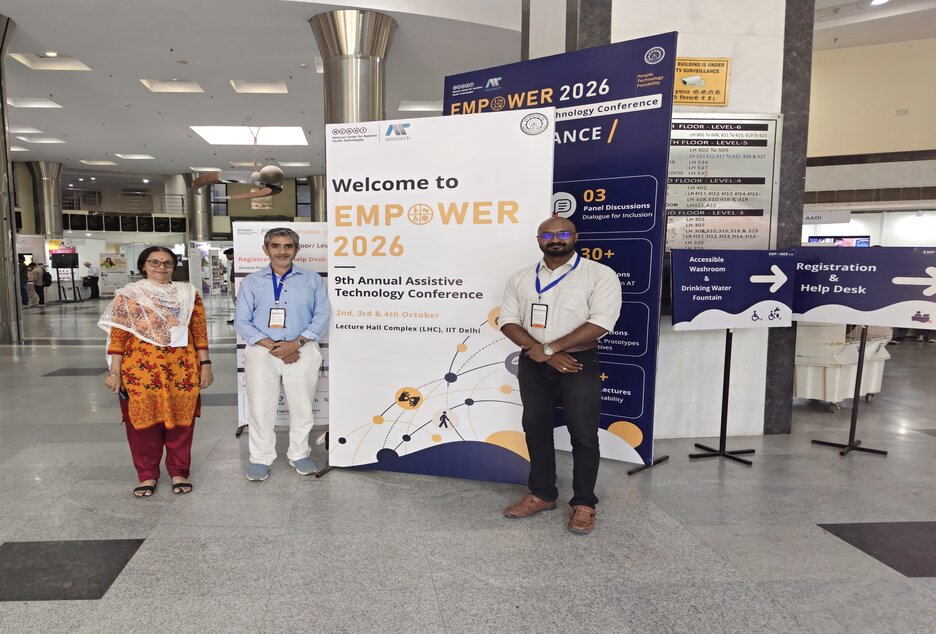
The UNESCO Chair on Assistive Technologies in Education at Amrita Vishwa Vidyapeetham participated in EMPOWER 2026 – the 9th Annual Assistive Technology Conference, held from 2 to 4 October 2026 at the Lecture Hall Complex, IIT Delhi.
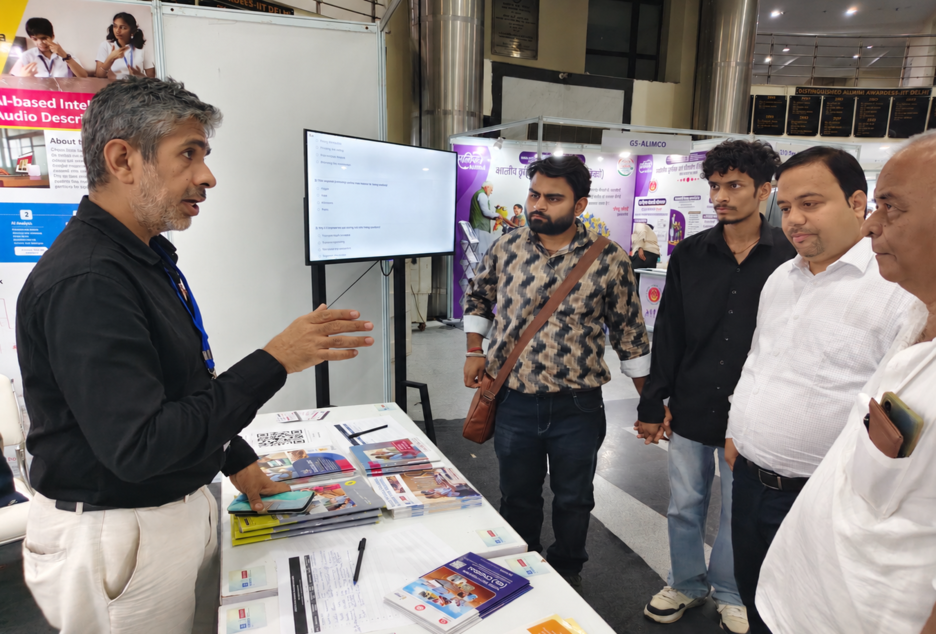
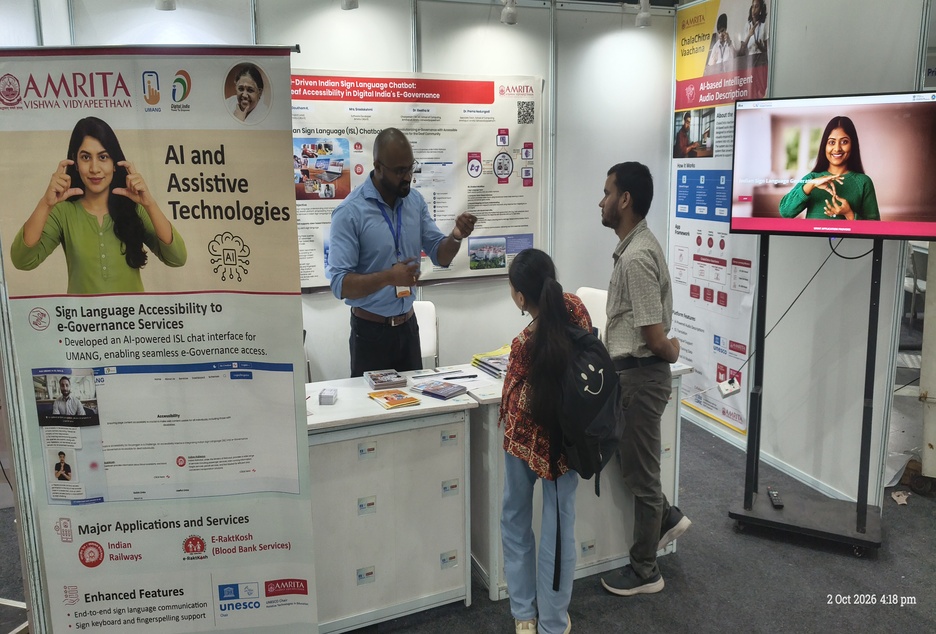
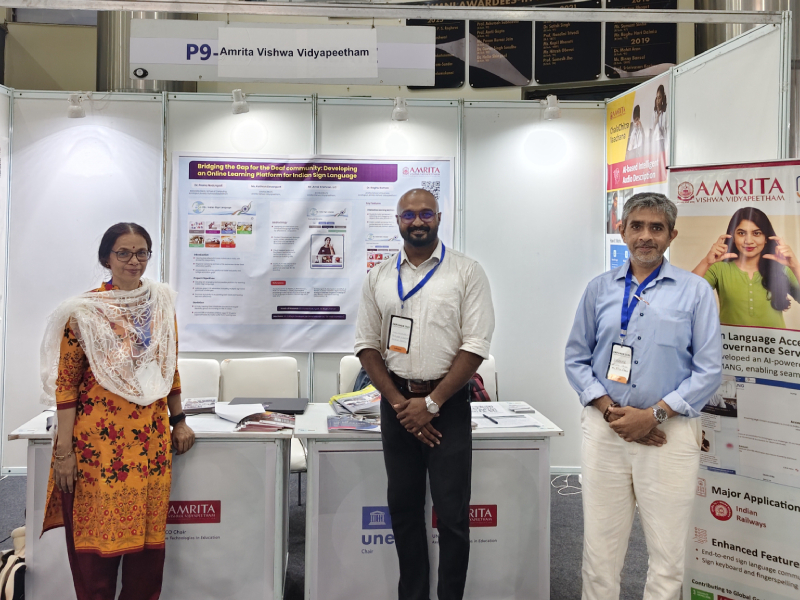
As part of the conference exhibition, the UNESCO Chair showcased its work in assistive technologies and accessible digital content through Booth P-9 in the exhibition hall on the ground floor of the Lecture Hall Complex. The exhibition brought together concluded and ongoing projects demonstrating how artificial intelligence and assistive technologies can be applied to address accessibility barriers across different domains.
Among the solutions demonstrated were:
The booth attracted visitors from diverse backgrounds, including persons with disabilities, policymakers, entrepreneurs, researchers and professionals working in the disability and accessibility sectors. The interactions provided an opportunity to demonstrate the technologies, understand perspectives and needs from different stakeholders, and explore potential avenues for collaboration and wider adoption of assistive technology solutions.
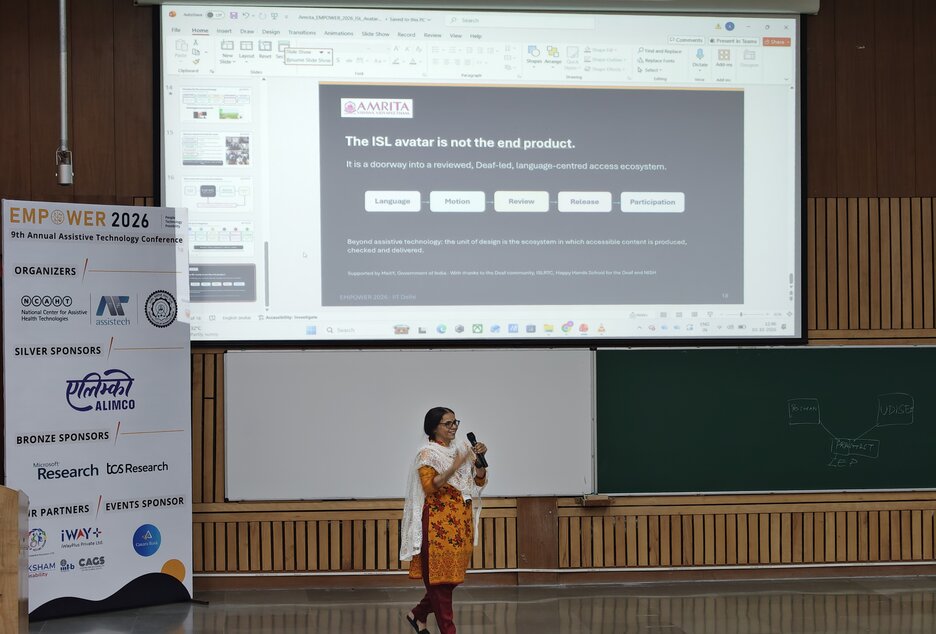
The UNESCO Chair also contributed to the academic programme of the conference. Dr. Prema Nedungadi, Chairholder, UNESCO Chair on Assistive Technologies in Education, delivered an invited presentation titled “Beyond Assistive Technology: Building AI Ecosystems Where Inclusion is the Architecture”. Delivered from 12:30 to 1:00 pm as part of the thematic session “Innovations in Communication Accessibility for Individuals with Speech and Hearing Impairment”, the presentation explored the journey of building AI ecosystems in which accessibility and inclusion are considered integral to the design. It used the journey of Chala Chitra Vachana as a case study, drawing on the challenges encountered and the lessons learned in developing an inclusive AI solution.
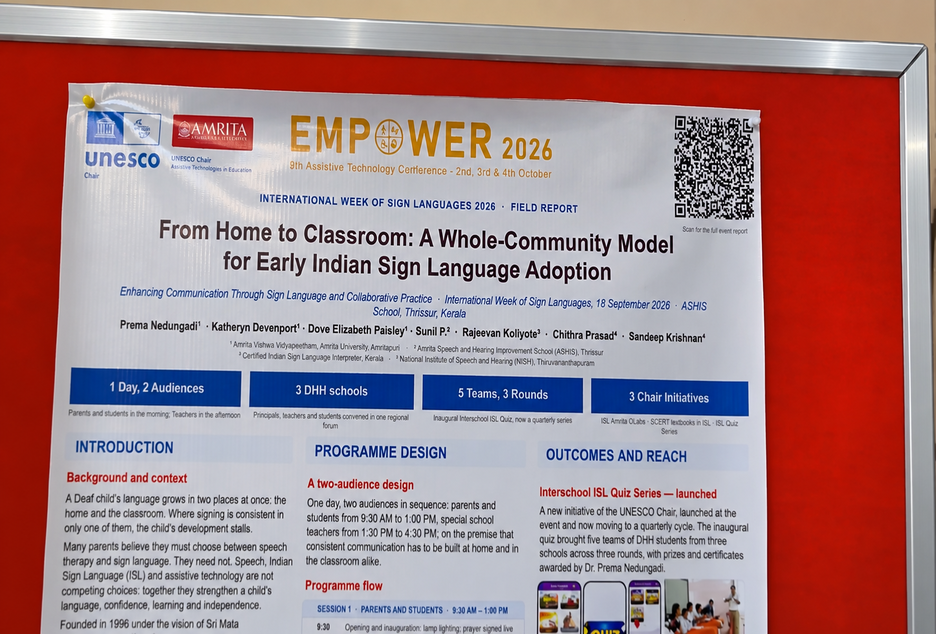
In addition to the exhibition and invited presentation, the UNESCO Chair presented a poster titled “From Home to Classroom: A Whole-Community Model for Early Indian Sign Language Adoption”, highlighting a two-audience model that brings parents and students together for early ISL exposure while strengthening teachers’ capacity to use ISL in educational settings. The initiative brought together three regional schools for DHH students, the National Institute of Speech and Hearing (NISH) and the State Council of Educational Research and Training (SCERT). It included practical parent training, teacher workshops, ISL-enabled learning resources, and the launch of an interschool ISL quiz series.
During the conference, the team engaged with stakeholders from more than 25 institutions across the assistive technology ecosystem and identified opportunities for collaboration, research and technology deployment.
Through its continued work in assistive technologies, inclusive education and AI-enabled accessibility, the UNESCO Chair at Amrita remains committed to advancing technology solutions that contribute to more inclusive learning and digital environments.