


Amrita Vishwa Vidyapeetham continues its commitment to sustainable water management by systematically measuring and expanding water reuse across all campuses. Wastewater generated from academic, residential, healthcare, and utility facilities is effectively treated and reused, supporting the university’s long-term vision of minimising freshwater dependence and progressing toward net-zero water loss, in alignment with SDG 6: Clean Water and Sanitation.
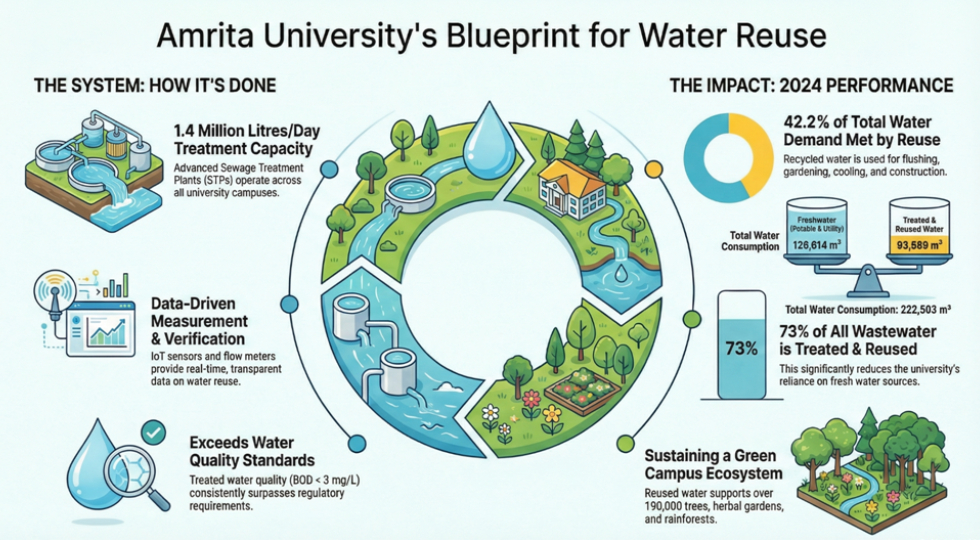
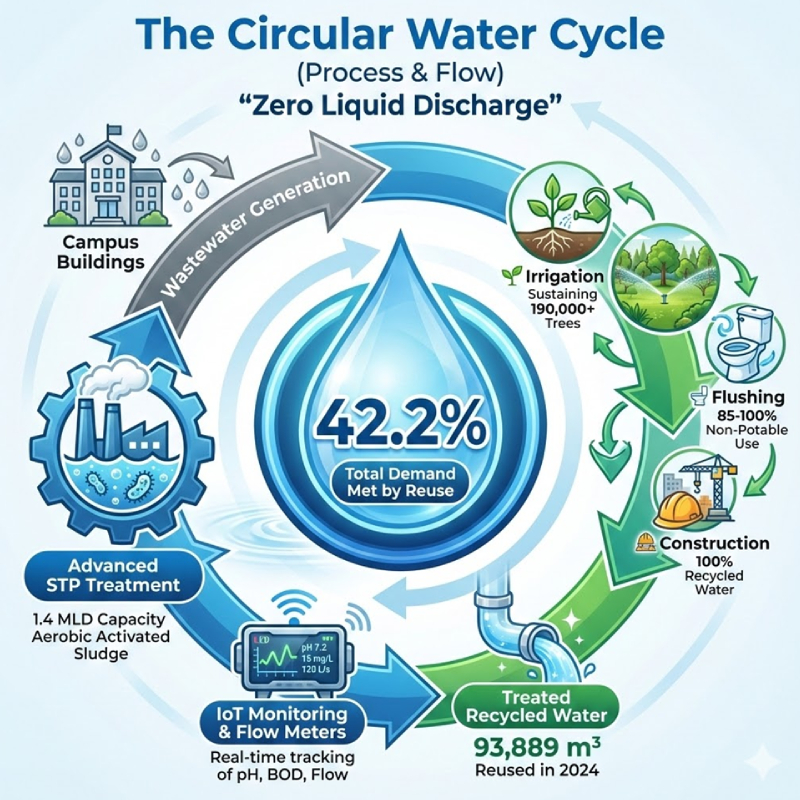
All Amrita campuses operate advanced Sewage Treatment Plants (STPs) with a combined treatment capacity of 1.4 million litres per day (MLD). These facilities have been upgraded with improved aeration systems and enhanced sludge management to ensure stable performance and high treatment efficiency.
Water reuse is measured and verified through:
This framework ensures transparent, auditable measurement of reused water.
In 2024, Amrita recorded a total water consumption of 222,503 m³ across all campuses.
Reused water is primarily applied for toilet flushing, gardening, landscaping, cooling operations, and construction activities, significantly reducing reliance on freshwater sources.
In 2024, approximately 73% of the wastewater generated across campuses was treated and reused, resulting in 42.2% of total water demand being met through recycled water.
| Month | Portable Water | Treated / Reused (m³) Water | Total Water Consumption (m³) | |
|---|---|---|---|---|
| Drinking (m³) | Utility Water (m³) | |||
| Jan | 4,049 | 6,240 | 7,511 | 17,800 |
| Feb | 4,049 | 6,240 | 7,511 | 17,800 |
| Mar | 5,061 | 7,800 | 9,389 | 22,250 |
| Apr | 5,061 | 7,800 | 9,389 | 22,250 |
| May | 2,530 | 3,900 | 4,694 | 11,125 |
| Jun | 3,542 | 5,460 | 6,572 | 15,575 |
| Jul | 3,542 | 5,460 | 6,572 | 15,575 |
| Aug | 4,049 | 6,240 | 7,511 | 17,800 |
| Sep | 4,049 | 6,240 | 7,511 | 17,800 |
| Oct | 4,555 | 7,020 | 8,450 | 20,025 |
| Nov | 5,061 | 7,800 | 9,389 | 22,250 |
| Dec | 5,061 | 7,800 | 9,389 | 22,250 |
| TOTAL | 50,609 | 78,005 | 93,889 | 222,503 |
The STPs employ aerobic activated sludge treatment, consistently producing treated water with BOD levels below 3 mg/L, exceeding regulatory requirements. Treated water quality is verified through:
During dry months, reuse levels increase due to higher non-potable demand, while monsoon periods show slightly reduced reuse ratios due to lower irrigation requirements.
Water reuse directly sustains Amrita’s green campus ecosystems, including Aushadavanam herbal gardens, Amritavanam rainforests, and Butterfly Parks. By 2024, over 190,000 trees across campuses were supported using recycled water, contributing to groundwater recharge, biodiversity conservation, and microclimate regulation.
Reused water supports:
Building on current performance, Amrita aims to further strengthen water reuse through the addition of new treatment capacity planned for 2025–26 and deeper integration of IoT-based water analytics. These initiatives will enhance reuse efficiency, improve predictive monitoring, and reinforce data-driven water governance across campuses.
Through systematic measurement, large-scale reuse, and transparent reporting, Amrita Vishwa Vidyapeetham demonstrates effective progress toward SDG 6.4: improving water-use efficiency and increasing safe reuse, supporting sustainable and responsible water management across the university.