


Amrita Vishwa Vidyapeetham provides comprehensive, structured assistance to start-ups fostering a low-carbon economy and clean-energy technologies through its Technology Business Incubator (Amrita TBI), an award-winning, non-profit incubator supported by the Government of India. Aligned with the UN SDGs and national climate priorities, Amrita TBI plays a pivotal role in translating academic research and technological innovation into market-ready, low-carbon solutions.
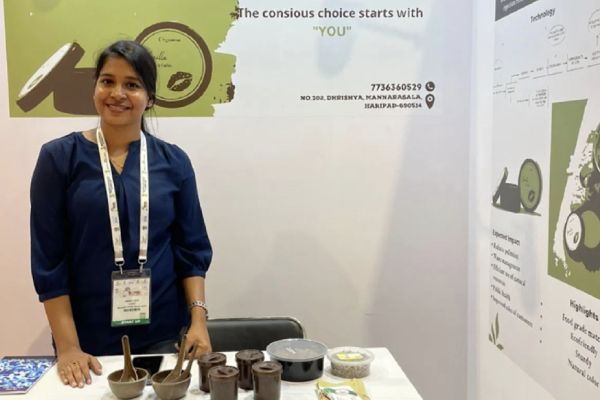
In 2024, Amrita strengthened technical mentoring for low-carbon innovation by leveraging its TBI, TEC, UNESCO Chairs, and national Clean Energy Networks. Experts from clean energy, green hydrogen, climate technology, and sustainability domains were engaged to mentor faculty, students, researchers, and start-ups. These experts delivered advanced technical sessions, guided research design, advised on technology readiness, and acted as long-term mentors, accelerating innovation in renewable energy, hydrogen technologies, energy efficiency, and sustainable systems.
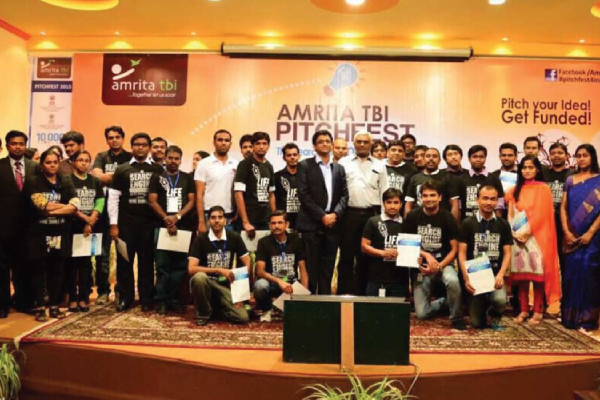
In 2024, Amrita TBI prioritised the incubation of start-ups addressing climate mitigation, energy efficiency, circular economy, and sustainable living. More than 30 start-ups focused on low-carbon innovation were actively nurtured, supported through structured incubation, funding access, mentorship, and laboratory-enabled prototyping. Collectively, these start-ups raised over USD 1.5 million in funding, generated 137+ jobs, and benefited from access to 100+ multidisciplinary laboratories across Amrita’s campuses.
Amrita TBI has incubated multiple trailblazing start-ups delivering commercially deployable low-carbon solutions, including:
Amrita TBI offers multi-stage financial and infrastructural support through national programmes, including:
Start-ups are supported through physical incubation centres in Kollam, Bengaluru, and Coimbatore, as well as a robust virtual incubation model introduced in 2024, enabling founders across India to access world-class incubation resources irrespective of location. This distributed model expands access to low-carbon innovation support beyond campus boundaries.
Amrita TBI provides sustained mentorship from national and international experts, including clean-energy specialists from Silicon Valley and Singapore, alongside access to venture capital and angel investors. Start-ups receive hands-on support for technology validation, business-model development, IP protection, and commercial scaling.
Through collaboration with the Amrita Technology Enabling Centre (TEC), several innovations have successfully transitioned from laboratory to market, demonstrating a viable pathway for low-carbon technologies to achieve real-world impact.
Amrita TBI is recognised by the Government of India as one of the “rarest of the rare” incubators selected under NITI Aayog’s Atal Innovation Mission and has received INR 10 crore in funding to strengthen its infrastructure and national reach.
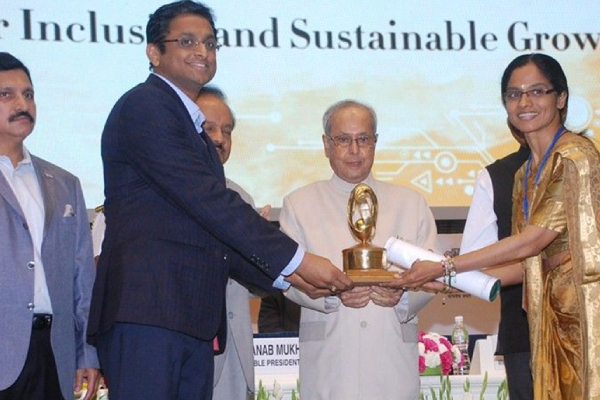
Low-carbon innovations emerging from Amrita’s incubation and research ecosystem progressed beyond laboratories into pilot implementation and demonstration.
Several start-ups and research teams successfully piloted technologies such as green hydrogen production from seawater, showcasing proof-of-concept solutions at national and international exhibitions. These pilots demonstrate Amrita’s emphasis on translational research, bridging innovation, feasibility, and scalability.
Through the Amrita Research & Innovation Symposium for Excellence platform in 2024, Amrita Vishwa Vidyapeetham facilitated in-depth, cross-sectoral discussions to strengthen applied research on low-carbon technologies. ARISE enabled the creation of an integrated institutional research pathway—“Clean Energy, Water, and Technology: Innovating Sustainability”—to coordinate interdisciplinary efforts across campuses. A major outcome of this process was the mobilisation and disbursement of over USD 1.2 million towards green hydrogen research and community-based clean-energy innovation, supporting translational research from laboratory development to pilot deployment.
In 2024, Amrita Vishwa Vidyapeetham advanced green hydrogen as a transformative solution for greening the Blue Economy, addressing the heavy reliance of coastal fishing communities on diesel-powered engines. Traditional fishing operations depend almost entirely on diesel motors, contributing to fuel insecurity, rising operational costs, and marine pollution.
Amrita’s research and pilot initiatives explored the feasibility of hydrogen as a clean alternative fuel for fishing vessels and shore-based marine infrastructure, produced using renewable energy and seawater resources. By demonstrating pathways to replace diesel with hydrogen, these initiatives highlight the potential to decarbonise the fishing industry, reduce emissions in coastal ecosystems, and improve long-term energy resilience for fishing communities.
This approach positions green hydrogen not only as a clean energy technology but as a strategic enabler for reshaping the entire fishing sector, supporting sustainable livelihoods, cleaner oceans, and climate-resilient coastal economies under the Blue Economy framework.

Amrita Vishwa Vidyapeetham actively collaborates with a wide ecosystem of external stakeholders—including start-ups, industry partners, community organisations, and social innovators—to co-develop, test, and scale low-carbon solutions. Community-based organisations such as Eco Civilization work alongside Amrita’s researchers, incubated start-ups, and students to support grassroots implementation, public engagement, and sustainability-driven behavioural change. These partnerships ensure that clean-energy and climate innovations are technically robust, socially inclusive, and adaptable to local contexts.