


In alignment with the Chancellor’s vision of building a climate-resilient and future-ready university, Amrita Vishwa Vidyapeetham strengthened its Divestment from Carbon-Intensive Energy Industries Policy in 2024, reaffirming a complete transition away from financial exposure to fossil-fuel sectors such as coal and oil. This policy is embedded within the university’s Sustainable Campus Policy Pack and is implemented through rigorous financial screening, monitoring mechanisms, and an institutional mandate to reinvest exclusively in clean, renewable, and low-carbon energy solutions.
For the second consecutive year, Amrita Vishwa Vidyapeetham publicly declared that 0% of its institutional funding in 2024 was sourced from carbon-intensive energy industries, demonstrating full compliance with its divestment mandate and reinforcing the university’s leadership in India’s higher-education sustainability landscape.
This divestment policy forms part of Amrita Vishwa Vidyapeetham’s institutional commitment to affordable and clean energy (SDG 7). The university excludes investments in fossil-fuel-based industries, including coal, oil, and gas, as a governance mechanism to reduce reliance on high-carbon energy systems and support the global transition to low-carbon, clean energy sources.
Amrita’s Divestment Policy, formally integrated into the Sustainable Campus Policy Pack, was reviewed again in 2024 to align with global climate benchmarks and national clean-energy priorities. As in the previous year, 0% of university funding in 2024 was sourced from carbon-intensive energy industries, demonstrating consistent and full implementation of the divestment mandate. The policy outlines a structured roadmap for eliminating any residual exposure to fossil-fuel investments and mandates that all future financial decisions undergo sustainability screening.
The 2024 revision strengthens compliance mechanisms, formalizes monitoring through annual sustainability reviews, and reinforces the institution’s commitment to transparent reporting.
Amrita’s Contributions to C20 Brazil 2024 – Advancing Fossil-Fuel Divestment
In 2024, Amrita’s experts, UNESCO Chairs, and sustainability leadership team actively contributed to the C20 Brazil Policy Pack, providing strategic guidance on:
Global Advocacy & Policy Engagement on Fossil-Fuel Divestment (C20 India 2023 → C20 Brazil 2024)
In 2024, Amrita Vishwa Vidyapeetham continued to play a significant global leadership role in advancing fossil-fuel divestment, climate finance reform, and inclusive energy-transition strategies through its active participation in Civil 20 (C20) Brazil 2024, building upon the strong foundation established during C20 India 2023, where Amrita served as the Secretariat for the Working Group on Sustainable & Resilient Communities.
Amrita’s Role in C20 Brazil 2024 – Advancing Divestment & Climate Finance
In 2024, Amrita played a critical role in C20 Brazil, contributing technical insights, policy briefs, and sustainability models to help develop the C20 Brazil 2024 Policy Pack. Amrita’s experts—drawing from its two UNESCO Chairs, the Sustainable Futures School, and Live-in-Labs® ecosystem—supported discussions on:
Fossil-Fuel Divestment as a Global Mandate
Amrita advocated strongly for phasing out new investments in coal and oil sectors, mandating transparency in institutional investment portfolios, encouraging national-level fossil-fuel divestment strategies, and accelerating the shift to clean, decentralized renewable energy systems.
Climate Finance for Resilience & Adaptation
Building on the 2023 recommendations, Amrita contributed to the development of policy language urging stronger international climate financing for climate-vulnerable communities, frontline investment in women-led resilience programs, expansion of results-based climate finance frameworks, and incentives for national renewable-energy manufacturing ecosystems.
Community-Centric Energy Transitions
Drawing from its massive field presence across Indian villages, Amrita emphasized community-led microgrids, local energy co-operatives, training youth as “Energy Transition Champions and technology-enabled climate-risk monitoring.
Industry Transition and Carbon Divestment Through Technology Enabling Centre
Amrita University advances its divestment goals by enabling large industries to transition away from carbon-intensive practices through its Technology Enabling Centre (TEC). As a national innovation and technology-transfer ecosystem, TEC supports industries in adopting cleaner production methods, energy-efficient systems, and sustainable process innovations that directly reduce dependence on fossil-fuel-based technologies.
Through collaborative R&D, prototype development, and industry partnerships, TEC helps modernise manufacturing processes, introduce low-carbon alternatives, and scale technologies that minimise emissions across sectors such as coir, water management, and materials processing. By equipping industries with viable pathways to shift toward renewable, resource-efficient, and circular models, Amrita strengthens the broader national movement away from carbon-intensive industrial systems.
In 2024, Amrita strengthened its institutional commitment to divesting from carbon-intensive industries through a dual approach: campus-level sustainable infrastructure expansion and research-driven innovation that accelerates the shift toward low-carbon systems.
Amrita advanced major green infrastructure upgrades aimed at reducing reliance on fossil-fuel-based energy:
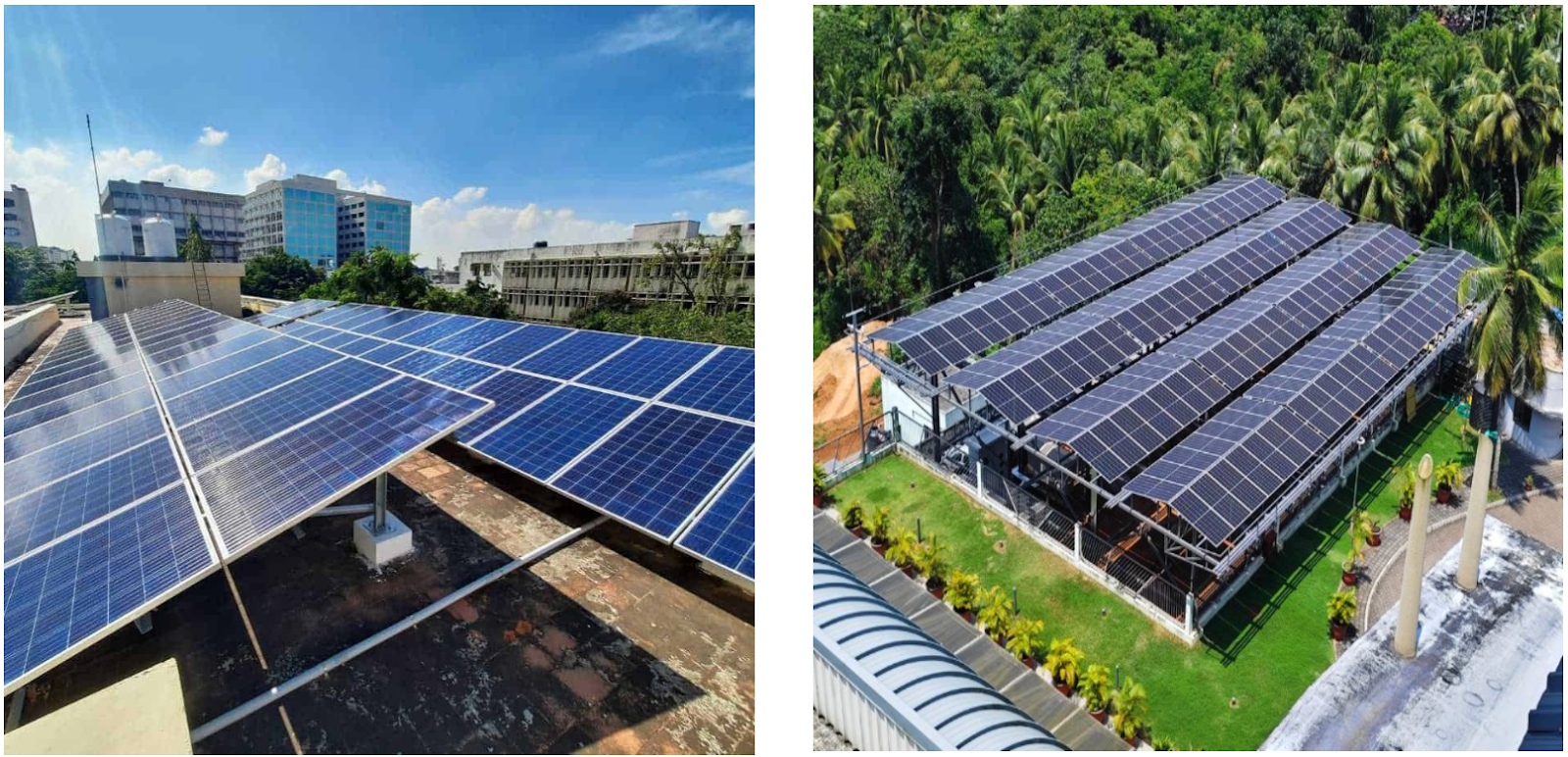
These initiatives collectively strengthened Amrita’s transition away from carbon-based utilities while embedding long-term operational sustainability.
Amrita’s research agenda in 2024 further amplified the university’s move toward a low-carbon future by developing scalable, clean-energy solutions:


Future Plans
Amrita University is planning to host its first carbon-neutral conference in 2025, emphasising the institution’s deep commitment to advancing low-carbon pathways and demonstrating leadership in sustainability. The initiative aims to set a benchmark for environmentally responsible academic convenings, reflecting Amrita’s dedication to achieving carbon neutrality and inspiring both direct and indirect stakeholders to pursue a zero-carbon future.


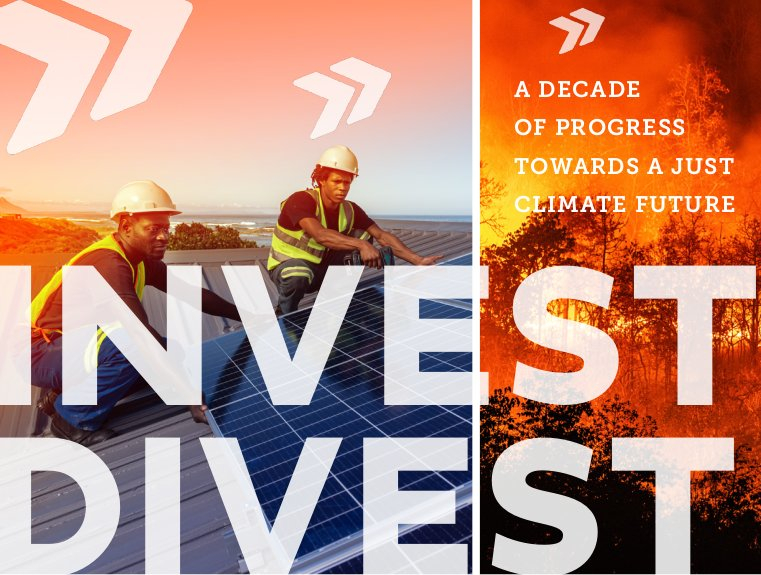
In line with Chancellor Sri Mata Amritanandamayi Devi’s vision for a sustainable and climate-resilient campus, Amrita Vishwa Vidyapeetham is firmly committed to divesting from carbon-intensive energy industries, particularly coal and oil. This bold step underscores the university’s dedication to reducing energy consumption, minimizing its carbon footprint, and driving the transition to clean, renewable energy.
Key Achievement (2023 Data): “In alignment with our sustainable campus policy, 0% of funding in 2023 was sourced from carbon-intensive energy industries.”
Links:
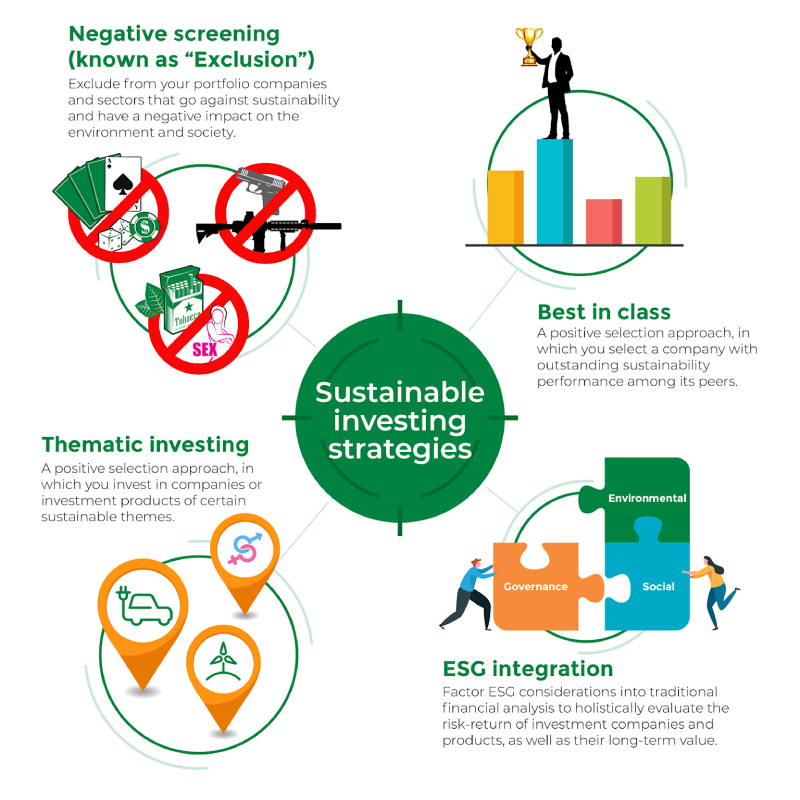
A comprehensive Disinvestment Policy for Carbon Intensive Energy Industries was integrated in the Sustainable Campus Policy Pack in 2023. This signifies the university’s unwavering commitment to environmental sustainability and its role in addressing climate change.[1][2]
The Sustainable Campus Policy was formulated first and issued in 2020, with the last update on November 11, 2023. This policy broadly covers:[2]
By divesting from fossil fuel industries, the university aims to redirect its investments towards renewable energy sources and other sustainable initiatives.[1]
Links:

Silhouette of an oil pumpjack representing the oil industry related to carbon-intensive energy.
The university’s divestment policy outlines a clear roadmap for phasing out existing investments in coal and oil industries within a specified timeframe. Funds generated from this divestment are strategically reinvested in renewable energy projects, energy-efficient technologies, and other sustainable development initiatives.[1]
This approach not only reduces the university’s carbon footprint but also promotes innovative solutions to address climate challenges.[1]
Link: https://www.amrita.edu/unsdg/sdg6/policy-divestment-from-carbon-intensive-energy-industries-policy/ (Published: December 23, 2024)


Renewable Energy Source Installations – 4 MW Solar Capacity:
Amrita University is committed to installing 4 MW of renewable energy capacity through solar power systems across its campuses. This initiative is a significant step toward reducing the carbon footprint and achieving 100% renewable energy by 2035.[1]
The 4 MW installation powers a substantial portion of campus operations, contributing to a cleaner, more sustainable energy future.[1]
Low Carbon Energy Tracking Achievements (2024):[2]
Links:
Amrita University has implemented an innovative lighting strategy to promote energy efficiency on campus:[3][1]
Link: https://www.amrita.edu/unsdg-25/sdg7/plan-to-reduce-energy/ (Published: December 22, 2024)
Links:
To reduce energy consumption:[1]
Link: https://www.amrita.edu/unsdg/sdg6/policy-divestment-from-carbon-intensive-energy-industries-policy/ (Published: December 23, 2024)
Efforts focused on encouraging reduced electricity consumption from the grid by:
Link: https://www.amrita.edu/unsdg/sdg6/policy-divestment-from-carbon-intensive-energy-industries-policy/ (Published: December 23, 2024)
Lorem ipsum dolor sit amet, consectetur adipiscing elit. Ut elit tellus, luctus nec ullamcorper mattis, pulvinar dapibus leo.
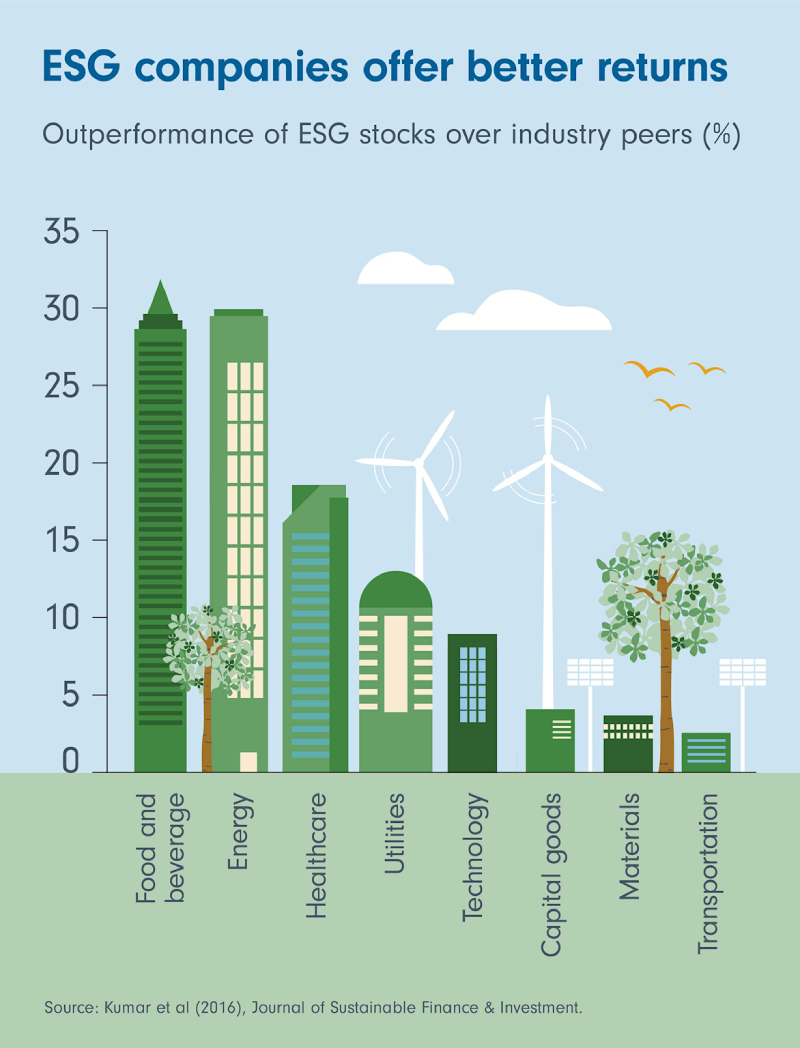
ESG stocks outperform industry peers across sectors, notably leading in Food and Beverage and Energy sectors with over 30% better returns.
As part of its commitment to divesting from carbon-intensive industries, Amrita actively supports low-carbon innovation and sustainable entrepreneurship:
2023 Achievements:
Featured Low-Carbon Startups (2023):
Greenamour Ventures: Eco-packaging and sustainable living solutions using reused materials for cosmetics, food, and pharmaceuticals industries
Tranquility IoT & Big Data Solutions (TIBS): Developed indigenous solutions including:
MiQasa: Pioneer in home automation with low-carbon technology solutions
Blinc Smart Homes: Designs smart switches and plugs prioritizing low-carbon innovation for sustainable infrastructure
Link: https://www.amrita.edu/unsdg-25/sdg7/assistance-to-low-carbon/ (Published: December 23, 2024)
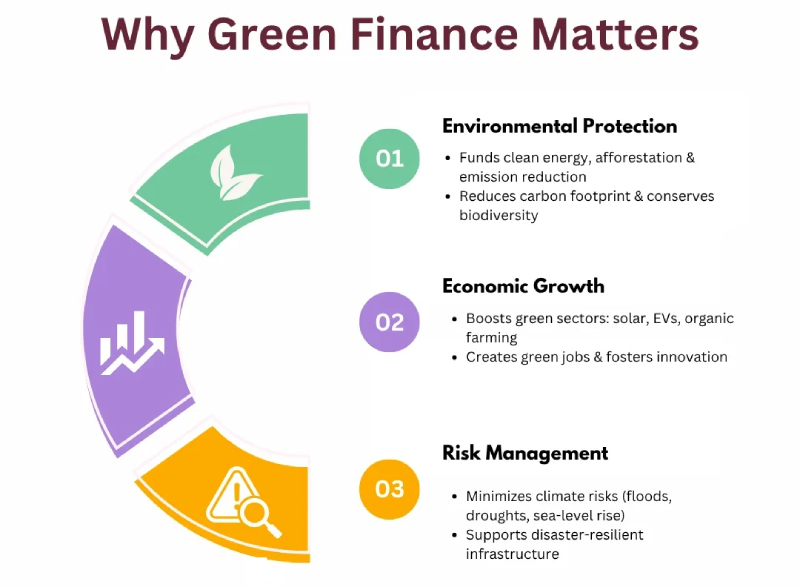
Infographic explaining why green finance matters, highlighting environmental protection, economic growth, and risk management benefits.
As of 2023, Amrita Vishwa Vidyapeetham has made significant progress in its mission to provide sustainable energy solutions to rural India:
Mothakara Village, Wayanad, Kerala (Since 2014):
Komalakudi, Kerala:
Munnar:
2023 Expansion:
Link: https://www.amrita.edu/unsdg/sdg6/policy-divestment-from-carbon-intensive-energy-industries-policy/ (Published: December 23, 2024)
Amrita University developed a groundbreaking, patent-winning solar electric car:
Technical Specifications:
The project involved retrofitting a Maruti car with new motor, motor controller, batteries, battery management system (BMS), and solar panels, making this solar electric vehicle both cost-effective and accessible.
Link: https://www.amrita.edu/unsdg/sdg6/policy-divestment-from-carbon-intensive-energy-industries-policy/ (Published: December 23, 2024)
In 2023, Amrita University developed and launched its innovative Hybrid Charging Station (HCS):
Key Features:
Advanced Technology:
Link: https://www.amrita.edu/unsdg/sdg6/policy-divestment-from-carbon-intensive-energy-industries-policy/ (Published: December 23, 2024)
Fossil fuel free pledge badge representing commitment to divest from fossil fuels in Amrita University.
The Civil 20 India working group on Sustainable and Resilient Communities – Climate, Environment and Net Zero Targets held extensive policy dialogues and consultations with 4000+ CSOs to develop policy recommendations submitted to G20.
Key Events in 2023:
| Event Name | Date |
| C20 Dialogues – Technology Integration, Finance and Adoption Strategies for Addressing Net Zero Emissions Management | 08/02/2023 |
| Online Webinar – Net Zero Emission Targets – Energy Storage Systems in Battery Electric Vehicles | 25/02/2023 |
| International Symposium on R&D of Autonomous Mobility and Electric Vehicle Technology | 10/03/2023, 11/03/2023 |
| C20 Policy Dialogues – Transitioning to Renewable Electricity and Renewable-Integrated Grids | 17/03/2023 |
| C20 Policy Dialogues – Decarbonising Infrastructure towards Net Zero Emissions | 23/03/2023 |
| Decoding Results Based Climate Finance (RBCF): Strategies for Success | 07/04/2023 |
| Financing a Just Energy Transition Through Fossil Fuel Subsidy Reform | 20/06/2023 |
Participating Organizations Included:
Link: https://www.amrita.edu/unsdg/sdg6/policy-divestment-from-carbon-intensive-energy-industries-policy/ (Published: December 23, 2024)
Amrita University’s Prof. Maneesha V Ramesh (UNESCO Chair on Experiential Learning for Sustainable Innovation and Development) and Prof. Bhavani Rao (UNESCO Chair on Gender Equality and Women’s Empowerment) were guest speakers during COP28 in Dubai, UAE.
This demonstrates Amrita’s commitment to including divestment from fossil fuels and advancing sustainable, inclusive solutions to climate change.
Link: https://www.amrita.edu/unsdg/sdg6/policy-divestment-from-carbon-intensive-energy-industries-policy/ (Published: December 23, 2024)
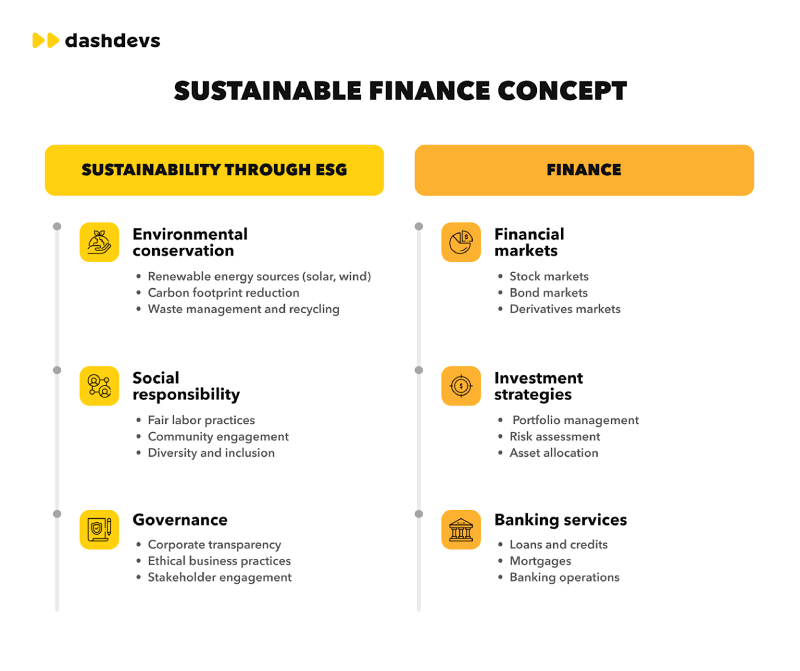
Infographic illustrating key aspects of sustainable finance and ESG principles.
Avoiding Financial Risk
Amrita University led the global working group for C20 India 2023 on Sustainable and Resilient Communities – Climate, Environment and Net Zero Targets by inspiring over 7,000 NGOs to prioritize divestment from carbon-intensive energy sources and adopt sustainable energy practices.
Special policy recommendations submitted to G20 for climate finance to reduce their financial risk from disinvestment from carbon intensive energy industries.
Climate Finance for Inclusive and Effective Climate Action:
Link: https://www.amrita.edu/unsdg/sdg6/policy-divestment-from-carbon-intensive-energy-industries-policy/ (Published: December 23, 2024)
In 2023, the institution undertook substantial sustainable investments to achieve energy efficiency goals:
Key Achievements:
Links:
The university’s divestment commitment and sustainable practices have earned recognition through prestigious certifications and rankings, demonstrating leadership in addressing climate change through responsible investment practices while inspiring broader societal transformation toward a low-carbon economy.
Through this comprehensive divestment policy integrated in 2023, Amrita Vishwa Vidyapeetham demonstrates institutional leadership by achieving 0% funding from carbon-intensive energy industries and redirecting capital toward renewable energy, low-carbon innovation, and sustainable development initiatives that serve as a model for educational institutions worldwide.