DATE
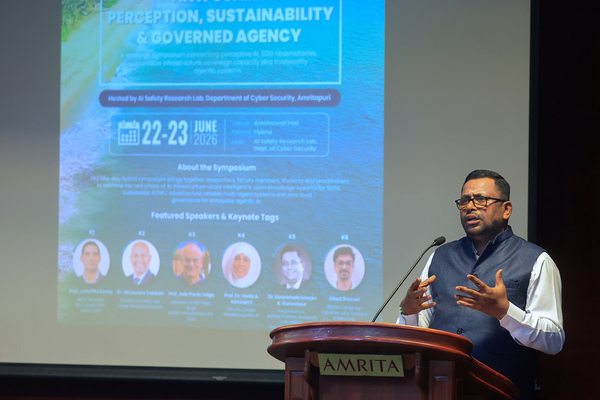
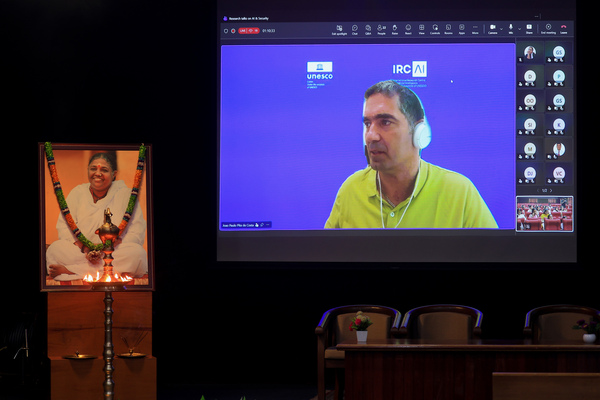
22 – 23 June 2026

VENUE
Amriteswari Hall

FORMAT
Hybrid

HOST
AI Safety Research Lab, Dept. of Cyber Security
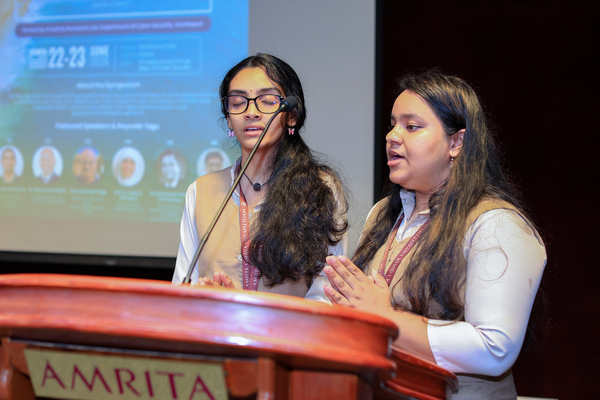
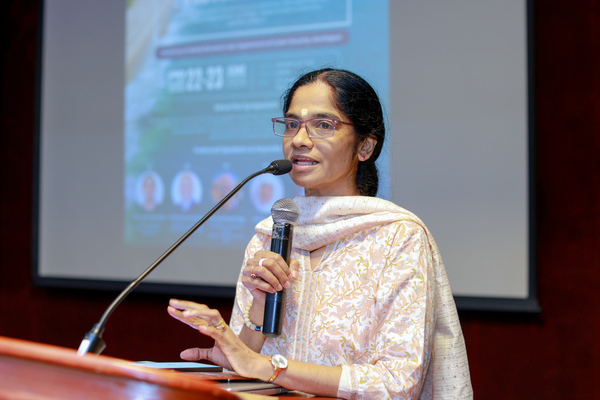
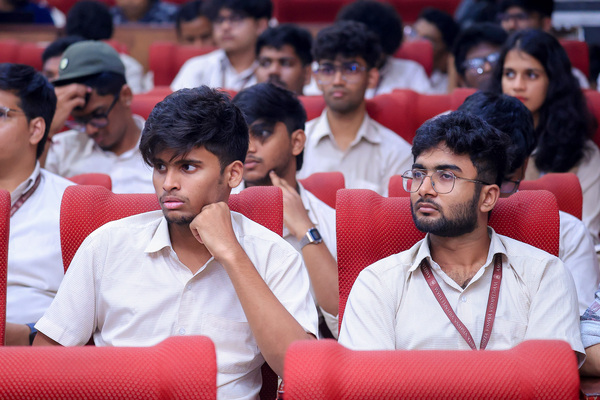
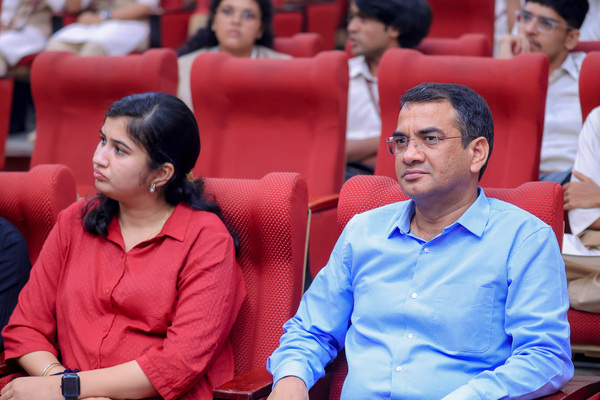
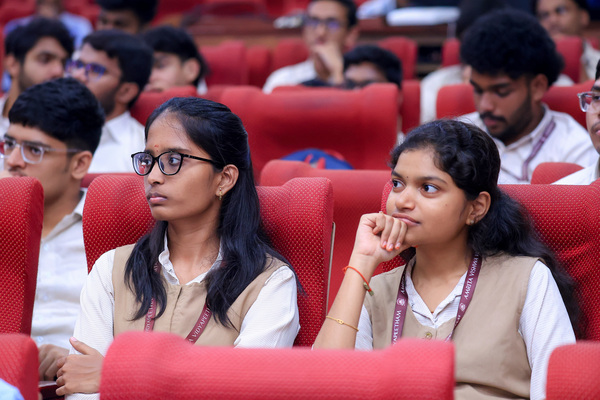
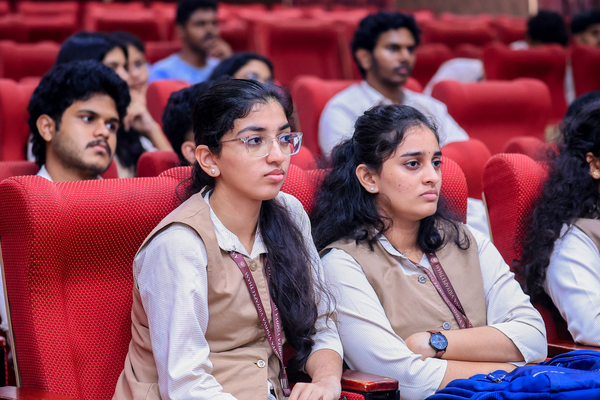
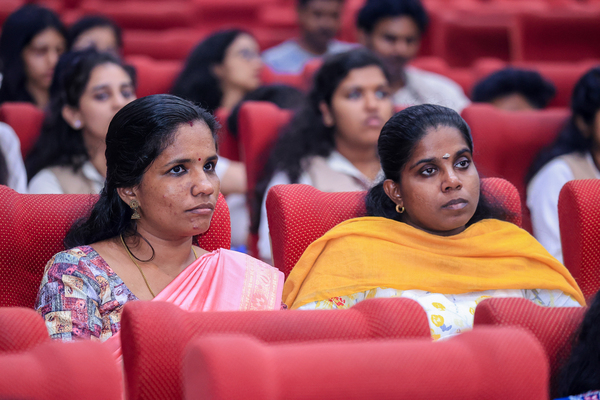
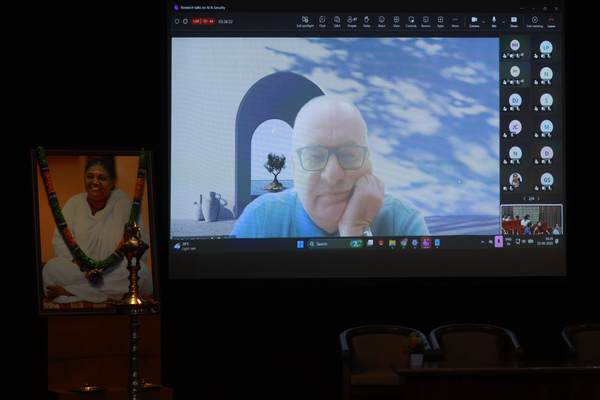
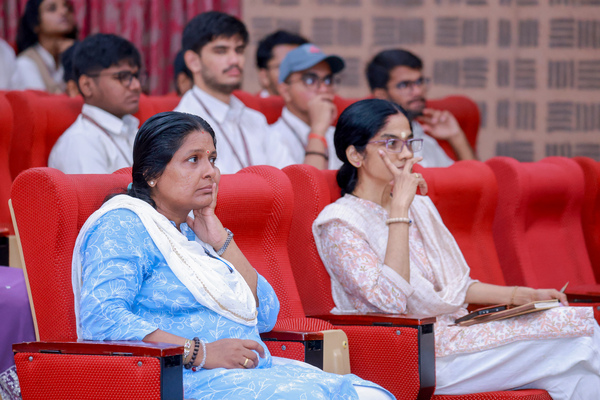
This two-day hybrid symposium brings together researchers, faculty members, students and practitioners to examine the next phase of AI: infrastructure-scale intelligence, open knowledge systems for SDGs, sustainable AI/HPC infrastructure, reliable multi-agent systems and zero-trust governance for enterprise agentic AI.
Six leading researchers and practitioners share their work across perceptive AI, SDG observatories, infrastructure, and trustworthy agentic systems. Tap “Read bio” for full abstract and biography.
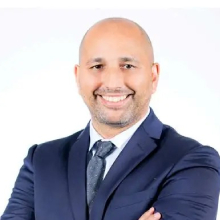
IRCAI, Slovenia
Governing the IRCAI Bias-Aware AI-Enabled SDG Observatory
K1 · ONLINE
Abstract focus: Positions the IRCAI SDG Observatory as a multilingual, bias-aware knowledge infrastructure integrating news, publications, policies, educational resources, innovation ecosystems and SDG indicators. Links open knowledge infrastructure, agentic AI, Green AI orchestration and trusted SDG intelligence.
Bio note: Senior researcher at IRCAI under UNESCO auspices, with a PhD in Mathematics from the University of Ljubljana. Leads AI-driven SDG Observatory work and has contributed to topological data analysis, public-health big-data policy support and AI education.
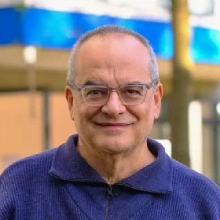
Khalifa University, UAE
The Next Big Wave in AI: Large Perceptive Models
K2 · ONLINE
Abstract focus: Introduces Large Perceptive Models as foundation models that understand complex environments through RF signals, sensors, topology, states and events. Addresses cross-modal alignment, temporal reasoning, uncertainty, physical grounding and trustworthy perceptive AI for intelligent infrastructure.
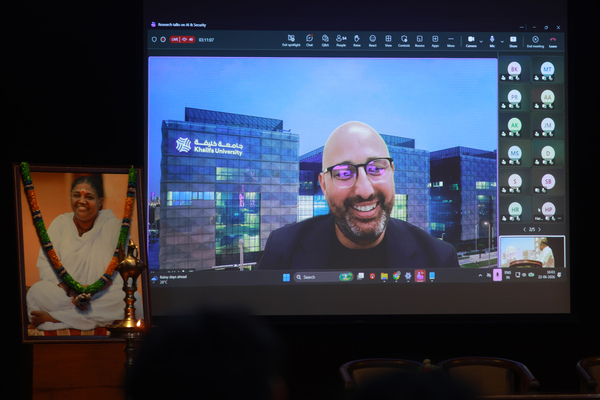
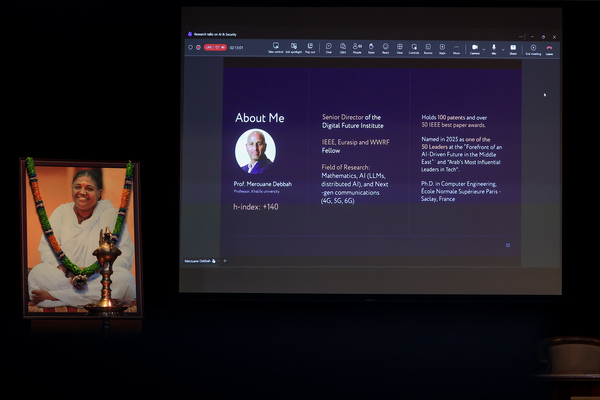
Bio note: Professor at Khalifa University and founding Senior Director of KU 6G Research Center. His work spans telecommunications, random matrix theory, learning algorithms, 4G/5G/6G technologies, distributed AI systems, semantic communications, NOOR, Falcon LLM and the Falcon Foundation.
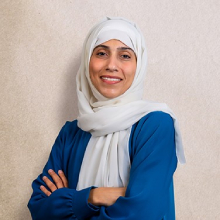
University of São Paulo, Brazil
EU-LAC Collaboration on Infrastructure, Capacity and AI for the SDGs
K3 · ONLINE
Abstract focus: Explores EU-Latin America and Caribbean cooperation on AI, HPC and data-centre expansion aligned with SDG 9. Highlights AI-enabled visualizations, media tracking, governance analysis and risk monitoring across energy, water, supply chains and cybersecurity.
Bio note: Professor at the University of São Paulo, senior researcher at CAENI-USP and researcher at C4AI. His work spans transnational governance, human rights, multinational companies, social and environmental impact assessment, labour standards and AI ethics/regulation.
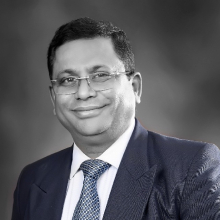
NYU Abu Dhabi
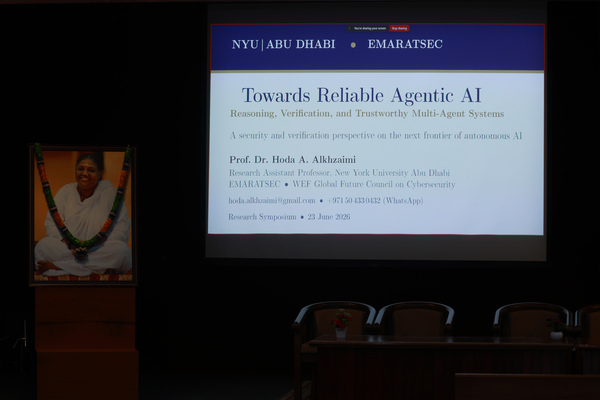
Towards Reliable Agentic AI: Reasoning, Verification and Trustworthy Multi-Agent Systems
K4 · ONLINE
Abstract focus: Examines next-generation reliable agentic AI beyond LLM interfaces. Focus areas include autonomous decision-making, planning architectures, verification and validation of outputs, trustworthy multi-agent coordination, safety, robustness, resilience, evaluation frameworks and human-AI oversight.
Bio note: Associate Vice Provost for Research Translation & Innovation and Assistant Professor of Engineering at NYU Abu Dhabi. Founder/director of emaratsec and contributor to global emerging-technology and cybersecurity advisory ecosystems, including ITU and WEF engagements.
Aaquarians.ai, Amrita AI Safety Research Lab, MBRSG
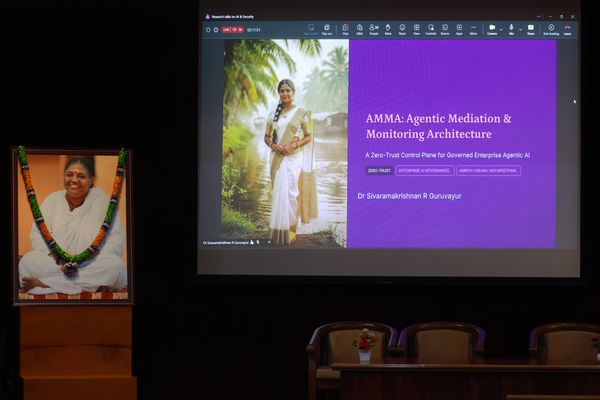
AMMA: Agentic Mediation & Monitoring Architecture
K5 · IN-PRESENCE
Abstract focus: Proposes an Agentic Gateway as the zero-trust runtime control plane for enterprise agentic AI. The architecture authorizes, transforms or blocks plans, tool calls, memory operations, external data exchange and agent-to-agent messages while integrating policy-as-code, guardrails, cumulative risk scoring and auditability.
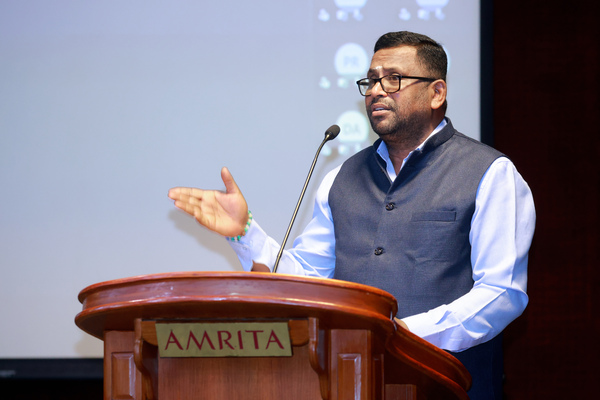
Bio note: Executive AI consultant, Chief AI Officer, Professor of Practice and Head of AI Safety Research Lab at Amrita. Brings 28+ years of technology leadership and deep specialization in ML, GenAI, LLMs, Agentic AI, AI Safety, Responsible AI and AI governance across BFSI, education and public-sector contexts.
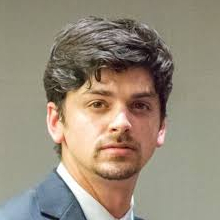
Amrita Center for Cybersecurity Systems & Networks
Rules for Neural Traffic: A New Defensive Layer for LLMs
K6 · IN-PRESENCE
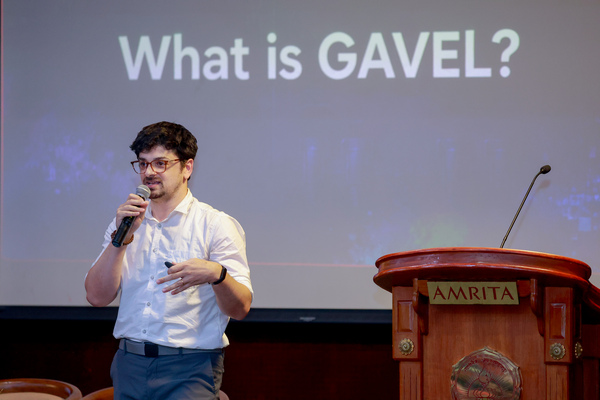
Abstract focus: Introduces GAVEL, a rule-based detection framework that monitors model neural activations rather than only surface text. Inspired by Snort and YARA, it expresses precise security logic over interpretable Cognitive Elements to improve auditability, updateability and robustness against obfuscation, jailbreaks and prompt injection.
Bio note: Research associate and project lead at the Amrita Center for Cybersecurity Systems & Networks. His work focuses on advanced AI system security, including LLM misuse in social engineering and cybercrime, rule-based activation monitoring, PRISM, agent attribution and accountable AI defense.
Two days of keynotes, technical sessions and networking. Switch between days to see the full schedule.
| TIME | SESSION |
|---|---|
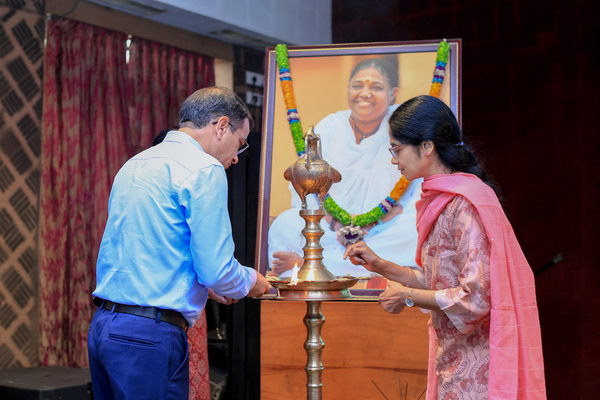
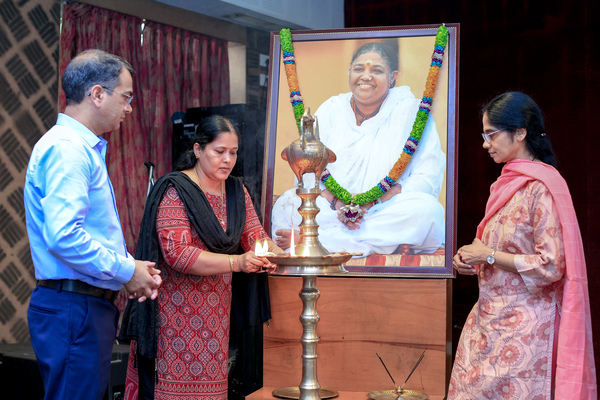
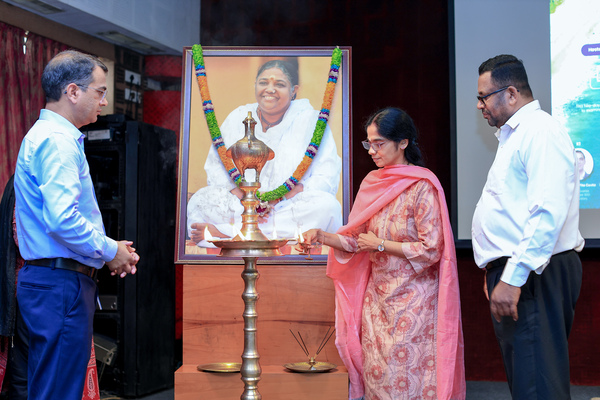
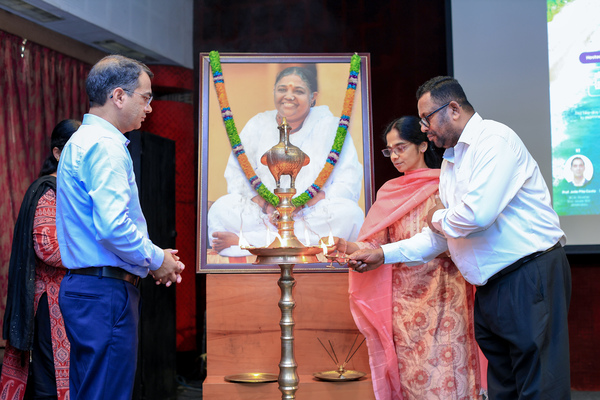
| 13:30 | Lighting the Lamp and Welcome Address |
| 14:00 – 15:00 | K1: Prof. João Pita Costa — Governing the IRCAI Bias-Aware AI-Enabled SDG Observatory (Online) |
| 15:00 – 16:00 | K2: Dr. Mérouane Debbah — The Next Big Wave in AI: Large Perceptive Models (Online) |
| 16:00 – 17:00 | K3: Prof. João Paulo Veiga — EU-LAC Collaboration on Infrastructure, Capacity and AI for the SDGs (Online) |
| 17:00 | Tea and Networking |
| TIME | SESSION |
|---|---|
| 10:30 – 11:00 | K4: Prof. Dr. Hoda A. Alkhzaimi — Towards Reliable Agentic AI: Reasoning, Verification and Trustworthy Multi-Agent Systems (Online) |
| 11:00 – 12:00 | K5: Dr. Sivaramakrishnan R. Guruvayur — AMMA: Agentic Mediation & Monitoring Architecture (In-Presence) |
| 12:00 – 13:00 | K6: Gilad Gressel — Rules for Neural Traffic: A New Defensive Layer for LLMs (In-Presence) |
| 13:00 – 13:15 | Vote of Thanks |
Scan the QR code below or click the button to secure your spot at the symposium.

Amrita Vishwa Vidyapeetham, Amritapuri Campus, Kollam, Kerala, India